
What it costs: Bad fit, unhappy players, and reorders that arrive late.
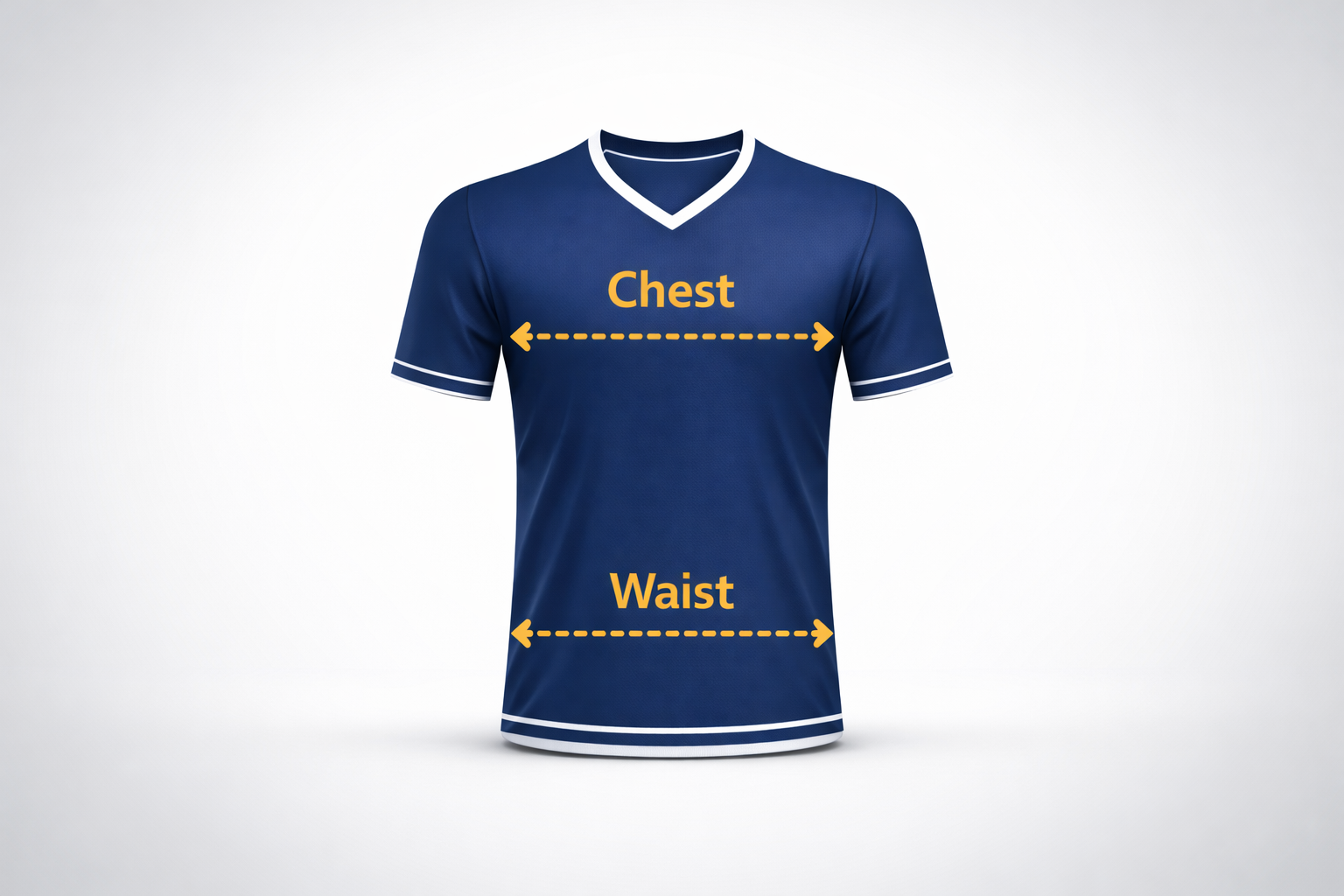
Why it happens: Teams collect sizes too early or guess based on last season. Every product fits differently, so guessing creates problems fast.
Quick rule: If the roster is not locked, the order is not ready.
Sport nuance: High-mobility sports punish tight cuts more than you expect.
What it costs: Misspelled names, wrong numbers, and bad placement that you only notice after delivery.
Why it happens: Teams review the mockup like a picture. They do not review it like a final production document.
Approval rule: One order owner. One feedback round. Then approve.
Sport nuance: If numbers are not readable from the stands, the design fails.
What it costs: Missed game dates and last-minute rush stress.
Why it happens: Rosters run late, revisions stack up, and approvals slip. Then shipping becomes a scramble.
Timeline rule that saves seasons: Build buffer for roster and revisions. Most teams lose time before production even starts because decisions take longer than they expect.
Quick rule: Your delivery depends on when you approve, not when you start talking about uniforms.
If your season start date is close, request a quote early so you can lock pricing, turnaround, and approvals.
Sport nuance: Tournament teams need more buffers than league teams.
What it costs: Fuzzy prints, pixelated sponsor logos, and a uniform that looks cheap even if the fabric is premium.
Why it happens: Teams send screenshots, tiny PNGs, or social media logos. Small files always look worse when they get printed large.
What it costs: A busy uniform, unreadable numbers, and a design that looks messy in photos.
Why it happens: Teams stack patterns, gradients, outlines, and multiple fonts in one layout. Every extra element competes with names and numbers.
Quick rule: If the numbers are hard to read, the design fails.
What it costs: Peeling names, cracked numbers, heavy logos, and uniforms that look worn too early.
Why it happens: Teams choose a print method based on price, not performance. The cheapest option is not always the best long-term option.
If you want a sharp, game-ready kit that holds up, check Wooter’s basketball uniforms.
What it costs: Overheating, restricted movement, and a uniform players do not enjoy wearing.
Why it happens: Teams choose the design first and forget conditions. Indoor and outdoor needs differ. Summer and winter needs differ. Contact-heavy play needs more durability.
Fabric choices matter most in heat and high movement. For breathable kits, explore Wooter’s soccer uniforms.
What it costs: Emergency reorders, mismatched replacements, and avoidable extra spend.
Why it happens: Teams order the exact roster with zero buffer, then panic when players join late or sizes change.
Quick rule: If your roster can change, your order needs a buffer.
If your roster changes mid-season, your reorder plan matters. For consistent matching, check Wooter’s baseball uniforms.
What it costs: Wrong quantities, wrong sizes, and approvals on the wrong mockup version.
Why it happens: Updates happen in multiple places. One person changes a name in chat. Another updates a sheet. Nobody knows what is final.
Quick rule: Version control beats group chat every time.
What it costs: Fixes become expensive or impossible once production starts.
Why it happens: Teams rush, assume someone else reviewed details, or approve before sizes and roster are truly final.
Quick rule: If you skip checkpoints, you find mistakes when it is too late to fix them.
Most uniform orders break for one reason. Too many moving parts live in too many places.
Sizes sit in a spreadsheet. Logos sit in someone’s WhatsApp. The “final” mockup sits in an email thread. Then someone approves the wrong version and you pay for it in reorders, delays, and frustration.
Wooter’s advantage is process. They push teams to make the important decisions earlier, when changes are easy and mistakes are cheap.
Wooter’s Custom Uniform Builder is a real advantage because it forces clarity early. Instead of explaining your design in messages, you can build the uniform with your colors, layout, and customization in mind before you approve anything.
That prevents the most common problems teams create accidentally:
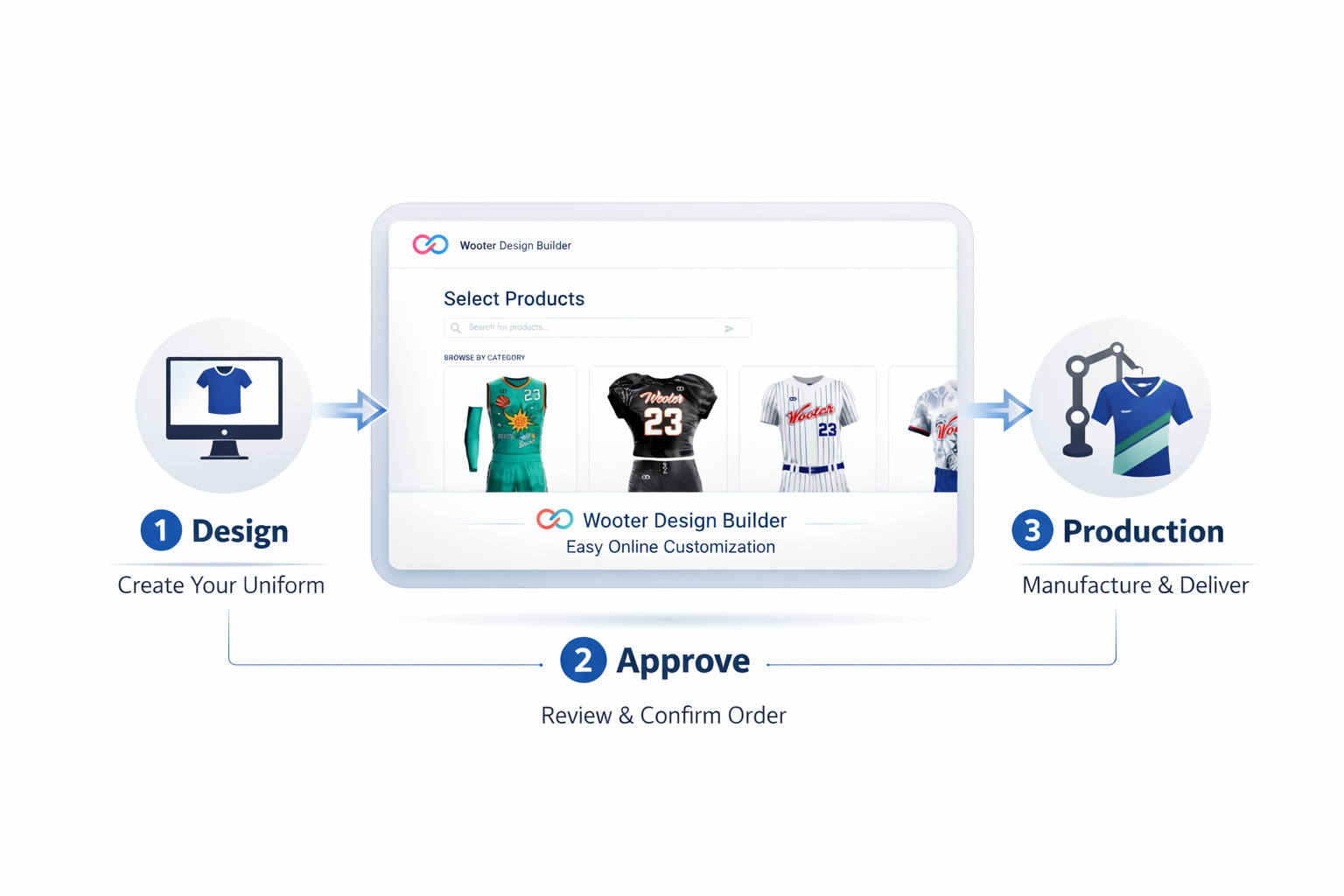
UniformsOS supports a structured workflow from mockup approval through production stages and shipment. That matters because most mistakes are not “design mistakes.” They are process mistakes.
When the order stays organized, you reduce:
Most teams do not have a mockup problem. They have an approval discipline problem. A structured workflow supports a checkpoint mindset, where the mockup is treated as the final gate before production.
Deadline failures usually start before production. Rosters run late. Revisions stack up. Approvals slip. A staged process helps you manage the real bottleneck early instead of discovering it when time runs out.
Players join late. Sizes change. Jerseys get lost. When your original specs stay organized, reorders become repeatable instead of stressful, and you avoid mismatched replacements.