
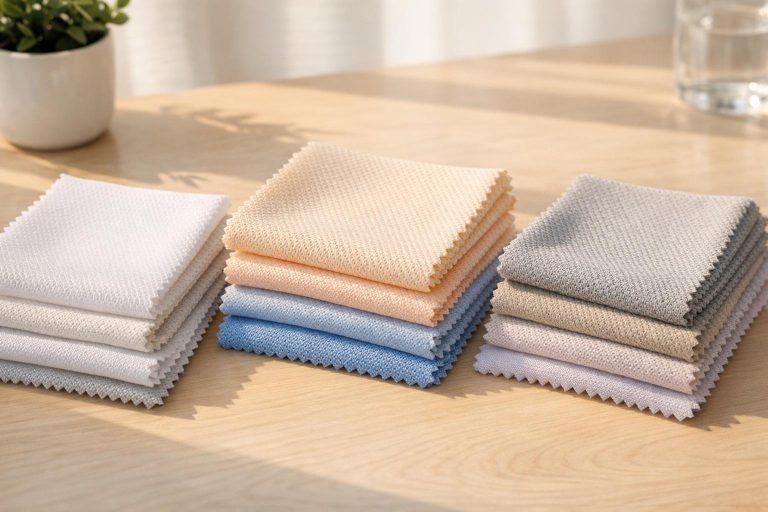
When selecting team uniforms, choosing breathable fabrics is key to improving comfort and performance. Here’s why it matters and what to look for:
- Breathability: Allows air to flow, keeping players cool and preventing overheating.
- Moisture-Wicking: Moves sweat away from the skin for faster evaporation, keeping uniforms light and dry.
- Durability: Synthetic fabrics like polyester resist wear, shrinking, and fading, making them ideal for intense sports.
- Flexibility: Materials like spandex or blends support unrestricted movement, crucial for agility and performance.
Quick Tips for Choosing the Right Fabric:
- Polyester: Great for moisture-wicking and durability, perfect for general training and games.
- Nylon: Offers stretch and abrasion resistance, ideal for base layers or contact sports.
- Blends (Polyester-Spandex): Combine moisture control with flexibility for sports requiring dynamic movement.
- Mesh: High ventilation for hot conditions, suitable for football or summer leagues.
- Natural Options (Cotton, Merino Wool): Soft and breathable but less effective for moisture control in high-intensity sports.
For warm climates, prioritize lightweight, moisture-wicking fabrics like polyester. In colder conditions, consider insulated options like merino wool. Always match fabric choice to the sport’s demands and local weather to ensure athletes perform comfortably.
Key Features of Breathable Fabrics for Team Sports
When selecting fabrics for team uniforms, three main features play a crucial role in ensuring athletes stay comfortable and perform at their peak. These features work hand in hand to enhance comfort and functionality across various sports.
Moisture-Wicking and Quick-Drying Properties
Top-notch performance fabrics rely on capillary action to draw sweat away from the skin and transfer it to the fabric’s outer layer, where it evaporates swiftly. Early advancements like CoolMax® set the stage for moisture management, and now, 100% polyester engineered for moisture-wicking is a staple in performance wear.
Unlike cotton, which tends to hold onto moisture, engineered synthetic fabrics repel water quickly, helping athletes stay dry. These fabrics are crafted with microfibers – typically between 0.5 and 1.5 dtex – that increase the surface area for effective capillary action. This process ensures sweat is pulled from the skin and evaporates quickly, leaving uniforms light and comfortable.
"Moisture-wicking pulls sweat from your skin to keep you comfortable. Quick-dry sheds water faster, making fabric ready for repeat use in less time. Breathable ensures heat and vapor escape, giving you a cooling effect and preventing skin irritation." – Ninghow
For moisture-wicking to work effectively, the garment needs to fit snugly against the skin. Looser fits can disrupt the capillary process.
Durability and Resistance to Wear
Team uniforms face constant wear and tear – from frequent washing to intense physical activity. Synthetic fibers like polyester are a popular choice for athletic wear because they’re resistant to shrinking, staining, and fading.
In high-contact sports like football, mesh fabrics are favored for their strength and ability to withstand stress. Additionally, many modern performance fabrics come with anti-microbial and stain-resistant treatments, which are especially important in sweat-heavy environments. Polyester Interlock fabrics, with their tight weave, are specifically designed to resist snagging.
Natural fibers such as cotton and wool, while comfortable, are prone to shrinking, staining, and fading over time. In contrast, polyester retains its look and performance even after numerous washes. This durability not only saves money on replacements but also keeps uniforms looking professional, boosting team morale and confidence. Flexibility is another critical factor – durable fabrics must still allow athletes to move freely during play.
Fit and Flexibility for Movement
A breathable fabric is only effective if it supports unrestricted movement. Modern performance fabrics often include Spandex or Elastane, which provide stretch and recovery, allowing athletes to move freely and perform at their best. Some 100% polyester fabrics achieve flexibility through "mechanical stretch" or specialized knit patterns, such as two-way or four-way stretch, without adding unnecessary weight.
The right fabric choice depends on the sport. For activities like wrestling, cycling, or volleyball, polyester-Spandex blends deliver excellent elasticity and a snug fit. In contrast, for sports like football or hockey, heavier mesh fabrics offer the durability needed without compromising mobility. The goal is to match the fabric’s flexibility to the demands of the sport while maintaining breathability.
| Fabric Type | Key Feature | Best Use Case |
|---|---|---|
| Polyester | Moisture-wicking & shape retention | General training and game jerseys |
| Nylon | Abrasion resistance & stretch | Contact sports and compression base layers |
| Spandex Blend | Maximum flexibility & recovery | Wrestling, cycling, and form-fitting uniforms |
| Mesh | High ventilation & tensile strength | Football jerseys and high-heat environments |
Common Fabric Options for Team Uniforms
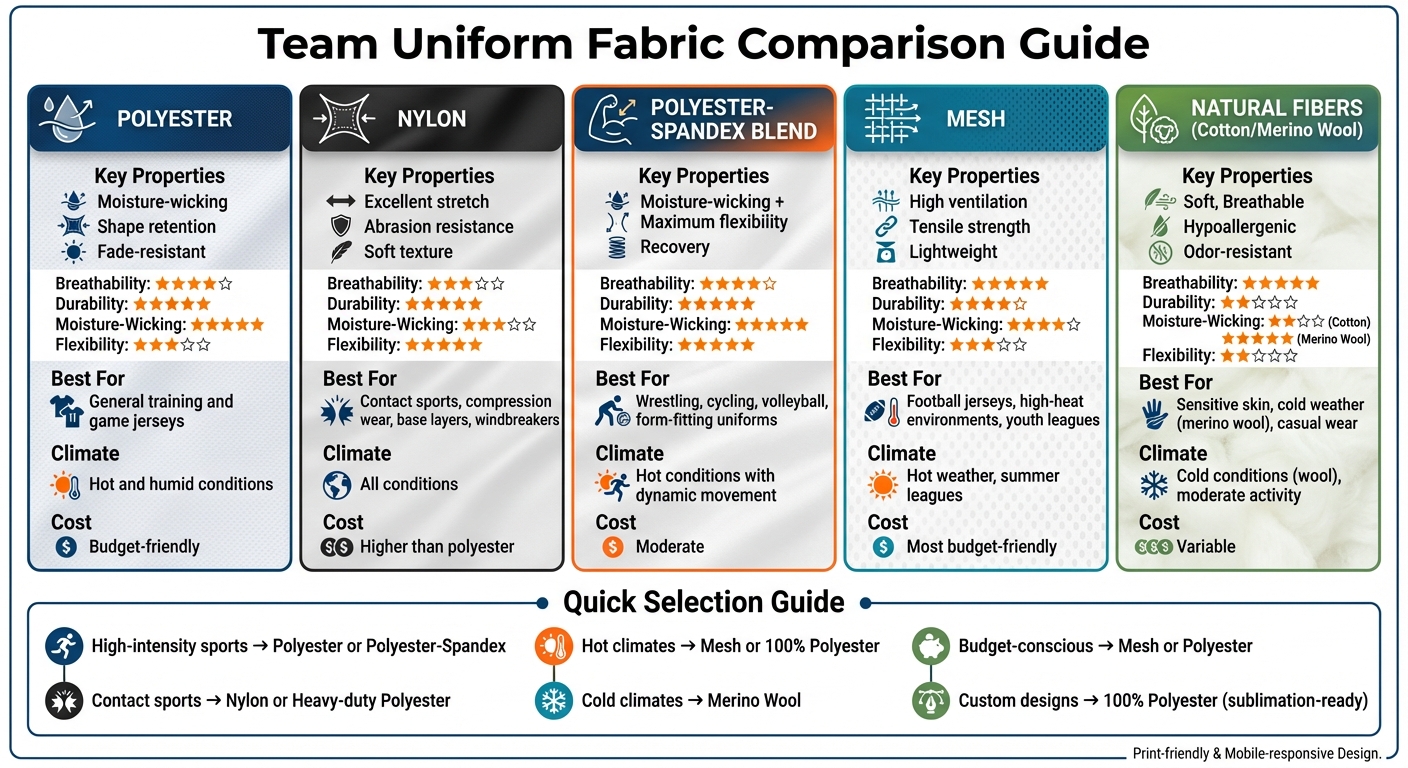
Team Uniform Fabric Comparison Guide: Properties and Best Uses
When selecting fabrics for team uniforms, understanding the options available can help you choose the best material for performance, comfort, and durability.
Synthetic Fabrics: Polyester and Nylon
Polyester is a go-to choice for team uniforms, thanks to its moisture-wicking properties and long-lasting durability. It resists shrinking, fading, and staining, maintaining its shape even after countless washes and rigorous activity. Many performance-focused fabrics are made entirely of polyester, offering breathability without relying on perforations. For teams with tighter budgets, such as youth leagues or summer camps, polyester mesh provides a tough yet affordable solution.
Nylon, on the other hand, is prized for its excellent stretch and recovery, making it a favorite for compression wear and base layers. It’s soft, breathable, and allows cool air to reach the skin, making it comfortable for athletes. Its outstanding abrasion resistance also makes it perfect for items like windbreakers and tracksuits. However, nylon tends to be less commonly used for standard jerseys and can be pricier compared to polyester.
Natural Fabrics: Cotton and Merino Wool
Natural fibers like cotton and merino wool come with their own set of advantages and challenges. Cotton provides great air circulation and feels soft against the skin. However, it absorbs moisture, which can weigh down garments during intense activity, and it doesn’t hold up as well to frequent washing.
Merino wool stands out for its ability to insulate in colder weather while staying breathable in warmer conditions. But, like cotton, it absorbs moisture and dries slowly, making it less practical for high-intensity sports. One area where natural fibers shine is odor control, as they naturally resist bacteria build-up. They’re also a great option for athletes with sensitive skin, offering a hypoallergenic alternative.
Next, let’s look at how blending fibers can address some of these limitations.
Blended Fabrics and Advanced Technologies
Blended fabrics combine the strengths of different materials to enhance performance. For example, polyester-spandex blends offer effective moisture-wicking paired with the stretch athletes need for unrestricted movement. Adding nylon to the mix can further improve breathability and abrasion resistance. Spandex, known for its ability to stretch up to 100 times its original size, is often incorporated into blends with polyester or nylon to create flexible, lightweight garments.
"Real magic happens when you combine materials. A polyester-spandex blend gives you moisture-wicking with just enough stretch. Add some nylon, and you’ve got a fabric that offers maximum breathability." – Gator Gross
Modern techniques take performance to the next level by introducing features like mesh panels, side vents, and zippered air vents in high-heat areas to improve airflow and reduce fatigue. Uniforms now often include functional upgrades such as UV protection, odor-resistant treatments, and wrinkle resistance. Plus, sublimation printing on synthetic blends allows for vibrant, long-lasting colors without affecting breathability.
sbb-itb-4d95ad3
How to Evaluate Fabrics for Your Team’s Needs
When selecting fabrics for your team, think performance first. A basketball team in Arizona will need something entirely different from a football team braving the cold in Minnesota.
Matching Fabrics to Sport-Specific Demands
Start by considering how your athletes move and the physical demands of their sport. For instance, basketball players thrive in loose, breathable apparel that allows for quick cuts and high jumps. Cyclists and runners, on the other hand, benefit from snug-fitting fabrics that stay out of the way of their equipment. High-contact sports like football demand abrasion-resistant materials, such as nylon or heavy-duty polyester, to handle the rough and tumble of tackles and constant physical contact.
For sports that involve intense physical exertion, synthetic fabrics that wick moisture away from the skin are essential. This keeps athletes comfortable by preventing sweat-soaked, clingy uniforms. Outdoor sports come with their own set of challenges – look for fabrics with UV protection or water-resistant coatings to shield athletes from the elements.
Considering Climate and Weather Conditions
Once you’ve nailed down the sport-specific needs, it’s time to factor in the climate. In hot and humid environments, fabrics need to do more than breathe – they should actively pull moisture away from the skin and promote rapid evaporation. Performance fabrics made from 100% polyester are a go-to for these conditions, thanks to their moisture-wicking capabilities. Traditional mesh is another great option for hot weather, offering maximum ventilation at a budget-friendly price – perfect for youth leagues or summer camps.
In cooler or unpredictable weather, Merino wool is a standout choice. It combines breathability with excellent insulation and naturally wicks moisture. For teams facing wind or rain, nylon or polyester shells with water-resistant properties provide protection while maintaining breathability. The trick is to match the weight and construction of the fabric to the typical playing conditions.
Balancing Cost, Quality, and Customization
Performance matters, but budget and customization are also key. You don’t have to overspend to get good results. Mesh fabrics, for example, are durable, breathable, and affordable. If you’re looking for a more polished appearance, interlock polyester offers a heavier feel and higher quality at a slightly higher price. For teams aiming for vibrant, custom designs, 100% polyester is ideal for sublimation printing. This process bonds ink directly to the fibers, ensuring designs won’t peel or fade.
Before committing, request fabric samples to evaluate texture, stretch, and GSM (grams per square meter) – a reliable measure of fabric weight and performance. Companies like Wooter Apparel offer fully sublimated custom designs starting at $16.99 per item, making professional-quality uniforms accessible without stretching your budget.
"The right fabric isn’t just clothing – it’s a performance booster." – Custom Team Gears
Conclusion: Choosing the Right Fabric for Your Team
When it comes to team uniforms, the right fabric can make all the difference. Fabrics that excel in managing moisture, offering durability, and ensuring comfort are key. Modern polyester stands out by wicking away sweat and drying quickly, which helps avoid the heavy, clingy feel that can come with wool or cotton uniforms. On the other hand, natural fibers like cotton and wool may fade, stain, or shrink over time, making them less dependable for intense sports settings.
The best fabric choice depends on the demands of your sport and the local climate. For high-contact sports, you’ll need heavier, more durable materials that can handle constant wear and tear. Sports that require agility and dynamic movement are better suited for lightweight, stretchy fabrics. In hot climates, breathable materials are essential to keep athletes cool, while colder conditions call for fabrics that provide insulation without compromising moisture control. These considerations should guide your decision-making process.
It’s a good idea to request fabric samples to evaluate how they feel, stretch, and weigh (measured in oz/sq yd). As mentioned earlier, the best performance fabrics strike a balance between these qualities, helping your team perform at its best.
FAQs
Why is polyester a great choice for team uniforms?
Polyester is a great choice for team uniforms thanks to its strength, lightweight feel, and ability to handle intense activity. It holds up against wear and tear, so your uniforms can survive countless practices and games without falling apart.
Another big plus? Polyester is moisture-wicking. It pulls sweat away from the body and dries quickly, keeping athletes cool and comfortable. On top of that, it maintains its shape and color, which means those bold, eye-catching designs will stay vibrant and won’t stretch out or fade. Plus, its odor-resistant feature helps keep uniforms smelling fresh, even after the toughest matches.
What are the benefits of moisture-wicking fabrics for athletes?
Moisture-wicking fabrics work by pulling sweat away from your skin and transferring it to the surface of the material, where it can evaporate quickly. This process helps keep athletes dry, regulate their body temperature, and prevent overheating during intense physical activity.
By minimizing the discomfort of damp, clingy clothing, these fabrics let athletes concentrate fully on their performance. They’re particularly valuable in high-intensity sports where staying cool and comfortable can make all the difference.
What is the best fabric for team uniforms in hot weather?
Polyester is a smart pick for team uniforms in hot weather. Its moisture-wicking and breathable features help players stay cool and dry, even during high-energy games. Plus, polyester is both lightweight and tough, ensuring comfort and durability for extended use on the field.