
Top 10 Mistakes Teams Make When Ordering Custom Uniforms (And How Wooter Prevents Them)

Custom uniform orders do not fail in production. They fail in planning.

One sizing guess triggers reorders. One blurry logo ruins the finish. One rushed approval locks in the wrong names and numbers. Then you waste budget fixing problems that were avoidable from day one.

This guide shows you how to order custom uniforms without the usual mistakes. You will see the 10 issues teams repeat every season, what each one costs, and the fast fix that keeps your order clean.

If you want a smooth season, run the order like a process. Finalize the product first. Measure and lock sizes next. Approve the mockup with discipline. Plan backward from your first game date.

Mistake Teams Make What It Costs The Fix (fast)
Guessing sizes Bad fit and reorders Measure and use the exact product size chart
Rushing mockup approval Wrong names and numbers Use a proof checklist before approval
Ordering too late Missed game dates Plan backward from the first game date
Low-quality logo files Fuzzy, cheap-looking prints Use vector files or high-res PNG
Overdesigning the uniform Unreadable numbers Keep the layout clean and simple
Wrong decoration method Early wear and cracking Match the method to your use case
Ignoring fabric and climate Overheating or poor mobility Choose fabric for sport and season
No reorder plan Emergency reorders Order extras and set a cutoff date
Spreadsheet chaos Wrong sizes and quantities Use one roster source of truth
Skipping checkpoints Problems caught too late Lock roster, approve proof, confirm production

Mistake #1: Guessing Sizes Instead of Measuring Players

What it costs: Bad fit, unhappy players, and reorders that arrive late.

Why it happens: Teams collect sizes too early or guess based on last season. Every product fits differently, so guessing creates problems fast.

Fix: The 15-minute Sizing Workflow

  • Finalize the exact product first. Do not collect sizes until the style is locked.
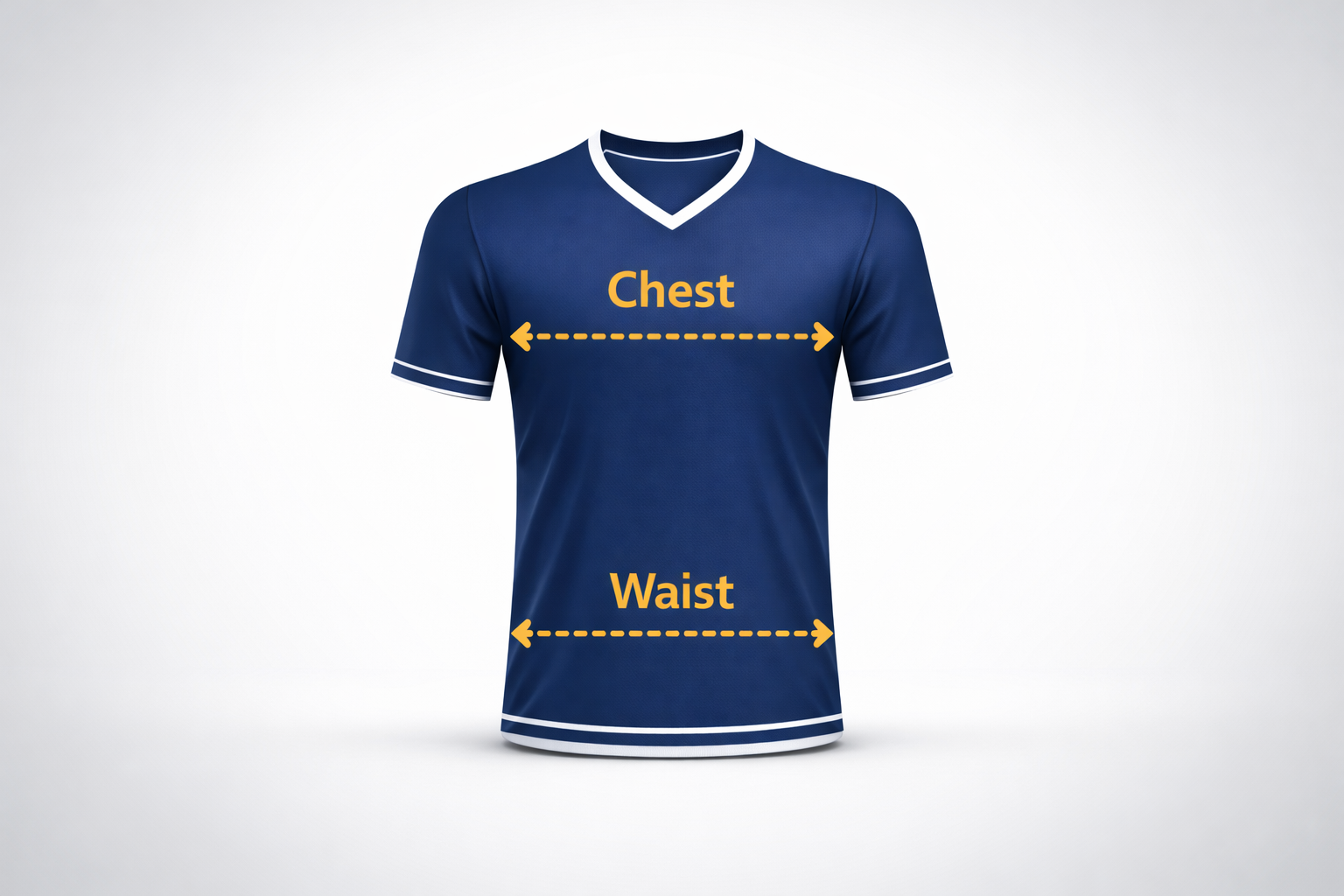
  • Have players measure chest and waist, then match to the product size chart.
  • Set a roster lock date so sizes stop changing before mockup approval.

Quick rule: If the roster is not locked, the order is not ready.

Sport nuance: High-mobility sports punish tight cuts more than you expect.
Mistake #2: Approving the Mockup Without a Proof Checklist

What it costs: Misspelled names, wrong numbers, and bad placement that you only notice after delivery.

Why it happens: Teams review the mockup like a picture. They do not review it like a final production document.

Fix: Use this Proof Checklist Every Time

  • Names: spelling, capitalization, spacing
  • Numbers: correct roster numbers, font, size, contrast, placement
  • Logos: correct file, sharp edges, correct size
  • Colors: strong contrast and clear readability
  • Quantity: correct counts by player and by size
  • Version: approve the latest mockup only

Approval rule: One order owner. One feedback round. Then approve.

Sport nuance: If numbers are not readable from the stands, the design fails.

Mistake #3: Ordering Too Late and Hoping it Works Out

What it costs: Missed game dates and last-minute rush stress.

Why it happens: Rosters run late, revisions stack up, and approvals slip. Then shipping becomes a scramble.

Fix: Plan Backward in 3 Steps

  • Start with your first game date.
  • Reserve time for roster, revisions, approval, production, and shipping.
  • Set an approval deadline and enforce it.

Timeline rule that saves seasons: Build buffer for roster and revisions. Most teams lose time before production even starts because decisions take longer than they expect.

Quick rule: Your delivery depends on when you approve, not when you start talking about uniforms.

If your season start date is close, request a quote early so you can lock pricing, turnaround, and approvals.

Sport nuance: Tournament teams need more buffers than league teams.

Mistake #4: Sending Low-quality Logos and Files

What it costs: Fuzzy prints, pixelated sponsor logos, and a uniform that looks cheap even if the fabric is premium.

Why it happens: Teams send screenshots, tiny PNGs, or social media logos. Small files always look worse when they get printed large.

Fix: Send Print-ready Artwork

  • Best files: AI, SVG, or PDF (vector)
  • PNG is fine if it is high resolution and clean
  • Never use screenshots
  • Keep small sponsor marks simple and high contrast

Print-Ready Logo Standards (Fast Rules)

  • Vector files are best for sharp edges.
  • Avoid thin lines in small sponsor marks.
  • Keep high contrast for small logos.
  • If you only have PNG, avoid logos under 1000 px wide.

Mistake #5: Overdesigning the Uniform

What it costs: A busy uniform, unreadable numbers, and a design that looks messy in photos.

Why it happens: Teams stack patterns, gradients, outlines, and multiple fonts in one layout. Every extra element competes with names and numbers.

Fix: 3 Rules for a Clean, Premium Look

  • Pick one hero element. Use a pattern or a gradient, not both.
  • Use one number font and one name font. Keep it consistent.
  • Prioritize readability from distance. Numbers come first.

Quick rule: If the numbers are hard to read, the design fails.

Mistake #6: Choosing the Wrong Decoration Method

What it costs: Peeling names, cracked numbers, heavy logos, and uniforms that look worn too early.

Why it happens: Teams choose a print method based on price, not performance. The cheapest option is not always the best long-term option.

Fix: Match the Method to the Job

  • Full-color designs: sublimation is usually the safest choice for durability.
  • Simple builds: heat press can work, but durability varies by use and care.
  • Small premium marks: embroidery works best in limited areas.

If you want a sharp, game-ready kit that holds up, check Wooter’s basketball uniforms.

Mistake #7: Ignoring Fabric, Climate, and Fit Needs

What it costs: Overheating, restricted movement, and a uniform players do not enjoy wearing.

Why it happens: Teams choose the design first and forget conditions. Indoor and outdoor needs differ. Summer and winter needs differ. Contact-heavy play needs more durability.

Fix: Pick Fabric for Your Real Environment

  • Hot weather: prioritize breathability and lighter feel.
  • Cold weather: plan warmups and layers instead of heavier jerseys.
  • Contact-heavy play: prioritize durability and stable fit.

Fabric choices matter most in heat and high movement. For breathable kits, explore Wooter’s soccer uniforms.

Mistake #8: No Plan for Roster Changes and Reorders

What it costs: Emergency reorders, mismatched replacements, and avoidable extra spend.

Why it happens: Teams order the exact roster with zero buffer, then panic when players join late or sizes change.

Fix: Simple Reorder-Proof Strategy

  • Order 1 to 2 extra uniforms in the most common sizes.
  • Set a roster cutoff date for guaranteed delivery.
  • Save the final design specs so reorders match.

Quick rule: If your roster can change, your order needs a buffer.

If your roster changes mid-season, your reorder plan matters. For consistent matching, check Wooter’s baseball uniforms.

Mistake #9: Running the Order Through Spreadsheets and Email Chaos

What it costs: Wrong quantities, wrong sizes, and approvals on the wrong mockup version.

Why it happens: Updates happen in multiple places. One person changes a name in chat. Another updates a sheet. Nobody knows what is final.

Fix: One-owner Workflow

  • Assign one order owner who controls final updates.
  • Use one roster sheet as the single source of truth.
  • Lock changes before mockup approval.

Quick rule: Version control beats group chat every time.

Mistake #10: Skipping Checkpoints and Discovering Problems Too Late

What it costs: Fixes become expensive or impossible once production starts.

Why it happens: Teams rush, assume someone else reviewed details, or approve before sizes and roster are truly final.

Fix: Set 3 Checkpoints and Do Not Skip Them

  • Checkpoint 1: roster locked (names, numbers, sizes final)
  • Checkpoint 2: proof approved (checklist completed)
  • Checkpoint 3: production confirmed (quantities and delivery window verified)

Quick rule: If you skip checkpoints, you find mistakes when it is too late to fix them.

How Wooter Prevents These Mistakes With a Structured Workflow?

Most uniform orders break for one reason. Too many moving parts live in too many places.

Sizes sit in a spreadsheet. Logos sit in someone’s WhatsApp. The “final” mockup sits in an email thread. Then someone approves the wrong version and you pay for it in reorders, delays, and frustration.

Wooter’s advantage is process. They push teams to make the important decisions earlier, when changes are easy and mistakes are cheap.

The Custom Uniform Builder Removes Guesswork Before the Mockup Stage

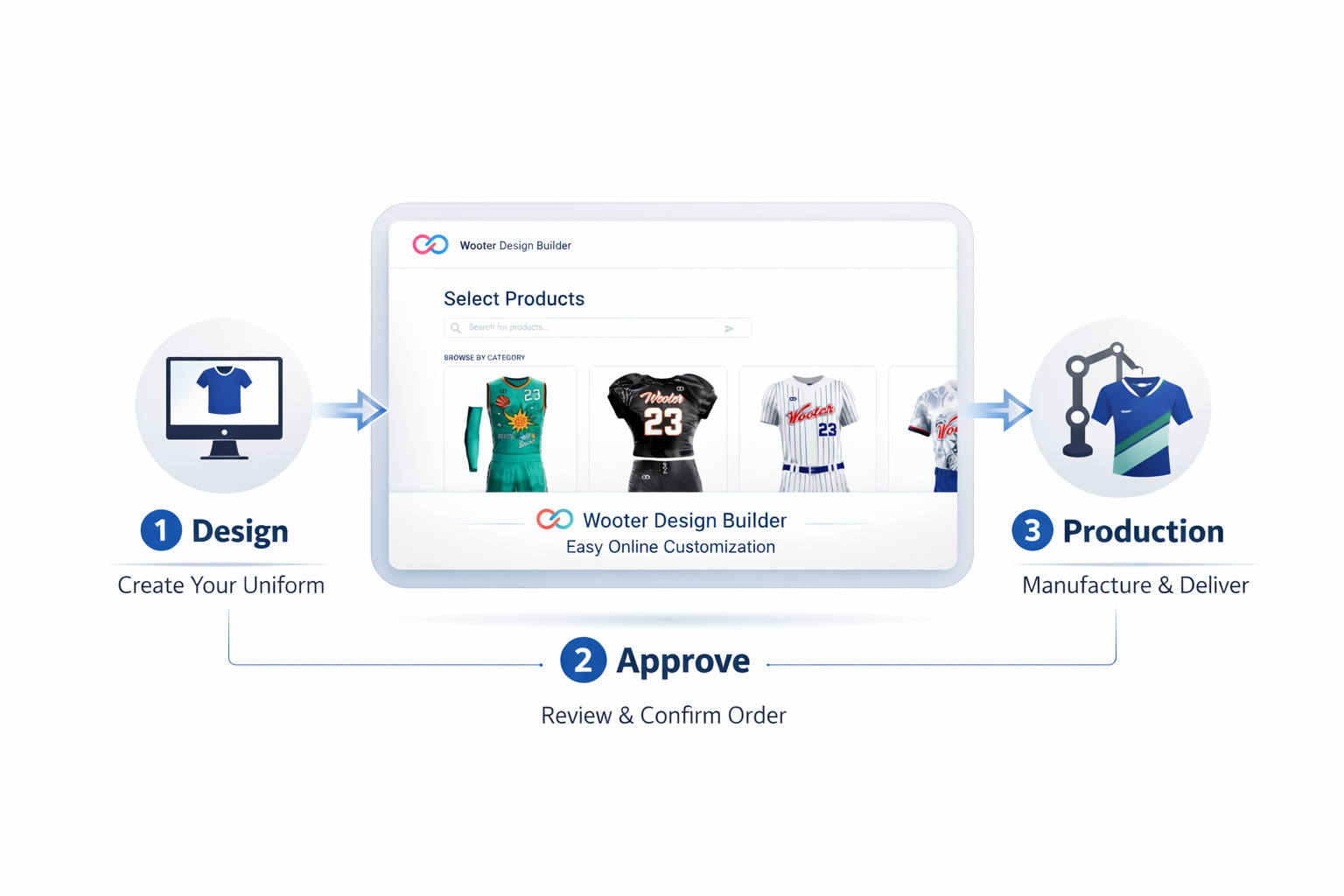
Wooter’s Custom Uniform Builder is a real advantage because it forces clarity early. Instead of explaining your design in messages, you can build the uniform with your colors, layout, and customization in mind before you approve anything.

That prevents the most common problems teams create accidentally:
  • Overdesigned layouts that bury the numbers
  • Wrong logo scale or awkward placement
  • Endless revisions that delay approval and push delivery late

UniformsOS Keeps the Order Organized When Teams Usually Lose Control

UniformsOS supports a structured workflow from mockup approval through production stages and shipment. That matters because most mistakes are not “design mistakes.” They are process mistakes.

When the order stays organized, you reduce:

  • version confusion
  • skipped checkpoints
  • rushed approvals
  • reorder mismatches

Approvals Become Checkpoints, Not Rushed Thumbs-ups

Most teams do not have a mockup problem. They have an approval discipline problem. A structured workflow supports a checkpoint mindset, where the mockup is treated as the final gate before production.

Stage Visibility Protects Your Deadline

Deadline failures usually start before production. Rosters run late. Revisions stack up. Approvals slip. A staged process helps you manage the real bottleneck early instead of discovering it when time runs out.

Reorders Stay Consistent When the Roster Changes

Players join late. Sizes change. Jerseys get lost. When your original specs stay organized, reorders become repeatable instead of stressful, and you avoid mismatched replacements.


FAQs: Custom Uniform Ordering Process

How long do custom uniforms take?

It depends on how fast you finalize the roster and approve the mockup. Start early so revisions and roster delays do not crush your deadline.

Order as soon as you know your season start date. The earlier you lock sizing and approve the proof, the smoother everything becomes.

Guessing sizes before the product is finalized. Pick the exact uniform first, then measure and match the correct size chart.

Vector files are best. Use AI, SVG, or PDF. If you only have PNG, use the highest resolution version with clean edges.

Use a proof checklist and approve once with a single order owner. Do not approve mockups in a group chat.

Sublimation is usually the safer choice for full-color designs because the graphics become part of the fabric. Heat press can work, but durability depends on use and care.

Yes, matching is easiest when your original specs stay consistent. Save the final art, fonts, and placement details from the first order.

Yes. Order 1 to 2 extras in common sizes if your roster might change. This avoids emergency reorders later.

Late roster collection and slow approvals. Production is only one part of the timeline.

 Confirm the roster is locked, numbers are readable, logos are print-ready, colors are intentional, and your timeline still works.

Want to Order Custom Uniforms Without Mistakes?

Most uniform problems are preventable. You just need a clean workflow before production starts.

If you want a smooth order, focus on three things:

  • Lock sizes using the exact product chart
  • Send print-ready logos, not screenshots
  • Approve the mockup with a checklist, not a quick glance

When you handle sizing, approvals, and timelines with discipline, everything else becomes easier.