
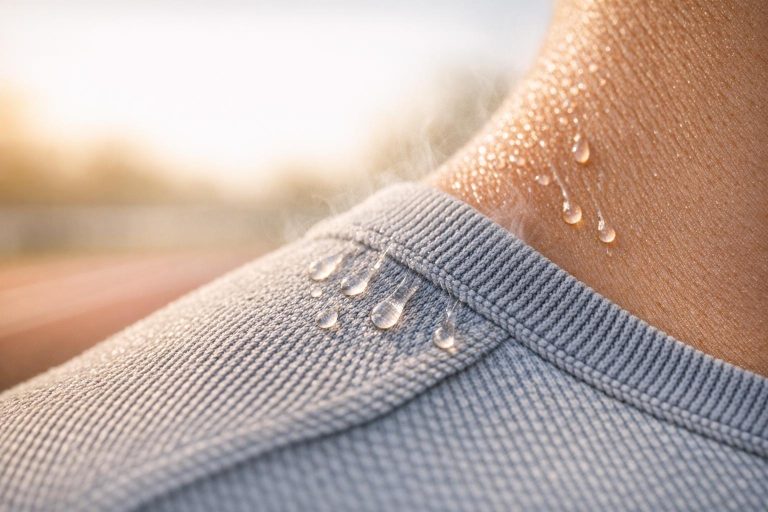
Moisture-wicking fabrics are designed to keep you dry and comfortable during physical activity by pulling sweat away from your skin and allowing it to evaporate quickly. Unlike cotton, which absorbs moisture and becomes heavy, these fabrics use synthetic materials like polyester or nylon to resist water absorption. This keeps athletes cool, reduces chafing, and helps maintain optimal body temperature even in hot or humid conditions.
Key Takeaways:
- Sweat Management: Moves sweat to the fabric’s surface for faster evaporation.
- Material Advantage: Synthetic fibers like polyester absorb less than 1% of moisture, compared to cotton’s 8.5%.
- Performance Benefits: Helps regulate body temperature, reduces skin irritation, and stays lightweight.
- Care Tip: Avoid fabric softeners to maintain effectiveness.
Moisture-wicking fabrics are a smart choice for athletes looking to stay dry, comfortable, and focused during intense activities.
Moisture Wicking Clothing Explained
What Are Moisture-Wicking Fabrics?
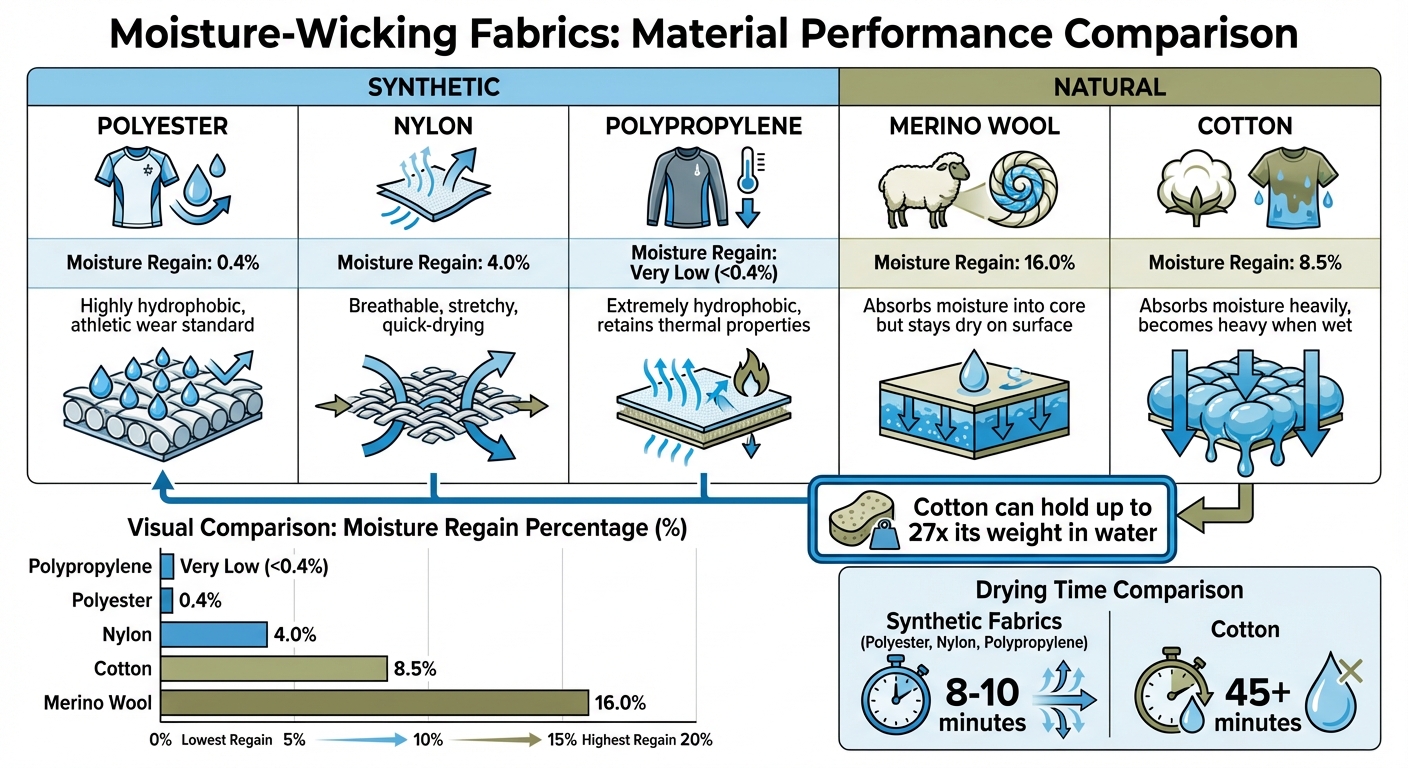
Moisture-Wicking Fabrics vs Cotton: Performance Comparison Chart
Moisture-wicking fabrics are designed to pull sweat away from your skin and speed up its evaporation process. Unlike ordinary fabrics that soak up moisture, these materials work like a transport system, moving sweat outward and drying quickly to keep you comfortable. The main goal is to keep your skin dry while preventing the fabric from becoming saturated.
These fabrics are typically made from synthetic fibers like polyester, nylon, and polypropylene. These materials are hydrophobic, meaning they resist absorbing water. Instead of holding onto sweat, they guide it along the surface of the fibers. Some advanced options even include merino wool, which has a naturally crimped structure that offers unique moisture-wicking properties.
| Material | Type | Moisture Regain | Key Characteristics |
|---|---|---|---|
| Polyester | Synthetic | 0.4% | Highly hydrophobic; often used in athletic wear |
| Nylon | Synthetic | 4.0% | Breathable, stretchy, and quick-drying |
| Polypropylene | Synthetic | Very Low | Extremely hydrophobic; retains thermal properties |
| Merino Wool | Natural | 16.0% | Absorbs moisture into its core but stays dry on the surface |
| Cotton | Natural | 8.5% | Absorbs moisture heavily, making it heavy when wet |
For context, polyester absorbs just 0.4% of moisture, while cotton soaks up 8.5%. This difference explains why synthetic fabrics keep you dry during intense activity, while cotton can leave you feeling sticky and weighed down.
How Moisture-Wicking Works
The magic behind moisture-wicking lies in capillary action, which refers to the movement of liquid through tiny spaces in the fabric due to molecular forces. When sweat touches the fabric, adhesion (the attraction between water and the fibers) pulls the moisture along the surface. For this to work well, the adhesion must overpower cohesion (the attraction between water molecules).
"The finer the diameter, the more individual fibers you can get in one yarn, which means more tiny channels that sweat can run along." – Janet Brady, Associate Professor of Materials Technology, Thomas Jefferson University
Some advanced fabrics enhance this process by using engineered fiber shapes, such as triangular or cross-shaped profiles. These designs create tiny pores and channels that speed up moisture movement compared to standard round fibers. High-performance fabrics often feature a "push-pull" mechanism: a hydrophobic inner layer that repels sweat from your skin and a hydrophilic outer layer that draws it outward for quicker evaporation.
Before any wicking happens, the fabric must first go through "wetting", where air on the surface is replaced by liquid sweat. To speed this up, some manufacturers add hydrophilic chemical treatments to the skin-facing side of the fabric, ensuring sweat enters the wicking channels faster.
This clever engineering is what sets moisture-wicking fabrics apart from traditional materials, as explored in the next section.
Moisture-Wicking vs. Cotton and Other Fabrics
When comparing moisture-wicking fabrics to traditional materials like cotton, the differences are striking – especially for athletes. Cotton is hydrophilic, meaning it absorbs moisture into its fibers, where it stays trapped. This is why a cotton shirt feels heavy, sticky, and takes forever to dry after a workout. In fact, cotton can hold up to 27 times its weight in water, leaving you with that uncomfortable, damp sensation.
"Instead of soaking in like a sponge, the fibers act like tiny water slides, moving moisture along and helping you stay dry." – Kerry Ryan, Fashion Designer and Adjunct Associate Professor, Pratt Institute
Synthetic moisture-wicking fabrics, on the other hand, are hydrophobic. They resist water absorption, keeping moisture on the surface where it spreads out and evaporates quickly. This keeps synthetic fabrics light, dry, and comfortable, even during intense physical activity.
One essential tip: don’t use fabric softeners when washing moisture-wicking clothes. Fabric softeners leave a waxy residue that clogs the tiny channels and pores, reducing the fabric’s ability to wick moisture effectively.
Benefits of Moisture-Wicking Fabrics for Athletes
Now that we’ve covered how moisture-wicking fabrics work, let’s dive into the real-world advantages they offer during workouts and competitions.
Better Comfort During Exercise
Moisture-wicking fabrics excel at keeping you dry and lightweight by pulling sweat to the fabric’s surface for quick evaporation. Unlike cotton, which holds onto moisture and becomes heavy, these fabrics create a dry, comfortable feel. This means athletes can stay focused without being distracted by sticky, damp clothing. By managing the microclimate – the thin layer of air between your skin and clothing – these fabrics help reduce humidity buildup, keeping you fresher even during intense workouts.
"The result is that you’re more comfortable because your body can regulate its temperature efficiently and the fabric touching your skin has a dry, nonsticky feel."
- Ken Knapp, Editor Emeritus, REI
This comfort also plays a key role in maintaining better thermal regulation throughout your activity.
Better Temperature Control
One standout feature of moisture-wicking fabrics is their ability to regulate body temperature. By speeding up sweat evaporation, these materials help cool your body and reduce cardiovascular strain. This cooling effect is especially helpful in hot, humid conditions, where advanced moisture-wicking polyester has been shown to boost exercise capacity by 8%, while also lowering skin temperature and perceived exertion. Additionally, these fabrics prevent the post-workout chill that often comes with sweat-soaked cotton, keeping you comfortable even after you’ve stopped moving.
Less Chafing and Skin Irritation
Because moisture-wicking fabrics keep sweat away from your skin, they reduce friction and minimize chafing. This also discourages bacterial growth and lowers the risk of skin irritation.
"Moisture-wicking fabric can be a crucial element to keeping you cool and dry, allowing you to push yourself a little harder without overheating."
- Bert Mandelbaum, MD, Sports Medicine Specialist, Cedars-Sinai Orthopaedics
For athletes who train daily or compete in back-to-back events, this reduced friction and irritation can mean the difference between enduring discomfort and performing at their best.
sbb-itb-4d95ad3
The Science Behind Moisture-Wicking Performance
Fiber Technology and Design
Moisture-wicking fabrics rely on specially engineered fibers to keep you dry and comfortable. Many of these fibers have unique shapes – like triangular, cross-shaped, or U-shaped – that create tiny pores. These micropores help sweat move quickly through the fabric using capillary action, speeding up the drying process.
Most of these fabrics are made from hydrophobic materials like polyester or nylon, which repel water instead of soaking it up. This forces sweat to travel across the surface of the fibers to the outer layer, where it can evaporate. Some advanced designs even use a dual-layer system: a hydrophobic inner layer pushes sweat away from the skin, while a hydrophilic outer layer pulls it outward for faster evaporation. As the sweat evaporates, your body cools down because heat is absorbed during the process.
These innovations in fiber design aren’t just clever – they deliver real, measurable benefits.
Performance Metrics: Drying Time and Moisture Retention
The impact of these design breakthroughs can be seen in how well these fabrics perform under stress.
Take, for example, a study from Western Michigan University conducted in November 2014. Researchers tested 10 healthy men wearing different shirts during 45 minutes of exercise at 50% VO2peak in 91°F (33°C) heat with 60% humidity. Participants wearing synthetic shirts made of 81% polyester and 19% elastane retained less sweat and had lower core rectal temperatures in the final 15 minutes of exercise compared to those wearing 100% cotton shirts.
When it comes to drying time, synthetic fabrics with microporous designs dry in just 8–10 minutes, while cotton takes over 45 minutes. Fabric construction also plays a role: interlock knit fabrics are better at transferring heat, sweat, and air compared to jersey knits, which tend to trap moisture and heat. These differences highlight how fabric design can dramatically improve comfort and performance.
Using Moisture-Wicking Fabrics in Team Uniforms
How Moisture-Wicking Uniforms Help Team Performance
Moisture-wicking uniforms can make a noticeable difference in how athletes perform, especially during high-pressure moments. Unlike traditional fabrics that hold onto sweat, these advanced materials stay light and dry, keeping players agile and focused – even during the most intense parts of a game, like the fourth quarter of basketball or extra innings in baseball.
One of the standout benefits of moisture-wicking fabrics is their ability to regulate body temperature. In hot weather, they speed up sweat evaporation, helping players cool down more efficiently. In colder or rainy conditions, they prevent the chilling effect caused by wet fabric clinging to the skin. Research backs this up: body-mapped designs – where moisture-wicking materials are strategically placed in high-sweat areas like the chest, shoulders, and back – can lower skin temperature increases by 47% in the chest and 55% in the back, while also reducing heart rate spikes by 5.1% during physical activity.
These fabrics use micro-fine fibers that create extra pathways for sweat to escape, helping them dry faster. Combined with excellent air circulation, this design ensures players stay comfortable and focused when it matters most. When applied to team uniforms, these features not only improve comfort but also give athletes the edge they need to perform at their peak.
Custom Team Uniforms with Wooter Apparel

Wooter Apparel takes this game-changing technology and brings it to life in custom team uniforms. They offer fully sublimated designs made from high-performance polyester blends that wick away moisture, keeping players dry and comfortable. Whether it’s basketball, soccer, baseball, softball, or football, Wooter’s uniforms are built for optimal performance. Plus, they’re competitively priced, with full team packages starting at $199.99.
Teams can also take advantage of free custom design services, creating one-of-a-kind looks that incorporate cutting-edge moisture-wicking technology. From reversible jerseys to custom warmup gear, every piece is designed with performance in mind, ensuring athletes stay cool, dry, and ready to dominate the competition.
Conclusion
Moisture-wicking fabrics are a game-changer for athletes, helping them stay dry while lowering core temperatures. This reduces cardiovascular strain and improves oxygen delivery, which can directly impact athletic performance. Research also shows that synthetic shirts outperform cotton when it comes to regulating body temperature. This enhanced temperature control opens the door to additional health benefits that boost overall performance.
These fabrics also promote better skin health. Unlike cotton, they remain lightweight and reduce friction, minimizing chafing and skin irritation. Plus, polyester’s low moisture retention prevents that sticky, uncomfortable feeling that can distract athletes during intense activity.
For teams looking to step up their game, moisture-wicking uniforms offer a real competitive edge. Wooter Apparel delivers fully sublimated custom uniforms that combine cutting-edge performance technology with sleek designs. Complete team packages start at $199.99 and are available for all major sports. These uniforms are specifically designed to help athletes manage heat stress and stay comfortable, even during extended periods of activity. When it comes to performance, choosing the right fabric can make all the difference.
FAQs
What makes moisture-wicking fabrics better than cotton for staying dry?
Moisture-wicking fabrics work by drawing sweat away from your skin and allowing it to evaporate quickly. This helps you stay dry and comfortable, even during intense physical activity. On the other hand, cotton tends to absorb sweat and hold onto moisture, which can leave the fabric feeling wet, heavy, and uncomfortable.
When athletes stay dry, they can focus better and perform at their best. These fabrics also assist in regulating body temperature and minimizing the irritation caused by damp clothing. That’s why they’ve become a go-to option for sportswear and activewear.
How can I properly care for moisture-wicking fabrics to keep them performing their best?
To keep your moisture-wicking fabrics in great shape, wash them in cold water – no warmer than 86°F – using a gentle detergent. Skip the fabric softeners and harsh chemicals, as they can interfere with the fabric’s ability to manage moisture effectively. Air drying is the best option, but if you’re short on time and need to use a dryer, opt for a low-heat setting to avoid any damage.
Always check the care instructions from the manufacturer to ensure you’re treating the fabric correctly. Taking these steps not only preserves the fabric’s moisture-wicking abilities but also helps your gear last longer, so you can stay dry and comfortable during every workout or game.
How do moisture-wicking fabrics help athletes perform better in any weather?
Moisture-wicking fabrics play a key role in keeping athletes dry and comfortable, no matter the weather. These fabrics work by pulling sweat away from the skin and allowing it to evaporate quickly. In hot conditions, this helps regulate body temperature, preventing overheating and reducing fatigue. When it’s cold, staying dry helps avoid chills, so athletes can stay comfortable and perform consistently.
Typically made from materials like polyester or nylon, these fabrics are lightweight, breathable, and designed to promote sweat evaporation. Whether you’re training under a blazing sun or competing in cooler temperatures, moisture-wicking fabrics help you stay focused and comfortable, so you can bring your A-game.