
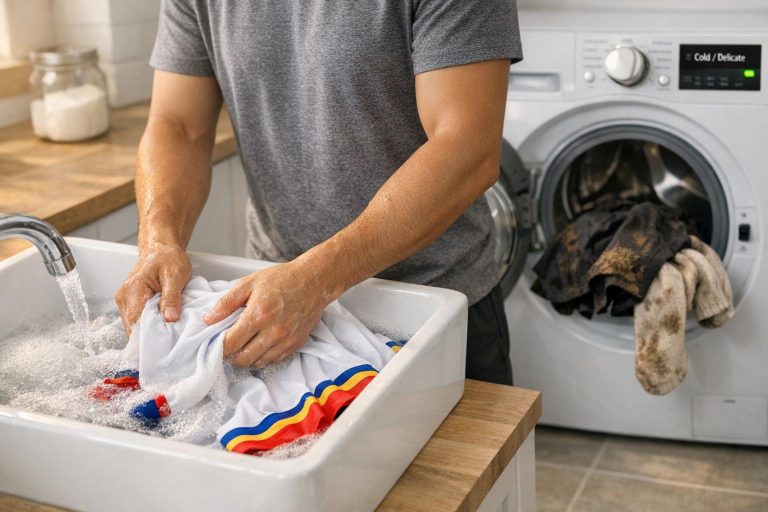
When it comes to cleaning sports uniforms, the choice between handwashing and machine washing depends on the type of fabric, design, and time available. Handwashing is ideal for delicate or custom sublimated uniforms, protecting details like logos, vinyl pressings, and vibrant colors. Machine washing, on the other hand, offers efficiency for durable fabrics and heavily soiled gear but requires proper settings to avoid damage.
Key Points:
- Handwashing: Best for preserving delicate designs and fabrics; time-intensive but gentle.
- Machine Washing: Convenient for large loads; use cold water, delicate cycles, and avoid high heat to protect uniforms.
Quick Comparison:
| Method | Pros | Cons | Best For |
|---|---|---|---|
| Handwashing | Gentle on fabrics; protects designs | Time-consuming; not practical for many items | Custom uniforms, delicate fabrics |
| Machine Washing | Efficient; handles tough stains well | Can cause wear, peeling, or stretching | Durable fabrics, large quantities |
For the best results, always turn uniforms inside out, avoid fabric softeners, and air dry to maintain their quality and performance.
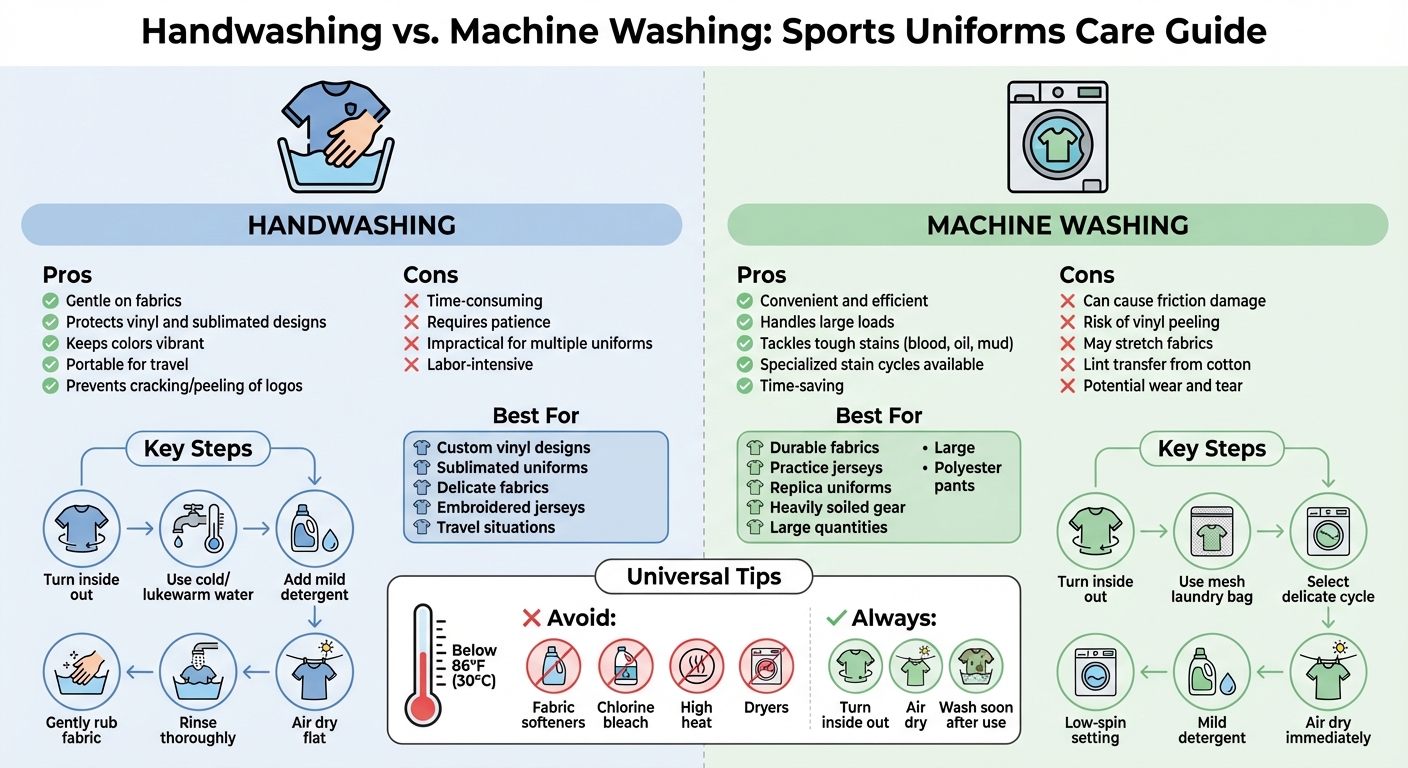
Handwashing vs Machine Washing Sports Uniforms Comparison Chart
How to Wash Sports Clothes (Step-By-Step)
Handwashing Sports Uniforms
Taking care of your sports uniforms starts with choosing the right washing method. Handwashing is the gentlest option, especially for custom sublimated designs or vinyl pressings. Unlike machine washing, it reduces the risk of damage caused by agitation. As gearUP explains:
"Handwashing is the gentlest way to wash custom jerseys. If you have the patience, this can lengthen the lifespan of your garment and keep colors and vinyl pressings vibrant."
The main benefit? Protecting delicate details like emblems, logos, stitched designs, and printed numbers. Cool or lukewarm water also helps preserve vinyl adhesives and ensures the vibrant colors of sublimated uniforms stay intact. Here’s a simple guide to handwashing your uniform the right way.
Step-by-Step Handwashing Process
- Turn the Uniform Inside Out: This protects the exterior lettering and designs from unnecessary friction.
- Prepare the Wash Basin: Use cold or lukewarm water – never hot, as heat can cause synthetic fibers like polyester or spandex to bleed dye.
- Add Detergent: A small amount of mild detergent works best. Choose an activewear-specific formula to remove oils while preserving elasticity.
- Soak the Uniform: Let it sit for 15–20 minutes to loosen sweat and oils. For stubborn odors, mix in half a cup of baking soda or a cup of distilled white vinegar.
- Gently Clean: Rub the fabric against itself gently to lift dirt without straining the fibers. For tough stains like grass or mud, apply an enzyme-based stain remover and let it sit for 10–15 minutes before washing.
- Rinse Thoroughly: Use cool water to rinse out all soap residue.
- Dry Carefully: Avoid wringing the fabric. Instead, press out excess water gently or lay it flat on a clean towel. Air dry on a drying rack or flat surface, steering clear of direct sunlight, which can fade colors.
Best Practices for Handwashing
To keep your uniform in top condition, follow these additional tips:
- Use a clean basin or sink to avoid transferring dirt or residue.
- Skip detergents labeled "brightening", "whitening", or "stain fighting", as they often contain harsh chemicals that can weaken vinyl and synthetic fibers.
- Avoid fabric softeners, which can clog moisture-wicking fibers and reduce their effectiveness.
- Wash your uniform soon after use to prevent odors from setting and to make stains easier to remove.
- For blood stains, apply hydrogen peroxide directly. For grease spots, use a small amount of dish soap as a pre-treatment.
- If you have hard water, add a water softener (not fabric softener) during the soak to prevent stiffness after drying.
Machine Washing Sports Uniforms
Machine washing is a time-saver and, when done properly, helps maintain the quality, color, and performance of sports uniforms.
The trick lies in using the right settings. A cold water, delicate cycle is non-negotiable – high heat can shrink synthetic fabrics like polyester and nylon, distort their shape, or even weaken the adhesive on vinyl logos. Cleaning expert Sophia Grant from ACTIVE emphasizes:
"Choose a delicate setting and wash with cold water. Do not use hot water – the heat will cause the fabric to deteriorate."
To further protect stitching and decals, opt for a low-spin setting. For added care, place fragile items in a mesh laundry bag. This ensures that even with machine washing, your uniforms remain intact and ready for action.
Step-by-Step Machine Washing Process
- Prepare the Uniform: Turn the uniform inside out and secure any buttons, zippers, or velcro to avoid snags. For uniforms with delicate elements like hockey laces, use a mesh laundry bag for added protection.
- Choose the Right Settings: Select a delicate cycle with cold water and low-spin speed. Add a mild liquid detergent or one specifically designed for activewear, such as Persil Activewear Clean, to effectively clean without damaging the fabric. Skip fabric softeners – they can harm synthetic materials.
- Tackle Odors: For persistent smells, mix in ½ cup of baking soda or 1 cup of white vinegar during the wash cycle.
- Dry Promptly: Once the cycle ends, remove uniforms immediately to avoid wrinkles or color bleeding. Air dry by laying them flat or hanging on padded hangers – never use a dryer, as heat can cause logos to crack or peel.
Tips for Safe Machine Washing
- Sort and Separate: Keep uniforms away from heavy items like jeans or towels, and wash similar colors together to avoid damage and color transfer.
- Don’t Overload the Machine: Overpacking can prevent proper cleaning and may damage delicate fabrics.
- Pre-Treat Stains: For tough stains like grass or mud, apply an enzyme-based detergent and let it sit for 10–15 minutes before washing. For blood stains, use a specialized stain removal program that runs for extended periods without high heat.
- Skip the Chlorine Bleach: Chlorine bleach can ruin synthetic fibers and fade colors. Instead, use oxygen-based bleach for brightening, if needed.
sbb-itb-4d95ad3
Handwashing vs. Machine Washing: Pros and Cons
When it comes to caring for uniforms, both handwashing and machine washing have distinct advantages and drawbacks. Knowing these can help you choose the best option for your team’s gear.
Handwashing is the gentlest method, offering excellent protection for fabrics. It keeps colors vibrant and prevents vinyl logos from cracking or peeling, making it ideal for preserving delicate designs and custom uniforms. However, it can be quite time-consuming and labor-intensive, especially if you’re dealing with multiple uniforms.
Machine washing, on the other hand, is all about convenience and efficiency. It’s a lifesaver for post-game cleaning, tackling heavy dirt and stains like blood or oil with ease. Many modern washing machines even come with specialized cycles – some lasting up to five hours – that are designed to handle tough stains better than manual scrubbing. The downside? The aggressive action can wear down fabrics, cause vinyl to peel, and attract lint from cotton materials. As noted by Butler Housekeeping:
"In a machine wash, clothes are stretched to its limit, literally beating your clothes to death by breaking the fibres thus, in the long run, hand washing would help to preserve the life of your garments."
Comparison Table: Handwashing vs. Machine Washing
Here’s a quick look at how the two methods stack up:
| Method | Pros | Cons | Best For |
|---|---|---|---|
| Handwashing | Gentle on fabrics; protects vinyl and sublimated designs; portable for travel | Time-intensive; requires patience; impractical for multiple uniforms; thorough rinsing needed | Delicate fabrics, custom vinyl, sublimated designs, travel |
| Machine Washing | Convenient; efficient for large loads; specialized cycles for tough stains | Can cause friction damage; potential for vinyl peeling and lint transfer; may stretch fabrics | Durable fabrics, replica jerseys, heavily soiled gear, large quantities |
To prevent damage, uniforms should always be washed at temperatures below 86°F (30°C). For particularly dirty uniforms, presoaking them in water mixed with detergent and baking soda for at least an hour before washing can make a big difference.
When to Choose Each Method
Deciding between handwashing and machine washing your sports uniforms depends on the type of material and how the uniform is decorated. Each method has its strengths, so understanding when to use each can help extend the life of your gear.
Handwashing for Delicate and Sublimated Uniforms
Handwashing is the go-to choice for authentic jerseys featuring embroidered names and numbers. As jerseyone.com explains:
"As the name and number on an authentic jersey are embroidered, special care should be taken when cleaning it."
This method is also ideal for uniforms with vinyl-pressed designs, as it minimizes the risk of cracking or peeling caused by the agitation of a washing machine.
For custom sublimated uniforms – like those made by Wooter Apparel – handwashing is the safest way to protect the intricate details and ensure their durability. Sublimated designs are more resilient to wear and tear, but handwashing remains the best way to maintain their quality over time. Taking proper care of these uniforms ensures your investment lasts.
Machine Washing for Durable or Replica Uniforms
On the other hand, machine washing is a practical option for practice jerseys, sturdy polyester pants, and basic replicas. It’s particularly effective for uniforms that are heavily soiled with mud or grass stains, as the machine’s agitation helps lift deep-set grime.
For the best results, pre-soak heavily stained items in warm water mixed with 1/4 cup detergent and one cup of baking soda for at least an hour before washing. Use a gentle cycle with cold water (no higher than 86°F) to avoid damaging the fabric or graphics. Skip the dryer – air-drying on a rack is much safer and helps preserve any printed designs.
Conclusion
Taking proper care of your sports uniforms is key to keeping them in great shape and performing their best. Handwashing is the gentlest method, especially for uniforms with custom features like embroidered names, vinyl details, or sublimated designs. It helps preserve their quality and keeps the colors looking sharp. For tougher stains or durable practice gear, machine washing on a gentle cycle with cold water is a practical solution.
Pay attention to care labels, turn uniforms inside out before washing, and steer clear of high heat or fabric softeners. Air drying on a rack or clothesline is the safest way to avoid damage to screen-printed elements like letters or numbers.
Maintaining uniforms doesn’t have to be complicated or expensive. These simple steps not only protect your investment but also ensure your gear is competition-ready.
For custom uniforms designed to endure, Wooter Apparel offers fully sublimated designs that handle regular use while keeping a professional look. Their moisture-wicking fabrics and sturdy construction are made to last, especially when paired with proper care. By sticking to these washing techniques, your uniforms will stay vibrant and perform well all season long. Pairing high-quality gear with the right care means your team will always look game-day ready.
FAQs
What are the benefits of handwashing sports uniforms?
Handwashing sports uniforms is a gentle way to clean them while protecting delicate fabrics, logos, and designs. This method is especially useful for uniforms with sublimated or embroidered details, as it lowers the chances of fading, cracking, or peeling. By skipping the intense agitation and high heat of machine washing, handwashing helps keep your uniform looking great and lasting longer.
It also gives you the chance to tackle tough stains – like grass or sweat – directly with spot treatments before rinsing. Plus, handwashing reduces the risk of color bleeding or fabric shrinking, making it a smart option for maintaining the quality and lifespan of your sports gear.
What’s the best way to protect delicate designs when washing sports uniforms in a machine?
To preserve delicate details like logos and numbers, turn the uniforms inside out before tossing them in the washing machine. This simple step helps reduce friction and keeps the designs from wearing out too quickly. Always wash with cold water on a gentle cycle, using a mild detergent. Skip bleach and fabric softeners – they can weaken the fabric and cause the designs to fade.
When it comes to drying, air drying is your best bet to maintain the uniform’s quality. If you need to use a dryer, go for a low-heat setting to avoid shrinking or damaging the designs.
How can I effectively remove tough stains from sports uniforms?
To handle stubborn stains on sports uniforms, begin by pre-treating the stained area promptly with a stain remover or an enzyme-based cleaner. Gently work the product into the fabric or allow it to soak for a few minutes to help loosen the stain. Once pre-treated, wash the uniform in cold water using a gentle cycle to preserve both the fabric and its colors. Steer clear of hot water, as it can set the stain and potentially harm the material. If the uniform is made of delicate fabric, handwashing might be the better choice.