Using Wooter’s Platform as a Vendor or Decorator: White-Label Custom Uniforms Made Simple

What if you could sell custom team uniforms under your own brand without owning production equipment or chasing rosters in spreadsheets?

Most vendors and decorators lose time in the same places. Roster changes. Approval loops. Payment collection. Reorders that never match the original. It is not a sales problem. It is a workflow problem.

This guide breaks down how Wooter’s platform supports a vendor or decorator model through white-label or co-branded ordering experiences, structured workflows, and scalable fulfillment.

You will learn what the system actually changes in your day-to-day operations and where it helps you grow without adding chaos.

What It Means to Use Wooter’s Platform as a Vendor or Decorator?

Using Wooter’s platform as a vendor or decorator does not mean reselling jerseys or acting as a middleman.

It means running a platform-backed uniform business.

You own the customer relationship.

You control your branding.

You sell under your name.

Behind the scenes, the entire ordering and fulfillment process is handled through a structured system designed for custom team apparel.

Instead of managing:

  • spreadsheets for rosters
  • emails for size changes
  • messages for name corrections
  • separate vendors for production
  • manual tracking for reorders

you operate through a single workflow that connects design, roster intake, approvals, production, and delivery.

From your customer’s perspective, they are working with you.

From an operations perspective, every order follows the same structured path.

This model allows vendors and decorators to:

  • offer professional team ordering experiences
  • handle large rosters without chaos
  • reduce production mistakes
  • launch team stores for repeat clients
  • scale sales without adding operational overhead

You are no longer limited by how fast you can process emails or manage files.

You are supported by a system that treats uniform orders like data, not documents.

In simple terms, you become the front-end brand of a modern custom apparel platform.

How the Platform Works End to End?

At a high level, the vendor or decorator model follows one simple flow:
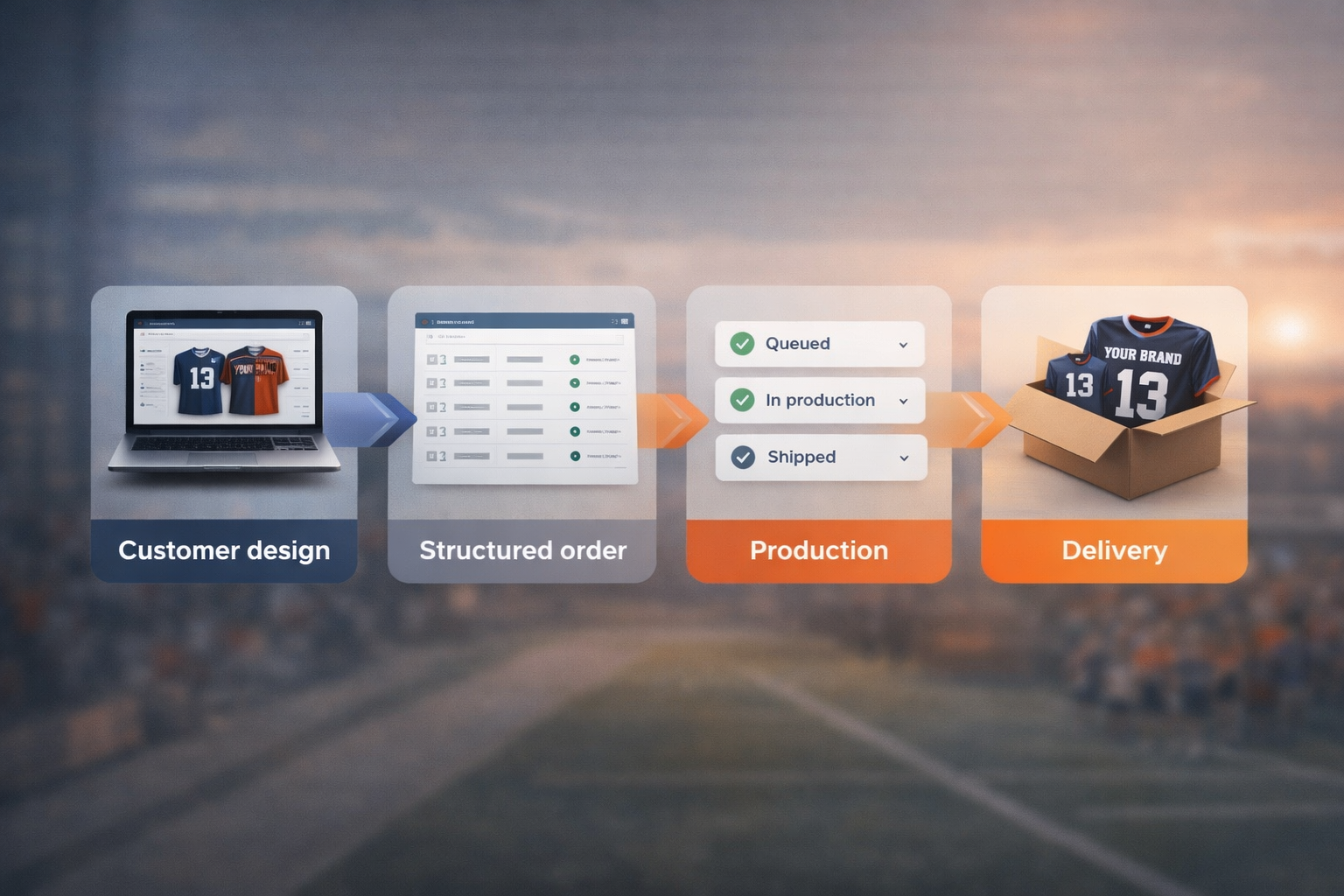
What changes is how each step is handled.

Instead of collecting rosters in spreadsheets and approvals in email threads, orders move through a connected workflow designed specifically for custom team apparel. Each stage feeds clean data into the next, so nothing gets lost between design, roster intake, proofing, and manufacturing.

Here’s what that looks like in practice:

1) Your customer starts the order

Your client designs uniforms, selects products, and adds names and numbers through a guided ordering experience. From their point of view, they are working directly with your brand.

You stay in control of pricing, communication, and the relationship.

2) Order data becomes structured

Once the order is submitted, roster details are captured in defined fields instead of free text. Sizes, names, and numbers enter the system as standardized inputs. This is where most manual workflows usually break down, and where platform-based ordering starts to matter.

3) Operations move to a centralized workflow

Behind the scenes, UniformOS manages the operational side of the order. Rosters are validated, proofs are generated, approvals are tracked, and production-ready data is prepared in one place.

Nothing advances on assumptions. Each step has structure and checkpoints.

4) Manufacturing and fulfillment take over

Once approved, orders move into production and are shipped directly to your customer. You do not manage factories, inventory, or logistics. You focus on selling and servicing accounts while fulfillment runs in the background.

All of this is powered by Wooter, which provides the manufacturing, quality control, and delivery layer that supports the platform.

The result is a closed loop:

  • Customers place clean orders
  • Operations run through a system
  • Production starts with verified data
  • Finished uniforms arrive without last-minute fixes

You operate like a modern apparel platform, not a manual decorator.
What UniformOS Actually Does Inside Wooter’s Ordering Process

UniformOS is the internal system that keeps a team uniform order consistent from the moment you submit a roster to the moment the factory produces the final pieces. It does not rely on someone “remembering” which spreadsheet was final or which file was approved.

It works by turning a uniform order into a controlled workflow, with structured inputs and checkpoints.

1) It creates one source of truth for the order

Instead of spreading information across emails and files, UniformOS keeps the critical parts of the order connected:

  • Roster data (sizes, names, numbers)
  • The approved design
  • Product and size options
  • Order status and production progress
  • Reorder history

This matters because most errors happen when those items live in different places.

2) It standardizes how people enter uniform details

UniformOS reduces “free text chaos” by pushing teams into structured choices:

  • Sizes come from defined size sets, not custom typing
  • Names and numbers follow consistent fields
  • Changes are tracked within the workflow, not scattered across messages

When data entry stays consistent, downstream design and production stay consistent.

3) It connects customization to the ordering flow

Wooter’s builder experience is not just a design tool. It supports the ordering process by keeping design decisions tied to the order record, instead of living as separate attachments.

4) It supports templates and controlled ordering through team stores

For many teams, the biggest source of mistakes is variation. Different people submit slightly different versions of the same order. Team stores reduce that by letting teams order from pre-approved designs and structured product options.

5) It makes reorders more predictable

Reorders fail when the original design, roster format, or size set is not preserved. UniformOS helps keep the original structure intact so the next order does not start from scratch.

This is where errors drop sharply, because consistency stops being “manual effort” and becomes part of the system.

Custom Builder: Client-Facing Design and Ordering

For vendors and decorators, the custom builder is where sales actually happen.

This is the front-end experience your customers interact with. It allows teams to design uniforms, select products, and personalize each jersey without emailing mockups back and forth or sending rosters separately.

Instead of starting orders with spreadsheets, clients move through a guided flow that captures everything in one place:

  • Product selection
  • Color choices and design layout
  • Player names and jersey numbers
  • Size selection for each roster entry

Because customization happens inside the ordering experience, critical details are collected upfront. There is no need to reconcile a design file with a separate roster document later.

This matters for vendors because it:

  • reduces back-and-forth during setup
  • prevents missing personalization details
  • keeps customers engaged in a visual, self-serve process
  • turns customization into structured input instead of loose instructions

From your perspective, you are not just taking orders. You are running a systemized intake process that prepares data for downstream operations automatically.

Customers design and submit.

You manage the relationship.

The order enters the workflow already organized.

This is what replaces the traditional “send us your roster” model with a cleaner, faster way to start every uniform program.

UniformOS: Backend Workflow for Vendors

If the custom builder is how customers place orders, UniformOS is what turns those orders into production-ready jobs.

This is the backend system that replaces spreadsheets, email threads, and manual tracking with a single operational workflow.

For vendors and decorators, UniformOS handles the parts of the business that usually consume the most time:

Roster management, without chaos

Instead of juggling multiple versions of the same roster, all player data lives in one place. Sizes, names, and numbers are captured as structured fields, not loose text. This prevents inconsistencies from spreading across design files and production notes.

You are no longer reconciling “final_final.xlsx” with a PDF proof.

Validation before anything moves forward

UniformOS applies checks before orders reach production:

  • Missing sizes are flagged
  • Duplicate numbers are surfaced
  • Required fields must be completed
  • Changes are tracked inside the system

This shifts error detection upstream, when fixes are easy and inexpensive.

Proofs and approvals in one workflow

Design proofs are generated from the same data used for production. Customers review exactly what will be printed, confirm accuracy, and approve inside the workflow.

There is no guessing which version was accepted. Approval becomes a clear checkpoint, not an assumption.

Templates that make reorders predictable

Once an order is complete, its structure does not disappear.

Designs, size sets, and roster formats are saved so future orders follow the same pattern. This turns reorders into repeatable revenue instead of a rebuild-from-scratch process.

For vendors, this means:

  • faster turnaround on returning teams
  • fewer setup steps
  • consistent results across seasons

One system instead of scattered tools

UniformOS connects intake, validation, proofs, production routing, and order history into a single operational layer. You do not manage separate tools for each stage. Everything runs through one workflow designed specifically for custom team apparel.

In practical terms, UniformOS lets you operate like a platform business. You focus on selling and servicing clients. The system handles structure, accuracy, and production coordination in the background.

Why This Model Works for Decorators and Vendors

Most vendors and decorators don’t struggle because they lack customers. They struggle because every new order adds more operational complexity.

Using a platform-backed model changes that.

Instead of scaling by adding staff, spreadsheets, or suppliers, you scale by running more volume through the same structured workflow.

Here’s what that looks like in practice:

Faster launch without infrastructure

You do not need to build ordering software, hire production teams, or manage inventory. Once your branding and product offerings are set, you can start selling custom uniforms immediately.

This shortens time to market from months to days.

No factory ownership required

Traditional growth means investing in equipment, space, and labor. With Wooter handling manufacturing and fulfillment, you stay asset-light. Your business grows through sales, not overhead.

You avoid:

  • print machines
  • sewing operations
  • warehousing
  • shipping coordination

Fewer mistakes and reprints

Because rosters, personalization, and approvals run through UniformOS, most errors are caught before production starts. Sizes are standardized. Numbers are validated. Proofs are approved inside the system.

This directly protects your margins by reducing rework and customer complaints.

Reorders become repeatable revenue

Returning teams no longer require a full reset. Designs, roster formats, and size sets already exist. New players can be added without rebuilding the order flow.

This makes seasonal refreshes and replacements easy to monetize.

You focus on selling, not fixing

The biggest shift is operational.

You spend less time correcting mistakes and chasing approvals, and more time building relationships, closing new accounts, and expanding existing ones.

Instead of running a manual decorator workflow, you operate a structured uniform business.

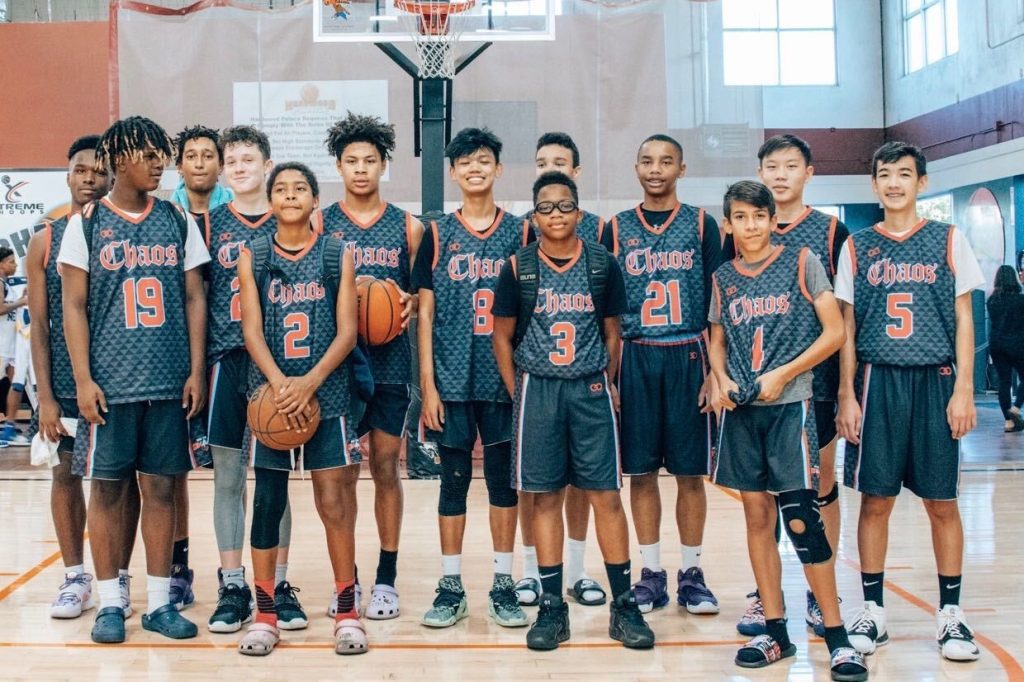
Youth basketball team posing in matching custom uniforms with player numbers on court
A single team can mean dozens of sizes, numbers, and last-minute changes. A structured ordering workflow keeps every jersey detail consistent from roster to final delivery.

Traditional Wholesale vs Wooter Platform

At first glance, Wooter might look like a wholesale supplier. But the operating model is fundamentally different.

Wholesale gives you blank products.

Wooter gives you a complete system.

Traditional Wholesale Wooter Platform
You buy blank products You sell finished custom uniforms
You manage rosters manually Rosters flow through a structured workflow
Design files live separately Design stays connected to the order
Errors are caught late Validation happens before production
Reorders start from scratch Templates make reorders repeatable
You coordinate fulfillment Fulfillment runs in the background

Getting Started as a Vendor or Decorator

If you are considering this model, the setup is straightforward compared to building your own infrastructure.

A typical starting path looks like this:

1) Choose your core products

Start with one or two uniform categories you already sell or understand well. Many vendors begin with a single sport or team type before expanding.

For example, launching with custom basketball uniforms for teams and leagues gives you a proven entry point into roster-based ordering while keeping your initial offering focused.

2) Enable client-side customization

Use the custom apparel builder to let customers design uniforms, select sizes, and add names and numbers directly in the ordering flow. This replaces manual roster collection and design emails, while giving clients a self-serve experience that feels professional and modern.

3) Run operations through UniformOS

Once orders are submitted, UniformOS handles roster structure, validation, proofs, approvals, and production routing. This is where manual workflows disappear and repeatable processes begin.

Instead of chasing files and confirmations, everything moves through a single operational system.

4) Launch your first team order

Start with a real client. Let them design. Collect approvals inside the workflow. Move the order into production. Deliver finished uniforms.

This first run shows you exactly how the platform replaces spreadsheets, email threads, and scattered tools.

5) Turn one-time orders into repeat business

Save designs and roster formats. Use templates for reorders. Offer seasonal refreshes, replacements, and new-player additions without restarting the entire process.

This is where long-term revenue compounds.

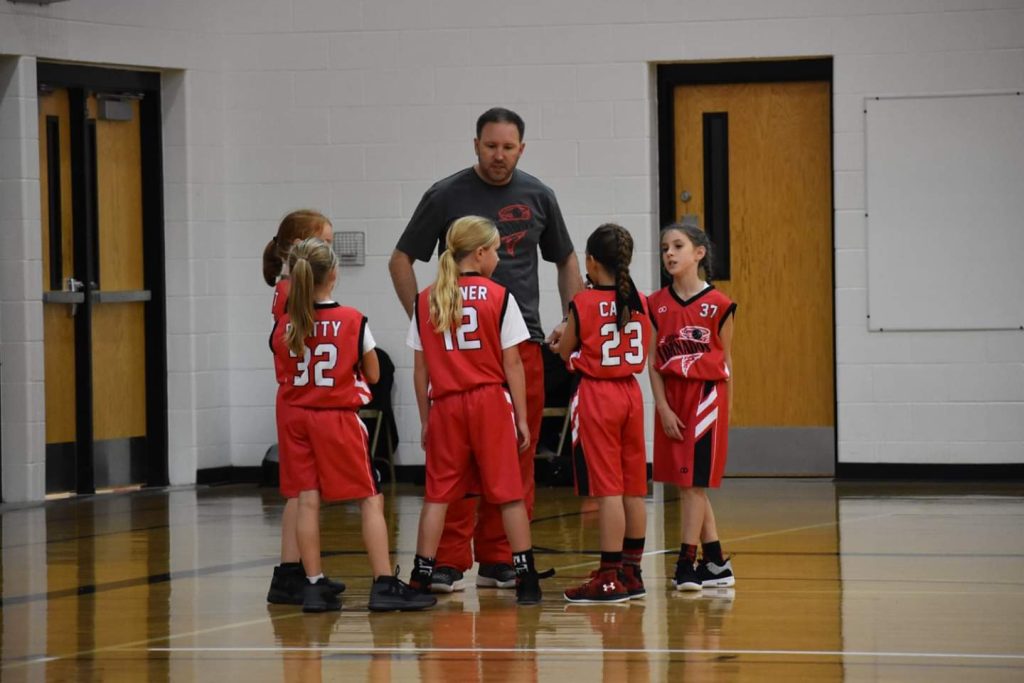
Youth basketball coach talking with players in red custom uniforms during a game break
Your first team order is where the chaos usually starts. When roster data and approvals stay in one system, you spend less time fixing details and more time supporting the program.

Frequently Asked Questions

Can vendors use Wooter as a white-label platform?

Yes. Vendors sell under their own brand while Wooter powers customization, workflow, production, and fulfillment behind the scenes.

No. Manufacturing and shipping are handled through Wooter, so decorators remain asset-light.

UniformOS manages roster data, validations, proofs, approvals, templates, and production routing. It replaces spreadsheets and manual coordination with a single operational workflow.

Yes. Vendors can offer co-branded team stores where players order individually from pre-approved designs and products.

Designs and roster formats are saved, making reorders faster and more consistent. New players can be added without rebuilding the entire order.

It is not traditional wholesale. Wholesale provides blank products. This platform provides customization, workflow software, production, and delivery.

You do. Vendors control branding, pricing, and communication with clients.

Local decorators, apparel brands, print shops, agencies, and sports vendors that already have customers but need scalable infrastructure.

Ready to Scale Your Custom Uniform Business?

Most uniform errors start in roster intake and approvals, not at the factory. Wooter reduces those avoidable mistakes by using a structured workflow that keeps sizes, names, numbers, and approvals consistent from order to production.