
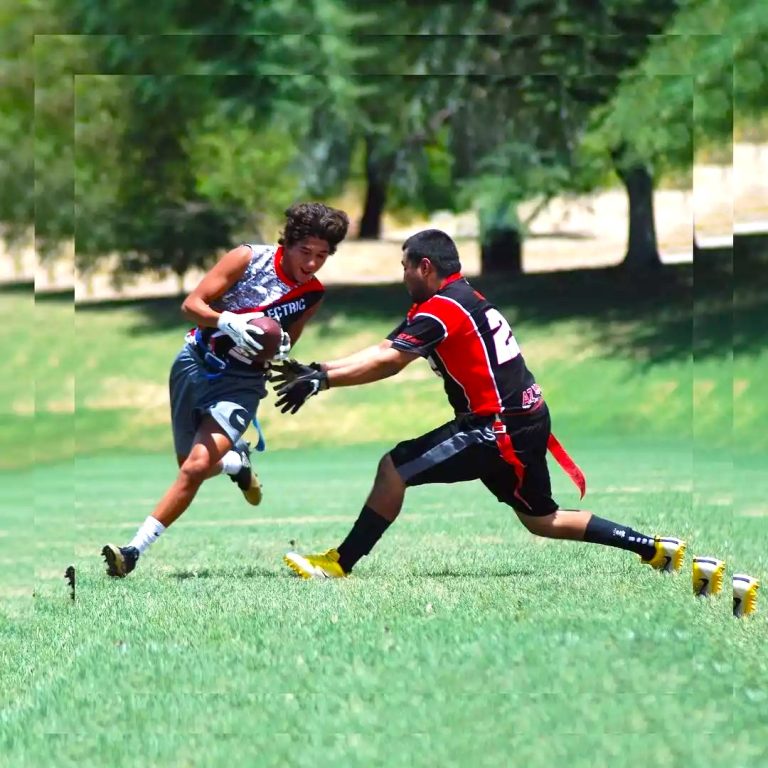
Seven players. Open field. No linemen. No wasted snaps.
Just speed, spacing, and execution.
That’s 7 on 7 football.
7v7 is where quarterbacks sharpen reads. Receivers learn separation that actually works. Defensive backs get real coverage reps. Every snap forces decision-making.
If you are stepping into 7 on 7 for the first time, or building a team for tournament season, this guide makes it simple.
You will learn:
- What 7 on 7 football is
- How it compares to tackle and flag football
- The common rules most tournaments use
- What to wear for competitive 7v7
- A quick checklist to build a strong team
What Is 7 on 7 Football?
7 on 7 football is a pass-focused format where each team plays with seven athletes instead of eleven.
It removes trench play and spotlights skill execution:
- Quarterback reads and release timing
- Route spacing and separation
- Coverage recognition and communication
- Conditioning under repeated snaps
Because there are fewer players on the field, each athlete gets more meaningful reps. That is the point.
Most leagues are non-contact, touch, or flag-based. Rules vary by organizer, but the game always rewards the same thing: clean execution in space.
7 on 7 Football vs Tackle vs Flag Football
All three formats teach football. They just teach different parts of it.
| Feature | 7 on 7 Football (7v7) | Tackle Football | Flag Football |
|---|---|---|---|
| Players on field | 7 per side | 11 per side | Varies (often 5v5, 7v7) |
| Main focus | Passing, routes, coverage, spacing | Full game: run + pass + line play | Non-contact play, basics, speed |
| Contact level | Usually non-contact, touch, or flag rules | Full contact | Non-contact (flag pull) |
| Linemen/trenches | Minimal or none | Core part of the game | Usually none |
| Best for | QB/WR/DB reps, offseason, tournaments | Full football experience | Beginners, youth, casual play |
| Pace | Very fast | Slower, structured | Fast, varies |
| Scoring | Often high-scoring | Balanced | Often high-scoring |
7 on 7 vs tackle football
Tackle football is built around physical line play, run schemes, and contact.
7v7 removes that and magnifies:
- Passing rhythm
- Separation skills
- Coverage discipline
- Situational execution
That is why 7v7 is an offseason staple for skill players.
7 on 7 vs flag football
Many youth leagues run 7v7 with flag belts, so the formats can overlap.
The difference is intent.
Flag football is often participation-first. Competitive 7v7 is concept-first. It focuses more on route combinations, coverages, leverage, and communication.
Tournament reality: most 7v7 weekends mean heat, turf, and back-to-back games. Heavy tops feel miserable by game three. That’s why teams often switch to breathable, athletic custom flag football uniforms that fits tournament movement and airflow.
Basic 7 on 7 Football Rules (What Most Leagues Use)
Rules vary by league and tournament. Always confirm the event rulebook. But most 7v7 formats follow a familiar structure.
Common 7v7 rules
- Seven players per team on the field
- Passing-first offense (many leagues are pass-only, some allow limited runs)
- No traditional offensive line
- Throw clock (often 4–7 seconds)
- Rush rules vary (common variants: no rush, delayed rush, or rush from a set distance)
- Non-contact, touch, or flag rules
- Interceptions flip possession
- Touchdowns usually worth 6
Four rule variations you will see a lot
These details show up in many tournament formats:
- First downs: often at midfield or at a cone/marker system
- Rush distance: commonly from a set depth (often around 7 yards), or only after a delay
- No-run zones: some leagues restrict runs near the goal line
- Field size: often shortened tournament fields, so spacing matters more than long speed
Quick note: If your team does not know the rush rule, your offense will panic. Confirm it before your first snap.
What to Wear for 7 on 7 Football
7 on 7 is high-rep football. Players sprint, cut, stop, and reset constantly. Tournament days stack games with minimal rest.
What to Wear for 7 on 7 Football
7 on 7 is high-rep football. Players sprint, cut, stop, and reset constantly. Tournament days stack games with minimal rest.
So gear is not about looking good for one game. It is about staying comfortable for the whole day.
Tournament-ready checklist
Lightweight jersey
You want mobility and breathability. Heavy tackle jerseys trap heat and restrict movement. For hot weekends, many teams choose custom flag football round-neck jersey designs because the fit works well for speed positions and keeps the overall look clean and athletic.
Athletic shorts with a secure fit
Shorts should stay in place through sharp cuts and quick change-of-direction. Comfort becomes a performance issue after multiple games. That is why teams upgrade to Custom Flag Football Shorts built for repeated tournament reps.
Cleats or turf shoes
Match the surface. Molded cleats for grass. Turf shoes for turf or indoor.
Flag belt or touch gear
A strong flat belt is required in many youth formats and some 7v7 leagues.
Compression layers (optional)
Helpful for sweat control and recovery when you are playing multiple games.
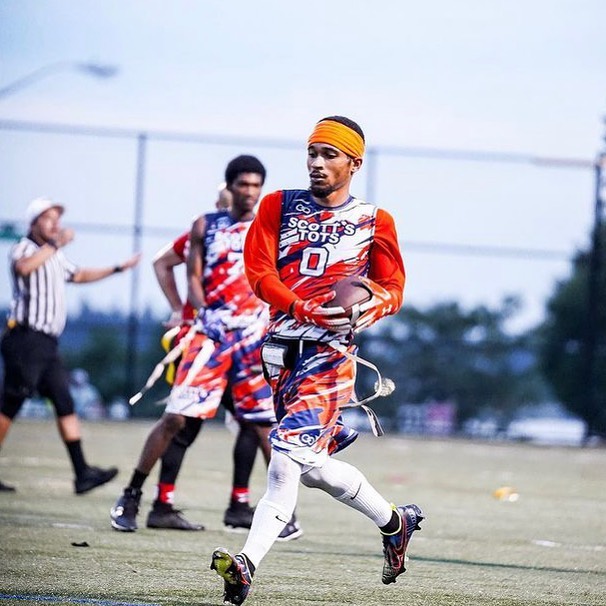
7v7 is played at full speed, so lightweight uniforms and clean spacing matter on every snap.
Mid-tournament problem: home vs away colors
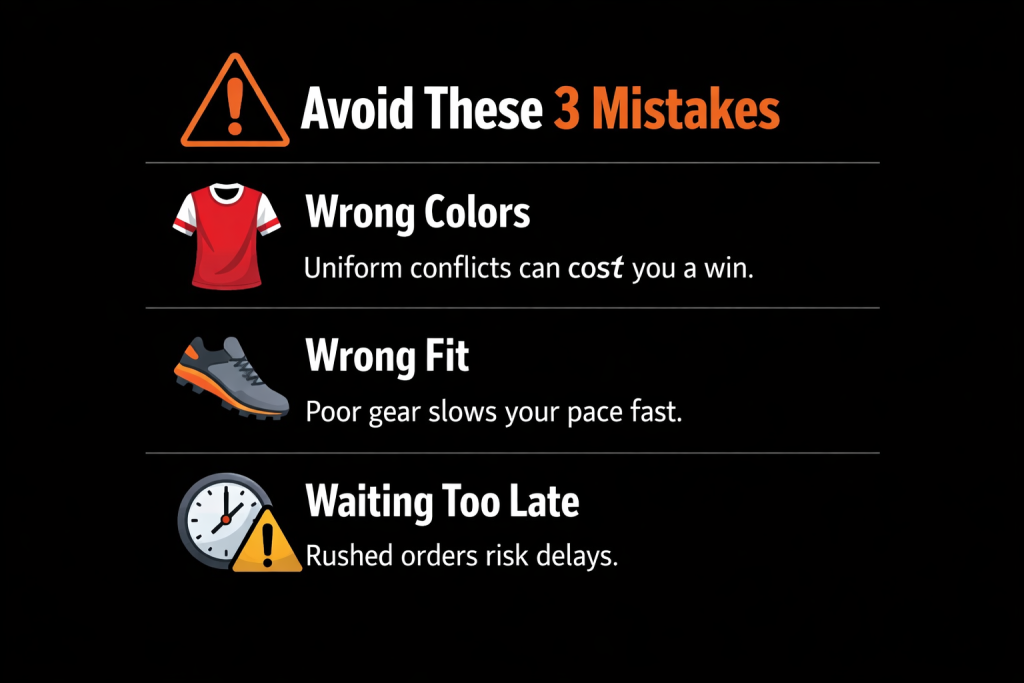
Many tournaments require contrasting colors. Teams lose time swapping jerseys or improvising.
Want a clean home and away setup without packing two jerseys?
Custom reversible flag football jerseys
Why teams choose it:
- Switch colors in seconds
- Pack less gear
- Stay consistent across brackets
- Avoid uniform conflicts that cause delays
Two looks. One jersey. Cleaner tournament flow.
Pro tip: Roster changes happen. Plan reorders early so late additions do not become a scramble.
Quick 7v7 Positions Guide
You do not need a long breakdown to understand 7v7 roles.
Offense (typical)
- QB: quick reads, fast release
- WRs/slots: separation, spacing, timing
- Snapper (if used): reliable snaps, quick release routes
Defense (typical)
- Corners: outside leverage, discipline deep
- Safeties: read QB, protect middle/deep
- Rover/linebacker: match routes, communicate underneath
7v7 is coverage football. If one defender misses an assignment, it is often six points.
How to Build a Winning 7 on 7 Team
This is the simple formula that shows up in strong teams.
Winning checklist
- Pick a quarterback who stays calm under a throw clock
- Teach receivers consistent depth and spacing
- Install two coverages and communicate them loudly
- Practice red-zone reps because space disappears fast
- Rotate players to stay fresh across multiple games
- Run a tight playbook and execute it perfectly
Uniform planning matters here. If you are trying to outfit a full roster quickly, your easiest team setup is the Flag Football (7v7) All-Star Package by Wooter. Use it when you want consistency across the squad and fewer moving parts during tournament season.
7 on 7 Football FAQs
Is 7 on 7 football the same as flag football?
Not exactly. Many youth leagues use flag belts in 7v7, but competitive 7v7 usually focuses more on routes, coverages, and quarterback reads.
Is 7 on 7 football contact or non-contact?
Most leagues are non-contact, touch, or flag-based. Always confirm the event rules.
How many players should a 7 on 7 roster have?
Seven play at a time, but most teams carry 10–12 for rotations during tournaments.
Are there running plays in 7v7?
Many formats are pass-only. Some leagues allow limited runs. Always check the rulebook.
How long are 7 on 7 games?
Commonly 20–30 minutes, depending on the tournament.
What positions are in 7v7?
Offense centers on QB and receivers. Defense is built around corners, safeties, and a rover who covers underneath.
Do you need home and away uniforms?
Often yes, because tournaments require contrasting colors. Reversible jerseys can solve this fast.
What should players wear for 7 on 7 tournaments?
Lightweight jerseys, athletic shorts, and the right footwear for the surface. Comfort matters when you play multiple games in a day.
Not exactly. Many youth leagues use flag belts in 7v7, but competitive 7v7 usually focuses more on routes, coverages, and quarterback reads.
Most leagues are non-contact, touch, or flag-based. Always confirm the event rules.
Seven play at a time, but most teams carry 10–12 for rotations during tournaments.
Many formats are pass-only. Some leagues allow limited runs. Always check the rulebook.
Commonly 20–30 minutes, depending on the tournament.
Offense centers on QB and receivers. Defense is built around corners, safeties, and a rover who covers underneath.
Often yes, because tournaments require contrasting colors. Reversible jerseys can solve this fast.
Lightweight jerseys, athletic shorts, and the right footwear for the surface. Comfort matters when you play multiple games in a day.
Win the Weekend: Wooter Gear Made for 7v7 Pace
Tournament weekends move fast.
Fields are packed. Games stack back to back. Sweat builds. Rosters change. Colors clash. The last thing you need is uniform stress in the middle of a bracket run.
Wooter helps you lock in a clean, tournament-ready setup early, so your team stays focused on execution. Finalize your roster, approve your design, and show up unified with gear built for speed and movement.