
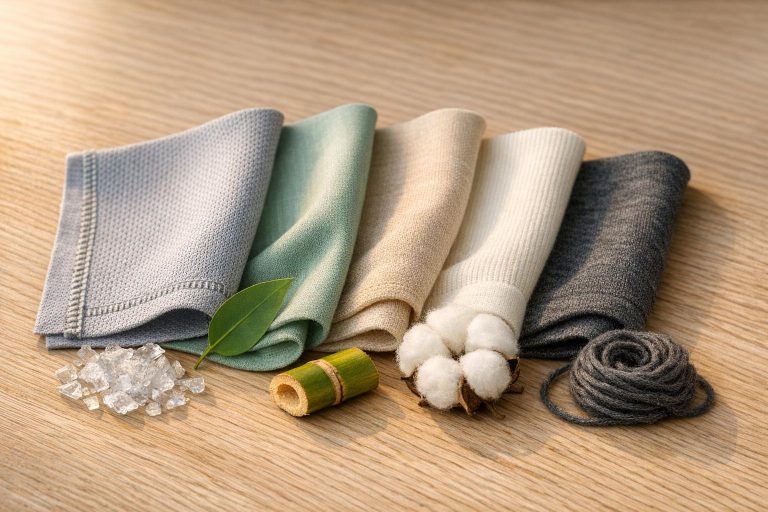
The sportswear industry is shifting toward materials that balance performance and eco-consciousness. Traditional fabrics like polyester and cotton have significant environmental drawbacks, from high carbon emissions to water waste. However, newer options such as recycled polyester, organic cotton, bamboo fabrics, Tencel Lyocell, and Merino wool offer better alternatives. These materials provide key features like moisture-wicking, breathability, and durability while reducing their ecological impact.
- Recycled polyester: Made from plastic waste, it cuts carbon emissions by 60% and dries quickly.
- Organic cotton: Pesticide-free and breathable but holds moisture, making it better for casual wear.
- Bamboo fabrics: Renewable and odor-resistant but depends on eco-friendly processing.
- Tencel Lyocell: Soft, moisture-controlling, and produced in a closed-loop system.
- Merino wool: Naturally odor-resistant and regulates temperature, ideal for outdoor sports.
Certifications like GOTS, GRS, and OEKO-TEX ensure materials meet verified standards for sustainability and safety. Teams and brands adopting these fabrics not only reduce waste but also meet growing consumer demand for responsible products. Whether you’re outfitting a soccer team with custom jerseys or choosing yoga wear, these materials prove that performance and responsibility can go hand in hand.
Design a no Plastic Sportswear Collection
sbb-itb-4d95ad3
Core Characteristics of Eco-Friendly Sportswear Fabrics
Eco-friendly sportswear fabrics are designed to deliver high performance – managing moisture, promoting airflow, offering stretch, and drying quickly – all while minimizing their environmental footprint. These features are the backbone of sustainable activewear, setting the stage for the materials that make it all possible.
Moisture-Wicking Properties
Managing sweat effectively is a key aspect of sustainable sportswear. Moisture-wicking fabrics rely on capillary action to pull sweat away from the skin, moving it to the fabric’s outer layer for quick evaporation. This process not only keeps skin dry but also helps prevent chafing and curbs the growth of odor-causing bacteria.
For example, recycled polyester dries in just 15–20 minutes, while cotton can take over 90 minutes. Tencel Lyocell, a biodegradable material made in a closed-loop system that recycles 99% of its solvents, is another standout for moisture control. Even Merino wool, known for its natural properties, can absorb over 30% of its weight in moisture vapor without feeling damp. One tip: avoid fabric softeners, as they can clog the fiber channels and reduce the fabric’s ability to wick moisture effectively.
Breathability and Air Circulation
Breathability is largely determined by fabric weight and weave. Looser weaves and open-knit constructions allow for better airflow, which is crucial for preventing overheating during intense activities. Fabrics with RET values under 15 and GSM ratings between 130–150 g/m² are particularly effective for high-intensity workouts . For extreme heat conditions, look for materials with RET scores under 6 and a Moisture Vapor Transmission Rate (MVTR) exceeding 15,000 g/m²/24h.
Stretch, Flexibility, and Durability
Sportswear designed for movement often incorporates elastane, typically in the range of 10–30%. Compression gear for high-impact activities uses 20–30% elastane, while yoga and other low-impact activities require around 10–15%. Fabrics with 4-way stretch construction allow for unrestricted movement in all directions.
Durability is just as important as flexibility, especially for eco-conscious consumers. As Delaware Valley Corp. explains:
Sustainable fabrics are designed to last longer, so you can get more use out of them before they need to be replaced. This reduces the amount of waste that ends up in landfills.
Recycled nylon stands out for its abrasion resistance, making it ideal for leggings, while recycled polyester is a go-to for custom baseball jerseys and training gear. To ensure long-lasting performance, materials should have over 95% stretch recovery, meaning they return to their original shape even after repeated use.
Quick-Drying Capabilities
Quick-drying fabrics play a dual role: they help regulate body temperature and keep garments lightweight during exercise. Unlike cotton, which becomes heavy and waterlogged when wet, recycled polyester dries in just 15–20 minutes, while poly-cotton blends (60/40) take around 30–45 minutes. High-performance moisture-wicking fabrics should aim for an Accumulative One-Way Transport Index (AOTI) above 0.3, with the best options reaching approximately 0.45.
Common Eco-Friendly Materials in Sportswear
The following materials blend athletic performance with sustainability, proving they can stand toe-to-toe with, and sometimes surpass, traditional fabrics in sportswear.
Recycled Polyester
Recycled polyester (rPET) is made from post-consumer plastic waste, like water bottles and ocean debris. To put it into perspective, crafting one athletic t-shirt requires about 8–9 recycled plastic bottles. Its performance is comparable to virgin polyester but with a much smaller environmental impact. Producing rPET uses 30% to 50% less energy and reduces carbon emissions by 60%.
This material shines in high-intensity sports like soccer, basketball, and running, thanks to its quick-drying properties. While it costs 10% to 15% more than virgin polyester, brands often charge 25% to 30% more for products made with rPET, reflecting growing consumer interest in sustainability. A downside is the release of microplastics during washing, though this can be addressed with specialized laundry bags.
Organic Cotton
Organic cotton avoids synthetic pesticides, herbicides, and GMO seeds, making it a naturally breathable and hypoallergenic option. Its soft texture works well for yoga, post-workout athleisure, and lifestyle sportswear. However, it’s not ideal for intense workouts, as it absorbs and holds moisture, leading to heavy, uncomfortable garments.
Switching to organic cotton farming helps reduce the environmental toll of conventional cotton production. For example, recycling one ton of cotton can save 765 cubic meters of water. For teams seeking eco-conscious warmup or casual apparel, organic cotton offers a comfortable and sustainable choice.
Bamboo Fabrics
Bamboo is a fast-growing plant that requires little water and no pesticides, making it a highly renewable resource for sportswear. Bamboo-based fabrics also have natural antimicrobial and anti-fungal properties, helping reduce odor – a big plus for athletes who wear gear multiple times before washing.
The challenge lies in how bamboo is processed. Many bamboo fabrics are made using a chemically intensive viscose method, which undermines their eco-friendly potential. Instead, look for bamboo processed through mechanical or closed-loop systems, verified by certifications like OEKO-TEX or FSC. Properly processed bamboo is excellent for base layers, socks, and apparel for athletes with sensitive skin.
Tencel Lyocell

Tencel Lyocell is a fiber derived from sustainably sourced wood pulp, such as eucalyptus or beech, using a closed-loop process that recycles 99% of the solvents. This fabric offers excellent moisture management, temperature regulation, and a silky feel.
Often blended with other fibers, Tencel enhances garment strength and reduces wrinkling. It’s particularly suited for yoga wear, warm-weather activewear, and base layers where softness and moisture control are key. The downsides? It’s pricier than synthetic options and may shrink or wrinkle if not cared for properly. For moderate-intensity activities, Tencel delivers both comfort and functionality.
Merino Wool
Merino wool, sourced from Merino sheep, is a natural fiber that regulates temperature in both warm and cool conditions. It can absorb over 30% of its weight in moisture vapor without feeling damp and naturally resists odor-causing bacteria. This makes it ideal for multi-day hikes or travel, where frequent washing isn’t an option.
"Polyester is more durable, less expensive and dries faster than Merino wool. Merino wool is more comfortable to the touch and provides better odor-control and breathability."
That said, Merino wool comes with trade-offs. It’s significantly more expensive than polyester, less durable, and loses its insulating properties when fully soaked. For outdoor sports in unpredictable weather, Merino wool is a great choice for base layers, though its cost may limit its use to specialized gear rather than entire team uniforms.
These materials show that sportswear can meet the demands of athletes while embracing eco-conscious practices, setting a new standard for team apparel.
Performance Comparison of Eco-Friendly Fabrics
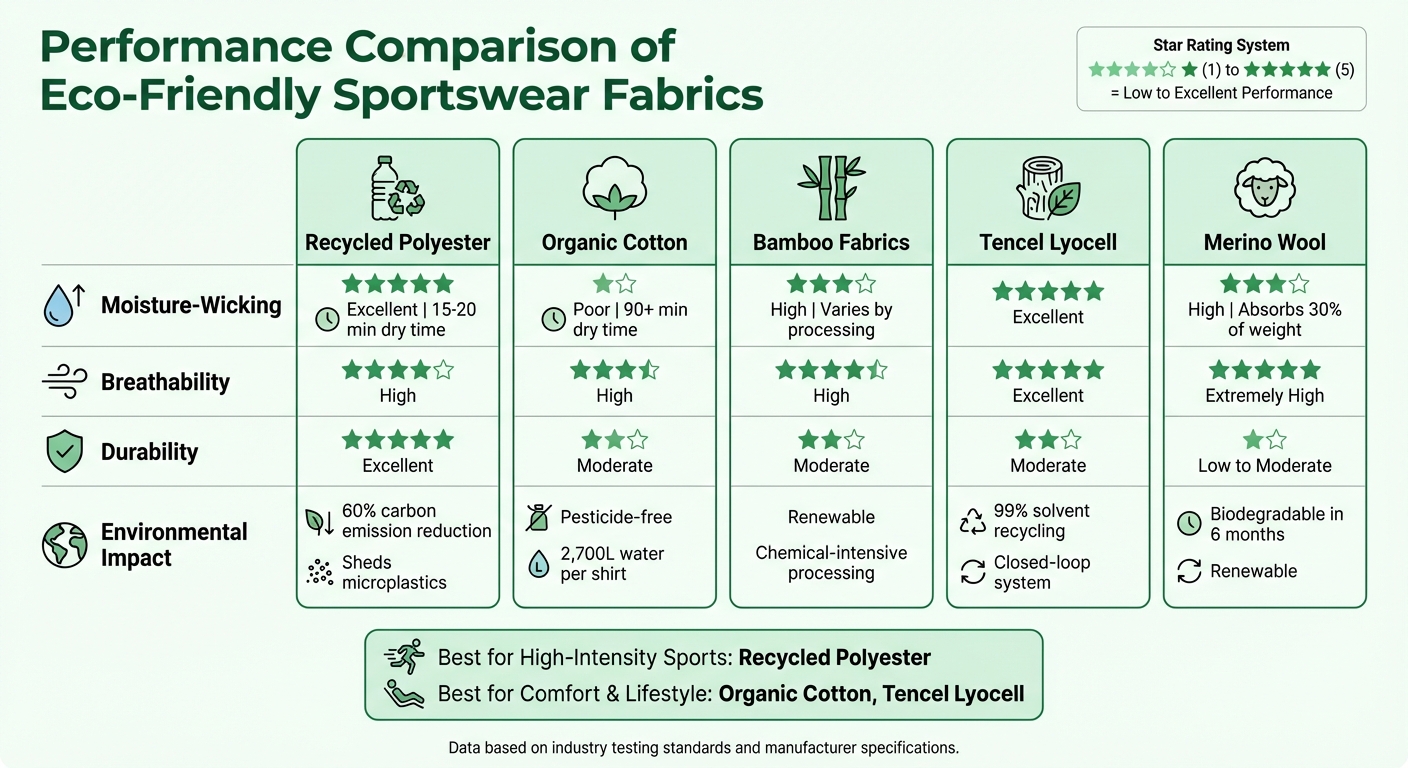
Eco-Friendly Sportswear Fabrics Performance Comparison Chart
Choosing the right material for sustainable sportswear means understanding how each fabric performs during athletic activities. While all eco-friendly fabrics help minimize environmental damage, their performance can vary significantly, especially during high-intensity workouts or recovery.
Recycled polyester is the top performer for intense physical activity. It excels at moisture-wicking, drying in just 15 to 20 minutes. However, its downside is the potential release of microplastics during washing.
Organic cotton shines in comfort and breathability but falls short in moisture management. It absorbs water into its fibers rather than moving it away, leading to heavier garments unsuitable for high-intensity workouts. This makes organic cotton a better choice for warmups or post-exercise athleisure wear.
Merino wool strikes a middle ground. It absorbs moisture effectively while staying relatively dry and offers natural odor resistance, making it ideal for multi-day use. However, its lower durability and higher cost often limit it to specialized base layers.
Fabric Performance Comparison Table
| Fabric Type | Moisture-Wicking | Breathability | Durability | Environmental Impact |
|---|---|---|---|---|
| Recycled Polyester | Excellent (15–20 min dry time) | High | Excellent | Cuts carbon emissions by up to 60%; sheds microplastics |
| Organic Cotton | Poor (90+ min dry time) | High | Moderate | Pesticide-free but needs 2,700 liters of water per shirt |
| Bamboo Fabrics | High (varies by processing) | High | Moderate | Renewable; chemical-intensive processing for viscose |
| Tencel Lyocell | Excellent | Excellent | Moderate | Closed-loop system recycles 99% of solvents |
| Merino Wool | High (absorbs 30% of its weight) | Extremely High | Low to Moderate | Biodegradable in about 6 months; renewable |
The table highlights a clear trend: synthetic fabrics like recycled polyester dominate in moisture-wicking and durability, while natural options like organic cotton and merino wool excel in comfort and biodegradability. For sports involving heavy sweating, such as basketball or soccer, recycled polyester is the go-to material for custom pro football jerseys. On the other hand, for yoga or lifestyle wear, bamboo blends or Tencel offer unmatched softness and effective moisture control.
This analysis lays the groundwork for discussing eco-friendly uniform options and customization possibilities. Teams looking to implement these materials can get a free quote for their specific needs.
Using Eco-Friendly Fabrics in Custom Team Uniforms
Sustainable fabrics are proving that performance and environmental responsibility can go hand in hand. Sports teams across basketball, soccer, football, and baseball are discovering that eco-friendly materials can deliver the moisture-wicking, breathability, and durability required for competitive play – all while reducing their environmental footprint. Choosing the right material tailored to the specific demands of each sport and working with providers who prioritize both performance and sustainability is key to making this shift.
Benefits of Eco-Friendly Uniforms for Teams
Eco-friendly uniforms do more than just perform well – they make a statement. When players wear jerseys made from materials like recycled polyester or organic cotton blends, they showcase a commitment to shared values, strengthening team identity. These materials are designed to meet the rigorous demands of sports. For example, recycled polyester retains the lightweight, moisture-wicking properties essential for high-energy games like basketball and soccer. Bamboo-spandex blends, often used in soccer and basketball, offer natural antimicrobial properties that help reduce fatigue during intense play. Meanwhile, hemp fabric provides excellent breathability, making it a great choice for baseball uniforms, especially in outdoor environments .
On top of performance, these fabrics contribute to environmental preservation. Organic cotton, for instance, eliminates the use of harmful pesticides, which are a major contributor to the 220 million metric tons of carbon emissions generated annually by conventional cotton production . By switching to sustainable materials, teams can reduce their environmental impact without sacrificing the quality or functionality of their uniforms.
Wooter Apparel‘s Customization Options
Wooter Apparel offers a seamless blend of sustainability and performance in their custom team uniforms. They incorporate eco-friendly fabrics like recycled polyester and organic cotton blends into their sublimated designs, ensuring that team logos, colors, and player numbers remain vibrant and durable throughout the season. The sublimation process works perfectly with these sustainable materials, delivering sharp, long-lasting designs.
Teams can take advantage of free custom design services to create uniforms that align with their style and performance needs. Options include moisture-wicking jerseys starting at $16.99, breathable shorts, and complete uniform packages tailored for specific sports. Wooter also offers warmup gear and accessories, all available with eco-friendly fabric options, making it easier for teams to combine sustainability with high-performance athletic wear.
Sourcing and Certification for Eco-Friendly Materials
When it comes to eco-friendly fabrics, sourcing and certification play a critical role in ensuring these materials meet both sustainability and performance standards. Simply selecting sustainable fabrics isn’t enough – verifying their authenticity is what sets genuine eco-conscious sportswear apart from misleading claims. Certifications provide the accountability needed to confirm that custom team uniforms adhere to real environmental and social benchmarks. For example, organizations like OEKO-TEX®, with over 35,000 certified companies worldwide, and Textile Exchange, which audits around 90,000 sites globally, create a clear chain of custody from raw materials to the final product. This process not only validates the eco-friendly nature of the materials but also solidifies trust in sustainable uniforms.
Common Certifications for Eco-Friendly Fabrics
Choosing the right certification for your team’s needs ensures you’re investing in fabrics that meet the promised standards. Here are some widely recognized certifications:
- Global Organic Textile Standard (GOTS): This is the top certification for organic fibers, requiring 70-95% organic content. It covers the entire supply chain, from harvesting to labeling, while also enforcing strict ecological and social criteria.
- Global Recycled Standard (GRS): Focused on recycled materials, GRS ensures a minimum of 50% recycled content for labeling and includes additional standards for responsible social, environmental, and chemical practices.
- OEKO-TEX® STANDARD 100: This certification tests all parts of a garment – threads, buttons, and accessories – against more than 1,000 harmful substances to ensure they are safe for human health. Teams can verify suppliers through the OEKO-TEX® Label Check or the Textile Exchange directory.
- Responsible Wool Standard (RWS): For wool-based gear, RWS guarantees humane treatment of sheep and sustainable land management practices.
- Recycled Claim Standard (RCS): RCS focuses on verifying the recycled content in materials, though it doesn’t mandate social or environmental criteria.
- Bluesign®: This certification ensures textiles are produced with minimal impact on people and the environment, with a strong focus on chemical management.
- Forest Stewardship Council (FSC): For bamboo or Tencel fabrics, FSC certification confirms that the wood pulp comes from responsibly managed forests.
| Certification | Primary Focus | Key Guarantee |
|---|---|---|
| GOTS | Organic Fibers | 70-95% organic content + ecological/social standards |
| OEKO-TEX® STANDARD 100 | Consumer Safety | Tested for 1,000+ harmful chemicals |
| GRS | Recycled Content | 50% minimum recycled content + social/chemical criteria |
| RCS | Recycled Content | Verifies recycled input (no social/environmental criteria) |
| Bluesign® | Chemical Management | Ensures safety in manufacturing processes |
| FSC | Forest Management | Responsible sourcing of wood pulp |
These certifications provide a framework for ethical sourcing, ensuring sustainability is embedded from the raw material stage through to production.
Ethical Sourcing Practices
Ethical sourcing goes beyond environmental considerations – it also emphasizes fair labor practices and supply chain transparency. These aspects are crucial for teams aiming to align their uniforms with broader sustainability objectives.
Manufacturers ensure compliance with these principles through rigorous quality control at three key stages: pre-production, during production, and pre-shipment. This includes checks like GSM verification and stretch recovery tests. Additionally, Textile Exchange is driving industry-wide goals, aiming to cut greenhouse gas emissions from fiber and raw material production by 45% by 2030. Teams can contribute to this effort by partnering with suppliers who adhere to verified certifications and maintain clear documentation of their sourcing practices.
The industry is also moving toward unified standards. On December 12, 2025, Textile Exchange introduced the Materials Matter Standard, which will become mandatory for all certified sites by December 31, 2027. This initiative aims to create a common framework for assessing sustainability across various materials and suppliers, simplifying the evaluation process for teams and manufacturers alike.
Conclusion
Eco-friendly sportswear materials now deliver the same performance as traditional fabrics while reducing environmental impact. Take recycled polyester, for example – it offers the durability and moisture-wicking properties of virgin polyester but uses 30–50% less energy and reduces carbon emissions by 60%. Natural fibers like Merino wool shine with their thermal regulation and natural anti-odor properties, while Tencel Lyocell stands out for moisture management and its closed-loop production process that recycles 99% of solvents.
Sustainability isn’t just a moral choice – it’s proving to be a smart business move. Retailers using verified performance fabrics have seen a 68% repeat order rate, compared to just 41% for basic polyester blends. Even though GRS-certified recycled polyester costs 10–15% more, it supports a pricing model that can increase profit margins.
"Sustainability isn’t just ethical – it’s increasingly profitable".
Beyond performance, sustainable fabrics reflect a commitment to the planet. For instance, choosing sustainable cotton significantly reduces water usage and emissions without sacrificing breathability, stretch, or durability.
Wooter Apparel demonstrates how performance and sustainability can seamlessly come together. Their fully sublimated custom designs combine high-performance eco-friendly fabrics with personalized style. Whether you’re outfitting a basketball team with recycled polyester jerseys or creating soccer uniforms from organic cotton blends, these customizable options ensure your team looks sharp while supporting responsible manufacturing. With certifications like GOTS, GRS, and OEKO-TEX® STANDARD 100, these uniforms guarantee verified sustainability, proving that investing in eco-friendly uniforms benefits both the players on the field and the planet.
FAQs
What is the best sustainable fabric for high-sweat workouts?
Recycled polyester (rPET) is a standout fabric for intense workouts. It’s designed to keep you dry with its moisture-wicking abilities, stands up to wear and tear, and is crafted from recycled materials. This combination makes it a smart pick for those prioritizing both performance and environmentally-conscious choices.
How can I reduce microplastic shedding from recycled polyester?
To cut down on microplastic shedding from recycled polyester, aim for fabrics with a higher recycled content – around 70% or more. These fabrics tend to shed fewer fibers because they have longer, more durable fibers. You can also take practical steps like reducing washing machine agitation, installing laundry filters, and choosing fabric treatments designed to strengthen fibers. These measures not only help limit microfiber release during washing but also help your sportswear last longer.
Which certifications should I look for on eco-friendly sportswear?
When shopping for sportswear, keep an eye out for certifications such as bluesign®, OEKO-TEX® STANDARD 100, GOTS, GRS, and Responsible Standards like the Responsible Wool Standard or Responsible Down Standard. These labels indicate that the products are made with care for the environment and adhere to responsible sourcing practices. They also ensure the use of safe materials and production methods that minimize environmental impact.