
Recycled polyester (rPET) is transforming soccer jerseys by reducing waste and maintaining high performance. Traditional jerseys made from virgin polyester have a substantial environmental impact, taking centuries to decompose. Recycled alternatives, crafted from PET bottles, old clothing, and marine debris, offer a more eco-friendly solution without compromising functionality.
Key takeaways:
- rPET matches virgin polyester in moisture-wicking, breathability, and flexibility.
- Puma’s "Re:Jersey" and "Re:Fibre" projects, launched in 2022 and expanded in 2024, showcase large-scale use of recycled materials in soccer jerseys.
- Each jersey repurposes around 18 plastic bottles, cutting energy use by up to 59% and emissions by 32%.
- Sublimation printing ensures vibrant, long-lasting designs on recycled fabrics.
- Wooter Apparel produces custom soccer jerseys with at least 75% recycled content, balancing performance and affordability ($40–$60 per jersey).
Recycled jerseys are durable, cost-effective, and a step toward reducing the sports industry’s environmental footprint. Teams can now prioritize eco-conscious gear without sacrificing quality or player performance.
FOREVER.BETTER. Podcast | Who Gives a Shirt | EP5 Jerseys for the Future
sbb-itb-4d95ad3
Performance Features of Recycled Fabrics
Recycled fabrics aren’t just about being eco-friendly – they’re built to handle the rigorous demands of modern soccer.
Moisture-Wicking and Breathability
Recycled polyester works just as well as virgin polyester when it comes to managing sweat. Both materials are hydrophobic, meaning they repel water and use capillary action to move sweat from the skin to the surface of the fabric. Once there, the moisture evaporates quickly, keeping players dry and comfortable during intense games.
Breathability, however, relies more on the fabric’s knit construction than whether the polyester is recycled or virgin. Manufacturers often use techniques like "panel mapping" to strategically place engineered mesh or micro-pique structures in areas prone to overheating, such as under the arms and across the back. This ensures maximum airflow. Studies show that 100% polyester fibers, whether recycled or virgin, achieve around 68% relative water vapor permeability, providing excellent ventilation during play.
"Modern rPET matches virgin hand feel and color performance intact when specified well." – Ivy Lee, Luson Sport
This effective sweat management pairs seamlessly with the fabric’s lightweight and flexible design.
Lightweight and Flexibility
Recycled polyester delivers lightweight jerseys that allow for unrestricted movement. The interlocking loop structure of jersey knit fabrics gives them natural stretch and a fluid drape, ensuring the garment moves effortlessly with the body.
To enhance flexibility, many recycled jerseys include 5% to 10% spandex (elastane), adding 4-way stretch and helping the fabric maintain its shape throughout the match. This prevents sagging or loss of form, even during high-intensity play. High-quality recycled fabrics typically weigh between 140 and 160 g/m², striking a balance between durability and breathability. Plus, producing recycled polyester uses up to 59% less energy than manufacturing virgin polyester.
These features make recycled polyester a strong contender for performance wear, leading to a closer look at how it compares to virgin polyester.
Performance Comparison: Recycled vs. Virgin Polyester
On the field, recycled polyester performs nearly as well as virgin polyester. While lab tests show recycled polyester has slightly lower tensile strength (around 10.06% less) and elongation (up to 18% less), these differences don’t significantly impact its performance in high-intensity soccer.
| Performance Metric | Virgin Polyester | Recycled Polyester (rPET) |
|---|---|---|
| Moisture-Wicking | High (via capillary action) | Equivalent to virgin when texturized |
| Breathability | High (structure dependent) | Equivalent (structure dependent) |
| Tensile Strength | Higher | ~10.06% lower |
| Hand Feel | Smooth/Soft | Matches virgin quality |
| Drying Speed | Fast (hydrophobic) | Fast (hydrophobic) |
In July 2024, Puma expanded its "Re:Fibre" recycling technology, outfitting 35 football clubs, including Manchester City and AC Milan, with replica jerseys for the Euro and Copa América tournaments. These jerseys, made from at least 75% recycled textile waste, met the elite performance standards required for professional play.
Durability and Longevity of Recycled Fabrics
Recycled polyester isn’t just about performance – it also stands out for its durability, which plays a big role in reducing waste. After all, jerseys that last longer mean fewer replacements. Teams need gear that can handle an entire season of intense play and constant washing. Research confirms that recycled polyester performs just as well as virgin polyester – and sometimes even better.
Tear and Abrasion Resistance
When it comes to abrasion resistance and shape retention, recycled polyester holds its own against virgin polyester. This makes it ideal for the rough-and-tumble world of soccer. Whether players hit the ground or collide during a match, the fabric must resist tearing at stress points like shoulders and elbows.
Studies show that knitted fabrics made with recycled polyester blends have bursting strength – a critical measure of tear resistance in knits – that matches fabrics made from virgin fibers. This ensures jerseys won’t split at the seams or develop holes after repeated use. For example, a 50/50 blend of recycled cotton and recycled polyester showed lower weight loss after 20 wash cycles compared to some commercial virgin yarns, proving its durability and resistance to surface wear.
"Fabrics comprising 50% recycled cotton and 50% recycled polyester show comparable endurance to commercial yarns after repeated laundering." – Fibers and Polymers
But durability isn’t just about structural strength – appearance matters too.
Color Retention and Anti-Pilling
Team colors and logos need to stay vibrant and professional-looking all season long. Recycled polyester maintains its structure and appearance even after multiple washes. Thanks to chemical recycling, old garments are broken down to their basic components, stripped of original colors and impurities, and then repolymerized into yarn that can hold color just as effectively as virgin polyester.
Sublimation printing on 100% recycled polyester embeds dye directly into the fibers, preventing cracking or peeling over time. Polyester’s natural resistance to pilling also extends to its recycled versions, which perform well in standardized tests (ISO/AATCC series). This ensures logos and base colors remain sharp and vibrant.
"Sublimation becomes part of the polyester jersey material, so there’s no raised ink to crack. That’s why it’s favored for all-over designs on 100 polyester jersey fabric." – Ivy Lee, Luson Sport
Environmental Benefits of Recycled Fabrics
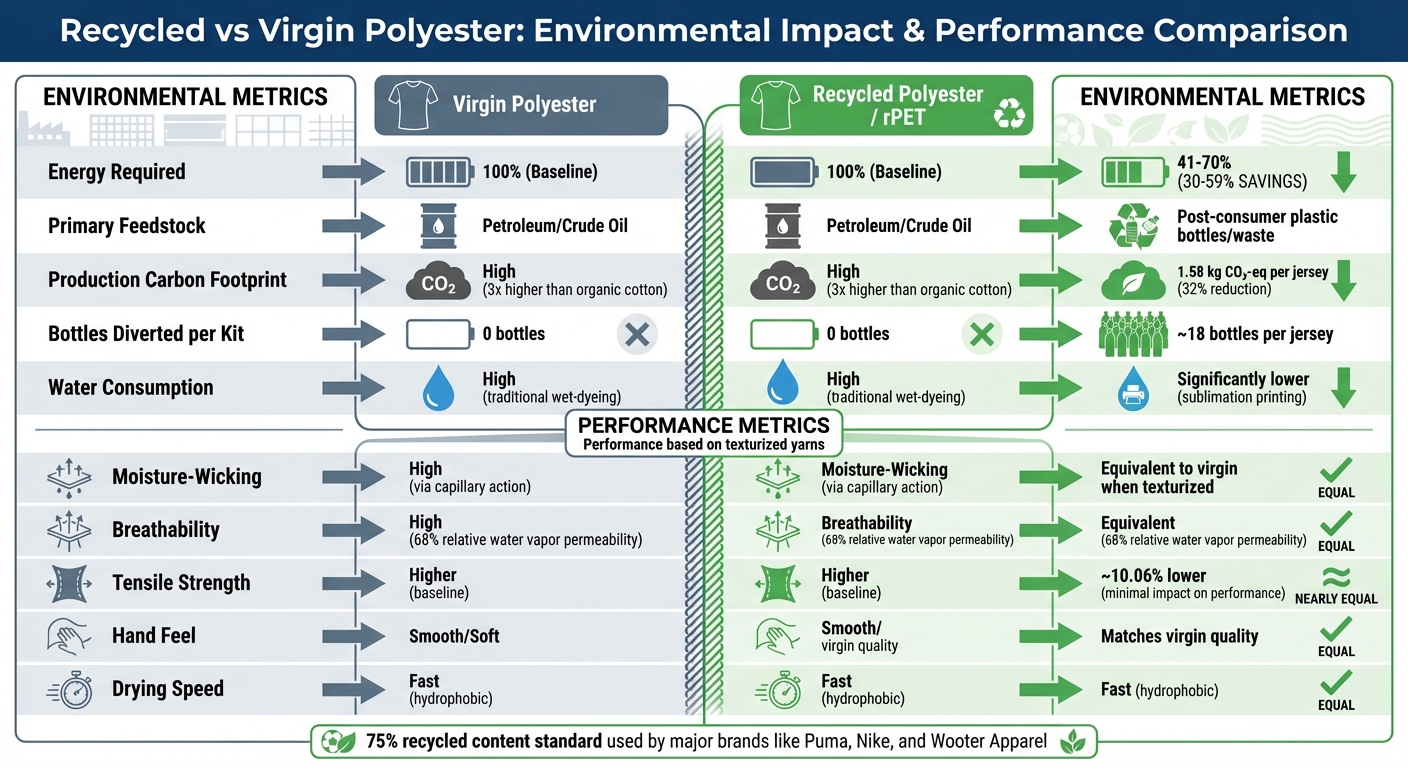
Recycled vs Virgin Polyester: Environmental Impact and Performance Comparison
Recycled fabrics aren’t just about durability and performance – they also come with a lighter environmental load. By opting for long sleeve crew neck soccer jerseys made from recycled materials, teams contribute to reducing the sport’s ecological impact in a meaningful way.
Energy and Water Savings
Producing recycled polyester requires 59% less energy than creating virgin polyester. This translates into significant energy savings, particularly by cutting down the need to extract and refine petroleum. For example, Nike‘s recycled fibers use 30% less energy during manufacturing compared to their virgin counterparts.
Water usage also sees a sharp decline. Sublimation printing, a technique often used for custom reversible V-neck soccer jerseys, consumes far less water than traditional wet-dyeing methods. On top of that, each soccer kit made from recycled materials repurposes around 18 plastic bottles, keeping them out of landfills. Since 2010, Nike has transformed over 2 billion plastic bottles into eco-friendly fibers for athletic apparel.
Carbon Emission Reductions
The carbon footprint of recycled polyester is significantly lower. A jersey made from recycled PET (rPET) has a total climate change burden of about 3.13 kg CO2-eq over its life cycle, with production alone accounting for 1.58 kg CO2-eq. In contrast, the carbon emissions from traditional polyester production can be up to three times higher than those of organic cotton alternatives.
"Rethinking the way we produce and moving towards a more circular business model is one of the priorities of our Sustainability Strategy." – Puma Annual Report 2023
Puma is leading the charge with its "RE:FIBRE" program, which focuses on recycling fabric waste and unsellable polyester items into new jerseys using chemical recycling. This initiative outfitted the Switzerland national women’s team during the World Cup and is scaling up to over 1 million items for major clubs like Manchester City, AC Milan, and Borussia Dortmund in 2024.
Visualizing Environmental Impacts
The advantages of recycled polyester are evident when comparing key environmental metrics:
| Environmental Metric | Virgin Polyester | Recycled Polyester (rPET) |
|---|---|---|
| Energy Required | 100% (Baseline) | 41% to 70% (30–59% Savings) |
| Primary Feedstock | Petroleum/Crude Oil | Post-consumer plastic bottles/waste |
| Production Carbon Footprint | High (3x higher than organic cotton) | 1.58 kg CO2-eq per jersey |
| Bottles Diverted per Kit | 0 | ~18 bottles |
| Water Consumption | High (traditional wet-dyeing) | Significantly lower (sublimation) |
The numbers paint a clear picture: recycled polyester not only reduces energy and water use but also helps divert waste from landfills while cutting down on emissions.
How Wooter Apparel Uses Recycled Fabrics in Custom Soccer Jerseys
Wooter Apparel incorporates recycled polyester (rPET) derived from textile waste and plastic bottles into their custom soccer jerseys, with each jersey containing at least 75% recycled materials. By combining performance-focused materials with eco-conscious practices, they’ve created a product that meets both team needs and environmental goals.
Sublimated Design and Customization
Using sublimation printing on recycled polyester, Wooter Apparel ensures that dyes bond permanently to the fabric. This method allows for endless customization – team colors, player names, numbers, sponsor logos, and even intricate graphics – without concerns about fading or cracking. Youth soccer clubs, in particular, can enjoy creating unique designs on jerseys made from recycled PET, all while maintaining the lightweight and flexible feel of traditional polyester. This approach merges standout visuals with practical production methods.
Balancing Environmental Responsibility and Affordability
Wooter Apparel keeps prices for their recycled jerseys between $40 and $60, a range made possible by processes that cut energy use by up to 59% and emissions by 32% compared to virgin polyester. By pairing eco-friendly innovation with competitive pricing, they make sustainable gear a realistic option for teams at all levels. For teams with limited budgets, focusing on essential game-day pieces is a smart starting point. Additionally, Wooter’s "Fan Shops" fundraising tool offers a creative way for programs to earn commissions on custom gear sales, helping offset uniform costs.
Commitment to Quality and Player Performance
Recycled PET blends used by Wooter Apparel are designed to match or even outperform virgin polyester in key areas like tear resistance, tensile strength, and air permeability. Enhanced with eco-friendly silicone finishes, these jerseys resist pilling, retain vibrant colors through more than 50 washes, and deliver extended durability. By combining rigorous material testing with eco-conscious treatments, Wooter ensures their jerseys not only last longer but also support optimal player performance on the field.
Conclusion
Recycled fabrics now rival traditional materials in performance, durability, and appearance – all while using 59% less energy during production and reducing plastic waste that could otherwise take centuries to break down. For sports teams, choosing recycled materials no longer means compromising on quality or functionality.
Wooter Apparel exemplifies how sustainability can work hand-in-hand with high-performance sportswear. Their custom soccer jerseys, made from recycled fabrics, are designed to resist tearing and enhance breathability, allowing athletes to perform at their peak. Plus, their fully sublimated designs ensure bold, long-lasting colors that can withstand even the most intense matches. This combination of sustainability and top-tier performance highlights how teams can benefit both on and off the field.
Switching to recycled jerseys can also boost a team’s reputation and attract sponsors who prioritize eco-friendly initiatives. Fans and communities increasingly value sustainability, and adopting environmentally conscious uniforms sends a strong message of commitment. As Anne-Laure Descours of Puma stated during their Re:Fibre initiative, "Our wish is to have 100 percent of our polyester products created from textile waste".
To maintain these advantages, teams should ensure their suppliers meet certifications like the Global Recycled Standard (GRS) or OEKO-TEX® Standard 100, which verify the authenticity and safety of recycled materials. Starting with essential items such as jerseys and shorts can help control initial costs while paving the way for a broader shift to sustainable gear. With recycled fabrics now meeting every performance benchmark, the real question isn’t whether teams can afford to embrace sustainability – but whether they can afford not to.
FAQs
How can I confirm a jersey is made from recycled polyester?
To ensure a jersey is made from recycled polyester, look for certifications or labels from trusted organizations that verify the use of recycled materials, such as rPET. Another option is to directly ask the supplier about their sourcing and manufacturing process. Don’t hesitate to request documentation that proves the recycled content. Suppliers with proper certifications typically provide transparency and uphold responsible sourcing practices for the materials in their products.
Will recycled jerseys feel different or fit differently than standard polyester?
Recycled jerseys are crafted to offer the same fit and feel as standard polyester jerseys. Although there might be minor variations because of fabric blends or production techniques, they typically deliver comparable comfort and performance.
What’s the best way to wash sublimated recycled jerseys to make them last?
To help your sublimated recycled jerseys stay in great condition, turn them inside out before washing – this helps shield the design. Wash them in cold water on a gentle cycle using a mild, chemical-free detergent. Steer clear of bleach, fabric softeners, and high heat, as these can damage the fabric. Instead of tossing them in the dryer, air dry them to avoid heat-related wear and tear. After wearing, rinse the jersey promptly to remove dirt and sweat, which helps maintain the fabric and keep the colors vibrant.