
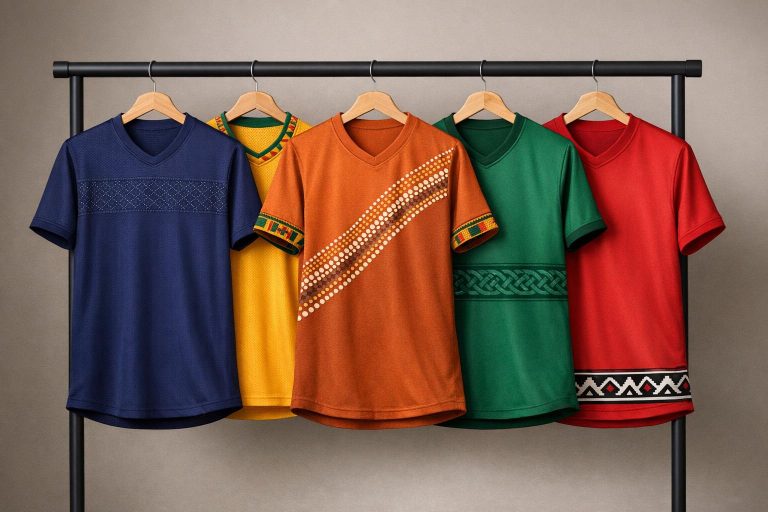
Custom football uniforms are more than just gear – they’re visual stories. From colors and patterns to materials and symbols, every design element reflects heritage, values, and identity. Here’s a quick breakdown of how these elements come to life:
- Colors: Teams often use flag colors or tones inspired by landscapes, evoking pride and emotion.
- Patterns: Local textiles and traditional weaving methods add depth and history to designs.
- Symbols: Logos, motifs, and emblems connect uniforms to their origins and communities.
- Materials: Fabrics tied to regional practices honor craftsmanship and traditions.
- Style Blends: Combining classic elements with modern aesthetics ensures relevance while respecting history.
Uniforms aren’t just about performance – they’re a way to honor stories, connect with fans, and celebrate identity.
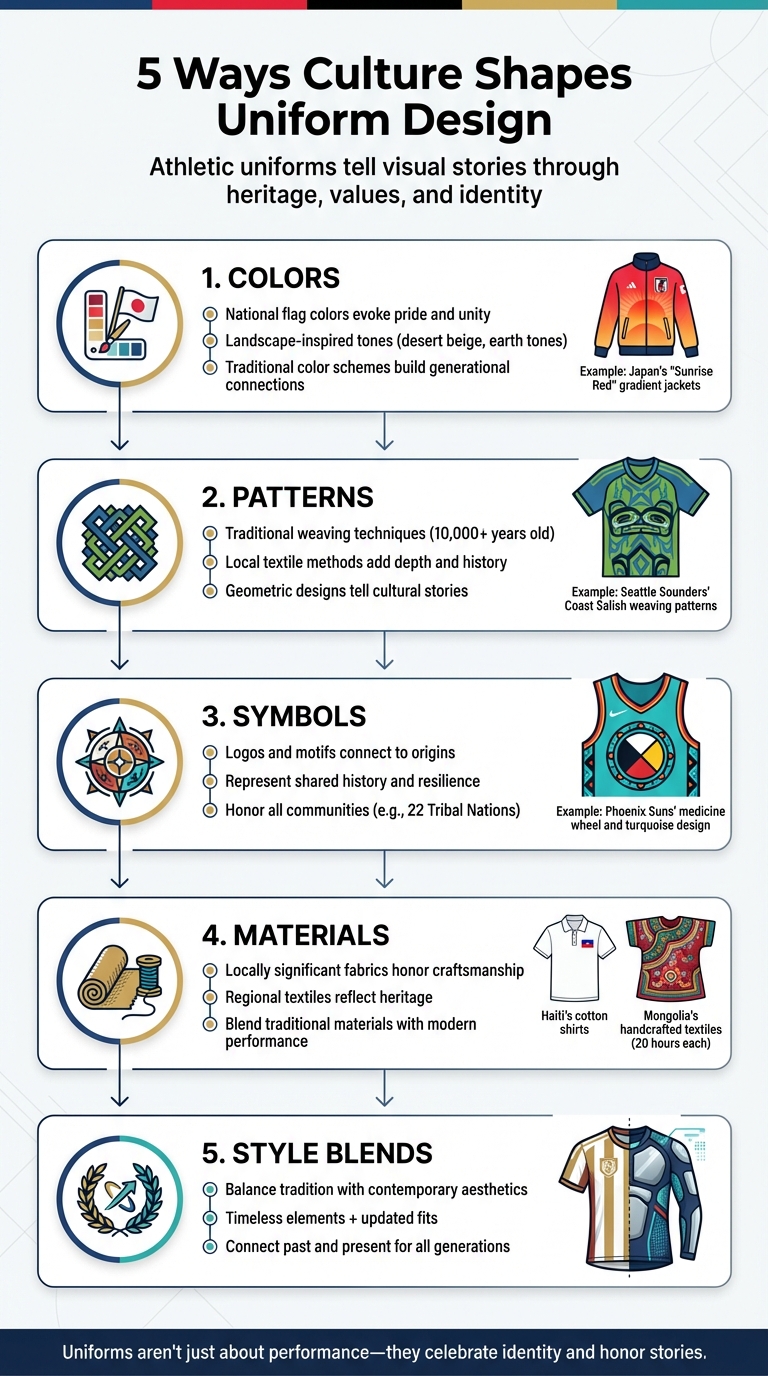
5 Cultural Elements That Shape Athletic Uniform Design
How Team USA’s 2024 Olympic Outfits Were Made By Ralph Lauren | Behind the Seams | InStyle
sbb-itb-4d95ad3
1. Colors That Carry Meaning and Emotion
The colors used in uniforms do much more than make a fashion statement – they convey values, evoke emotions, and tell stories. In the Olympics, for instance, national flag colors dominate, acting as powerful symbols of pride and unity on a global stage. When athletes wear these colors, they’re not just competing; they’re representing the very essence of their nation’s identity.
Take Germany’s team jerseys, for example. Their white designs, marked by clean lines and precise tailoring, reflect the nation’s reputation for discipline and industrial precision. On the other hand, Team Japan’s Olympic uniforms embrace "Sunrise Red" with gradient podium jackets. This choice not only symbolizes the rising sun but also incorporates eco-friendly materials, blending tradition with modern values.
Colors often draw inspiration from regional landscapes as well. Emirates Airlines uniforms, for instance, feature a signature beige tone that mirrors the UAE’s desert dunes, creating a sense of natural harmony and national pride. Similarly, the 2025 Australian jerseys, influenced by Aboriginal art, use warm earth tones to honor the land, celebrate diversity, and acknowledge deep historical connections. These thoughtful choices root teams in their environment and cultural heritage, making the uniforms more than just clothing – they’re a statement. For teams looking to capture their own heritage, custom uniforms offer a way to weave these cultural stories into every stitch.
Tradition also plays a key role in shaping color choices. Among the NHL’s original six teams, the New York Rangers‘ red, white, and blue diagonal jersey design and the Boston Bruins‘ classic color scheme have stood the test of time. These enduring designs foster strong emotional ties, connecting generations of fans to their teams.
Whether inspired by flags, landscapes, or longstanding traditions, the colors of uniforms create instant connections. They strengthen team identity, deepen fan loyalty, and ensure that every design choice carries meaning.
2. Patterns and Designs from Local Textiles
Incorporating traditional weaving techniques and textile patterns into modern uniforms does more than enhance their appearance – it bridges the gap between contemporary athletic wear and regional heritage. These designs celebrate craftsmanship and cultural traditions while fostering a unique team identity. This blend of heritage and sportswear creates opportunities to highlight specific cultural stories.
One standout example is the Seattle Sounders FC and their "Salish Sea Kit", unveiled in February 2025 for the 2025 and 2026 MLS seasons. Collaborating with weavers Connie McCloud (Puyallup Tribe), Gail White Eagle (Muckleshoot Tribe), and Danielle Morsette (Suquamish Tribe), the team worked with Adidas to incorporate Coast Salish weaving techniques like "twilling" and "twining." These methods, with roots stretching back over 10,000 years, were carefully replicated after four design iterations. The jersey features navy and aqua tones symbolizing water, basket-weaving patterns, the Puyallup Tribal fish, and the Lushootseed phrase "x̌ax̌aʔ ti qʷuʔ" (Water is Sacred). This design showcases how timeless regional techniques can inspire modern sportswear.
"The geometric designs are used to symbolize either a story, a plant, a tree, or a feeling. … Different shapes are used to symbolize something holistically where we tell our story in our garments and our blankets using these techniques." – Gail White Eagle, Master Weaver, Muckleshoot Indian Tribe
The collaboration went beyond aesthetics. Cultural experts guided the process to ensure that traditional materials like cedar and sweet grass were thoughtfully reflected in synthetic fabrics. Additionally, MLS donated $50,000 from the jersey sales to local Native nonprofits, strengthening the partnership’s cultural and community impact.
These textile-inspired designs transform uniforms into powerful storytelling tools. The symmetrical shapes and diagonal lines of the weaving evoke movement and depth – qualities that resonate with athleticism while honoring the deep cultural roots they represent.
3. Symbols That Represent Identity
In uniform design, symbols go beyond aesthetics – they serve as powerful markers of identity and forge connections between teams and their fans.
Take the Phoenix Suns, for example. They partnered with Nike’s N7 Program and the Inter-Tribal Council of Arizona on a two-year initiative that wrapped up in late 2022. The goal? To design custom pro football jerseys that pays tribute to all 22 Tribal Nations in Arizona. The design includes a medicine wheel on the waistband, a turquoise base representing "living stone", and side tape featuring the word "SUN" written in all 22 native languages.
"The presence of all 22 native languages of the Arizonian tribes is significant in showing the perseverance and resilience of the nation’s cultures."
– Shawn Martinez, Senior Director of Live Presentation, Phoenix Suns
This project is a striking example of how symbols in design can embody shared history and cultural strength. By weaving these meaningful elements into the uniform, the Suns turned a practical piece of clothing into a storytelling canvas – one that celebrates heritage, resilience, and pride in community.
4. Materials Based on Regional Practices
The choice of fabrics and textiles for uniforms often reflects a region’s heritage and craftsmanship, creating a meaningful connection between athletes and their cultural roots. By using locally significant materials, teams not only honor tradition but also bring a unique flair to international competitions.
Take Team Haiti at the 2024 Paris Olympics as an example. Their women’s uniforms featured Haitian cotton shirts paired with sleeveless blazers, while the men’s attire included Guayabera shirts and trousers adorned with artwork inspired by Haitian textile traditions. These designs celebrated Haiti’s rich cultural identity in a striking way.
Similarly, Team Mongolia embraced their heritage with traditional Mongolian textiles in their national colors, complete with the Soyombo symbol. Each outfit required 20 hours of meticulous handcrafting by Michel & Amazonka. Female athletes accessorized their outfits to match, while male flag bearers completed their look with archer hats and boots, showcasing Mongolia’s cultural legacy on the global stage.
Historically, early 20th-century teams relied on thick wool, cotton, and leather for uniforms, prioritizing warmth and durability to withstand unpredictable weather conditions.
Today, the tradition of incorporating cultural elements into uniforms continues, blending heritage with modern performance needs. For example, Indian team uniforms highlight regional diversity through traditional textiles and intricate embroidery. Meanwhile, Australia’s 2025 custom v-neck soccer jerseys introduce an innovative design inspired by Australian Aboriginal materials, emphasizing the importance of cultural representation and diversity in sports.
5. Blending Classic and Contemporary Styles
Great uniform designs strike a balance between honoring tradition and embracing modern trends. By combining timeless elements like colors, patterns, and symbols with updated shapes and details, teams can create jerseys that feel both fresh and deeply rooted in heritage.
Modern uniform designs often incorporate sleek, performance-driven fits while weaving in nods to cultural or historical significance. This could mean using traditional motifs alongside cutting-edge fabrics or reimagining classic designs with a contemporary twist. The result? Uniforms that not only perform well on the field but also tell a story that connects past and present, appealing to fans of all ages.
Adding Custom Designs with Wooter Apparel
Once you’ve drawn inspiration from your team’s heritage, it’s time to bring those ideas to life with custom uniforms. Wooter Apparel makes it simple and affordable to incorporate cultural elements into fully sublimated uniforms. Whether your team plays basketball, football, baseball, softball, or soccer, these uniforms can highlight your community’s unique colors, patterns, and symbols.
Start with free custom design services to turn your cultural vision into wearable art. Wooter Apparel’s design team collaborates with you to craft designs that stand out, using advanced sublimation printing to ensure the colors and details remain vibrant and long-lasting, no matter how intense the season gets.
The pricing is straightforward: custom V-neck jerseys and shorts start at $16.99, reversible jerseys at $24.99, warmup jackets at $22.99, and the complete MVP uniform package at $199.99. The best part? The pricing stays flat, no matter how intricate your design is – so you can go all out without worrying about extra fees.
Every uniform is built for performance and durability while honoring your team’s cultural story, allowing your team to play with pride and style.
Conclusion
Culture influences uniform design through thoughtful use of colors, traditional patterns, symbolic imagery, local materials, and a blend of heritage with modern aesthetics. These elements go beyond aesthetics – they tell a story about a team’s origins and values, turning sportswear into a meaningful connection between players, their history, and the communities they represent.
High-profile examples, such as designs inspired by indigenous heritage, demonstrate how practicality and artistry can come together to celebrate inclusiveness and diversity. When creating your team’s uniforms, don’t just focus on colors that look visually appealing. Instead, think about what your community values, the symbols that reflect your shared identity, and how traditional elements can be adapted for today’s athletes. A thoughtful design can inspire pride on and off the field.
Your team’s story deserves to be showcased. Whether it’s through references to local landmarks, historical motifs, or cherished traditions, uniforms that honor your heritage deepen the connection between players and their supporters. By combining performance with cultural meaning, you can create a sense of pride that makes every game a celebration of identity and shared values.
FAQs
How do teams choose meaningful uniform colors?
Teams pick uniform colors by thinking about their identity, psychology, and traditions. The colors should match the team’s values, history, and background while also being easy to see and offering good contrast. For example, red often symbolizes strength and energy, while blue suggests reliability and calmness. Including team members in the decision-making process helps create an emotional connection. Choosing colors that truly represent the team’s personality builds a solid, unified image that inspires players and strengthens the bond with fans.
How can a team use cultural patterns without misusing them?
Teams can carefully incorporate cultural patterns into uniform designs by respecting their meanings and working closely with cultural experts or community members. This approach helps ensure the designs celebrate heritage while avoiding misrepresentation. For instance, the choice of colors and symbols must be made thoughtfully – what represents good fortune in one culture, like red, might signify mourning in another. By prioritizing research and showing genuine respect, teams can honor cultural identities without falling into stereotypes.
How do you balance cultural design with athletic performance?
Balancing cultural design with athletic performance involves blending meaningful elements – such as traditional motifs, symbols, and colors – with functional features tailored for sports. This means incorporating materials like high-quality, moisture-wicking fabrics and ensuring ergonomic fits that allow for ease of movement.
Working closely with cultural experts helps ensure these designs stay true to their roots, while modern materials and sleek designs focus on comfort, flexibility, and durability. The outcome? Uniforms that celebrate cultural heritage while meeting the demands of athletes on the field.