
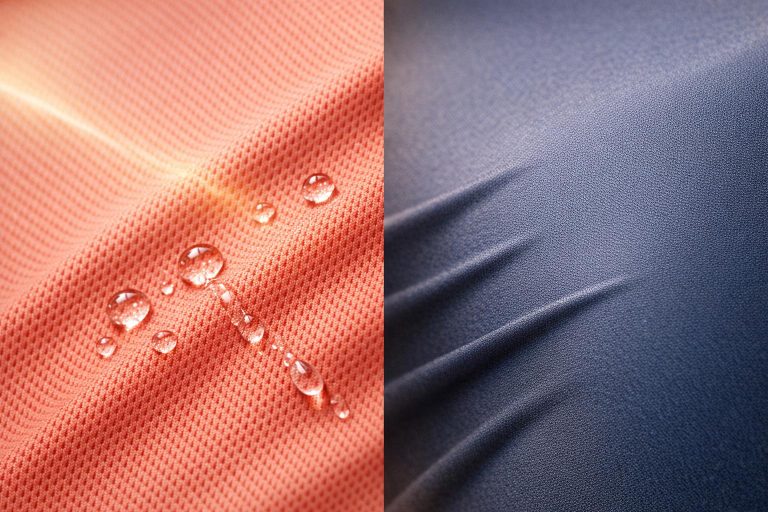
When it comes to choosing between polyester and nylon for sportswear, the decision depends on your activity and priorities. Polyester is lightweight, quick-drying, and water-resistant, making it ideal for high-sweat activities and outdoor sports. Nylon, on the other hand, offers superior stretch, durability, and a soft texture, making it better for flexibility-focused sports or indoor use.
Key Takeaways:
- Polyester: Repels water, dries faster, retains shape, and handles UV exposure well.
- Nylon: Absorbs moisture, stretches more, feels softer, and is more abrasion-resistant.
Quick Overview:
- For high-intensity cardio or outdoor sports: Polyester is better due to its quick-drying and lightweight properties.
- For flexibility or low-intensity activities: Nylon’s stretch and softness provide greater comfort.
Quick Comparison:
| Feature | Polyester | Nylon |
|---|---|---|
| Moisture Absorption | Very low (<0.5%) | Moderate (2-5%) |
| Drying Speed | Faster | Slower |
| Shape Retention | Excellent | Poor when wet |
| Stretch/Elasticity | Moderate (15-35%) | High (20-40%) |
| Texture | Firm | Smooth |
| UV Resistance | Strong | Weaker |
| Durability | Good | Excellent |
Polyester works best for staying dry and maintaining structure, while nylon excels in flexibility and durability. Choose based on your sport’s demands!
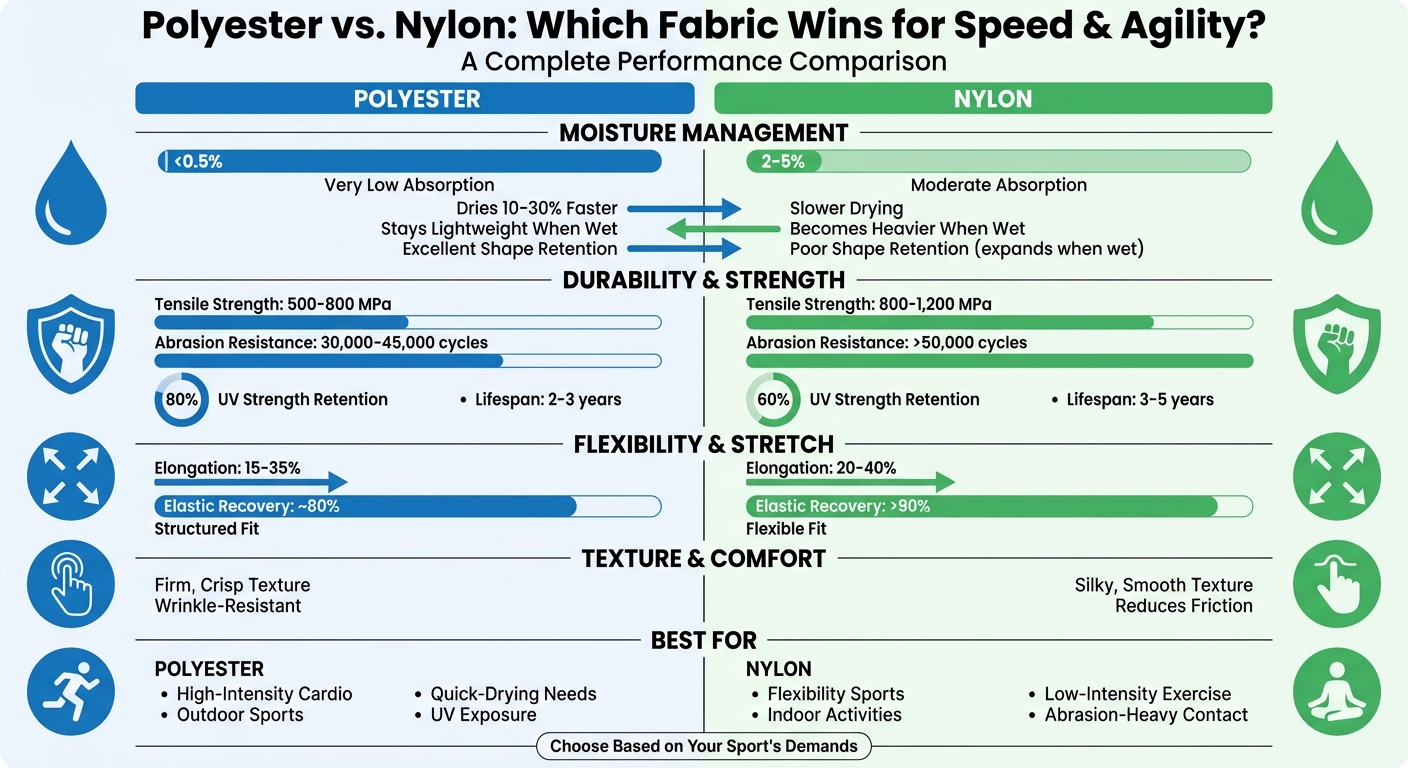
Polyester vs Nylon Fabric Comparison for Athletic Performance
The Best Sportswear Fabric: Nylon Or Polyester?
sbb-itb-4d95ad3
Moisture Management: Staying Dry During Intense Activity
When you’re pushing your limits during intense activity, staying dry can make all the difference. The way polyester and nylon handle moisture boils down to their chemistry – polyester resists water, while nylon absorbs it.
Polyester’s Water-Resistant Edge
Polyester is naturally hydrophobic, meaning it repels water and pushes moisture to the surface. This allows sweat to evaporate quickly, helping you stay dry and maintain a snug, aerodynamic fit. With minimal moisture absorption (just 0.4%), polyester remains lightweight, even when drenched in sweat. In fact, it dries 10% to 30% faster than nylon, and in warm conditions, a polyester jersey can dry completely within 1 to 3 hours.
Because polyester doesn’t hold water within its fibers, it keeps its shape and structure intact even when wet. There’s no sagging, no added weight, and no compromise to the fit that supports your performance. This quick-drying property ensures you stay comfortable and efficient during high-intensity sports.
Nylon’s Moisture Challenges
On the other hand, nylon is hydrophilic, meaning it absorbs water into its fibers. Nylon can take on 2% to 5% of its weight in water, which causes the fibers to swell, stretch, and gain weight. This added moisture slows down evaporation, leaving you feeling damp and uncomfortable during prolonged activity. As the fabric stretches and clings, the extra weight – though small – can make a difference, contributing to fatigue over time. For athletes focused on speed and agility, nylon’s tendency to hold onto moisture can be a clear drawback.
For a quick comparison, here’s how polyester and nylon stack up:
Comparison Table: Moisture Management
| Feature | Polyester | Nylon |
|---|---|---|
| Moisture Absorption | Very Low (0.4%) | Moderate (2–5%) |
| Drying Speed | 10–30% Faster than Nylon | Slower; fibers retain water |
| Weight When Wet | Remains lightweight | Becomes heavier |
| Shape Retention | Excellent; resists stretching when wet | Poor; expands and may sag when wet |
| Wicking Mechanism | Pushes water to surface | Absorbs and stores internally |
When it comes to moisture management, polyester’s quick-drying and water-resistant properties make it the go-to choice for high-performance activities. Nylon, while durable, may leave you feeling weighed down when the intensity rises.
Durability and Shape Retention: Long-Term Performance
Athletic gear takes a beating, so durability and the ability to maintain shape are critical. Nylon stands out for its raw strength and abrasion resistance, while polyester is better at holding its shape over time.
Polyester’s Strength in Shape Stability
One of polyester’s standout qualities is its shape stability. It resists stretching, shrinking, and sagging better than nylon, making it a dependable choice for gear that needs to retain its form. With a tensile strength ranging from 500 to 800 MPa, polyester performs well under athletic stress, though it doesn’t quite match nylon’s toughness. Where polyester truly excels is in maintaining its shape, particularly when exposed to moisture.
Another plus for polyester is its UV resistance. It retains 80% of its strength after 500 hours of sun exposure, compared to nylon’s 60%, making it a strong option for outdoor sports gear. In abrasion tests, polyester withstands 30,000 to 45,000 Martindale cycles before showing wear. While nylon edges it out in this area, polyester remains a solid performer. On average, polyester activewear lasts about 2 to 3 years, offering a reliable and cost-effective option for most athletes.
That said, nylon takes the lead in durability, thanks to its superior strength and flexibility, though it requires more care due to its sensitivity to moisture.
Nylon’s Flexibility and Strength
Nylon is known for its exceptional durability. With a tensile strength of 800 to 1,200 MPa, it outperforms polyester in load-bearing and high-friction scenarios. It can endure over 50,000 Martindale cycles of abrasion, making it ideal for areas prone to wear, like compression shorts or wrestling gear. Nylon fibers can stretch 25% to 50% before breaking and recover over 90% of their original length, ensuring excellent elasticity and recovery.
"Nylon’s higher tenacity gives it an edge in load-bearing and high-abrasion scenarios, while polyester still performs admirably at a lower cost." – Eric, Fabric Expert, Szoneier Fabrics
However, nylon’s flexibility comes with a downside – it’s more prone to losing its shape over time, especially when wet. Absorbing 2% to 5% moisture, nylon fibers can swell, leading to sagging or stretching with prolonged use. Despite this, nylon activewear typically lasts 3 to 5 years, outlasting polyester but requiring more maintenance to preserve its fit and appearance.
Comparison Table: Durability and Shape Retention
| Property | Polyester | Nylon |
|---|---|---|
| Tensile Strength | 500–800 MPa | 800–1,200 MPa |
| Abrasion Resistance | 30,000–45,000 cycles | >50,000 cycles |
| Elastic Recovery | ~80% | >90% |
| Shape Retention (Wet) | Excellent (resists deformation) | Poor (may sag or stretch) |
| UV Strength Retention | 80% after 500 hours | 60% after 500 hours |
| Typical Lifespan (Activewear) | 2–3 years | 3–5 years |
Breathability and Temperature Regulation
When you’re pushing yourself during intense activities, staying cool isn’t just about comfort – it’s about performance. Polyester and nylon handle heat and airflow in distinct ways, and knowing how they differ can help you pick the right material for your needs.
Polyester’s Engineered Cooling
Polyester isn’t naturally breathable, but modern designs have turned it into a performance powerhouse. By using open fiber structures, micro-perforations, and moisture-wicking treatments, manufacturers create fabrics that allow air to flow where it’s most needed. One of polyester’s standout qualities is its hydrophobic nature – it absorbs less than 0.5% of its weight in moisture. This means sweat doesn’t linger in the fabric but moves quickly to the surface, where it evaporates.
This rapid drying keeps polyester lightweight and comfortable, even during high-intensity activities like basketball or soccer. Brands like Wooter Apparel take this a step further, adding mesh panels in areas prone to heavy sweating, ensuring maximum cooling right where athletes need it most.
Nylon’s Built-In Ventilation
Unlike polyester, nylon benefits from its natural structure to promote airflow. Its knit design creates tiny channels that let vapor escape, making it naturally breathable. Nylon also feels smoother and softer than polyester, which can help reduce irritation during fast, repetitive movements. It wicks sweat effectively, providing an immediate cooling sensation.
However, nylon’s breathability has its limits. It absorbs 2% to 5% of its weight in moisture, which can cause the fibers to swell and hold onto sweat during prolonged activity. As it becomes damp, nylon’s cooling ability decreases, and the fabric may start to feel heavy and sticky. Its denser weave can also trap more heat compared to polyester, which might not be ideal for extended cardio sessions.
Comparison Table: Breathability and Temperature Control
| Feature | Polyester | Nylon |
|---|---|---|
| Airflow Mechanism | Engineered with weave and wicking tech | Natural knit microchannels |
| Moisture Absorption | <0.5% | 2%–5% |
| Drying Speed | Faster | Slower; holds moisture longer |
| Heat Retention | Low; releases heat quickly | Moderate; can trap heat |
| Cooling Performance | Great for high-sweat activities | Good initially; less effective when wet |
| Best For | High-intensity, long-duration cardio | Versatile activewear, moderate activity |
These differences highlight how each fabric suits specific athletic needs, whether you’re sprinting on the field or enjoying a lighter workout.
Weight and Mobility: Supporting Agile Movements
When it comes to athletic performance, the weight and flexibility of your gear can make a big difference. Whether you’re sprinting, cutting sharply, or leaping, the fabric you wear plays a key role in how effectively you move. Polyester and nylon, two popular materials, offer distinct advantages in weight and mobility.
Polyester’s Lightweight and Structured Fit
Polyester is a go-to choice for athletes who prioritize staying light on their feet. It absorbs only 0.4% of its weight in moisture, meaning it remains lightweight even during intense workouts. Plus, it dries 10–30% faster than nylon, usually within 1 to 3 hours, so it quickly returns to its original weight after getting wet. This consistency is a big deal for sports that require speed and endurance.
However, polyester isn’t as stretchy as nylon. With an elongation range of 15–35%, it offers a firmer, more structured fit. This stability is ideal for sports like basketball or soccer, where you need your gear to stay in place during quick movements. On the flip side, this rigidity might feel restrictive for activities that demand a wider range of motion, like gymnastics or wrestling.
Nylon’s Flexibility and Softness
If freedom of movement is your priority, nylon stands out. Its fibers can stretch 20–40% before breaking, offering excellent flexibility for multi-directional sports. Even better, nylon snaps back to its original shape after stretching, so it won’t lose its snug fit. Its silky texture also minimizes friction against the skin, reducing irritation during repetitive actions like jumping or running.
That said, nylon isn’t without its downsides. It absorbs 2–5% of its weight in moisture, which can make it feel heavier or less structured during extended workouts, especially in humid conditions. This added moisture can cause the fabric to sag or cling, which might be distracting during prolonged activity.
Comparison Table: Weight and Mobility
Here’s a breakdown of how polyester and nylon compare in key areas:
| Feature | Polyester | Nylon |
|---|---|---|
| Moisture Absorption | <0.5% (Stays lightweight) | 2–5% (May feel heavier) |
| Stretch/Elasticity | 15–35% elongation | 20–40% elongation |
| Fit & Shape | Structured; wrinkle-resistant | Flexible; may sag when wet |
| Texture | Firm, crisp | Silky, smooth |
| Drying Speed | Dries 10–30% faster | Slower due to higher moisture absorption |
| Movement Benefit | Consistent structure | Greater range of motion |
For team sports or high-intensity cardio, polyester’s lightweight consistency can help you stay fast and dry. On the other hand, nylon’s flexibility makes it a better fit for activities that demand a lot of stretching or quick directional changes. Choosing the right fabric can have a direct impact on your agility and performance.
Material Selection for Specific Sports
Choosing the right fabric for sportswear isn’t just about comfort – it’s about matching the material to the sport’s unique demands, whether it’s outdoor or indoor, high-intensity or low-intensity.
Outdoor vs. Indoor Sports
The environment where a sport is played has a big impact on fabric performance. For outdoor sports like soccer or track, polyester is the go-to choice. Why? It handles UV exposure like a champ, resisting fading and maintaining its structure even under harsh sunlight. On the other hand, nylon struggles in these conditions, often yellowing or weakening after prolonged sun exposure. This makes polyester uniforms a better long-term option for outdoor teams.
Indoor sports like basketball, volleyball, or wrestling have different needs. These games involve frequent contact with floors and lots of friction. Here, nylon shines with its excellent abrasion resistance and elasticity. It holds up against constant rubbing on surfaces while allowing the flexibility needed for fast, sharp movements on indoor courts.
High-Intensity vs. Low-Intensity Sports
The intensity level of a sport also plays a role in material selection. For high-energy activities like sprinting, track events, or fast-paced soccer, polyester is the ideal fabric. Its moisture-wicking and quick-drying properties keep athletes feeling light and dry, avoiding that heavy, clingy sensation that can slow them down.
For lower-intensity exercises such as yoga or stretching, nylon offers a softer, more comfortable feel. Its smooth texture helps reduce skin irritation during repetitive movements, while its natural stretch allows for a full range of motion. These qualities make it a top choice for activities that prioritize flexibility and comfort.
Custom Sportswear for Teams
Custom uniforms are where performance meets style, and fabric choice becomes even more critical. Polyester is often the primary material for sublimated uniforms, like those offered by Wooter Apparel. This fabric works well with disperse dyes at high heat, creating vibrant, long-lasting colors that resist UV fading and bleeding. This makes it perfect for outdoor teams that need durable and eye-catching jerseys season after season.
For teams needing compression gear or added flexibility, nylon can be strategically used in specific parts of the uniform to provide stretch and comfort. Wooter Apparel’s custom packages, starting at $199.99, include jerseys, shorts, and warmup gear tailored to meet the specific performance needs of any team.
Conclusion: Choosing the Best Fabric for Speed and Agility
Key Takeaways
Polyester and nylon each bring their own strengths to the table when it comes to athletic performance. Knowing their differences can help you make the right call for your needs. Polyester stands out for its water-repelling and quick-drying properties, making it a solid choice for wet conditions. It holds its shape when wet and offers strong UV resistance, which is a plus for outdoor training. On the other hand, nylon is known for its elasticity and smooth texture, but it tends to absorb moisture, expanding by up to 3.5% when wet – something to consider during intense, sweat-heavy activities.
"Polyester is hydrophobic, meaning it repels water, which enables it to wick moisture away from the skin and dry quickly. Nylon, on the other hand, absorbs more water, which can lead to longer drying times."
- Saad Hajidin, Founder, inPhorm
Durability is another factor to weigh. Nylon’s higher tensile strength makes it more resistant to physical wear, while polyester shines in retaining color and standing up to prolonged sun exposure. These differences show how each fabric can enhance performance in its own way.
Final Recommendations
Choosing the right fabric depends on your sport and its specific demands. For outdoor, high-sweat activities like soccer, cycling, or track, polyester is a top pick – it keeps you dry, lightweight, and protected from the sun. For sports that require maximum flexibility, such as gymnastics or martial arts, nylon’s stretchability makes it a strong contender.
When designing custom team uniforms, think about your competition environment and activity level. For example, Wooter Apparel uses polyester in their sublimated uniforms because it offers vibrant, fade-resistant colors. Their custom packages, starting at $199.99, can blend both fabrics – polyester for jerseys and shorts, and nylon accents for added stretch where it matters most. Balancing performance, comfort, and budget will guide you to the best choice for your team or personal needs.
FAQs
Which fabric performs better in humid weather?
Polyester is often the better pick for humid weather because it absorbs less moisture and dries quickly, helping you stay cooler and drier. Nylon, by contrast, tends to hold onto heat and moisture, which can make it feel warmer and less comfortable. Thanks to its moisture-wicking ability, polyester is a smarter choice for dealing with sweat and maintaining comfort in sticky, humid conditions.
Do polyester or nylon athletic clothes hold odors more?
Polyester athletic wear tends to retain odors less than nylon. This is largely due to polyester’s excellent moisture-wicking and fast-drying capabilities, which help minimize the growth of odor-causing bacteria. In contrast, nylon absorbs more moisture and takes longer to dry, making it more prone to trapping unpleasant smells. For sportswear where managing odors is a priority, polyester is usually the smarter pick.
Which fabric is easier to wash and maintain?
Polyester is known for being easier to care for compared to nylon. It resists wrinkles, shrinking, and stretching, making it a durable option for everyday use. Additionally, it’s resistant to mold, mildew, and stains, dries quickly, and maintains its quality over time. On the other hand, while nylon is strong and elastic, it absorbs more water, takes longer to dry, and needs more delicate care to maintain its appearance. In terms of upkeep, polyester tends to require less effort.