
Managing uniforms for one team can already feel like a logistical challenge. Now multiply that by five, ten, or even fifty teams, and what you get is a system that quickly becomes overwhelming. League directors, school administrators, and multi-team organizers often find themselves buried under spreadsheets, chasing emails, fixing errors, and dealing with last-minute changes.
This is where most organizations struggle, not because they lack effort, but because they lack the right system.
That’s exactly the gap Wooter was built to fill.
Wooter isn’t just a custom uniform provider. It’s a complete, centralized platform designed to simplify and automate the entire ordering process for leagues and multi-team organizations. From collecting player information to managing bulk orders and handling reorders, everything is streamlined into one cohesive system.
Instead of chaos, you get clarity.
Instead of manual work, you get automation.
Instead of errors, you get accuracy.
The Problem: Managing Multiple Teams Is Chaos

Let’s start with the reality most leagues face.
The traditional uniform ordering process hasn’t evolved much. It typically relies on a mix of emails, spreadsheets, and manual coordination. While this might work for a single team, it quickly breaks down when applied to an entire league.
Here’s how it usually unfolds:
A league director sends instructions to multiple coaches.
Each coach collects player sizes and details from parents.
Some parents respond late. Others send incomplete or incorrect information.
Coaches follow up repeatedly.
All data is eventually compiled into spreadsheets.
At this point, the real problems begin.
Data has to be manually transferred, verified, and organized. Names get misspelled. Jersey numbers get duplicated. Sizes are entered incorrectly. And because everything is handled manually, these mistakes are almost inevitable.
Once orders are submitted, issues don’t stop there.
There are often:
- Missing entries
- Incorrect sizes
- Duplicate numbers
- Last-minute changes
Which leads to:
- Reorders
- Delays
- Frustrated players and parents
And the cycle repeats every season.
For multi-team organizations, this becomes a serious operational burden. Instead of focusing on improving the league, administrators spend hours managing logistics.
The bigger the organization grows, the worse the inefficiencies become.
Spreadsheets multiply.
Email chains become endless.
Errors become more frequent.
At some point, it becomes clear: the system itself is the problem.
The Solution: A Centralized Ordering System
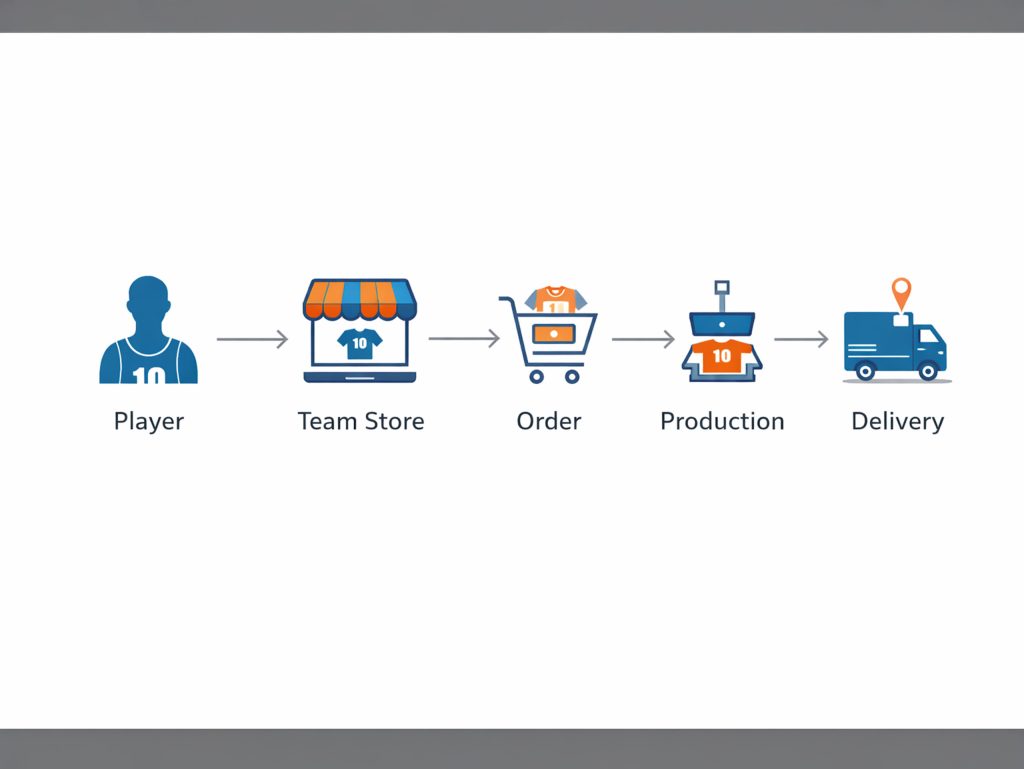
Wooter approaches this challenge from a completely different angle.
Instead of trying to improve the traditional process, it replaces it entirely with a centralized, digital system.
At its core, Wooter provides a platform where everything, from data collection to order management, is handled in one place. This eliminates the need for disconnected tools and manual coordination.
Here’s what that looks like in practice:
- Player information is collected directly through the system
- Orders are automatically organized and compiled
- Administrators manage everything from a single dashboard
- Production begins only after everything is verified
- Delivery is tracked and structured
There’s no need to juggle spreadsheets.
No need to chase emails.
No need to manually compile data.
The system does it for you.
This shift, from manual coordination to centralized automation, is what transforms the entire experience for league administrators.
Instead of reacting to problems, you’re working within a system designed to prevent them.
How the Wooter System Works
Wooter simplifies the uniform ordering process into a clear, structured workflow.
1. League Setup
The process begins with setting up your league inside the platform. You can organize teams, divisions, and seasons in a way that mirrors your actual structure.
This creates a foundation where everything is clearly defined and easy to manage.
2. Team Stores Go Live
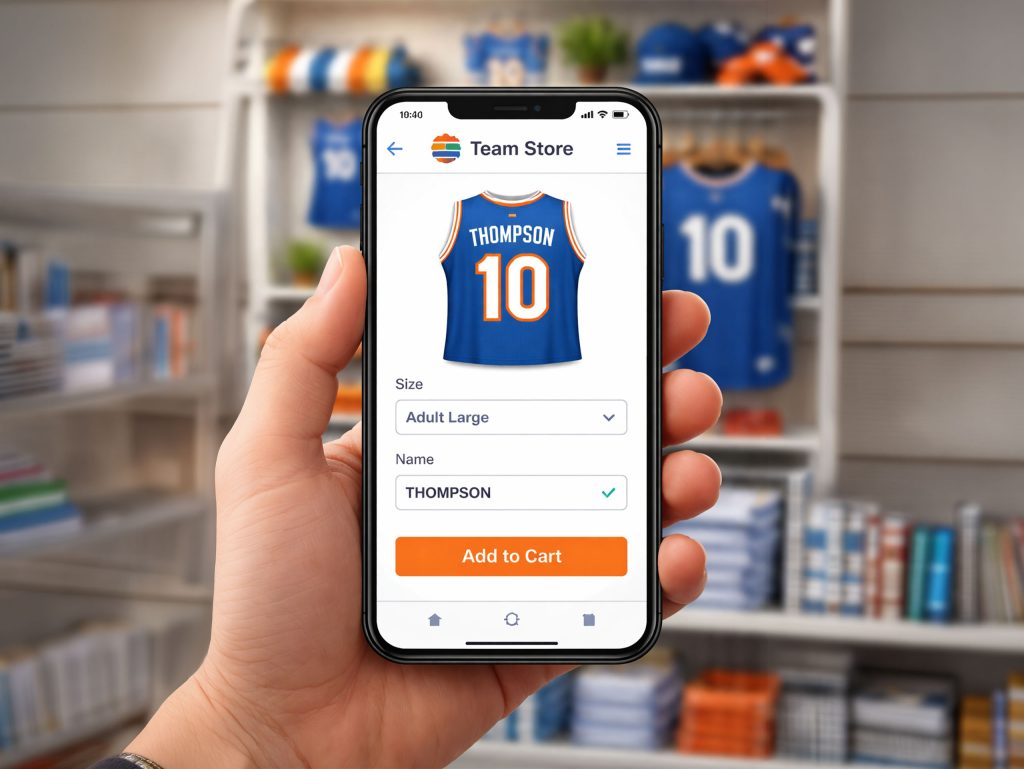
Each team gets its own dedicated online store.
This is one of the most powerful features of the system.
Instead of collecting information manually, players or parents simply visit the team store and enter their details themselves. This includes:
- Sizes
- Names
- Jersey numbers
- Item selections
Because the data is entered directly by the source, the chances of errors drop significantly.
There’s no middle layer. No retyping. No confusion.
3. Automated Data Collection
As orders come in, the system automatically organizes everything.
Administrators can view all data in real time, across all teams. There’s no need to merge spreadsheets or verify entries manually.
Everything is already structured.
This not only saves time but also ensures consistency and accuracy.
4. Centralized Order Management
Once the ordering window closes, administrators can review everything in one place.
Instead of checking multiple files, you get a complete overview of:
- Team orders
- Player details
- Quantities
- Customizations
From here, approvals can be made quickly and confidently.
5. Production and Delivery
After approval, the order moves directly into production.
Because the data is already clean and organized, there are fewer delays and fewer errors during manufacturing.
Delivery is then handled in a structured way, ensuring teams receive their uniforms on time.
6. Features Designed for Scale
Wooter isn’t just built to solve problems; it’s built to scale with your organization.
Whether you’re managing a handful of teams or a large league, the platform adapts to your needs.
Team Stores: Eliminating Bottlenecks
Team stores remove one of the biggest friction points in the traditional process: data collection.
Instead of chasing coaches and parents, you simply share a link.
Each team manages its own inputs, while everything feeds into a centralized system.
This creates a balance between autonomy and control:
- Teams handle their own entries
- Administrators maintain oversight
The result is faster, cleaner, and more reliable data.
Bulk Ordering: Simplified and Structured
Bulk ordering is no longer a complicated task.
Because all orders are collected digitally, Wooter compiles them automatically. Administrators don’t need to calculate totals or double-check entries.
Everything is already prepared.
This reduces:
- Manual workload
- Risk of missing items
- Order inconsistencies
And allows you to manage large volumes with ease.
Reordering: Built for Ongoing Needs
Leagues are dynamic. Players join mid-season. Teams expand. Uniforms need replacements.
Traditional systems struggle with this because they’re not designed for continuity.
Wooter solves this by storing all order data and designs.
This means:
- You can reorder instantly
- You don’t need to start from scratch
- Previous setups can be reused
It’s a long-term solution, not just a one-time tool.
Data & Roster Management
Wooter also functions as a management system for your league.
You can track:
- Player information
- Team assignments
- Sizes and preferences
All in one place. This eliminates the need for separate systems and ensures that your data remains consistent across seasons.
End-to-End Workflow Integration
One of Wooter’s biggest strengths is that it controls the entire process.
From design to delivery, everything is connected.
This reduces the number of touchpoints where errors can occur and ensures a smoother experience overall.
Why This Matters for League Directors
If you’re managing a league, your time is valuable.
But in a traditional system, most of that time is spent on tasks that shouldn’t require so much effort:
- Following up on missing information
- Fixing errors
- Managing spreadsheets
- Coordinating between teams
These tasks don’t add value; they just consume time.
Wooter changes that.
Automating and centralizing the process allows you to shift your focus from operational headaches to strategic priorities.
Instead of managing chaos, you’re managing a system.
This leads to:
- Better organization
- Improved efficiency
- Less stress
More time for growth
Real Impact: From Chaos to Control
Organizations that switch to Wooter often experience a dramatic improvement in how they manage uniforms.
What used to take days can now be handled in hours.
What used to involve constant errors becomes reliable and predictable.
The difference is clear:
Before:
- Scattered communication
- Manual data entry
- Frequent mistakes
- Time-consuming corrections
After:
- Centralized system
- Automated workflows
- Clean, accurate data
- Streamlined execution
This isn’t just about saving time, it’s about creating a better experience for everyone involved.
Players get the right uniforms.
Parents have a smoother process.
Administrators stay in control.
Set up your league store
If you’re ready to replace spreadsheets, eliminate errors, and streamline your entire uniform process, it’s time to take the next step.
Set up your league store with Wooter and experience a smarter, more efficient way to manage uniforms at scale.
Built for Long-Term Growth
One of the most important aspects of Wooter is that it grows with your organization.
As your league expands, the system continues to support your needs without adding complexity.
You don’t need to reinvent your process every season.
Instead, you build a foundation that improves over time.
This is especially valuable for organizations that:
- Run multiple seasons per year
- Manage large numbers of teams
- Plan to scale in the future
Wooter isn’t just a solution for today, it’s a system for long-term success.
Final Words: A Better Way to Manage League Uniforms
Managing uniforms for multiple teams doesn’t have to be chaotic.
The traditional approach, emails, spreadsheets, and manual coordination, simply isn’t built for scale. It creates unnecessary work, increases the risk of errors, and limits your ability to grow.
Wooter offers a better alternative.
By centralizing the entire process into one platform, it eliminates inefficiencies and gives you full control over your operations.
From team stores and bulk ordering to reordering and data management, everything is designed to simplify your workflow and improve your results. If you’re running a league or a multi-team organization, the question isn’t whether you need a better system; it’s how long you can afford to operate without one.