
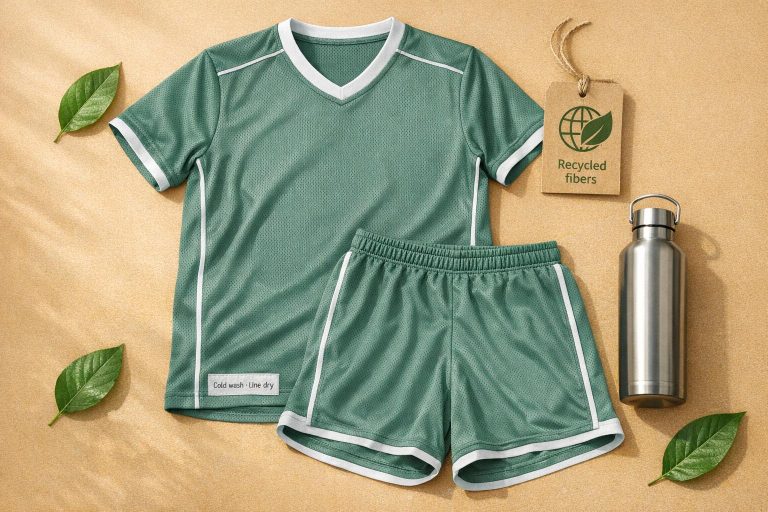
Traditional sports uniforms are harming the planet, but eco-friendly options offer a solution. Here’s why upgrading to sustainable sportswear is a smart move:
- Materials Matter: Recycled polyester, organic cotton, bamboo, and Tencel reduce waste, save water, and cut energy use.
- Performance Benefits: These fabrics excel in moisture-wicking, durability, and temperature control, rivaling conventional options.
- Cost Efficiency: Though pricier upfront, they last longer, reducing replacement needs and saving money over time.
- Certifications to Trust: Look for GOTS and OEKO-TEX labels to ensure ethical and safe production.
Switching to sustainable uniforms helps teams perform better, save money, and reduce their environmental impact. Read on to learn about the best materials, care tips, and design options for your team.
Design a no Plastic Sportswear Collection
sbb-itb-4d95ad3
Why Choose Eco-Friendly Sports Uniforms
Switching to eco-friendly sports uniforms isn’t just good for the planet – it’s a smart move for performance, budget, and reputation. The benefits touch on three main areas: environmental responsibility, athletic performance, and long-term savings.
Environmental Impact
Did you know that traditional polyester jerseys leave a carbon footprint three times larger than organic cotton alternatives? By opting for recycled polyester (rPET), teams can cut energy usage significantly while repurposing waste like plastic bottles and fishing nets into functional fabrics. This small switch helps prevent these materials from becoming long-term pollutants.
Water savings is another big win. Organic cotton farming uses less water and avoids harmful pesticides, protecting both ecosystems and water supplies. Plus, eco-friendly uniforms tackle the issue of microplastics. Unlike traditional synthetics, natural fibers like bamboo and hemp, along with biodegradable options, release fewer microplastics during washing, reducing overall pollution.
Eco-conscious production methods also avoid toxic dyes and finishes, ensuring a safer environment for everyone – including the athletes wearing the gear.
Performance and Comfort
Sustainable materials aren’t just good for the planet – they’re designed to perform. Fibers like Tencel and bamboo excel at moisture-wicking, keeping athletes dry even during intense games.
Temperature control is another standout feature. Merino wool, for example, adjusts to the weather, cooling players in the heat and warming them in the cold. On top of that, materials like hemp and Tencel naturally resist odor-causing bacteria, meaning uniforms can go longer between washes without smelling bad. That’s a win for both convenience and skin health, especially since hypoallergenic options like organic cotton and bamboo reduce irritation.
Long-Term Cost Savings
While eco-friendly uniforms might cost more upfront, they save money in the long run. Their durable construction means fewer replacements are needed over multiple seasons. As Outland Denim explains:
"By producing well-made garments that last longer, sustainable brands offer better value for money and reduce the need for frequent replacements".
Wearing these uniforms twice as often can cut greenhouse gas emissions by 44%. For teams, this translates to fewer replacement orders and lower overall expenses. Materials like hemp and recycled polyester hold their shape and resist pilling, reducing the need for annual updates.
Proper care can extend the life of these uniforms even further, and recycling programs help teams embrace circular economy practices, potentially lowering future costs.
| Material | Durability Advantage | Cost Benefit |
|---|---|---|
| Recycled Polyester | Resists pilling and keeps shape | Fewer replacements needed |
| Organic Cotton | Strong and soft fibers | Lasts for multiple seasons |
| Hemp | Extremely durable; UV-resistant | Longest-lasting natural fiber |
| Bamboo | Stays soft after washing | Reduces laundry frequency |
Teams that choose sustainable uniforms also stand out in the market. Eco-friendly gear builds loyalty among environmentally conscious players, parents, and sponsors. The combined perks – better for the planet, better for athletes, and better for budgets – make the case for switching to eco-friendly uniforms crystal clear.
Eco-Friendly Fabric Options for Sports Uniforms
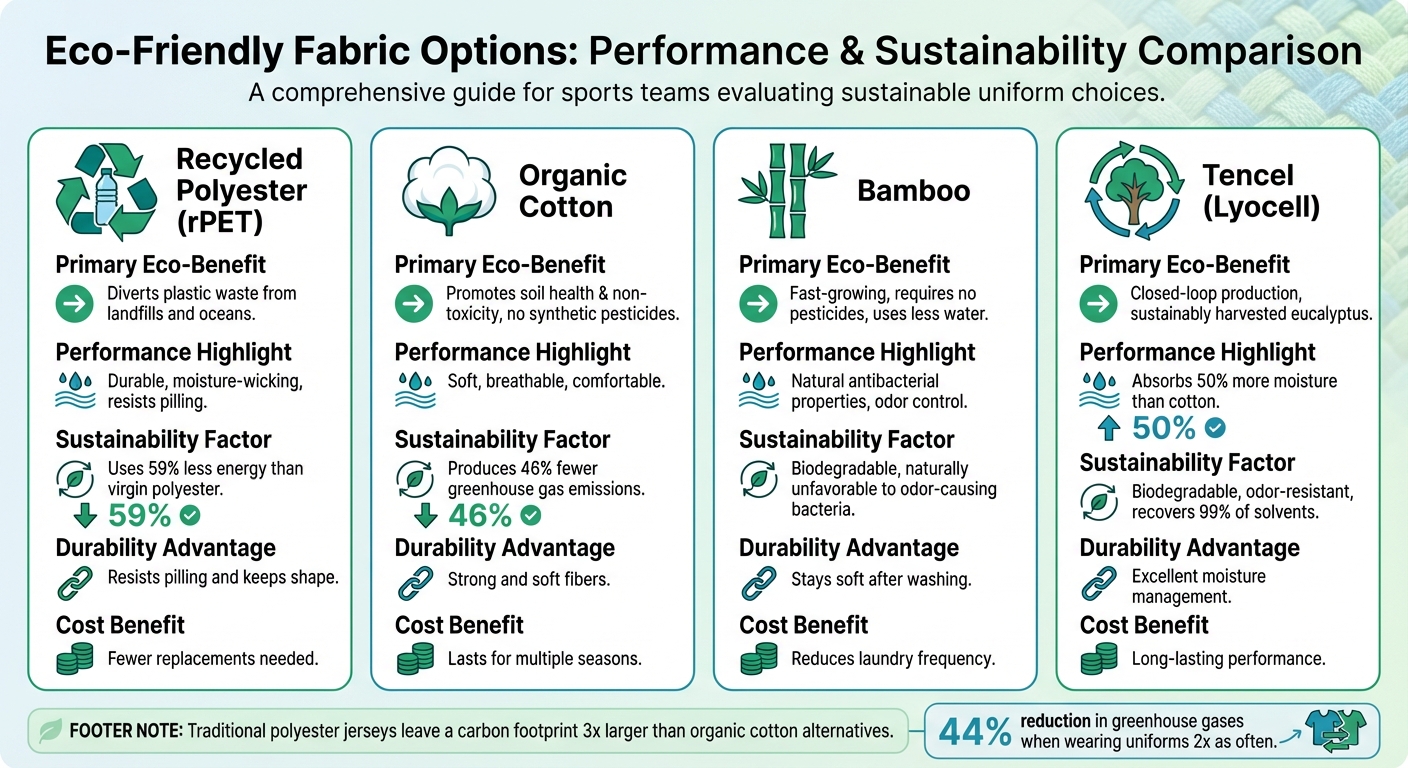
Eco-Friendly Sports Uniform Fabrics Comparison Guide
The fabric you choose for sports uniforms can make a huge difference – not just in performance but also in reducing the ecological toll of production. Below are some standout options that combine functionality with a reduced environmental impact.
Recycled Polyester
Recycled polyester, or rPET, transforms discarded plastic bottles and old garments into high-performance fabric. The process involves cleaning, crushing, and melting plastic waste to create new fibers. This keeps plastic out of landfills and oceans while cutting down on energy use compared to producing virgin polyester. Plus, recycled polyester retains the features athletes rely on, like moisture-wicking, breathability, and resistance to pilling. It’s durable, holds its shape through multiple washes, and offers a lower-impact alternative for activewear.
Organic Cotton
Organic cotton is a natural, chemical-free option that feels great against the skin. Unlike conventional cotton, it’s grown without synthetic pesticides, fertilizers, or genetically modified seeds. This farming method supports healthier soil and relies mainly on rain-fed irrigation, reducing water usage. Its breathable, soft texture makes it a favorite for training gear and casual wear. And when its life cycle ends, organic cotton breaks down naturally, leaving no lasting waste in landfills.
Bamboo and Tencel Fibers
Bamboo and Tencel fibers are paving the way for plant-based performance fabrics. Bamboo, for instance, grows incredibly fast without pesticides and uses much less water than traditional crops. Its natural antibacterial properties also help control odor, making it perfect for outdoor sports and frequent use.
Tencel, made from sustainably harvested eucalyptus wood pulp, offers another eco-friendly option. As noted by Silver Sea Apparel:
"TENCEL™ can absorb about 50% more moisture compared to cotton or organic cotton and the fibers are naturally unfavorable to odor causing bacteria".
Tencel production is highly efficient, using a closed-loop process that recovers and reuses nearly all solvents, reducing waste and pollution. Both bamboo and Tencel fabrics are soft, manage moisture effectively, and biodegrade naturally, making them excellent picks for teams aiming to minimize their ecological footprint.
| Fabric Type | Primary Eco-Benefit | Performance Highlight | Sustainability Factor |
|---|---|---|---|
| Recycled Polyester | Diverts plastic waste | Durable, moisture-wicking | Uses 59% less energy than virgin polyester |
| Organic Cotton | Promotes soil health & non-toxicity | Soft, breathable | Produces 46% fewer greenhouse gas emissions |
| Tencel Lyocell | Closed-loop production | Absorbs 50% more moisture than cotton | Biodegradable & odor-resistant |
Up next, discover how to design these sustainable uniforms to optimize both performance and eco-consciousness.
How to Design Eco-Friendly Sports Uniforms
Eco-Friendly Design Practices
Creating environmentally conscious sports uniforms starts with selecting materials like recycled polyester, organic cotton, Tencel, or bamboo. These options not only reduce reliance on virgin resources but also support waste reduction. Incorporating digital design tools can further optimize production by cutting fabric waste by up to 15% through precise pattern cutting. Additionally, zero-waste design techniques – where patterns are strategically arranged to utilize every inch of fabric – help eliminate scraps during manufacturing.
For vibrant and long-lasting colors, consider low-impact water-based or waterless dyeing methods. Traditional cotton production contributes to 220 million metric tons of carbon emissions annually, largely due to pesticides and dyes. By switching to eco-friendly dyeing technologies, manufacturers can significantly reduce water usage and chemical pollution, safeguarding natural waterways without compromising color quality.
Durability is another key factor. Reinforced stitching and modular designs, such as reversible jerseys, extend the lifespan of uniforms, reducing the need for frequent replacements. When uniforms do reach the end of their life, choosing biodegradable or recyclable fabrics ensures they can be responsibly disposed of, completing the sustainability cycle.
These practices not only lessen environmental harm but also pave the way for creating uniforms that are both functional and tailored to athletes’ needs.
Custom Design Options with Wooter Apparel
Wooter Apparel combines sustainable materials with eye-catching designs to create custom sports uniforms that don’t compromise on performance. Their sublimated designs use eco-friendly fabrics like recycled polyester and organic cotton, offering teams a way to meet both performance goals and environmental standards. Sublimation embeds colors directly into the fabric, making the designs highly durable while also cutting down on chemical waste.
Wooter Apparel offers a free custom design consultation to help teams align their sustainability goals with their performance and style needs. Whether it’s moisture-wicking recycled polyester for high-energy basketball games or breathable bamboo blends for outdoor soccer, their design team ensures the fabric matches the sport’s demands. Teams can also customize a range of items – from jerseys to accessories – that deliver on both functionality and environmental responsibility.
Certifications for Eco-Friendly Sports Uniforms
Certifications ensure that eco-friendly sports uniforms meet rigorous environmental and ethical standards, covering everything from raw material sourcing to the final product. They help cut through marketing claims and combat greenwashing.
Global Organic Textile Standard (GOTS)
The Global Organic Textile Standard (GOTS) is one of the most respected certifications for organic textiles, addressing the entire production process. To display the "Organic" label, uniforms must contain at least 95% organic fibers, while the "Made with Organic" label requires a minimum of 70% organic fibers. The latest GOTS Version 8.0, launched on March 2, 2026, added stricter chemical restrictions, mandatory due diligence protocols, and new criteria aimed at improving product lifecycle sustainability.
What sets GOTS apart is its thorough approach. It mandates wastewater treatment at wet processing facilities, bans chlorine-based bleaching and synthetic sizing agents, and restricts the use of hazardous chemicals such as PFAS and toxic heavy metals. Beyond environmental standards, GOTS also enforces International Labour Organization guidelines, protecting over 4 million workers in 15,441 certified facilities across 87 countries. These standards prohibit child and forced labor, ensure safe working conditions, and guarantee fair wages.
To verify a supplier’s GOTS certification, use the GOTS Certified Suppliers Database. Look for the official logo – a white shirt on a green circle – on finished products, accompanied by the license number and certifier name. Each shipment also comes with a Transaction Certificate, ensuring transparency from the organic farm to the final garment.
OEKO-TEX Certification
The OEKO-TEX Standard 100 focuses on the safety of the finished product by testing every component – fabric, thread, buttons, and accessories – for over 1,000 harmful substances such as pesticides, carcinogenic dyes, formaldehyde, and heavy metals. This is especially crucial for sports uniforms, as sweat can increase the skin’s absorption of toxins. Research shows that some non-certified athletic wear may expose users to up to 40 times the safe BPA limit.
"Wearing synthetic workout clothes exposes your skin to chemicals, with sweating further increasing absorption." – Mohamed Abdallah, Associate Professor, University of Birmingham
For teams interested in evaluating a factory’s overall sustainability practices, OEKO-TEX STeP (Sustainable Textile Production) examines environmental performance, chemical management, and social responsibility at production facilities. You can verify a product’s certification using the OEKO-TEX Label Check tool on their official website.
While certified eco-friendly uniforms may have higher upfront costs – ranging from $25 to $200 depending on complexity – they often save money in the long run by adhering to strict safety standards and minimizing the risk of product recalls. Choosing certified team uniforms ensures your gear prioritizes both environmental care and athlete safety.
How to Care for Eco-Friendly Sports Uniforms
Taking care of eco-friendly sports uniforms properly ensures they last longer and remain in good condition. How you wash, dry, and store these garments makes a big difference in their durability and performance, while also protecting your investment in sustainable gear.
Washing and Drying Guidelines
When it’s time to wash your uniforms, stick to cold water and turn the garments inside out. Use a mild, enzyme-based detergent, and steer clear of bleach, fabric softeners, or dryer sheets – they can damage elastic fibers and custom pro football jerseys. Cold water not only protects the fabric but also saves on energy costs. Elastic materials like spandex can start to deform at temperatures as low as 150°F (65°C), so keeping the water cool is essential. For tough stains, pre-treat the area with a gentle detergent before tossing it into the wash.
"The high heat of a tumble dryer is the single fastest way to ruin elastic fibers – it can even melt them or make them brittle, leading to immediate loss of elasticity." – Sportek International Inc.
Air drying is your safest bet. Hang the uniforms or lay them flat to avoid heat damage and extend their lifespan. If you must use a dryer, set it to the lowest heat and take the garments out while they’re still slightly damp. This helps protect elasticity and cuts down on energy use. However, air drying remains the most energy-efficient option and helps maintain fabric quality.
To minimize microfiber shedding, wash full loads. Less friction between garments reduces fiber loss. You can also use tools like a Cora Ball, which captures microfibers during the wash cycle and helps prevent fabrics from wearing out prematurely (it costs about 1.6 cents per load over five years). If you notice slight shrinkage, try soaking the item in lukewarm water with a bit of conditioner for 15–30 minutes, then gently stretch it back to its original shape.
Once your uniforms are clean and dry, storing them correctly is the next step in keeping them in great shape.
Storage and Handling Tips
Proper storage is just as important as washing and drying when it comes to preserving your sports uniforms. Always make sure they’re completely dry – don’t forget to check areas like seams and waistbands to avoid mold or mildew. Store uniforms in a cool, dry place, away from direct sunlight, which can fade colors and damage eco-friendly dyes.
"To keep your custom sportswear in optimal condition during periods of non-use, proper storage is key." – Wooter Apparel
Opt for breathable fabric storage bags or drawers instead of airtight plastic bins. Plastic traps residual moisture, which can break down the fabric over time. Fold your uniforms loosely to avoid creating deep creases that might weaken the material. Address any stains or odors as soon as possible – don’t store garments without treating these issues, as they can set into the fibers permanently.
Making the Switch to Eco-Friendly Sports Uniforms
Choosing materials like recycled polyester, organic cotton, or bamboo fabrics allows you to maintain both performance and style while reducing your impact on the planet. Bamboo fabrics, in particular, are a great option for high-intensity sports since they are naturally breathable and odor-resistant.
Look for certifications such as GOTS, OEKO-TEX, and SA8000. These labels ensure your uniforms meet authentic sustainability standards and are produced under ethical manufacturing practices.
Brands like Wooter Apparel make this transition simple. Their full-sublimation technology embeds designs directly into the fabric, which prevents peeling or fading and extends the life of the garment. Plus, their in-house design team offers fully customized uniforms, allowing you to incorporate sustainability messaging, team colors, and logos. Even better, they provide these services with no minimum order requirements and free custom design support. Pricing starts at $39.99 per set for basketball uniforms, $27.99 per set for soccer kits, and $59.99 per set for football uniforms – making eco-friendly options accessible for teams of all sizes. These cost-effective, personalized solutions make adopting sustainable uniforms a practical choice.
As Kane Athletica puts it:
"Embrace the shift towards sustainability in your wardrobe and make a positive difference with every workout and training session. Your body, the planet, and future generations will thank you for it."
FAQs
Which eco-friendly fabric is best for my sport?
Organic hemp stands out as one of the most eco-friendly fabric options for sportswear. It naturally resists pests, uses very little water to grow, and aligns with efforts to promote environmental responsibility. Beyond its environmental perks, hemp is both durable and breathable, making it a smart and practical choice for activewear.
How can I tell if a uniform is truly sustainable?
To find a uniform that’s genuinely eco-conscious, pay attention to a few important aspects: materials, production methods, and lifecycle. Choose fabrics like recycled or organic options that are kinder to the environment. Check if the manufacturing process prioritizes ethical practices and reduces waste. Also, think about how long the uniform will last and whether it can be reused, repaired, or recycled when its time is up. Certifications or eco-labels can help confirm that the uniform meets environmental and social responsibility standards, ensuring it leaves a smaller footprint.
Do eco-friendly uniforms need special washing?
Eco-friendly uniforms last longer and maintain their benefits when cared for properly. Use gentle, eco-friendly detergents and wash them in cold water to protect both the fabric and their sustainable qualities. Steer clear of high heat and harsh chemicals, as these can weaken the materials and shorten their lifespan.