
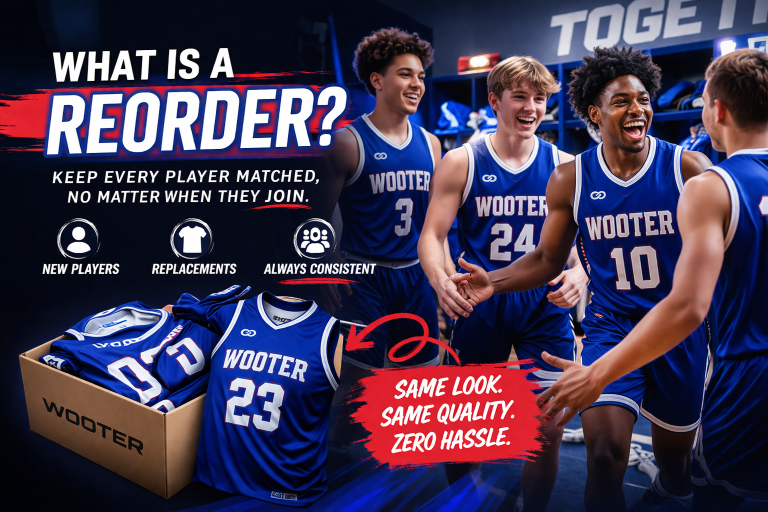
A team order does not always end with the first shipment.
New players join. Sizes change. Uniforms get lost, damaged, or replaced mid-season. That is why reorders matter. A reorder is a repeat uniform order made after the original team order, usually for new players or replacement items that need to match the existing team design.
In other words, it is how teams stay complete without starting over.
A Reorder Means Ordering
the Same Uniform Again
A reorder is a follow-up order for an existing uniform design. Instead of creating a new look from scratch, the team orders the same uniform again so the new item matches what the rest of the roster is already wearing.
That usually means keeping:
- the same team colors
- the same logo placement
- the same fonts and number style
- the same overall design
This is why a custom uniform reorder is different from a new team order. The design is already approved. The goal is continuity, not redesign.
Why Teams Need Reorders?
Reorders are a normal part of team operations. Most teams need them at some point during a season. This is especially common in youth sports, school programs, clubs, and leagues where rosters change or player needs shift during the year.
A replacement uniform order or reorder for new players is often needed when:
New Player Joins
A player joins after the first order was placed. They need a uniform that matches the existing roster exactly.
Player Needs a New Size
A size has changed or was ordered incorrectly the first time. A replacement in the right size is needed.
Jersey or Shorts Are Lost
A uniform piece goes missing during the season. The replacement needs to match the original design.
A Uniform Is Damaged
A jersey or shorts are no longer wearable. The team needs a replacement that stays consistent with the set.
Backup Pieces Are Needed
Additional items are required to keep the program running smoothly throughout the season.
How Uniform Reorders Work?
A reorder is usually simpler than the original order because the design already exists.
In most cases, the process looks like this:
- the team selects the existing uniform design
- the new player or replacement item is added
- sizes, names, and numbers are confirmed
- the reorder is placed and processed
That means the team does not need to go back through the full design process. Since the look is already set, the reorder focuses on matching the original uniform as closely as possible.
For example: if a new basketball player joins mid-season, the team may need the same jersey, shorts, colors, and number style as the rest of the roster. A team uniform reorder makes that possible without creating a brand-new order from scratch.
Why Reorders Matter for
Team Consistency?
Uniform consistency matters more than many teams expect.
When one player’s gear does not match, it stands out. That can affect team presentation, branding, and the professional look of the roster as a whole. A reorder helps avoid that by keeping new or replacement items aligned with the original team design.
This matters for:
- team identity
- league presentation
- event photos
- sponsor visibility
- player appearance on game day
A team apparel reorder is not just about replacing an item. It is about keeping the team visually complete.
Reorders vs.
New Team Orders
A reorder and a new team order are not the same thing. The difference is important because reorders are built for continuity. A new order is built for a new season, new look, or new setup.
When Should You
Place a Reorder?
The best time to place a reorder is as soon as the need becomes clear.
Teams usually reorder when:
- a player joins after the main order
- a uniform is no longer usable
- additional stock is needed
- backups are required for the season
Waiting too long can create unnecessary gaps where players do not have matching uniforms when they need them.
That is why many programs treat reorders as part of normal season management rather than a last-minute fix.
How Reorders Work With
Team Stores and Ordering Systems
Reorders become much easier when teams use a structured team store or organized ordering workflow.
In a modern fan shop or team store setup, the original design can stay connected to future orders. That makes it easier to reorder uniforms, replacement pieces, or additional gear without restarting the full process.
This is also where UniformOS fits naturally. When uniform designs, player details, and reorder history are managed through one system, teams can handle reorders faster and with fewer mistakes.
That matters for programs that deal with ongoing roster changes, replacement requests, or recurring uniform needs throughout the season.
Reorders also connect naturally to related workflows like league uniform programs, where design consistency matters across teams, and individual fulfillment or bulk fulfillment, depending on how replacement items are delivered.
Frequently Asked Questions
Still have questions about uniform reorders?
These quick answers explain when teams place reorders, how they work, and why they help keep every player matched to the rest of the roster
What is a reorder in team uniforms?
A reorder is a repeat order placed for an existing team uniform design, usually for new players, replacement items, or additional gear.
When should a team place a reorder?
Teams usually place a reorder when a new player joins, a size changes, a uniform is lost or damaged, or extra items are needed during the season.
Are reorders faster than new team orders?
In many cases, yes. Reorders are often faster because the uniform design has already been approved.
Can a reorder match a previous team design exactly?
That is the goal. A reorder is meant to match the existing team design so new or replacement items stay consistent with the rest of the roster.
What is the difference between a reorder and a new team order?
A reorder uses an existing design for replacement or additional items. A new team order starts a new design process for a fresh setup.
Add New Players Without Breaking Team Consistency
Rosters change, but your team look should stay consistent. Reorders make it easier to add new players, replace damaged pieces, and keep everyone aligned without starting over.