
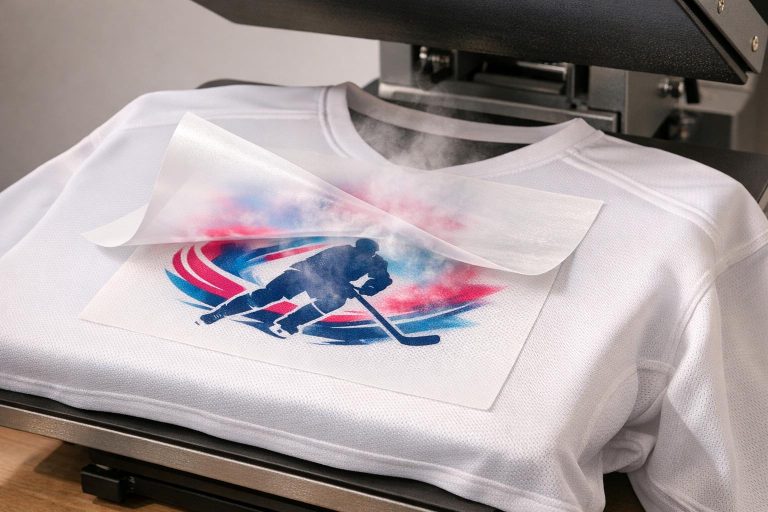
Sublimation printing is a process that permanently embeds designs into polyester fabrics, making it a popular choice for hockey jerseys. Unlike other methods like screen printing or heat transfers, sublimation ensures that logos, numbers, and colors become part of the fabric itself. This means no cracking, peeling, or fading – even after intense wear and repeated washing.
Here’s why sublimation stands out for hockey jerseys:
- Durability: The design is bonded to the fabric, ensuring it lasts as long as the jersey.
- Comfort: Sublimation keeps the material lightweight and breathable, ideal for active gameplay.
- Vibrant Colors: The process supports unlimited colors and intricate designs without additional costs.
- Customization: Player names, numbers, and team logos are seamlessly integrated into the jersey.
The process involves printing designs onto transfer paper, applying heat and pressure to turn the dye into gas, and bonding it to polyester fibers. The result is a smooth, long-lasting jersey that performs well under the demands of hockey.
For teams looking for customizable team uniforms that combine performance and style, sublimation offers a reliable and durable solution.
How sublimation T Shirt sports Jersey is made – process
sbb-itb-4d95ad3
What Is Sublimation Printing?
Sublimation printing is a process where solid dye transforms directly into gas, skipping the liquid stage entirely. This technique starts with a design printed onto transfer paper using heat-sensitive dyes. Then, with a heat press set between 380–420°F, the design is transferred onto polyester fabric. The heat opens up the fabric’s pores, allowing the dye to bond permanently as the material cools down.
This method is especially suited for hockey jerseys because the dye becomes part of the fabric itself. The result? A smooth, breathable, and lightweight garment that holds up even during intense gameplay.
"The nature of sublimation means that the prints are never heavy or thick. The garment is unchanged by the process, save for the addition of your art."
– Wooter Apparel
One key aspect of sublimation is that it only works on 100% polyester or fabrics with a high polyester blend. The dye bonds exclusively with polymer fibers, which means this process isn’t compatible with cotton.
This seamless integration of design and fabric highlights why sublimation often outshines traditional printing methods.
How Sublimation Differs from Other Printing Methods
The main distinction between sublimation and other printing techniques lies in how the design interacts with the fabric. Methods like screen printing or heat transfers apply ink or vinyl onto the surface, creating a layer that can crack, peel, or fade over time – problems that are especially noticeable with hockey jerseys, which endure constant wear and tear. Sublimation, on the other hand, embeds the design directly into the fabric fibers. This ensures the material stays lightweight, breathable, and free of added texture.
Another advantage is cost efficiency. Screen printing often charges extra for multiple colors, logos, or personalized elements like player names. Sublimation, being a digital process, allows for unlimited design elements, vibrant colors, sponsor logos, and even individual customizations – all applied in a single heat-press session without additional fees.
"Sublimation draws its main strength from being a digital printing process which allows an unlimited number of design elements and logos to be printed, and individual personalizations like names and numbers to be included all in one print."
– Jared Musolino, Head Designer, Wooter Apparel
The Science Behind Sublimation
Sublimation is a fascinating process where a solid dye transforms directly into a gas, skipping the liquid phase entirely. This happens when enough heat energy is applied to overcome the forces holding the molecules together, allowing them to break free and enter a gaseous state. However, for sublimation to occur, the temperature and pressure must remain below the substance’s triple point – the unique conditions where it could otherwise turn into a liquid.
When it comes to hockey jerseys, the process unfolds in a carefully controlled sequence. Heat causes the fabric’s pores to open while simultaneously vaporizing the dye, allowing it to bond directly to the fibers. As Wooter Apparel puts it: "The gaseous dye… bonds firmly with the molecules of the fabric, fully integrating with them. Totally inseparable!"
This integration is a game-changer for laced hockey jerseys, which endure constant friction and frequent washing. Once the material cools, the fabric’s pores close, and the dye gas reverts to a solid state, permanently bonding with the fibers. Importantly, this is a physical change, not a chemical one, meaning the dye’s chemical structure remains unchanged throughout the process. This ensures that the designs stay vibrant and intact over time.
Required Conditions for Sublimation
For sublimation to work, precise heat, pressure, and fabric composition are non-negotiable. Temperatures must stay between 385°F and 400°F to fully vaporize the dye without damaging the material.
The fabric also plays a crucial role – it must be 100% polyester or a high-polyester blend. Polyester’s synthetic pores are essential for trapping the gaseous dye, a process that simply won’t happen with natural fibers like cotton. Steady, even pressure is equally important, as it ensures the dye penetrates the fabric completely and prevents issues like ghosting or blurry designs. Without these exact conditions, the molecular bonding won’t occur, and the design won’t become a permanent part of the jersey.
This meticulous process lays the groundwork for creating durable, high-performance hockey jerseys with long-lasting designs.
Step-by-Step Sublimation Process for Hockey Jerseys
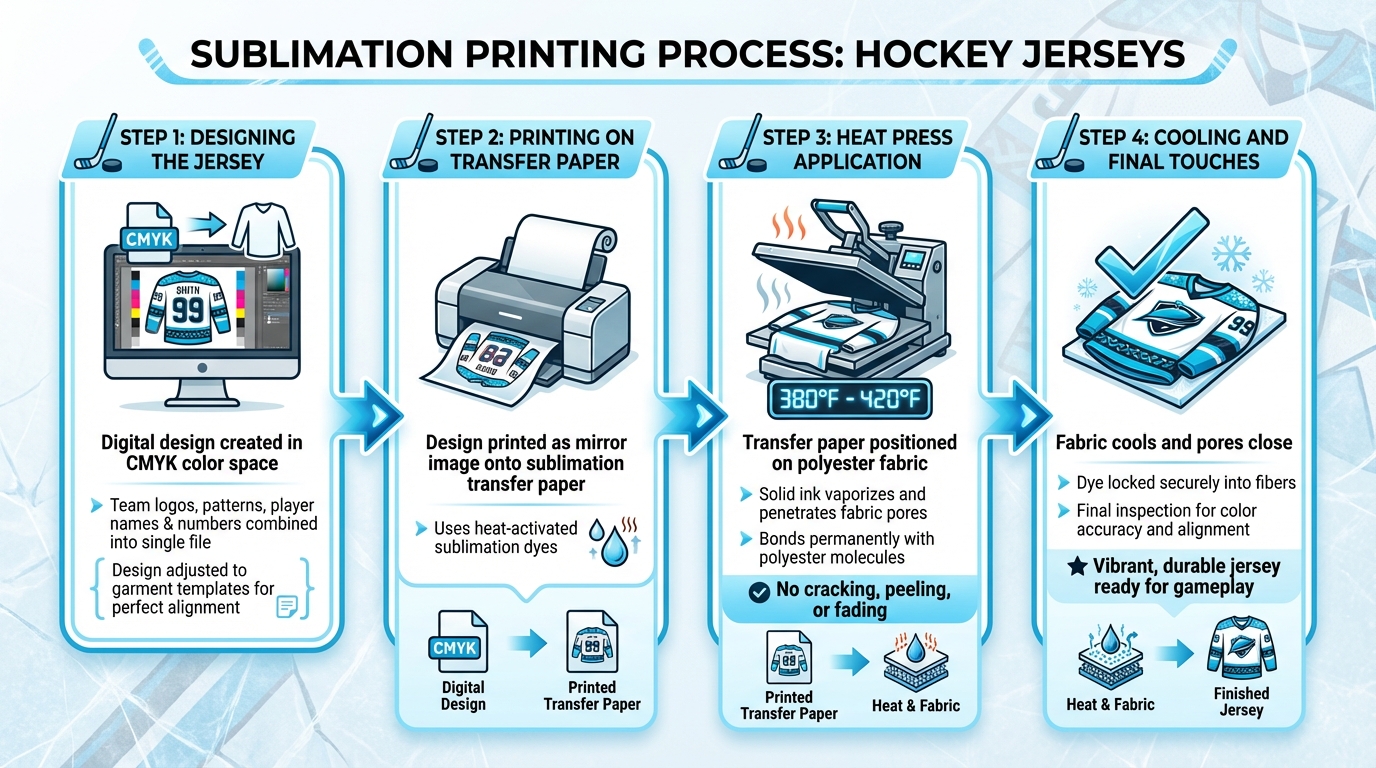
4-Step Sublimation Printing Process for Hockey Jerseys
Transforming a digital design into a hockey jersey that’s both durable and eye-catching involves a detailed sublimation process. Here’s how it’s done, step by step.
1. Designing the Jersey
Everything starts with creating a digital design using specialized design software. Designers work in the CMYK color space to ensure the colors on-screen match the sublimation dyes used during printing. This method allows for intricate designs and bold colors to come to life in one seamless application.
Key design elements – like team logos, patterns, player names, and numbers – are combined into a single file. This ensures every part of the design is infused into the fabric at the same time. The design is then adjusted to fit specific garment templates, ensuring patterns align perfectly across different panels for a cohesive all-over look.
Once the design is finalized, it’s time to prepare the transfer paper.
2. Printing on Transfer Paper
The next step involves printing the design onto sublimation transfer paper. This is done using a specialized inkjet printer equipped with heat-activated sublimation dyes. The design is printed as a mirror image so it appears correctly when transferred to the fabric.
3. Heat Press Application
Now comes the critical stage. The printed transfer paper is positioned on the polyester fabric panels, and a heat press is used to transfer the design. The press operates at temperatures between 380°F and 420°F, with steady pressure applied. At this high heat, the solid ink on the paper vaporizes, penetrating the fabric’s open pores and bonding directly with the polyester molecules. This creates a permanent design that won’t crack, peel, or fade. Consistent pressure ensures sharp, even colors across the jersey.
4. Cooling and Final Touches
After the heat press process, the fabric is left to cool. As it cools, the fabric’s pores close, locking the dye securely into the fibers. A final inspection is then performed to check for color accuracy and proper design alignment. These jerseys not only boast vibrant colors but are built to withstand the intense wear and tear of hockey games, much like custom pro football jerseys designed for high-impact sports.
Benefits of Sublimation for Hockey Jerseys
Sublimation brings a range of advantages to hockey jerseys, perfectly aligning with the sport’s unique demands: constant friction, frequent washing, and the need for lightweight, breathable gear.
Durability and Resistance to Wear and Tear
With sublimation, the dye becomes part of the fabric itself, meaning no cracking, peeling, or fraying – ever. This is a game-changer for hockey players, whose jerseys endure constant contact with shoulder pads, elbow pads, and chest protectors. Since the design is embedded directly into the polyester, it stays intact even after countless washes.
Another bonus? Players won’t feel any added texture from the design. The jersey’s natural softness remains untouched, ensuring comfort throughout the season.
Lightweight and Breathable Fabric
The sublimation process allows the dye to penetrate the fabric without clogging its pores. This keeps the material breathable, which is crucial for athletes during intense games. Unlike other printing methods that can weigh down the fabric with layers of ink, sublimation keeps the jersey lightweight and effective at wicking moisture away. This means players stay cool and comfortable, even during the most heated moments.
"The nature of sublimation means that the prints are never heavy or thick. The garment is unchanged by the process, save for the addition of your art." – Wooter Apparel
Long-Lasting, Bright Colors
Sublimation delivers bold, sharp designs by locking dye into the fibers, ensuring vibrant colors that look as fresh as they did on day one – even after years of wear. The digital printing method also supports a wide range of colors and intricate gradients, giving teams the creative freedom to design standout jerseys.
"The finished result is jerseys with vibrant colors and crisp graphics that will stand the rigors of play and the test of time." – CustomHockeyUniforms.com
These features make sublimated jerseys not just visually striking but also highly functional for players on and off the ice.
Sublimation vs. Other Printing Methods
When it comes to hockey jerseys, the choice of printing method can make or break performance. Screen printing, for instance, applies thick layers of ink that tend to crack with wear and tear, while heat transfers create a film that often peels after repeated washes. These limitations highlight why sublimation stands out as the go-to option for modern hockey jerseys.
Sublimation works in a completely different way. Instead of sitting on the surface, the ink is transformed into a gas and bonds directly with the polyester fibers. This means the design becomes part of the fabric itself, eliminating issues like cracking or peeling.
For teams, sublimation is also a game-changer when it comes to customization. Player names and numbers can be seamlessly integrated into the design, with each jersey printed individually from a digital transfer. This approach ensures full design coverage without adding extra costs.
Comparison Table: Sublimation vs. Other Methods
| Feature | Sublimation Printing | Screen Printing | Heat Transfer |
|---|---|---|---|
| Durability | Permanent; lasts as long as the jersey | Fades and cracks over time | Peels and cracks over time |
| Design Coverage | Seam-to-seam, all-over coverage | Limited to flat, specific areas | Limited to flat, specific areas |
| Feel/Texture | Soft, natural fabric feel | Heavy ink layer | Plastic-like layer |
| Breathability | High; fabric remains breathable | Reduced in printed areas | Low; blocks airflow |
| Resistance to Fading | Extremely high; ink is within fibers | Moderate; ink wears off | Low; colors dull quickly |
| Customization | Simple for names and numbers | Costly and time-consuming | Moderately challenging |
The advantages of sublimation are clear – it delivers the durability, comfort, and customization needed to keep up with the intense demands of hockey.
Conclusion
Sublimation has transformed the way hockey jerseys are made, offering designs that are both long-lasting and visually striking. By infusing dye directly into the fabric, this process ensures that graphics won’t crack, peel, or fade – even after intense use on the ice.
This approach also keeps jerseys soft and breathable, free from the heavy feel of layered inks. Plus, it allows for unlimited color options and intricate, all-over designs in a single step. Teams not only gain high-quality jerseys but also benefit from an eco-conscious production process that eliminates waste and doesn’t require water.
With turnaround times typically between 2 to 3 weeks and digital files enabling precise reorders even years later, sublimation is a practical and reliable solution for both new teams and established programs.
For hockey uniforms that combine durability, vibrancy, and top-tier performance, custom sublimated jerseys are the way to go. Wooter Apparel offers fully sublimated hockey jerseys, complete with free custom design services, making it simple to bring your team’s vision to life with professional-grade quality built to endure the demands of the game.
FAQs
Will sublimated graphics wear off from hockey pads?
Sublimated graphics on hockey jerseys are built to last and withstand the friction caused by hockey pads. This technique embeds detailed designs directly into the fabric, keeping them sharp and vibrant even after repeated use with pads.
Can sublimation print on cotton or low-poly fabrics?
Sublimation isn’t effective on cotton or fabrics with low polyester content because the process relies on polyester to bond with the dye. While there are some alternative methods to make it work, sublimation performs best on materials with a high polyester percentage, delivering bright, long-lasting results.
How do I wash sublimated hockey jerseys safely?
To keep sublimated hockey jerseys in great condition, always wash them in cold water. This helps preserve the vibrant colors and prevents the dye from fading or bleeding. Steer clear of hot water, as it can harm the sublimation print and shorten the jersey’s lifespan. Treat them gently to ensure the design stays intact over time.