
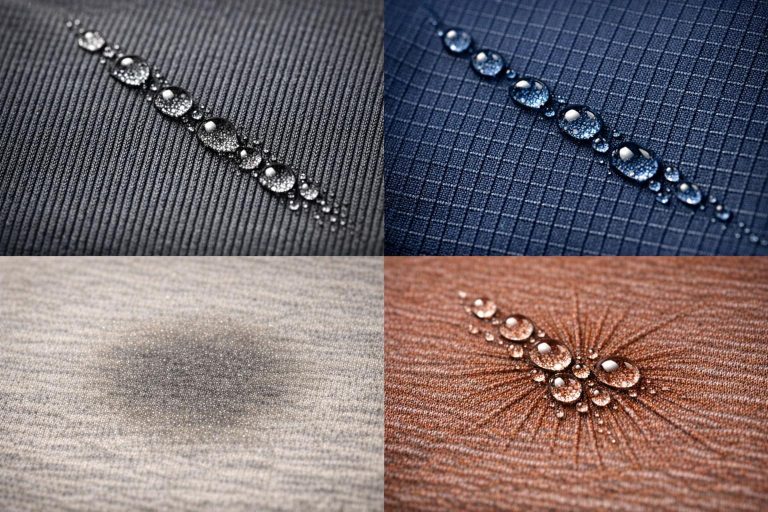
When you’re outdoors, the right clothing can make or break your experience. Moisture-wicking fabrics are designed to keep you dry and comfortable by pulling sweat away from your skin and allowing it to evaporate. Here’s what you need to know:
- Synthetic Fabrics (Polyester, Nylon, Spandex): These dry fast, are durable, and work well for intense activities like running, cycling, or wearing pro football jerseys. However, they may trap odors.
- Natural Fabrics (Merino Wool, Bamboo): Merino wool excels in odor control and temperature regulation, making it ideal for hiking and cold weather. Bamboo offers softness but relies on chemical treatments for odor resistance.
- Blends: Combining synthetic and natural fibers gives you the best of both worlds – durability, comfort, and performance.
Key Tips:
- Choose lightweight fabrics (100–150 GSM) for hot weather and midweight (150–250 GSM) for cooler conditions.
- For heavy sweating, look for garments with mesh panels or polypropylene layers.
- Proper care is essential: wash in cold water, avoid fabric softeners, and air-dry to maintain performance.
The right fabric can improve comfort, reduce chafing, and even help regulate your body temperature during outdoor activities.
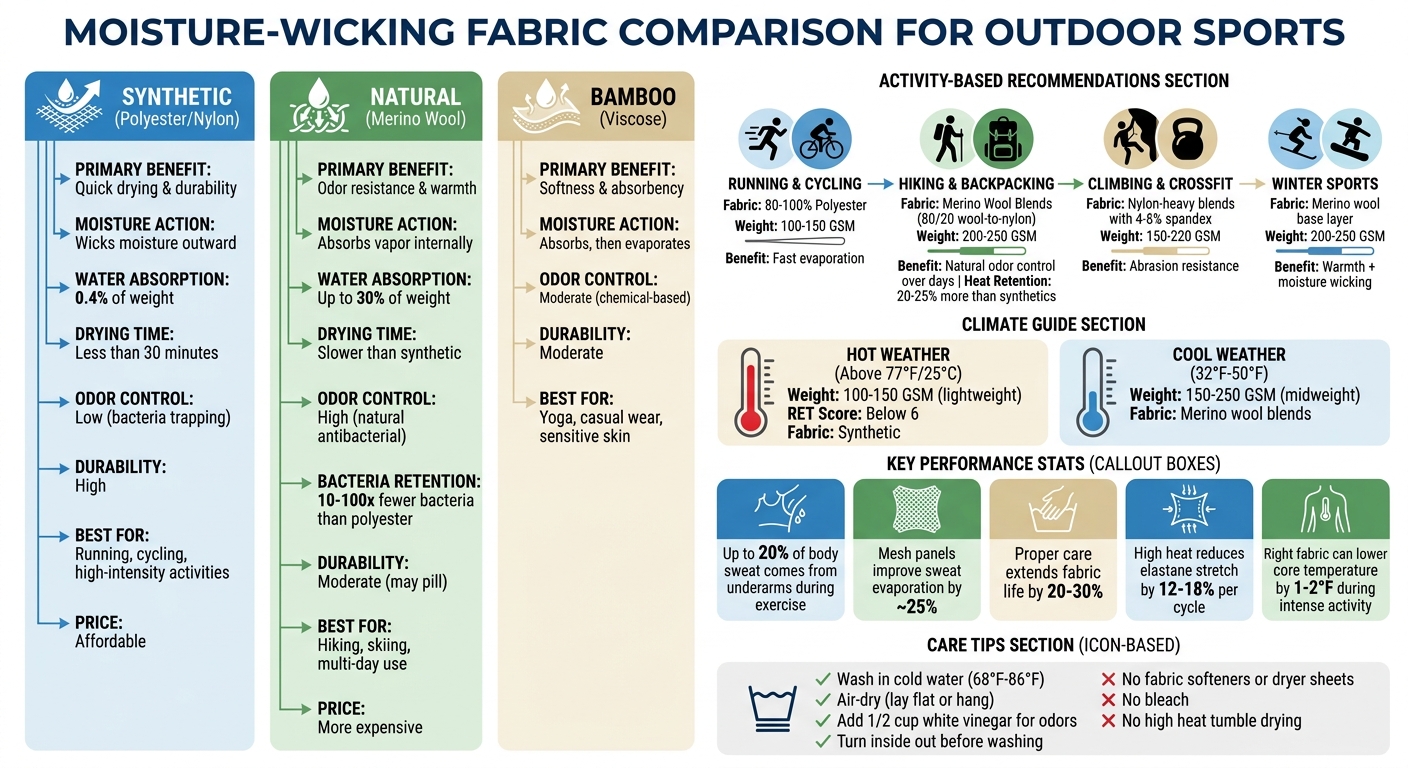
Moisture-Wicking Fabric Comparison Guide for Outdoor Sports
92. Adventure Ready: Understanding Moisture-Wicking Materials and Their Importance for Hiking
sbb-itb-4d95ad3
Types of Moisture-Wicking Fabrics
Moisture-wicking fabrics are generally divided into two categories – synthetic and natural – each tailored for specific outdoor activities and conditions.
Synthetic Fabrics: Polyester, Nylon, and Spandex
Polyester stands out as a hydrophobic material, absorbing just 0.4% of its weight in water. According to Sportek International Inc.:
Polyester is the workhorse of athletic wear… it doesn’t absorb sweat into its fibers; instead, it allows moisture to travel along the filament surfaces and evaporate.
This makes polyester an excellent choice for high-intensity activities like custom collegiate football, trail running, or cycling, as it dries in less than 30 minutes compared to cotton’s two-hour drying time.
Nylon shares similar moisture-wicking abilities but offers a softer texture and better resistance to abrasion. This makes it ideal for activities like rock climbing or hiking, where clothing endures friction. However, nylon fabrics can trap bacteria and oils, leading to lingering odors even after washing. To address this, manufacturers often incorporate silver-based antimicrobial treatments that can reduce bacteria by over 99%.
Spandex, also known as elastane, is usually blended with polyester or nylon (4–8%) to enhance stretch and flexibility. This makes it a popular choice for activities requiring mobility, such as yoga or climbing. Synthetic fabrics are also more affordable due to their mass production.
While synthetic options excel in drying speed and durability, natural fibers bring advantages like odor control and better temperature regulation.
Natural Fabrics: Merino Wool, Bamboo, and Fabric Blends
Merino wool operates differently from synthetic materials. Its inner fibers are hydrophilic, meaning they can absorb up to 30% of their weight in moisture vapor while keeping the outer surface dry. As Knowing Fabric explains:
Merino wool benefits come from lanolin, which inhibits bacterial growth – the main cause of odors.
Tests show that merino wool retains 10–100 times fewer bacteria than polyester after identical workouts. This makes it a top choice for multi-day hikes or cold-weather base layers when washing isn’t practical. However, merino wool dries slower and may pill with heavy use. It also tends to be more expensive due to sustainable harvesting and production methods.
Bamboo fabric, often in the form of bamboo viscose, is prized for its softness. While marketed as antibacterial, its odor control typically depends on chemical treatments.
Fabric blends combine the strengths of both synthetic and natural materials. For instance:
- Merino-nylon blends (80% wool, 20% nylon) enhance durability while maintaining natural odor resistance, making them perfect for extended backcountry trips.
- Polyester-cotton blends (65% polyester, 35% cotton) balance a soft, natural feel with quicker drying, ideal for casual outdoor activities.
- For cold-weather sports like skiing or winter hiking (32°F–50°F), merino wool blends (200–250 GSM) can retain 20–25% more body heat than pure synthetics.
If quick moisture transport is your priority for intense cardio, opt for moisture-wicking polyester blends with at least 60–70% polyester.
| Feature | Synthetic (Polyester/Nylon) | Natural (Merino Wool) | Bamboo (Viscose) |
|---|---|---|---|
| Primary Benefit | Quick drying & durability | Odor resistance & warmth | Softness & absorbency |
| Moisture Action | Wicks moisture outward | Absorbs vapor internally | Absorbs, then evaporates |
| Odor Control | Low (bacteria trapping) | High (natural antibacterial) | Moderate (chemical-based) |
| Durability | High | Moderate (may pill) | Moderate |
| Best Use | High-intensity activities | Hiking, skiing, multi-day use | Yoga, casual wear, sensitive skin |
How to Choose the Right Fabric for Your Activity
What to Consider: Climate, Activity Type, and Sweat Production
When picking fabrics, think about the climate, the type of activity, and how much you sweat.
The weather plays a big role in choosing the right fabric weight, which is measured in GSM (grams per square meter). For hot conditions (above 77°F/25°C), go for lightweight fabrics (100–150 GSM) that allow air to flow freely. In cooler weather (32°F–50°F), midweight fabrics (150–250 GSM) are better since they balance warmth and moisture management. For extreme heat, aim for fabrics with a RET score below 6 and a lightweight build (100–150 GSM) to help sweat evaporate quickly.
High-intensity sports like trail running or mountain biking, which can generate around 800–1,200 watts of heat during peak effort, are best paired with hydrophobic synthetic fabrics. These materials quickly wick away sweat. On the other hand, lower-energy activities like backpacking are better suited for merino wool, which naturally resists odor.
Sweat distribution also matters. Up to 20% of your total body sweat can come from the underarm area during exercise. If you sweat heavily, look for garments with mesh panels in high-sweat zones, such as the underarms and upper back. These panels can improve sweat evaporation by about 25%. Polypropylene base layers are a great choice for heavy sweaters – they repel water and channel moisture outward.
Here’s a quick test to check fabric performance: drop water on the inner surface of the garment. It should spread over 2 inches within 60 seconds and move outward instead of soaking in. High-performance fabrics typically meet these benchmarks.
Let’s dive into fabric recommendations tailored to specific sports.
Fabric Recommendations by Sport
Each sport has unique demands, and the right fabric can make all the difference.
For running and cycling, fabrics with at least 80% polyester or nylon in the 100–150 GSM range, such as those used in reversible button-down baseball jerseys, are ideal. These materials handle constant moisture from high heart rates efficiently. A slim fit is also key to reducing chafing and preventing fabric from flapping during movement.
For hiking and backpacking, merino wool blends are the way to go. An 80/20 wool-to-nylon ratio is common, offering a balance of performance and durability. Merino wool naturally resists odors – studies show it retains 10–100 times fewer bacteria than polyester after similar workouts. If you’re wearing the same shirt for multiple days, this is a game-changer. In cooler conditions (32°F–50°F), merino blends at 200–250 GSM provide 20–25% more body heat retention than synthetic fabrics.
For activities like rock climbing and CrossFit, choose nylon-heavy blends. These fabrics are built to withstand friction and abrasion. Adding 4–8% spandex ensures flexibility, so you can move freely without feeling restricted.
For winter sports like skiing, a merino wool base layer (200–250 GSM) is a smart choice. It keeps you warm during downtime, like chairlift rides, and wicks sweat effectively during intense runs. Just make sure your outer layer is breathable – otherwise, moisture can get trapped, leaving you damp and uncomfortable.
| Activity Type | Best Fabric Choice | Ideal Weight (GSM) | Primary Benefit |
|---|---|---|---|
| Running, Cycling | 80–100% Polyester | 100–150 | Fast evaporation |
| Hiking, Backpacking | Merino Wool Blends | 200–250 | Natural odor control over days |
| Climbing, CrossFit | Nylon-heavy Blends | 150–220 | Abrasion resistance |
| Yoga, Casual Walks | Bamboo or Cotton Blends | 150–200 | Soft feel for light activity |
Caring for Moisture-Wicking Fabrics
How to Wash and Dry Moisture-Wicking Clothing
Taking care of moisture-wicking fabrics the right way ensures they perform as intended and last longer. Always wash these garments in cold water (68°F–86°F) to help extend their lifespan by up to 20–30%. Hot water can weaken synthetic polymers, reducing the fabric’s structure and its ability to wick moisture effectively.
Skip fabric softeners and dryer sheets – they clog the fabric’s tiny pores. Instead, stick to mild detergents and use only half the recommended amount. Too much detergent can leave a residue that blocks moisture movement. Bleach is another no-go since it breaks down synthetic fibers and removes antimicrobial coatings. If odors persist, try adding half a cup of white vinegar during the rinse cycle to neutralize bacteria and remove detergent buildup. Turning garments inside out before washing helps tackle sweat and oils while protecting the outer surface from wear and tear.
When it comes to drying, air-drying is your best bet. Lay garments flat or hang them on padded hangers to avoid stretching. High heat is especially harmful – tumble-drying polyester-elastane blends can reduce their stretch by 12–18% after just one cycle, and after 10 cycles, elastane can lose up to 60–80% of its elasticity, leading to sagging and poor fit. If you must use a dryer, choose the lowest heat setting and steer clear of ironing. Direct heat can melt or fuse synthetic fibers, permanently damaging the fabric.
Once your clothing is clean and dry, storing it properly is just as important for keeping it in top shape.
Storage and Long-Term Maintenance
Always store moisture-wicking garments completely dry. Even a little moisture in storage can lead to mold and mildew, which can ruin the fabric and cause odors that are nearly impossible to remove. Avoid leaving damp, sweaty clothes in a gym bag or hamper – this creates a breeding ground for bacteria, leading to unpleasant smells and fabric degradation.
Choose a cool, dry place for storage, away from direct sunlight. Prolonged exposure to sunlight can weaken fibers and fade colors. Opt for breathable fabric storage bags or drawers rather than airtight plastic containers, which can trap any lingering moisture. For items with elastane or spandex, folding is better than hanging to prevent stretching or "shoulder bulges" caused by gravity.
Lastly, check your gear regularly for signs that it may need replacing. If the fabric is thinning or odors persist despite proper washing, it could mean the antimicrobial treatments or fibers have worn out. Proper storage can help slow this process, keeping your gear fresh and functional for as long as possible.
Conclusion
Selecting the right moisture-wicking fabric can make all the difference in outdoor sports. Synthetic options like polyester and nylon dry quickly, making them ideal for high-intensity activities like running or HIIT. On the other hand, Merino wool shines in cold weather and multi-day adventures, thanks to its natural odor resistance and ability to regulate temperature even when damp . Remember to match fabric weight to the climate: lightweight (100–150 GSM) for warm conditions and midweight (150–250 GSM) for cooler temperatures.
Pay attention to construction details as well. Features like flatlock seams and mesh panels in high-sweat zones (underarms, back) are game-changers. Look for garments with at least 60–85% synthetic content for optimal performance. These fabrics wick sweat effectively through capillary action, keeping you dry and minimizing chafing .
Equally important is how you care for your gear. Skip the fabric softeners and dryer sheets, as they can damage moisture-wicking properties. Wash in cold water and air-dry to maintain performance over time .
The right clothing doesn’t just keep you comfortable – it can lower your core temperature by 1 to 2 degrees during intense activities, improving endurance and decision-making. By investing in quality fabrics and proper care, you’ll not only enhance your performance but also extend the life of your gear and elevate your outdoor experiences.
FAQs
How can I tell if a shirt is truly moisture-wicking?
To determine if a shirt is moisture-wicking, check the label for materials like polyester, nylon, or merino wool. These fabrics are specifically made to pull sweat away from your skin and dry quickly. A good moisture-wicking shirt should feel dry even after intense sweating and shouldn’t hold onto moisture. For a practical test, wear the shirt during physical activity to see if it remains comfortable and dry.
What fabric is best if I sweat a lot but want less odor?
Merino wool stands out as an excellent option for those who sweat heavily but want to avoid lingering odors. It does a fantastic job of wicking away moisture and can absorb up to 30% of its weight without feeling damp. Plus, thanks to its natural antimicrobial properties, it resists odors effectively. On the other hand, synthetic fabrics like polyester may also wick moisture, but they often hold onto odors, making merino wool a better choice for staying fresh and dry.
How do I remove sweat smells without ruining wicking performance?
To get rid of sweat odors from moisture-wicking fabrics without compromising their performance, wash them as soon as possible using a gentle detergent specifically made for technical fabrics. Skip fabric softeners and bleach, as these can harm the material. To tackle lingering smells, try adding a bit of white vinegar or opt for a sports detergent. Instead of high heat, air dry your clothes in a well-ventilated space to protect the fabric and maintain its functionality.