
- Cold Weather: Reduces muscle flexibility and sprint distances. Uniforms use thermal base layers, insulating mid-layers, and windproof outerwear to retain heat without restricting movement.
- Hot Weather: High temperatures impair decision-making and increase cardiovascular strain. Lightweight, breathable fabrics like polyester with mesh panels help players stay cool and dry.
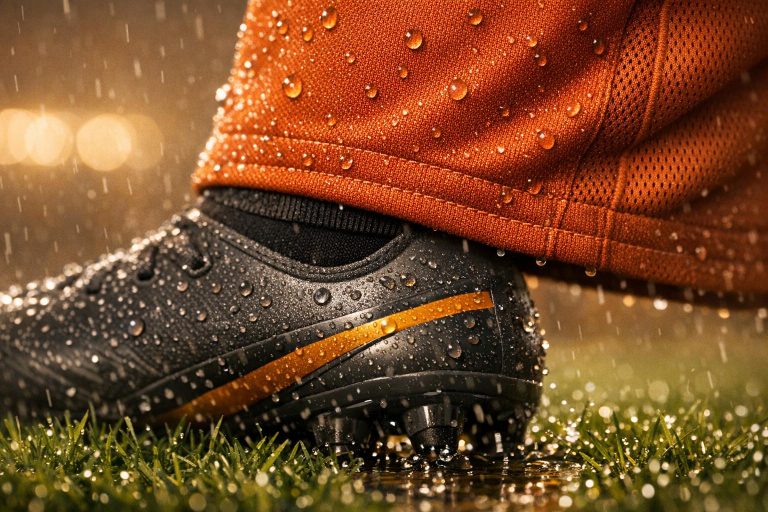
- Rainy Weather: Wet conditions make fields slippery and uniforms heavier. Quick-dry, water-repellent fabrics and water-resistant cleats with non-slip soles ensure mobility and safety.
Key Takeaways:
- Moisture-wicking fabrics are essential across all weather types to keep players dry.
- Layering systems allow players to manage temperature effectively in cold climates.
- Bright colors improve visibility during rain, while lighter shades reflect heat in sunny conditions.
- Specialized cleats enhance traction on wet fields, reducing injury risks.
Uniforms tailored to specific weather conditions optimize player comfort, safety, and performance.
How to Dress Warm for Soccer in the Winter
sbb-itb-4d95ad3
Cold Weather Uniform Design
When temperatures dip below freezing, soccer uniforms need to strike a delicate balance between keeping players warm and allowing full freedom of movement. Achieving this involves a smart layering system that retains heat and manages moisture without adding unnecessary bulk. Each layer plays a specific role in tackling the challenges of cold weather.
Base Layers and Thermal Materials
The foundation of cold-weather uniforms is the moisture-wicking base layer, designed to retain heat while keeping sweat off the skin. This is followed by a mid-layer, typically made of fleece or synthetic fill, which provides insulation without trapping excess moisture. These layers fit snugly to the body, ensuring they pull sweat away efficiently and maintain warmth. Materials like polyester and nylon are popular for their quick-drying properties, while merino wool is a go-to for those who prefer natural fibers due to its excellent odor resistance.
"Think of a base layer as a second skin – it should be lightweight, snug and comfortable while allowing maximum mobility." – TacticalGear.com
For insulation, synthetic fills such as PrimaLoft or Thinsulate are reliable options, especially since they maintain warmth even when damp. Unlike down, which loses its insulating properties when wet, these materials are better suited for the unpredictable conditions of outdoor play.
Layering Systems for Movement and Warmth
The outer layer acts as a shield against wind and the elements. Soft shell jackets, made from stretchable fabrics, are often preferred over traditional waterproof shells. They offer better mobility and breathability – key factors for athletes who generate significant body heat during play. This design ensures players stay protected from the cold without overheating.
"Soft shells place an emphasis on mobility and breathability. They’re a coveted choice for many duty assignments because they’re designed for high-intensity tasks." – TacticalGear.com
Accessories like thermal socks and gloves add another layer of flexibility. These items can be easily removed during play, allowing players to adjust their body temperature as needed. This adaptability helps maintain muscle flexibility and reduces the risk of injuries caused by cold, stiff muscles.
Hot Weather Uniform Design
Soccer uniforms designed for hot, sunny conditions need to do more than just look good – they must help players stay cool, dry, and focused. Smart fabric choices and thoughtful design elements play a huge role in keeping players comfortable and safe from heat-related issues like dehydration or exhaustion. Let’s dive into how materials and color choices make a difference when the temperature soars.
Breathable and Lightweight Materials
Top-tier soccer jerseys often use 100% polyester, a lightweight material known for its moisture-wicking properties. This fabric pulls sweat away from the skin, allowing it to evaporate quickly and keeping the uniform light and dry, even during intense play. To boost cooling, many designs also include mesh panels along the sides and back. These panels improve airflow in areas where heat tends to build up, helping players regulate their body temperature more effectively during high-energy matches.
"In hot and sunny conditions, the aim is to keep players cool and protect them from the sun." – Soccer Hub Insights
Another perk of polyester is its durability. It resists shrinking, stretching, and fading, even after frequent washes and exposure to the sun. This means the uniforms maintain their performance and appearance throughout the season. When paired with smart color choices, these fabric innovations ensure players stay comfortable and focused, even under the harshest conditions.
Color Selection and Heat Reflection
The color of a uniform isn’t just about aesthetics – it also plays a role in managing heat. Lighter shades like white, light gray, and pale blue reflect more sunlight, reducing the amount of heat absorbed by the fabric. This makes lighter-colored uniforms an effective choice for hot-weather play.
"Adapting clothing to weather conditions helps players stay comfortable, reduces injury risk, and allows them to focus fully on the game." – Soccer Hub Insights
Rainy Weather Uniform Design
Rainy weather, like extreme cold or heat, calls for uniforms designed to meet specific challenges. In wet conditions, players need gear that repels water, ensures visibility, and provides reliable traction. Soccer matches often continue through light rain unless lightning or unsafe fields force a pause. The right uniform can mean the difference between performing confidently or being weighed down by waterlogged gear. Advances in fabric and footwear design have significantly improved how players handle these conditions.
Water-Resistant and Quick-Dry Fabrics
One of the biggest hurdles in rainy weather is keeping uniforms from absorbing water and becoming heavy. Modern uniforms use quick-dry, water-repellent fabrics with hydrophobic linings to stay lightweight and allow for freedom of movement, even in heavy rain. These materials not only repel water but also wick away sweat, so players don’t feel weighed down by moisture from multiple sources. This combination ensures comfort and mobility, which are essential for quick sprints and sudden directional changes.
Visibility is another critical factor. Rain and overcast skies can make muted colors like gray, brown, or black blend into the background, creating a "camouflage effect" that makes it harder for players to spot teammates. Bright, high-contrast colors are far more effective in these conditions, helping players stay visually connected with their team even when the weather is working against them. This focus on visibility complements the overall strategy of tailoring every aspect of the uniform to meet rainy weather challenges.
Cleats and Traction for Wet Surfaces
While lightweight fabrics keep players comfortable, specialized cleats are essential for maintaining traction on slippery fields. Water-resistant cleats with non-slip soles are designed to grip rain-soaked turf, reducing the risk of slips and falls. These cleats often feature traction patterns tailored for soft, muddy ground, giving players the stability they need to make sharp turns and sudden stops without fear of losing their footing. Reliable traction is key to both performance and injury prevention on unpredictable, wet surfaces.
Research Findings: Weather-Based Design Comparison
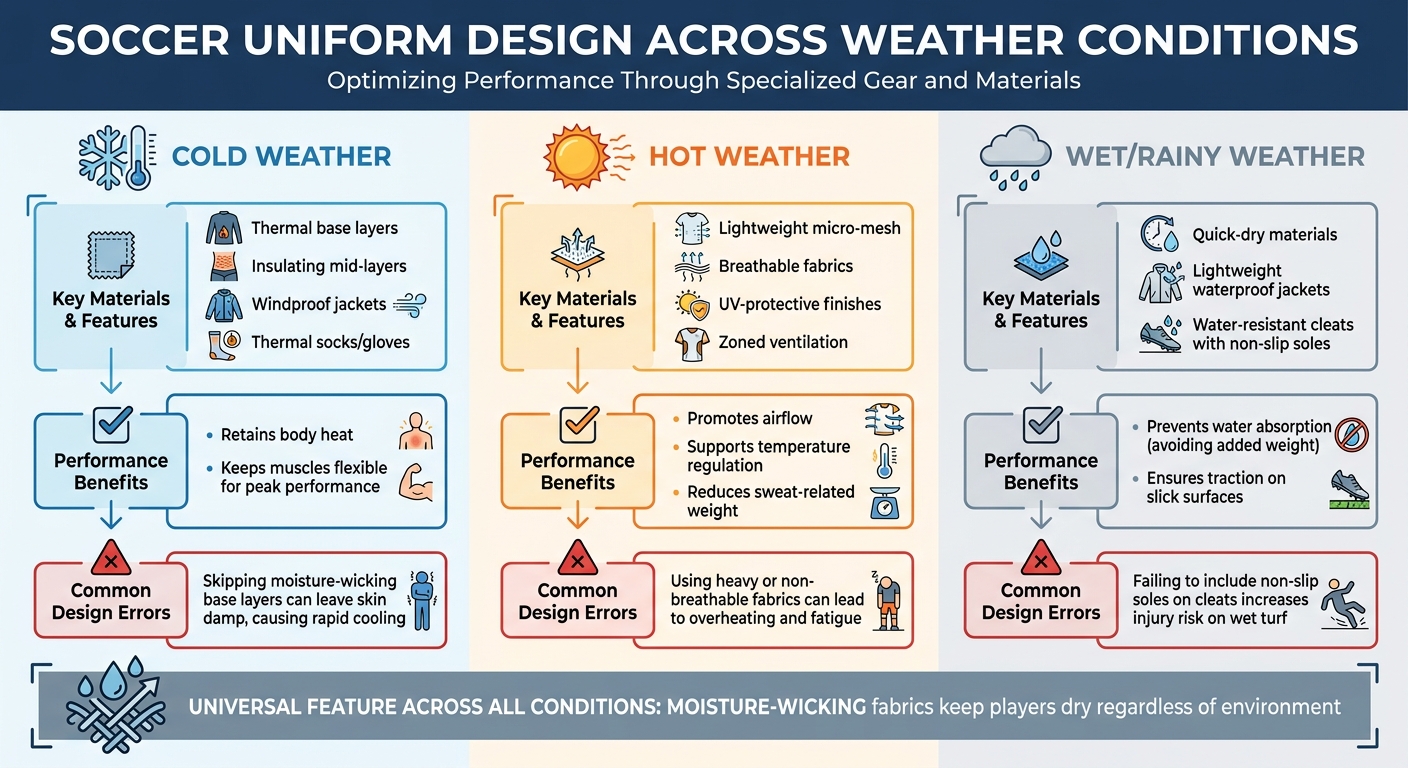
Soccer Uniform Design Features by Weather Condition
Research indicates that soccer uniforms must be tailored to meet the demands of varying weather conditions. In cold climates, uniforms are crafted to retain heat while maintaining flexibility. Hot weather calls for designs that prioritize cooling through improved airflow. Meanwhile, wet conditions require materials that minimize water absorption and ensure optimal traction. Across all these scenarios, moisture-wicking remains a universal feature, keeping players dry regardless of the environment. This lays the groundwork for a closer look at specific design features for each weather type.
Weather-Specific Design Features Table
The table below outlines how uniform designs adjust to different weather challenges, focusing on materials, benefits, and common missteps:
| Weather Condition | Key Materials and Features | Performance Benefits | Common Design Errors |
|---|---|---|---|
| Cold | Thermal base layers, insulating mid-layers, windproof jackets, thermal socks/gloves | Retains body heat and keeps muscles flexible for peak performance | Skipping moisture-wicking base layers can leave skin damp, causing rapid cooling |
| Hot | Lightweight micro-mesh, breathable fabrics, UV-protective finishes, zoned ventilation | Promotes airflow, supports temperature regulation, and reduces sweat-related weight | Using heavy or non-breathable fabrics can lead to overheating and fatigue |
| Wet | Quick-dry materials, lightweight waterproof jackets, water-resistant cleats with non-slip soles | Prevents water absorption (avoiding added weight) and ensures traction on slick surfaces | Failing to include non-slip soles on cleats increases injury risk on wet turf |
These comparisons highlight the thoughtful strategies used to address weather-specific needs. The research emphasizes that layering and moisture-wicking are the two most important elements across all conditions. Cold weather relies on a three-layer system to regulate temperature effectively, while hot and wet weather benefit from moisture-wicking to manage sweat and excess water.
As noted by Soccer Hub Insights, "Soccer is played in all kinds of environments, so having versatile, high‑quality apparel is essential for athletes who want to compete at their best year‑round". This underscores the importance of tailored uniform designs in boosting both performance and comfort, no matter the weather.
Applications for Custom Soccer Uniforms
Multi-Weather Design Solutions
Modern soccer uniforms are now crafted to handle a wide range of weather conditions, offering athletes both comfort and performance. Today’s designs combine moisture-wicking base layers with adjustable insulation, creating a system that players can customize based on temperature and wind. For instance, insulating mid-layers and windproof outer shells can be added or removed as needed, helping athletes regulate their body temperature without sacrificing mobility or comfort.
For hot weather, uniforms often feature lightweight polyester blends, UV-treated fabrics, and mesh panels strategically placed in high-sweat areas. These elements promote airflow and minimize heat absorption, directly addressing challenges posed by extreme heat or precipitation.
"Adapting clothing to weather conditions helps players stay comfortable, reduces injury risk, and allows them to focus fully on the game." – vsstandings
Wooter Apparel‘s Custom Uniform Options
Wooter Apparel takes these advanced design principles and brings them to life with their custom soccer uniforms. Their sublimation process embeds ink directly into the fabric, ensuring vibrant colors and durable designs that won’t crack or peel, even after numerous washes. This method also supports key performance features like moisture-wicking microfibers, breathable mesh panels, and four-way stretch fabric for a secure yet flexible fit during intense play.
Beyond aesthetics, Wooter Apparel incorporates functional details to enhance performance. Raglan sleeves improve mobility, while flatlock stitching minimizes friction for added comfort. Teams can also opt for performance polyester with antimicrobial finishes, a practical choice for multi-game tournaments, ensuring the uniforms maintain their functionality and freshness over time.
Conclusion
Weather has a clear impact on both performance and safety in sports. Studies indicate that for every 1°C drop below freezing, a team’s total sprint distance decreases by about 19.2 meters. On the other hand, when temperatures rise above 68°F (20°C), players cover less ground overall and engage in fewer high-speed runs.
The right uniform design can help athletes adapt to these challenges. Cold weather calls for thermal layers and windproof jackets, while hot conditions demand breathable fabrics. For rainy games, quick-dry materials and water-resistant cleats are essential. Each of these adjustments helps players manage the physical demands of different climates.
"Adapting clothing to weather conditions helps players stay comfortable, reduces injury risk, and allows them to focus fully on the game." – Soccer Hub Insights
Modern uniform design incorporates these considerations while maintaining team identity. Wooter Apparel’s sublimated designs combine weather-specific features – like moisture-wicking microfibers and breathable mesh panels – with vibrant colors and long-lasting materials. This ensures that uniforms perform well in any condition, whether it’s freezing cold, scorching heat, or a sudden downpour.
FAQs
How should a soccer uniform fit for layering in cold weather?
When dressing for cold weather, begin with a snug, moisture-wicking thermal layer to keep your skin dry. Over that, add a slightly looser insulating layer to trap warmth. Top it off with a windproof jacket to protect against chilly winds and low temperatures. Don’t forget thermal socks and gloves to keep your hands and feet warm. Make sure your layers are flexible enough to allow free movement without hindering your performance.
What fabric features matter most for staying cool in heat?
Key fabric features for staying cool in hot weather include moisture-wicking properties to pull sweat away from the skin and lightweight, breathable materials that allow air to circulate and reduce heat retention. These qualities are essential for staying comfortable and performing well in warm conditions.
How do I choose the right cleats for a wet field?
When picking cleats for a wet field, focus on options specifically designed for such conditions. Look for cleats with waterproof or synthetic uppers to keep your feet dry and comfortable. Additionally, prioritize a stud configuration meant for soft and slippery surfaces. A 6-stud soft-ground design is a great choice, as it provides improved traction and stability on muddy or wet fields.