
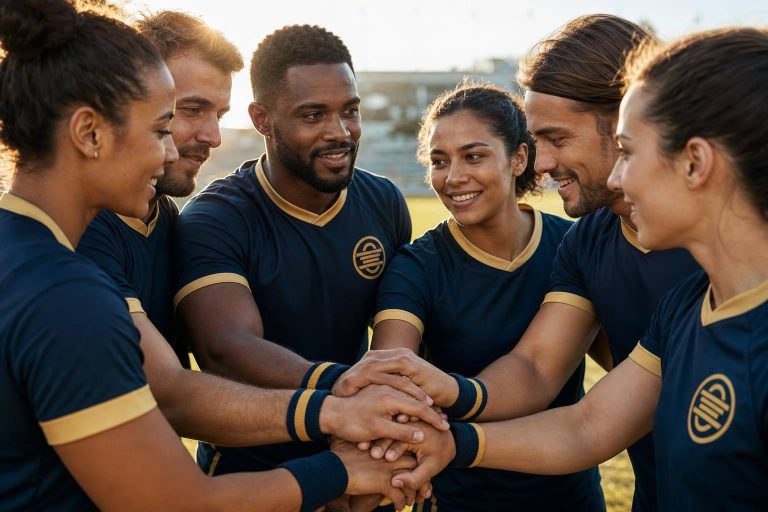
Symbols like logos, colors, and mottos are more than just designs – they create a shared identity that unites teams. Without them, teams risk disconnection, leading to poor morale, cliques, and weak communication. Studies show that connected teams are more productive and perform better. Symbols act as visual anchors, reminding players of their purpose and fostering pride and belonging. Custom uniforms, in particular, strengthen this bond, reinforcing unity every day. To design impactful symbols, focus on your team’s values and story, ensuring the design is meaningful and timeless. When integrated into daily team culture, symbols can inspire, motivate, and improve performance on and off the field.
Understanding Team Disconnection and Its Effects
Signs of a Disconnected Team
Disconnection in a team often starts subtly. Little things – like failing to celebrate a teammate’s success or an unusually quiet locker room – can hint at deeper issues. Cliques are another common sign, where players stick to small groups instead of engaging with the entire team. This behavior creates barriers that harm unity.
Another warning sign is inconsistent effort. When some players push themselves while others seem indifferent, it creates an imbalance that can lead to frustration and resentment. Communication issues also stand out. Disconnected teams often struggle to make quick, coordinated decisions when the pressure is on. As Bryon Scott of YSN Live observed:
"In sports, fans can tell when a team lacks heart. The same is true in business."
These signs are just the surface. To truly address disconnection, it’s essential to understand where it stems from.
Root Causes of Disconnection
One major cause is high roster turnover. When players come and go too quickly, there’s little time to build trust or a sense of shared purpose. New members may struggle to feel like they’re part of something meaningful, which slows their integration into the team.
Another factor is limited time spent together. Teams that only meet during games miss out on the bonding that happens through regular practice, shared rituals, or off-field activities. Without these moments, players remain individuals rather than becoming a cohesive group. This lack of shared values and identity often leads to breakdowns in coordination, especially during high-stakes situations.
Why Symbols Are Central to Team Identity
Team symbols can play a crucial role in addressing disconnection. A well-designed logo, uniform, or color scheme does more than look good – it becomes a unifying emblem that answers the question, "What are we all part of?" Symbols provide a shared identity that fosters belonging, confidence, and accountability.
However, symbols only work when they reflect something real about the team. As Bryon Scott of YSN Live put it:
"A logo or pin cannot fix a broken culture. But when symbols align with authentic leadership and shared purpose, they amplify pride and unity."
This highlights the importance of intentional design. A generic logo won’t inspire much, but a symbol rooted in the team’s story and values can become a rallying point, strengthening the bonds between its members.
sbb-itb-4d95ad3
How Team Symbols Build Cohesion
The Psychological Benefits of Symbols
Symbols play a powerful role in creating a sense of unity within teams. They act as a shared visual anchor, helping players feel connected to one another and to a collective purpose. According to social identity theory, when individuals strongly associate themselves with a group, they naturally cooperate more, adhere to shared values, and prioritize team achievements over personal recognition. Over time, these symbols become tied to emotional moments, whether they’re victories, defeats, or comeback stories, making them a source of motivation and pride.
How Symbols Affect On-Field Performance
Symbols don’t just unite teams emotionally – they also have a measurable impact on performance. When athletes identify with their team’s emblem, they communicate more effectively, approach challenges with trust, and focus on collective goals rather than individual stats. In high-pressure moments, like trailing late in a game or competing on unfamiliar turf, these shared symbols help players reconnect with their team’s narrative, keeping their effort and determination intact.
The concept of enclothed cognition backs this up. For instance, a study revealed that participants wearing a "doctor’s coat" made about 50% fewer errors on an attention task compared to those wearing the same coat labeled as a "painter’s coat." This shows how the meaning we attach to what we wear can influence our mindset – whether it’s feeling like a professional, an athlete, or a competitor. On the field, this psychological edge can translate into better focus and stronger results.
Custom Uniforms as Everyday Team Symbols
Uniforms are one of the most visible and consistent representations of team identity. Worn during every practice and game, they reinforce a sense of belonging while leveling the playing field – ensuring every player looks equally official.
The design of these uniforms matters. Consistent typography and cohesive design across all team gear create a unified image, enhancing both team spirit and competitive focus. Companies like Wooter Apparel simplify this process by offering fully sublimated custom uniforms for sports like basketball, football, baseball, softball, and soccer. With free custom design support included, teams can ensure their logos and colors remain vibrant and sharp all season long. Sublimation technology embeds the design directly into the fabric, making the uniform not just durable but a lasting symbol of the team’s evolving journey.
How Do Sports Teams Build Strong Team Cohesion? – Sport Psychology Insights
How to Design Effective Team Symbols
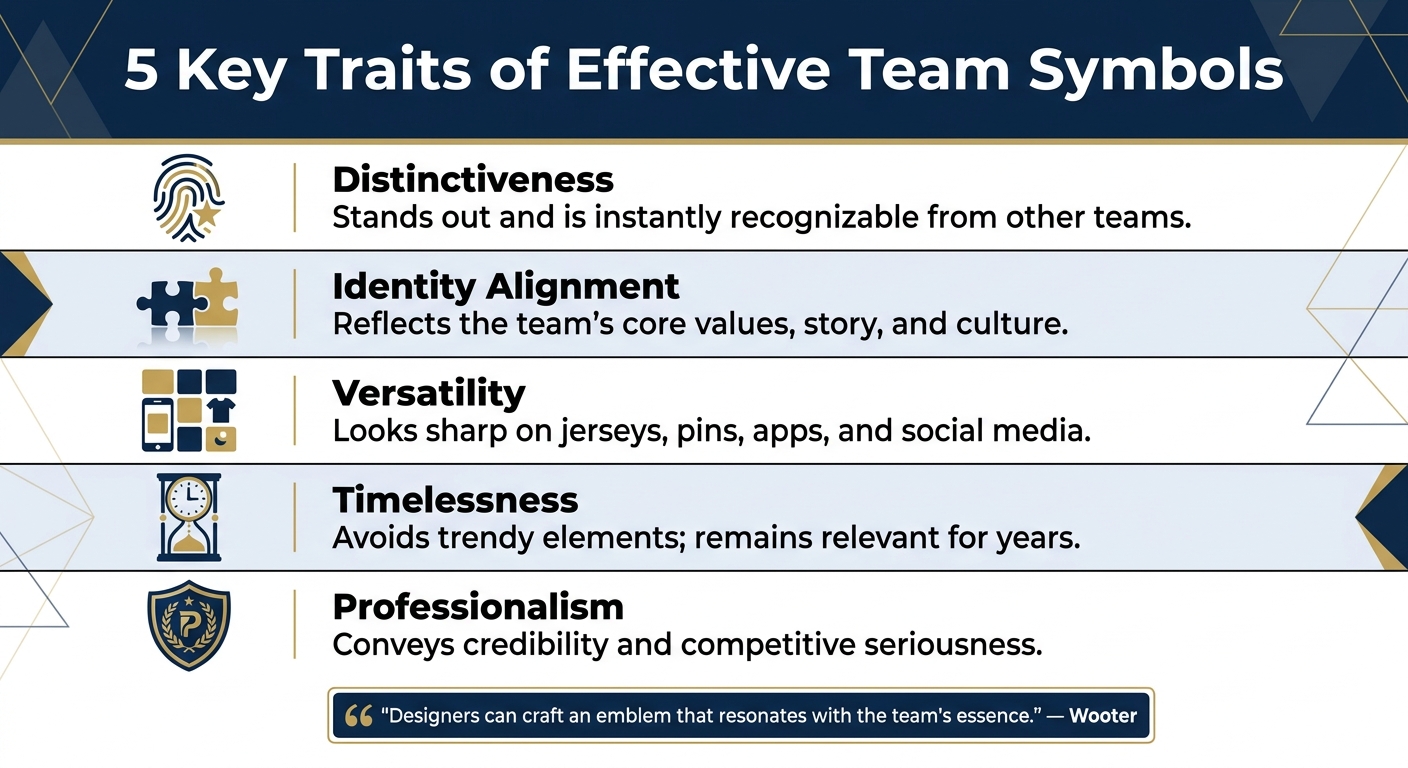
5 Key Traits of Effective Team Symbols
Start with Your Team’s Values and Story
Before jumping into design work, it’s essential to define what your team stands for. This isn’t about picking colors or shapes right away – it’s about understanding the core values and story that make your team unique.
A great way to uncover these values is through the "Nine Whys" exercise. Ask team members, “Why does this work matter?” and keep asking “why” until you uncover something meaningful beyond just winning games or meeting goals. After several rounds, you’ll likely identify 3–5 key values, such as resilience, discipline, or community, that can shape your visual identity.
"A shared team identity also clarifies why the work of a team matters and what goals it has." – Christiaan Verwijs, Organizational Psychologist
Another exercise to try is "Worst Team, Best Team." Have your group describe what the team looks like at its worst and then at its best. From the "best" column, choose three traits that define your team at its peak. These traits can serve as the foundation for your design. By grounding your symbol in your team’s story and values, you create something that not only looks good but also strengthens team unity.
Once you’ve defined these values, the next step is figuring out how to visually represent them.
Key Elements of Good Symbol Design
With your team’s values in hand, you can start designing a symbol that reflects them. Effective team symbols share five important traits: distinctiveness, identity alignment, versatility, timelessness, and professionalism.
- Distinctiveness ensures your symbol stands out and doesn’t blend in with others.
- Versatility means it looks great in any size or format – whether it’s on a jersey, a pin, or a social media profile picture.
- Timelessness ensures the design remains relevant for years, avoiding trendy elements that quickly feel outdated.
"By incorporating these five essential secrets – distinction, reflection of identity, versatility, timelessness, and professionalism – designers can craft an emblem that resonates with the team’s essence." – Wooter
For inspiration, think about symbols from nature or history. For instance, a longhorn can symbolize strength, a beaver represents industriousness, and a golden poppy conveys resilience. Adding a well-thought-out motto can amplify the symbol’s impact, giving it even more meaning every time it’s seen or spoken.
Bringing Symbols into Uniforms and Daily Culture
Once your symbol is finalized, it’s time to make it part of your team’s everyday life. A symbol only becomes meaningful when it’s visible and consistently used. Incorporating it into uniforms is a great start. Companies like Wooter Apparel offer fully sublimated custom long sleeve crew neck t-shirts, embedding your design directly into the fabric for vibrant colors and sharp details. This kind of consistency helps reinforce your team’s identity.
But don’t stop at uniforms. Bring the symbol into the team’s daily culture. Use it on water bottles, warmup bags, or locker room posters to keep it front and center. Create custom awards tied to team values – like a “Trailblazer” award for someone who shows initiative – to make the symbol feel earned and meaningful. Even small gestures, like welcoming new members with a ceremony that highlights the symbol, can help them feel connected to the team’s legacy.
"When leaders incorporate meaningful symbols into efforts at recognition, they reinforce company values while they enhance morale." – State Symbols USA
Keeping Team Symbols Relevant Over Time
Building Symbols into Team Culture
For a team symbol to remain meaningful, it needs to be an active part of fans’ and players’ experiences. Stuart Crawford, Creative Director at Inkbot Design, explains it perfectly:
"Sports branding taps deep into raw emotion. It appeals to a fan’s sense of identity. The relationship isn’t transactional; it’s ancestral."
That deep, emotional connection doesn’t just happen – it’s cultivated. Maintaining consistency is key. Your symbol’s color palette should show up everywhere: uniforms, social media, stadium signage, warmup gear, and even digital platforms like ticketing apps. The goal? Make your symbol so recognizable that it becomes a cornerstone of your team’s identity. This kind of familiarity creates a foundation that allows the symbol to evolve as the team grows.
Updating Symbols Without Losing Identity
Symbol updates are inevitable, whether to keep up with modern design trends or to reflect a shift in the team’s mission. The challenge lies in striking a balance between refreshing the design and preserving its core essence.
The Milwaukee Bucks offer a great example of how to do this right. In April 2015, they unveiled a rebrand led by Doubleday & Cartwright. They swapped out a timid deer mascot and a generic red-and-green color scheme for a bold, powerful buck and "Cream City Cream", a shade inspired by Milwaukee’s historic cream-colored bricks. The result? A modern look that still felt deeply tied to the city’s heritage. It’s often praised as a standout example of sports branding done well.
On the flip side, the Washington Commanders’ rebrand (2020–2022) shows what can go wrong. The process felt overly corporate and out of touch, largely because fans weren’t involved. As Crawford warns: "Fans are not customers but stakeholders with deep emotional equity in the team’s identity. Ignoring them during a rebrand is perilous." Instead, teams should involve their community, gradually unveiling updates, explaining the reasoning behind changes, and making fans feel like they’re part of the process.
Measuring Whether Symbols Are Working
Once a symbol has been updated, it’s important to evaluate its effectiveness. A Brand Invisibility Diagnostic can help, using four key measures: visibility in search results, whether the team’s identity is recognizable without the logo, clarity of messaging, and how well fans and players engage with it.
Pay attention to how players interact with the symbol. Do they wear it with pride, or does it feel like just another logo? Short surveys at the end of a season can shed light on whether players feel a stronger connection to the team. As Crawford puts it: "Your story is your why. Without a story, your logo is just a drawing, and your colours are just paint." Regular evaluation and thoughtful updates ensure that your symbol remains a lasting emblem of team unity.
Consistency matters. From uniforms to everyday gear, every piece should reflect your team’s identity. At Wooter Apparel, we help teams integrate their symbols seamlessly into custom apparel, ensuring that your symbol continues to inspire and unite.
Conclusion: The Lasting Value of Team Symbols
Team symbols go far beyond mere design elements – they represent a team’s identity and fuel collective performance. Whether it’s a thoughtfully designed logo, a cohesive color scheme, or a custom uniform, these symbols sharpen focus and create a sense of unity.
Studies reveal that uniforms tied to a team’s story can spark a powerful psychological transformation. They instill pride, nurture a sense of belonging, and strengthen bonds among team members. As the Wooter Apparel Blog highlights:
"When players wear uniforms that reflect their team’s identity, they develop a deep sense of belonging and pride in representing their group. This sense of belonging fosters camaraderie and strengthens team bonds." – Wooter Apparel Blog
Symbols that resonate with a team can elevate confidence, promote accountability, and improve coordination on the field. These tangible benefits show why incorporating symbols into everyday team practices is so impactful. And as teams evolve, so should their symbols, ensuring they remain relevant and meaningful.
Organizational psychologist Christiaan Verwijs emphasizes this ongoing evolution:
"We’ve learned that it’s important not to aim for the perfect team purpose. It will evolve anyway."
For teams looking to bring their identity to life, Wooter Apparel offers fully sublimated custom uniforms designed to capture the essence of any team’s story. With a 4.9-star rating from 1,366 reviews, they’re a trusted partner in creating symbols that matter.
In tackling team disconnection, a well-designed symbol is far more than just a visual marker. It’s a strategic tool – one that unites, inspires, and grows alongside the team.
FAQs
How can I tell if my team is becoming disconnected?
When a team starts to drift apart, it often shows in several ways. Poor communication is one of the most obvious signs – team members might not be sharing ideas, updates, or feedback effectively. This often leads to low morale, where individuals feel unmotivated or disconnected from the group’s goals. Another telltale sign is a lack of cohesion, where the team struggles to work together seamlessly.
One subtle but powerful indicator is the absence of a unified visual identity. For example, teams without coordinated uniforms or shared symbols may lack a sense of togetherness. These visual elements often represent teamwork and shared purpose, and their absence can highlight a deeper issue of disconnection.
Teams facing these challenges often experience reduced motivation and a weaker sense of belonging. To counter this, fostering shared values and introducing strong symbols – like custom team apparel – can help reignite a sense of unity and purpose. These small but meaningful steps can go a long way in rebuilding team spirit.
What makes a team logo or motto actually meaningful?
A team logo or motto gains meaning when it sparks connection, fosters a shared sense of purpose, and emphasizes belonging. These qualities encourage team members to feel aligned with their objectives and united by common values.
How do custom uniforms improve team performance?
Custom uniforms play a key role in elevating team performance by creating a strong sense of identity and unity. They instill confidence, promote team spirit, and encourage players to take responsibility for their roles. These elements work together to improve coordination, communication, and strategic gameplay, enabling teams to perform at their peak.