
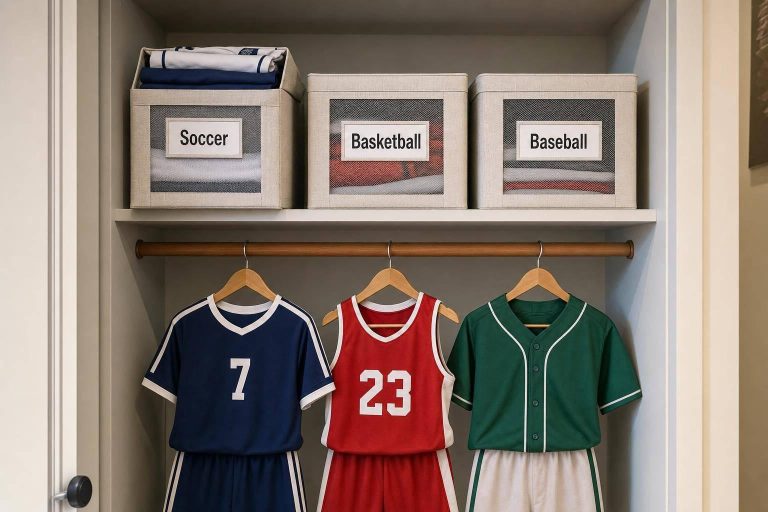
If I store uniforms dirty, damp, hot, or packed too tight, I’m asking for mold, odor, faded color, and cracked numbers. The fix is simple: I wash every piece, dry it all the way, keep it in a cool dark place, and label each set before the season ends.
Here’s the short version:
- Wash before storage so sweat, dirt, and stains do not sit for months
- Use cold water and mild detergent to help protect fabric, color, and prints
- Dry 100% of each item because even small damp spots can lead to mold and mildew
- Store at about 55°F to 80°F with 30% to 50% humidity
- Keep uniforms out of garages, attics, basements, and direct sun
- Hang light jerseys and fold heavier gear like football jerseys and pants
- Use breathable storage instead of sealed plastic when possible
- Label by team, player, size, and type so next season starts with less confusion
A few small steps now can cut replacement costs later. For teams with dozens of items, even replacing 10% to 20% of a uniform set can add up fast in U.S. dollars.
Quick comparison:
| Storage choice | Best use | Main upside | Main risk |
|---|---|---|---|
| Garment bags | Special pieces, hanging jerseys | Helps block dust | Less airflow than mesh |
| Vented plastic bins | Team sets, stacked storage | Good for sorting and space | Can still hold moisture if items are not fully dry |
| Mesh bags | Short-term sorting or transport | Strong airflow | Low dust and pest protection |
I’d sum it up like this: clean first, dry fully, store cool, and label everything. That’s the whole system in one line.
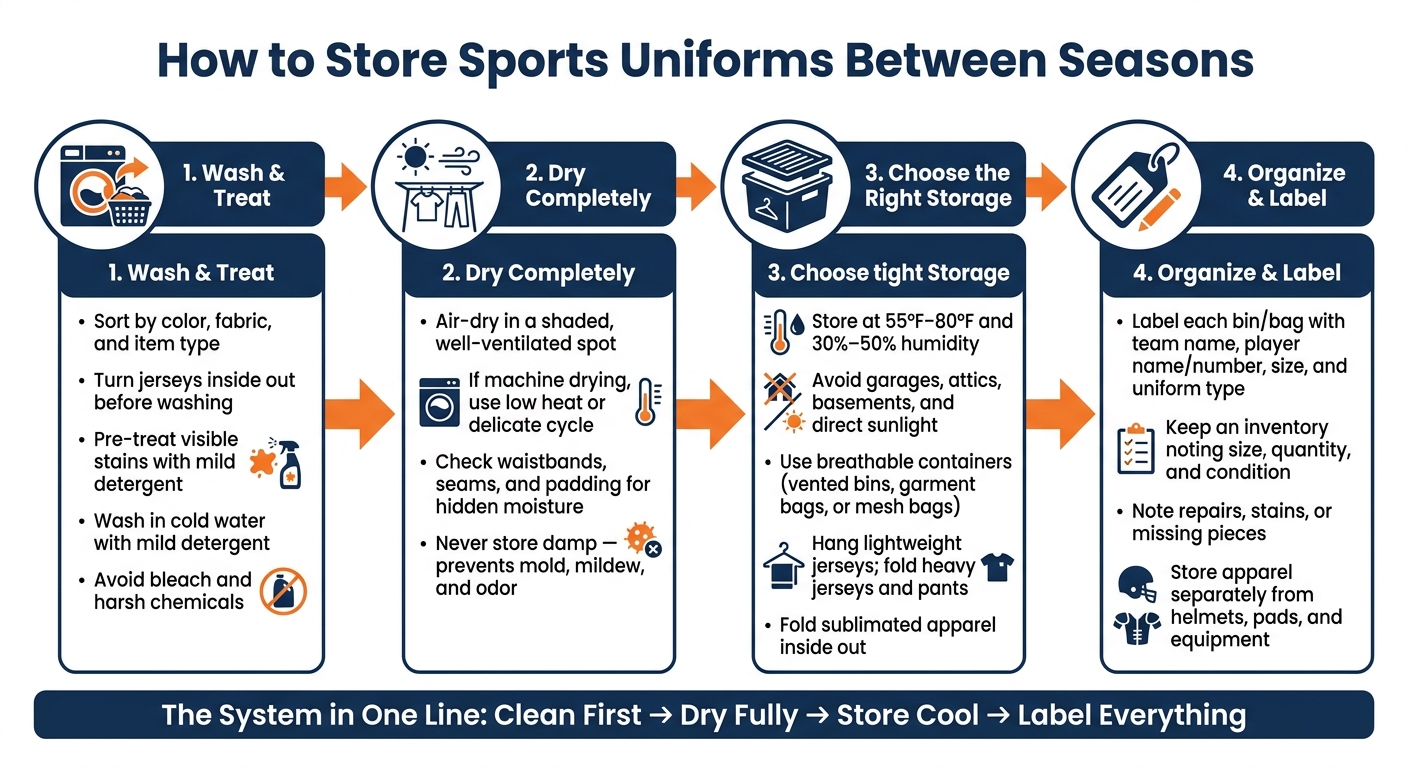
How to Store Sports Uniforms Between Seasons: 4-Step Guide
STOP Ruining Your Jerseys: Store Them the Right Way
sbb-itb-4d95ad3
Step 1: Wash and Treat Uniforms Before Storage
Start with a full wash before storage.
Sort by Color, Fabric, and Item Type
Before you load the washer, sort uniforms by color, fabric, and item type. That helps stop dye transfer and gives delicate materials a better shot at staying in good shape. Turn jerseys and anything with printed or embroidered designs inside out before washing to cut down on friction and help protect those details.
Pre-Treat Stains Before Washing
Pre-treat any stains you can see with a small amount of mild detergent before washing. Test it on a hidden area first.
Use Mild Detergent and Avoid Harsh Chemicals
Wash uniforms in cold water with a mild detergent. Skip bleach and harsh chemicals, since they can wear down fabric fibers and make colors fade.
Once the uniforms are clean, dry every piece all the way before storage.
Step 2: Dry Every Piece Completely
Never store damp uniforms. Moisture that gets trapped in the fabric can lead to mold, mildew, and stubborn odors. It can also wear down the fabric and printed graphics. After washing, drying is the last thing to do before storage.
"Ensure the garments are completely dry before storing them to prevent mold and mildew growth." – Wooter Apparel
Air-Dry First When Possible
Air drying is usually the best option for sports uniforms. Hang each piece on a clothesline or drying rack in a shaded spot with good airflow, or lay it flat on a clean surface. Skip direct sunlight, since too much sun can fade colors and discolor custom graphics over time.
Use Low Heat if Machine Drying Is Needed
If you need to use a dryer, stick with low heat or a delicate cycle. High heat can fade colors, wear down fibers, and shrink the garment. Before you put anything away, check waistbands, seams, and padding for any hidden moisture.
Once every piece is fully dry, place it in a cool, dry storage area.
Step 3: Choose the Right Storage Method and Space
Pick a Cool, Dry, Dark Storage Area
Store uniforms in a climate-controlled indoor space, like a clean closet or a storage room. Aim for 55°F to 80°F and 30% to 50% relative humidity. Skip garages, basements, attics, and any spot with direct sunlight.
After you choose the space, pick a storage container that fits the type of uniform.
Garment Bags, Vented Bins, and Mesh Storage: A Comparison
Use breathable storage and avoid sealed plastic. Sealed containers can trap moisture and odors, which is the last thing you want when gear sits for months.
| Feature | Garment Bags | Vented Plastic Bins | Mesh Bags |
|---|---|---|---|
| Moisture Control | Moderate (Breathable) | Good (via Air Vents) | Excellent (Maximum Airflow) |
| Odor Risk | Low | Low | Very Low |
| Pest & Dust Protection | High | Moderate | Low |
| Storage Efficiency | Moderate (Hanging) | High (Stackable) | Moderate (Bulk) |
For team sets, vented plastic bins make sense because they stack well and keep uniforms sorted. Garment bags are a good fit for special pieces that need extra dust protection. Mesh bags work best for sorting and transport, not for long off-season storage.
Once the container is handled, the next move is deciding whether each item should hang or fold.
When to Hang and When to Fold
Hang lightweight jerseys on wide or padded hangers. Fold heavier items, such as football jerseys and pants, so they don’t stretch or pick up hanger marks. Fold sublimated apparel inside out to cut down on friction.
| Item Type | Recommended Method | Reasoning |
|---|---|---|
| Basketball Jerseys | Hang | Lightweight; stays crisp on wide or padded hangers. |
| Football Jerseys | Fold | Heavy fabric can stretch and leave hanger marks. |
| Football Pants | Fold | Protects integrated padding and prevents elastic stretching. |
| Baseball/Softball Uniforms | Fold | Stacked team sets are easier to inventory and organize when folded. |
| Sublimated Apparel | Fold (Inside Out) | Prevents designs from rubbing or sticking together. |
Avoid packing items too tightly. Synthetic fabrics can hold creases if they stay compressed for too long. Next, label each set so it’s easy to find before the season starts.
Step 4: Organize Uniforms for Next Season
Label by Team, Player, and Uniform Type
Once everything is clean and packed, label each bin or garment bag so you can grab what you need fast next season. Include the team name, player name or number, size, and uniform type on every label. A spreadsheet helps keep naming consistent, which saves a lot of guesswork later.
Keep an Inventory and Store Apparel Separate from Equipment
After labeling, inventory each set before sealing the bins. List each item’s size, quantity, and condition. Make notes about repairs, stains, tears, and any missing pieces. It also helps to record sizes as you sort, since fit can change by style and manufacturer. Using pro football sizing kits can help ensure future orders remain consistent.
Keep apparel in a separate storage area from helmets, pads, cleats, and balls. That way, uniforms are much easier to find when it’s time to gear up again.
Conclusion: Clean, Dry, Cool, and Labeled
Off-season uniform storage comes down to four basics: clean, dry, cool, and labeled.
Stick to those four, and uniforms tend to last longer. Skip them, and you can end up paying for replacements that were easy to avoid. Good storage also cuts down on last-minute replacement costs when the next season rolls around.
For next season’s custom uniforms, Wooter Apparel offers fully sublimated designs made to hold up with proper care. Store uniforms the right way now, and next season starts faster, cheaper, and with less wear.
FAQs
How long can uniforms stay in storage?
Uniforms can sit in storage all offseason without issues if you take care of them first.
Keep them clean and make sure they’re completely dry before putting them away. Store them in a cool, dry spot out of direct sunlight. Breathable garment bags or neatly organized bins can help protect everything until next season.
Should I use silica gel packs in storage bins?
Yes. Moisture absorbers can help stop the damp buildup that leads to mold and mildew when you store team uniforms in bins.
Use them in breathable garment bags or storage containers, and make sure the uniforms are fully dry before you put them away. It also helps to keep the gear in a cool, dry spot with good airflow, which can help protect the fabric and the design.
What should I do if a uniform smells musty after storage?
Wash it well with a mild detergent and cold water. Skip harsh chemicals, hot water, and fabric softeners. They can wear down the fabric, lock in odors, and weaken its moisture-wicking ability.
If the smell still lingers, use a sportswear deodorizer or freshener made for activewear. Before you put it away, let it air-dry fully in a well-ventilated spot. That extra drying time helps keep odors from coming back.