
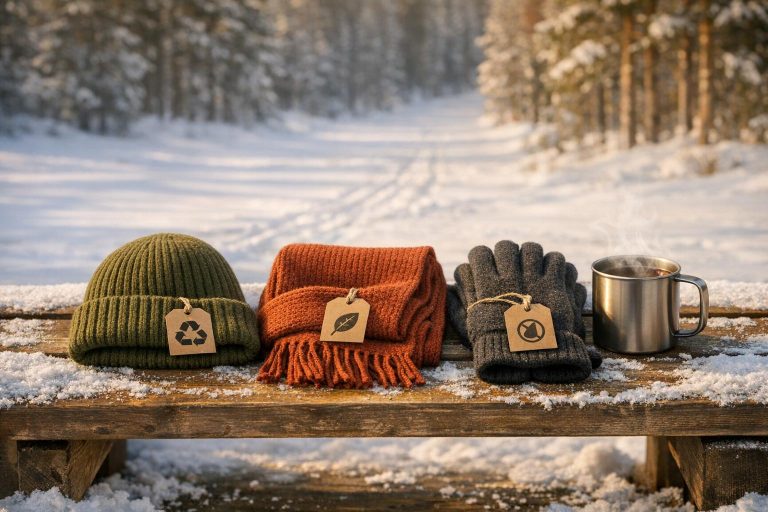
Looking for winter sports gear that’s better for the planet? Here’s what you need to know: Eco-friendly winter accessories now offer high performance while reducing waste and using safer materials. From gloves to beanies, brands are turning to recycled synthetics, natural fibers like Merino wool, and PFAS-free waterproofing to create durable, low-impact gear.
Key Highlights:
- Materials: Recycled polyester, Merino wool, alpaca fiber, bamboo, and recycled nylon are leading choices for warmth, moisture control, and biodegradability.
- Top Picks:
- Gloves: Swany ECO Gloves ($80) and Auclair Merino Wool Liner Gloves ($45) combine recycled and natural materials for warmth and comfort.
- Scarves: Altai Valley’s yak wool scarves ($85) and Faherty‘s alpaca blends ($159–$248) provide lightweight insulation, similar to custom track hoodies used for layering.
- Beanies: ANIÁN Recycled Cashmere Beanie ($60) and Turtle Fur’s Recycled Ocean Ragg Wool Beanie ($20.50) stand out for their sustainable designs.
- Durability: Many products feature replaceable parts or long-lasting construction to reduce waste.
- Certifications: Look for labels like Bluesign, GRS, and LWG to ensure safer production and materials.
By choosing gear made with recycled or renewable materials, you can stay warm, save resources, and avoid harmful chemicals – all without sacrificing performance.
Salomon Sustainable Stories Ep 9: Catching Up with Winter Sports
sbb-itb-4d95ad3
Materials Used in Eco-Friendly Winter Accessories
When it comes to winter accessories, choosing the right materials means balancing performance with sustainability. Eco-friendly options include both recycled synthetics and natural fibers that are durable, manage moisture effectively, and break down naturally over time. Let’s take a closer look at some of the standout materials used in sustainable winter sports gear.
Recycled Polyester
Recycled polyester is made by transforming post-consumer plastic bottles into durable fibers. As Blue Force Sports explains:
Recycled polyester is just as strong and durable as virgin polyester, but it has a much lower environmental impact
. By repurposing plastic waste, this material not only reduces landfill and ocean pollution but also retains the moisture-wicking qualities essential for winter sports.
Natural Fibers
Natural fibers, like bamboo, offer renewable and biodegradable solutions. Bamboo, in particular, has some impressive qualities. According to Blue Force Sports:
Bamboo is a fast-growing and renewable resource that is both lightweight and strong… it also has natural antibacterial properties
. Other natural fibers, such as Merino wool and alpaca fiber, offer additional benefits, which are explored further below.
Recycled Nylon and Hemp
Recycled nylon provides lightweight, moisture-managing properties, while hemp stands out for its natural resistance to mold and mildew .
These materials highlight how both recycled synthetics and natural fibers can work together to create eco-conscious winter gear.
Merino Wool
Merino wool is a standout natural fiber for winter gear, offering both performance and sustainability. It’s fully biodegradable and renewable, breaking down naturally when no longer in use. Its moisture-wicking properties help athletes stay dry during intense activities, while its natural odor resistance means fewer washes are needed – saving water and energy over time.
Alpaca Fiber
Alpaca fiber is prized for its exceptional warmth-to-weight ratio, making it ideal for lightweight yet insulating accessories like scarves and beanies. It’s also hypoallergenic, making it a great option for those with sensitive skin who might find traditional wool irritating.
Recycled Synthetics
Recycled synthetics, including recycled polyester, are becoming increasingly popular in high-performance winter accessories. Many brands now incorporate these materials to reduce waste without sacrificing quality. For example, recycled polyester beanies often start at around $25, while premium options, such as recycled cashmere, can cost up to $37. Additionally, many sustainable brands use fabrics made of at least 50% recycled materials, and their production processes focus on reducing water usage and CO2 emissions compared to traditional manufacturing methods.
These materials demonstrate how thoughtful choices in fabrics can lead to winter accessories that perform well while minimizing their environmental impact.
Best Eco-Friendly Winter Accessories
Gloves
These gloves combine sustainable materials with functionality, making them a great choice for eco-conscious buyers. Arctic Fox & Co. offers "The Recycled Bottle Gloves" in Forest Fern, made with 85% recycled materials. Their seamless design reduces waste, and each purchase helps remove 1 lb of plastic from the ocean. At $26.00, these gloves are touchscreen compatible, making them practical for daily use.
For colder conditions, the Swany ECO Gloves are a top pick. They provide a Level 2 warmth rating, keeping hands comfortable down to 20°F. Made with recycled wool fleece, they deliver excellent insulation and earned a perfect 5.0/5 rating from Antonio Sergio Nogueira Neto in March 2026. Priced at $80.00, they are a premium option for serious winter protection. Another great choice is Auclair’s Merino Wool Liner Gloves, which use pure merino wool for moisture control and cost $45.00. Each of these gloves highlights the effective use of recycled and natural fibers for warmth and sustainability.
Scarves
Scarves have also embraced eco-friendly materials while maintaining high performance. Altai Valley offers 100% yak wool scarves priced at $85.00. Known to be three times warmer than cashmere and more durable than both cashmere and merino wool, yak wool is ideal for winter sports. The brand’s Sustainable Fibre Alliance certification ensures adherence to strict animal welfare and environmental guidelines.
For a softer yet durable option, the Faherty Après Alpaca Scarf blends alpaca fiber with recycled nylon. Depending on the style, prices range from $159.00 to $248.00. This mix offers the perfect balance of softness, stretch, and durability for active use. To maintain these scarves, hand washing in cold water and line drying is recommended to protect their fibers.
Beanies
Eco-conscious design extends to beanies, combining sustainability with performance. The ANIÁN Recycled Cashmere Beanie is made with a 50/50 blend of merino wool and recycled cashmere. Priced at $60.00, it has a 4.44/5 rating from 75 reviews, with users loving its softness and helmet-friendly low-profile design.
Turtle Fur’s Recycled Ocean Ragg Wool Beanie uses repurposed marine waste and is currently available for $20.50 (regularly $40.99).
For backcountry enthusiasts, the Alpine Fit Go All Winter Hat is a standout. It features an exterior made of 86% recycled polyester and a 100% merino wool lining, offering natural odor resistance. Weighing just 2 oz, it’s compatible with helmets and sells for approximately $38.00.
Lastly, the Vuori Douglas Beanie, made from 30% recycled cashmere and 70% wool, has a 4.4/5 rating from 120 reviews. Users praise its ability to keep them warm during heavy snow, making it a reliable winter accessory.
Product Comparison
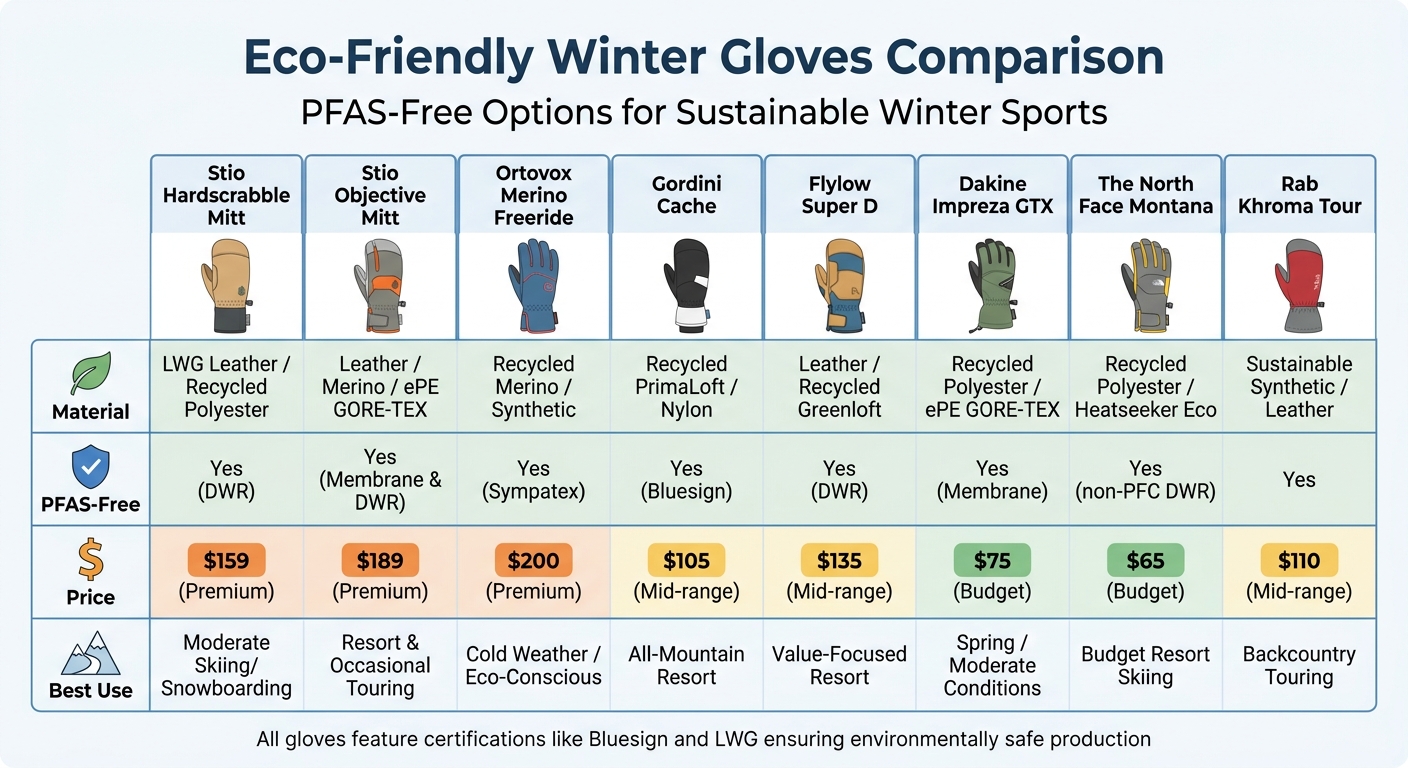
Eco-Friendly Winter Gloves Comparison: Materials, Prices, and Best Uses
Comparison Table
Here’s a quick overview of eco-friendly winter gloves, comparing their materials, PFAS-free status, price, and ideal use. These gloves combine sustainable materials with advanced non-PFC treatments to keep you warm while being mindful of the environment:
| Product Name | Material Type | PFAS-Free Status | Price (USD) | Best Use |
|---|---|---|---|---|
| Stio Hardscrabble Mitt | LWG Leather / Recycled Polyester | Yes (DWR) | $159 | Moderate Skiing/Snowboarding |
| Stio Objective Mitt | Leather / Merino / ePE GORE-TEX | Yes (Membrane & DWR) | $189 | Resort & Occasional Touring |
| Ortovox Merino Freeride | Recycled Merino / Synthetic | Yes (Sympatex) | $200 | Cold Weather / Eco-Conscious |
| Gordini Cache | Recycled PrimaLoft / Nylon | Yes (Bluesign) | $105 | All-Mountain Resort |
| Flylow Super D | Leather / Recycled Greenloft | Yes (DWR) | $135 | Value-Focused Resort |
| Dakine Impreza GTX | Recycled Polyester / ePE GORE-TEX | Yes (Membrane) | $75 | Spring / Moderate Conditions |
| The North Face Montana | Recycled Polyester / Heatseeker Eco | Yes (non-PFC DWR) | $65 | Budget Resort Skiing |
| Rab Khroma Tour | Sustainable Synthetic / Leather | Yes | $110 | Backcountry Touring |
Each glove in this list uses non-PFC treatments, reducing potential harm to the environment and human health. Certifications like Bluesign and LWG (Leather Working Group) ensure environmentally safe production practices and chemical safety standards are upheld.
The price range caters to a variety of budgets, from high-end options for serious winter sports enthusiasts to affordable choices for casual use. For off-mountain warmth, you might also consider custom soccer hoodies designed for team comfort. Whether you’re skiing, snowboarding, or touring, these gloves balance performance with eco-conscious design.
Benefits of Eco-Friendly Winter Accessories
Eco-friendly winter accessories not only help reduce waste but also conserve resources without sacrificing performance. Many of these products are made with recycled materials like PrimaLoft Gold Eco and Greenloft, which repurpose items such as plastic bottles and discarded fishing nets. This approach keeps waste out of landfills and oceans while also addressing concerns about chemical safety.
For example, PFAS-free treatments and ePE membranes are now used to eliminate harmful chemicals while still maintaining waterproof and breathable properties. This was highlighted during October 2025 testing at Crested Butte Mountain Resort with the Stio Objective Insulated Winter Mittens. As Senior Editor Morgan Tilton observed:
Despite the lighter environmental footprint, I noticed no performance dip. These mittens stayed waterproof and breathable during wet and windy storm cycles.
Durability is another key advantage of sustainable accessories. High-quality eco-friendly gear is built to last, reducing the need for frequent replacements and breaking the cycle of fast fashion. For instance, in 2024, Stio’s "Second Turn" trade-in program diverted about 8,600 pounds of material from landfills and conserved over 28,000 gallons of water. Materials like merino wool naturally manage odor and moisture, while bamboo grows with minimal water use and no pesticides.
These accessories also deliver impressive performance. Some eco-conscious mittens, for instance, retain warmth in temperatures as low as 15°F while weighing just 8 ounces. Leather certified by the Leather Working Group offers windproof protection and flexibility straight out of the box, skipping the usual break-in period. By 2024, Stio had incorporated 68% recycled polyester into its product line, proving that sustainable materials can rival or even outperform traditional ones in technical capabilities.
Sustainability extends beyond materials to ethical production practices. By supporting brands that adhere to fair labor conditions and reduce emissions through local manufacturing, you can ensure your purchase aligns with your values. Certifications like Bluesign and the Global Recycled Standard confirm that products meet stringent environmental and worker safety standards . Ultimately, the most eco-friendly choice is durable gear that doesn’t need frequent replacing, offering reliable performance year after year while minimizing overall consumption.
Conclusion
When it comes to choosing winter sports accessories, a few thoughtful decisions can make a big difference – for both you and the planet. Accessories that focus on eco-friendly design emphasize durability, non-toxic materials, and ethical manufacturing. Why does that matter? Because gear that lasts longer means less waste. As the experts at Better Trail put it:
Choosing durable outdoor gear is perhaps the most effective way to reduce environmental impact – the longer it lasts, the less it needs to be produced
.
For items like gloves, scarves, and beanies, check for certifications like GRS, LWG, and Bluesign. These labels ensure the products meet high standards for safety and quality. Also, steer clear of water-repellent treatments that contain PFAS, often referred to as "forever chemicals", which can harm both soil and water supplies. If possible, support brands that offer trade-in or repair programs – they’re a great way to extend the life of your gear.
Materials make a difference, too. Natural fibers like merino wool and alpaca fiber are excellent for moisture-wicking and odor resistance, plus they’re fully biodegradable, which helps avoid microplastic pollution. Meanwhile, recycled synthetics such as PrimaLoft Gold Eco deliver top-notch performance while repurposing waste materials.
If you’re shopping on a budget but still want quality and sustainability, there are options out there. For example, The North Face Montana Gloves ($65) use recycled Heatseeker Eco insulation and balance affordability with eco-conscious design. These products show that you don’t have to compromise on performance to make environmentally responsible choices.
FAQs
How can I tell if winter gear is truly eco-friendly?
To find winter gear that’s kinder to the planet, focus on items made with sustainable materials like recycled polyester, organic cotton, or responsibly sourced down. Also, check for certifications or practices such as PFAS-free waterproofing and Bluesign-approved materials, which highlight eco-conscious manufacturing processes.
Which materials are best for warmth without PFAS?
Sustainable materials such as organic cotton, bamboo, and recycled polyester offer great warmth without relying on PFAS. These materials are environmentally friendly and free of harmful chemicals, making them perfect for winter sports accessories like gloves, scarves, and beanies.
How do I care for wool or alpaca accessories so they last?
To care for your wool or alpaca accessories and keep them looking their best, hand wash them in cold water using a mild detergent like wool wash or a gentle shampoo. Steer clear of hot water and harsh chemicals, such as bleach, as these can damage the fibers. Once washed, lay the items flat to dry – this helps preserve their shape and softness. Additionally, airing them out between washes is a simple way to keep them fresh.