
When choosing fabrics for sportswear, two key factors matter: stretch (how much the material can expand) and recovery (its ability to return to its original shape). Without good recovery, uniforms can sag and lose their fit, impacting performance. Here’s a quick look at five fabrics commonly used in athletic wear:
- Spandex (Lycra/Elastane): Offers 4-way stretch with up to 500–800% expansion and a 95% recovery rate. Best for high-impact sportswear like compression garments and dancewear.
- Polyester: Durable and moisture-wicking, often blended with spandex for 40–100% stretch. Ideal for team jerseys and outdoor activities.
- Nylon: Known for durability, great recovery, and resistance to wear. Works well for yoga wear and compression gear.
- Merino Wool: Naturally elastic and odor-resistant, but less stretchable (up to 30%). Suited for base layers and temperature regulation.
- High-Performance Blends: Combine spandex with nylon or polyester to balance stretch, recovery, and durability. Used in leggings, sports bras, and custom uniforms.
Key Takeaway: The right fabric depends on the sport’s demands. Spandex and blends dominate for flexibility, while polyester adds moisture control and nylon excels in durability. Merino wool is great for comfort but less practical for intense activities.
Working out the Percentage of Stretch of Fabric – Understanding stretch and recovery!
sbb-itb-4d95ad3
1. Spandex (Lycra/Elastane)
Spandex, also known as Lycra or Elastane, sets the standard when it comes to fabrics that need maximum stretch and quick recovery. This synthetic fiber can stretch between 500-800% of its original size and still return to its original shape.
Stretch Capacity
Spandex offers a 4-way stretch, meaning it stretches both lengthwise and crosswise. This flexibility supports the wide range of movements required in dynamic sports. Unlike 2-way stretch fabrics that only stretch in one direction, spandex’s 4-way stretch is perfect for handling the unpredictable movements athletes make. High-performance activewear often requires a stretch percentage of 70-100% or more, and spandex consistently meets these demands. Its excellent stretch is paired with outstanding recovery.
Recovery Rate
Top-quality spandex boasts a recovery rate of up to 95%, meaning it nearly returns to its original shape after being stretched.
"A garment is only as good as its recovery"
Want to test this at home? Stretch a 10-inch piece to 12.5 inches, hold it for a minute, and then release it. If it’s spandex, it should shrink back to within 0.25 inches of its original length. This snap-back ability is what keeps fabric from sagging in high-stress areas like knees and waistbands.
Durability and Moisture Management
Spandex is often blended with materials like polyester or nylon to enhance durability, improve abrasion resistance, and manage moisture effectively. Many modern spandex fabrics also feature antimicrobial treatments and UPF50 sun protection, making them an excellent choice for outdoor training sessions.
Ideal Applications
Thanks to its flexibility and durability, spandex is a go-to fabric for sports uniforms and performance apparel. Its compressive, form-fitting qualities make it ideal for high-impact sportswear, compression garments, swimwear, and dancewear. Sports uniforms incorporating spandex blends – such as those from Wooter Apparel – allow athletes to move explosively while maintaining the garment’s shape, game after game.
2. Polyester
Polyester stands out as a durable, moisture-managing fabric that complements the stretch capabilities of spandex. While it doesn’t stretch much on its own, its strength and ability to handle moisture make it a key player in sports uniforms.
Stretch Capacity
Polyester is often blended with spandex (typically 10–20% spandex) to create fabrics with 40-60% stretch for casual sportswear. For premium activewear and uniforms, these blends can achieve 70-100% stretch, offering the flexibility needed for intense physical activity.
Durability
One of polyester’s biggest strengths is its resistance to wear and tear. It holds up through repeated washing, exposure to sweat, UV rays, and constant stretching. This means team uniforms made with polyester maintain their shape and performance throughout multiple seasons, making it a reliable choice for athletes.
Moisture-Wicking Capability
Polyester excels at pulling sweat away from the skin and spreading it across the surface of the fabric for quick evaporation. Some versions of polyester are treated to enhance this moisture-wicking ability even further, making them perfect for high-intensity sports. This feature helps athletes stay cooler and more comfortable, even during demanding games or workouts.
Ideal Applications
Thanks to its durability, moisture control, and affordability, polyester-spandex blends are widely used in sports like running, basketball, and HIIT training. Custom team uniforms from Wooter Apparel often rely on these blends to provide the perfect mix of stretch, toughness, and moisture management. Whether it’s football jerseys or soccer jerseys, polyester-based fabrics deliver consistent performance without breaking the budget.
3. Nylon
Nylon stands out for its ability to stretch and recover, maintaining its shape even under stress. Building on the strengths of spandex and polyester, it adds another layer of durability and performance, making it a go-to material for activewear.
Recovery Rate
One of nylon’s standout features is its exceptional elastic recovery. As Pine Crest Fabrics puts it:
"Nylon has a fantastic elastic recovery meaning that fabrics can stretch to their limits without losing their shape".
This means garments like leggings and sports bras hold their shape even after intense use and numerous washes. When paired with spandex, nylon further boosts recovery, ensuring the fabric stays snug and supportive.
Durability
While spandex offers extreme stretch and polyester excels in moisture control, nylon brings durability and resilience to the table. It resists sunlight, heat, and water, making it a top choice for outdoor sports apparel and swimwear. Other perks include its wrinkle resistance, quick-drying nature, and ability to reduce chafing during rigorous activities. Even after heavy use, nylon maintains its fit and feel, ensuring your gear performs as intended.
Ideal Applications
Nylon-spandex blends are perfect for team uniforms that need consistent compression and shape retention. They’re also great for yoga wear, everyday sports apparel, and outdoor gear that faces high wear and tear. Plus, nylon’s ability to absorb acid dyes allows for vibrant, eye-catching colors, adding a design edge. At Wooter Apparel, these blends are a staple for crafting custom athletic uniforms that combine comfort, durability, and striking visuals. With these qualities, nylon-spandex blends remain a popular choice for teams seeking reliable and long-lasting performance.
4. Merino Wool
Merino wool provides a natural alternative to synthetic materials like spandex, polyester, and nylon when it comes to stretch and recovery. Its elasticity comes from the crimped structure of its fibers, which act like tiny springs. This allows the fabric to move with your body and return to its original shape.
Stretch Capacity
Merino wool can stretch up to 30% and still snap back to its natural form. As Ecowool explains:
"Merino will return to its natural shape even when stretched by up to 30 percent".
This elasticity makes it a great choice for athletic wear, as it helps garments maintain their fit during physical activities. However, synthetic fabrics like nylon and polyester outperform pure merino wool when it comes to "fit flexibility", offering greater stretch for dynamic movements.
Recovery Rate
The spring-like structure of merino wool also supports its ability to recover its shape. That said, it needs more careful care than synthetic options. Washing it on a gentle cycle with cold water and laying it flat to dry preserves its shape. Hanging wet merino garments can lead to permanent stretching due to gravity. For athletic wear, stable knit constructions such as 1×1 rib or Milano stitches are better at maintaining shape compared to looser plain stitches.
Moisture-Wicking Capability
Merino wool handles moisture differently from synthetic fabrics. It absorbs moisture as vapor before it turns into sweat, keeping you dry and avoiding the clammy sensation often associated with liquid-wicking synthetics. In fact, merino can absorb up to 35% of its weight in moisture before feeling damp. Its natural lanolin and antibacterial properties also help neutralize odor-causing bacteria, making it possible to wear merino garments multiple times between washes. This combination of moisture management and odor control makes merino a smart choice for specific athletic needs.
Ideal Applications
Thanks to these features, merino wool is especially suited for base layers and activities where temperature regulation and odor control are key. For high-intensity sports that demand greater flexibility and shape retention, synthetic fabrics or merino-synthetic blends are better options. At Wooter Apparel, combining merino with synthetic cores creates hybrid fabrics that offer the softness and comfort of wool alongside the durability and stretch required for custom athletic uniforms. These blends balance natural comfort with reliable performance, making them a versatile choice for teams.
5. High-Performance Blends
High-performance blends combine base fibers like nylon or polyester with spandex to achieve levels of performance that single-fiber fabrics can’t match. While 100% spandex can stretch over 300%, its limited breathability and sewing challenges make blended fabrics a more practical choice.
Stretch Capacity
The stretch capability of a fabric blend depends on the elastane percentage and the knit structure. For example:
- Nylon-spandex blends (80/20) typically stretch between 130–160%.
- Polyester-spandex blends (85/15) offer a stretch range of about 110–140%.
High-performance activewear often demands at least 70–100% stretch, particularly for activities involving multidirectional movements like squats or lunges. These blends provide 4-way stretch, allowing unrestricted movement in all directions – a must for dynamic athletic activities. This flexibility also supports excellent shape recovery, which we’ll explore next.
Recovery Rate
Recovery rate refers to how well a fabric returns to its original shape after being stretched. Nylon-spandex blends typically achieve a recovery rate of 95–98%, while polyester-spandex blends range from 90–95%. A high-quality stretch jersey containing 20% spandex can retain over 95% of its recovery ability even after 100 cycles of wear and washing.
Durability
Specific knit structures, such as interlock or warp knits, are used in high-performance blends to enhance recovery and prevent sagging at areas like knees or elbows. Nylon blends are particularly durable, offering better abrasion resistance compared to polyester blends, making them a popular choice for compression gear and yoga wear. One brand reported a 55% reduction in product returns after upgrading from a low-cost polyester blend to a premium 78/22 nylon-spandex fabric. Additionally, specialized fibers like XLANCE maintain consistent recovery power even after 50 industrial laundry cycles at high temperatures. Alongside durability, moisture management is another key feature of these fabrics.
Moisture-Wicking Capability
Polyester-spandex blends excel in moisture management, achieving fast wicking speeds of ≥2.0 cm in just one minute (AATCC TM197). To qualify as breathable, high-performance fabrics should meet a moisture vapor transmission rate (MVTR) of at least 3,000 g/m²·24h. Polyester blends also dry more quickly and provide better UV resistance than nylon blends, making them ideal for running shirts and outdoor workout gear. However, as Szoneier Fabrics notes:
"The higher the spandex content, the better the stretch and snap-back – but too much spandex can reduce breathability and make sewing more complex".
Ideal Applications
For high-intensity sports like HIIT or cycling, nylon-spandex blends with power mesh lining offer maximum support. When creating leggings or sports bras, aim for a fabric weight of 280–320 GSM to ensure a good balance of support, opacity, and stretch. Nylon blends are especially suited for yoga wear, leggings, and compression gear due to their softness and superior elasticity. On the other hand, polyester blends are more budget-friendly and work well for running tops and outdoor training gear. Companies like Wooter Apparel rely on high-performance blends in custom athletic uniforms, ensuring the durability, stretch, and moisture control that athletes need to perform at their best. These blends offer a clear advantage in meeting the demands of modern sportswear.
Advantages and Disadvantages
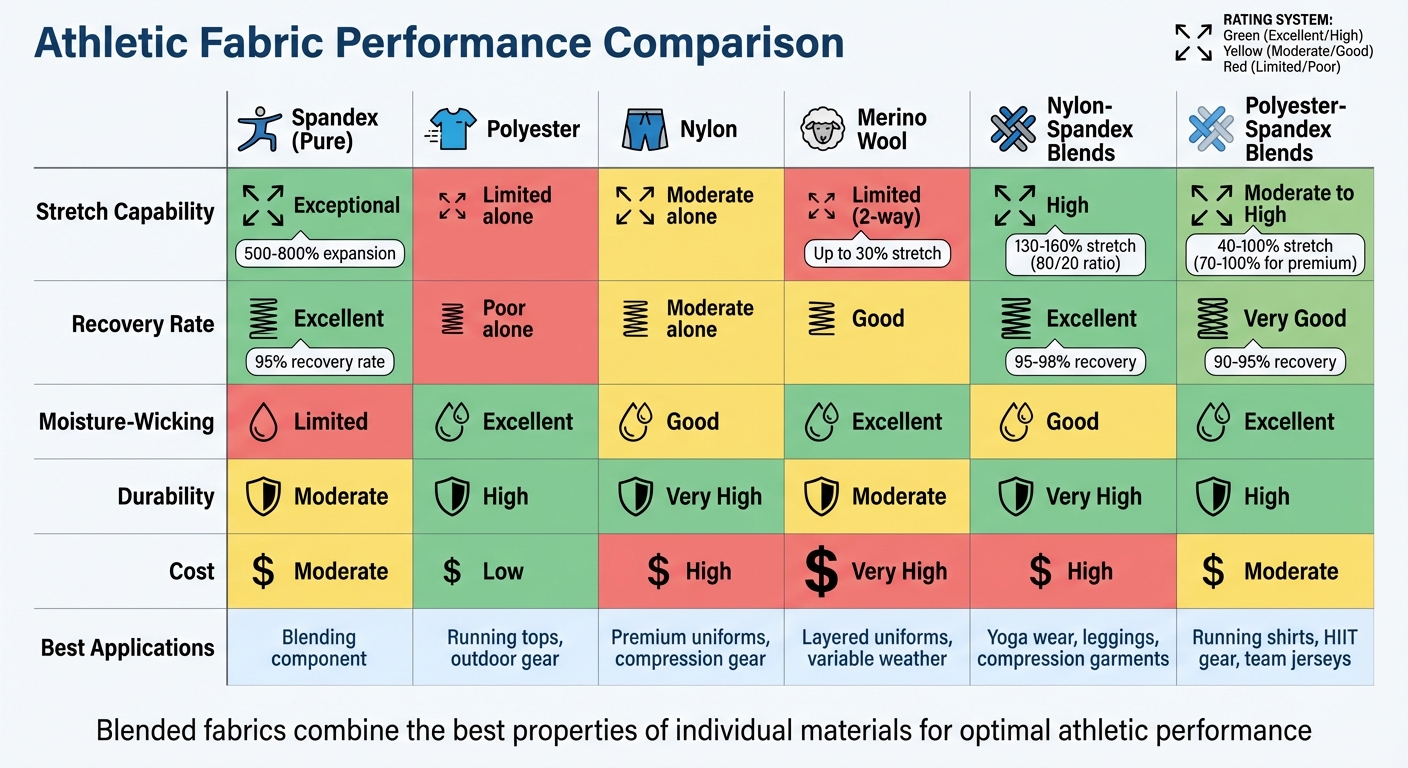
Athletic Fabric Comparison: Stretch, Recovery, and Performance Metrics
This section breaks down the practical pros and cons of various fabrics for athletic uniforms, building on the detailed fabric analyses covered earlier.
Each material offers its own strengths and weaknesses. Spandex, for example, is highly stretchable, making it a go-to for fabric blends. But it falls short in breathability and is tricky to sew, so it’s rarely used alone. Polyester, on the other hand, is affordable and great at wicking moisture, though it can limit mobility if used by itself – making it less suited for sports that require a full range of motion.
Nylon stands out for its smooth texture and impressive durability, including resistance to pilling. However, it’s heavier and more expensive, which can be a drawback for teams on a budget or for contact-heavy sports. Meanwhile, Merino wool excels at temperature regulation and odor resistance, but its high price, limited stretch, and shrinkage risk make it less practical for high-performance athletic wear.
Blended fabrics solve many of these issues. For instance, nylon-spandex blends – commonly in 75/25 or 80/20 ratios – offer excellent four-way stretch and comfort, making them perfect for activities like yoga or running. Polyester-spandex blends strike a balance between cost and performance, making them a favorite for running shirts, HIIT gear, and team jerseys. However, fabrics that stretch extensively but lack good recovery can lead to sagging in areas like elbows or knees over time.
Here’s a quick comparison of how these fabrics perform across key criteria:
| Fabric Type | Stretch Capability | Recovery Rate | Moisture-Wicking | Durability | Cost | Best Applications |
|---|---|---|---|---|---|---|
| Spandex (Pure) | Exceptional | Excellent | Limited | Moderate | Moderate | Blending component |
| Polyester | Limited alone | Poor alone | Excellent | High | Low | Running tops, outdoor gear |
| Nylon | Moderate alone | Moderate alone | Good | Very High | High | Premium uniforms, compression gear |
| Merino Wool | Limited (2-way) | Good | Excellent | Moderate | Very High | Layered uniforms, variable weather |
| Nylon-Spandex Blends | High | Excellent | Good | Very High | High | Yoga wear, leggings, compression garments |
| Polyester-Spandex Blends | Moderate to High | Very Good | Excellent | High | Moderate | Running shirts, HIIT gear, team jerseys |
The table underscores why blending fabrics is critical for creating high-performance athletic wear. For team uniforms, blends that combine high stretch with excellent recovery ensure garments perform well over time. At Wooter Apparel, we design custom uniforms using these advanced fabric technologies, ensuring every piece offers the flexibility and durability athletes need to excel.
Conclusion
When choosing fabrics for athletic wear, it’s crucial to match the material to the demands of the sport or activity. Sport Lycra and high-quality Nylon-Spandex blends, with their 70–100% stretch and excellent recovery, are ideal for athletes needing flexibility without losing fit. Polyester-Spandex blends strike a balance between durability, moisture-wicking properties, and affordability, making them a popular choice for team sports. For activities that require peak performance, premium Nylon-Spandex blends (in 75/25 or 80/20 ratios) offer exceptional four-way stretch, a smooth feel, and resistance to pilling.
Beyond performance, environmental factors also play a role in fabric selection. For fluctuating weather conditions, Merino Wool stands out with its natural stretch, temperature regulation, and odor control. On the other hand, warm-weather sports benefit from breathable fabrics like Cool Dry Mesh, which emphasize ventilation.
It’s important to focus on both stretch and recovery. A fabric that stretches but doesn’t return to its original shape will lose its form quickly, leading to sagging at high-stress points like knees and elbows.
At Wooter Apparel, we specialize in crafting custom uniforms that incorporate these advanced fabric technologies. Whether you’re looking for cost-effective Polyester-Spandex blends for team jerseys or premium Nylon-Spandex for compression gear, our fully sublimated designs deliver the flexibility, durability, and performance athletes need – across basketball, football, baseball, soccer, and more.
FAQs
How do I choose the right stretch fabric for my sport?
To pick the best stretch fabric, think about what your sport requires in terms of flexibility, moisture-wicking, and durability. Sports that demand a lot of movement, like basketball or gymnastics, benefit from Lycra or polyester-spandex blends with 4-way stretch. For contact sports or when compression is necessary, fabrics like Power Mesh or other compression materials are a better fit. Always test fabric samples to check their stretch, comfort, and how well they work with prints before making a purchase.
What spandex percentage gives good stretch without losing breathability?
A fabric blend containing at least 8% spandex, like a mix of 92% polyester and 8% spandex, provides great stretch without compromising breathability. This makes it a perfect choice for sports uniforms, offering both flexibility and comfort for active performance.
How can I tell if a fabric will sag after washing and wear?
To figure out whether a fabric is likely to sag over time, start by looking at its fiber content and care instructions. Materials made with sturdy fibers like polyester or spandex are known for holding their shape well, especially if you wash them in cold water and let them air-dry. On the other hand, fabrics with less durable fibers or those that aren’t cared for properly may lose their shape and start to sag.