
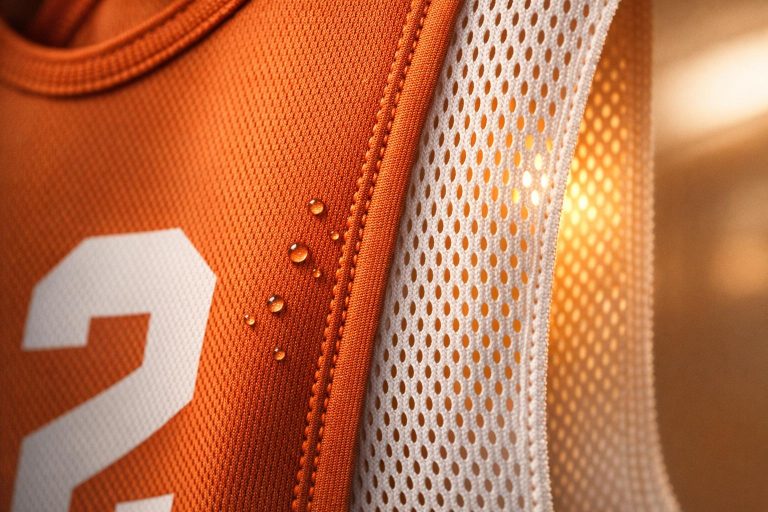
When designing breathable jerseys, the focus is on three factors: moisture management, airflow, and lightweight materials. These elements ensure players stay cool, dry, and unrestricted during games. Here’s what matters most:
- Moisture-Wicking Fabrics: Polyester is ideal as it pulls sweat away from the skin and dries quickly. Sublimation printing preserves ventilation by embedding designs without blocking pores.
- Ventilation Zones: Mesh panels in high-sweat areas (underarms, back, sides) improve airflow and help regulate body temperature.
- Lightweight Construction: Lower GSM fabrics reduce weight and drag, allowing free movement. Heavier fabrics may be more durable but can trap heat.
For durability and style, sublimation printing ensures long-lasting, vibrant designs without compromising breathability. Selecting the right fabric and design features based on playing conditions – hot gyms or cooler arenas – further optimizes performance.
Key takeaway: Jerseys should feel light, wick sweat efficiently, and allow airflow while maintaining durability and style.
What Makes a Jersey Breathable
When it comes to basketball jerseys, three main factors influence how breathable they are: moisture management, air circulation, and fabric weight. Each of these plays a key role in keeping players cool and comfortable during intense games. Let’s break down how these elements work together to enhance performance.
Moisture-Wicking and Sweat Management
The secret to staying dry on the court lies in synthetic fibers like polyester. These materials excel at pulling sweat away from the skin and moving it to the fabric’s surface, where it evaporates quickly. This process, known as moisture-wicking, prevents sweat from building up and creating distractions. Polyester’s hydrophobic nature (it repels water) is the reason it pushes moisture outward instead of soaking it up, which is what cotton tends to do.
The way designs are applied to jerseys also matters. Sublimation printing embeds ink directly into the fabric fibers, preserving the material’s pores and allowing sweat to escape. In contrast, methods like screen printing or vinyl transfers create a solid layer on top of the fabric, blocking these pores and trapping sweat underneath. This can lead to uncomfortable "hot zones." That’s why sublimation printing is the go-to choice for custom performance jerseys – it keeps the moisture-wicking properties intact while delivering durable, vibrant graphics.
Airflow and Ventilation
Good ventilation is another crucial factor. Mesh panels with an open-knit, perforated design allow air to pass through the jersey, helping heat escape. These panels are typically placed in high-sweat areas like the underarms, back, and sides, where athletes need airflow the most. This isn’t just about feeling cool – it’s about regulating body temperature, which can directly affect stamina and overall performance. Combined with moisture-wicking, ventilation zones ensure jerseys are effective in keeping players comfortable and focused.
Lightweight Materials for Better Movement
The weight of the fabric, measured in GSM (grams per square meter), has a big impact on how a jersey feels and performs. Lighter fabrics with a lower GSM reduce drag, making it easier for players to move freely while also promoting quicker cooling. A great example is when Adidas launched their Rev30 jerseys during the 2010-2011 NBA season. These jerseys used recycled polyester to cut garment weight by 30%, giving players a noticeable edge during fast-paced moments like sprints and defensive maneuvers.
A lightweight jersey should feel almost "invisible", allowing players to move without restriction – even when the fabric gets damp. This balance of comfort and functionality is what makes a breathable jersey stand out.
sbb-itb-4d95ad3
Selecting Fabrics for Breathable Jerseys
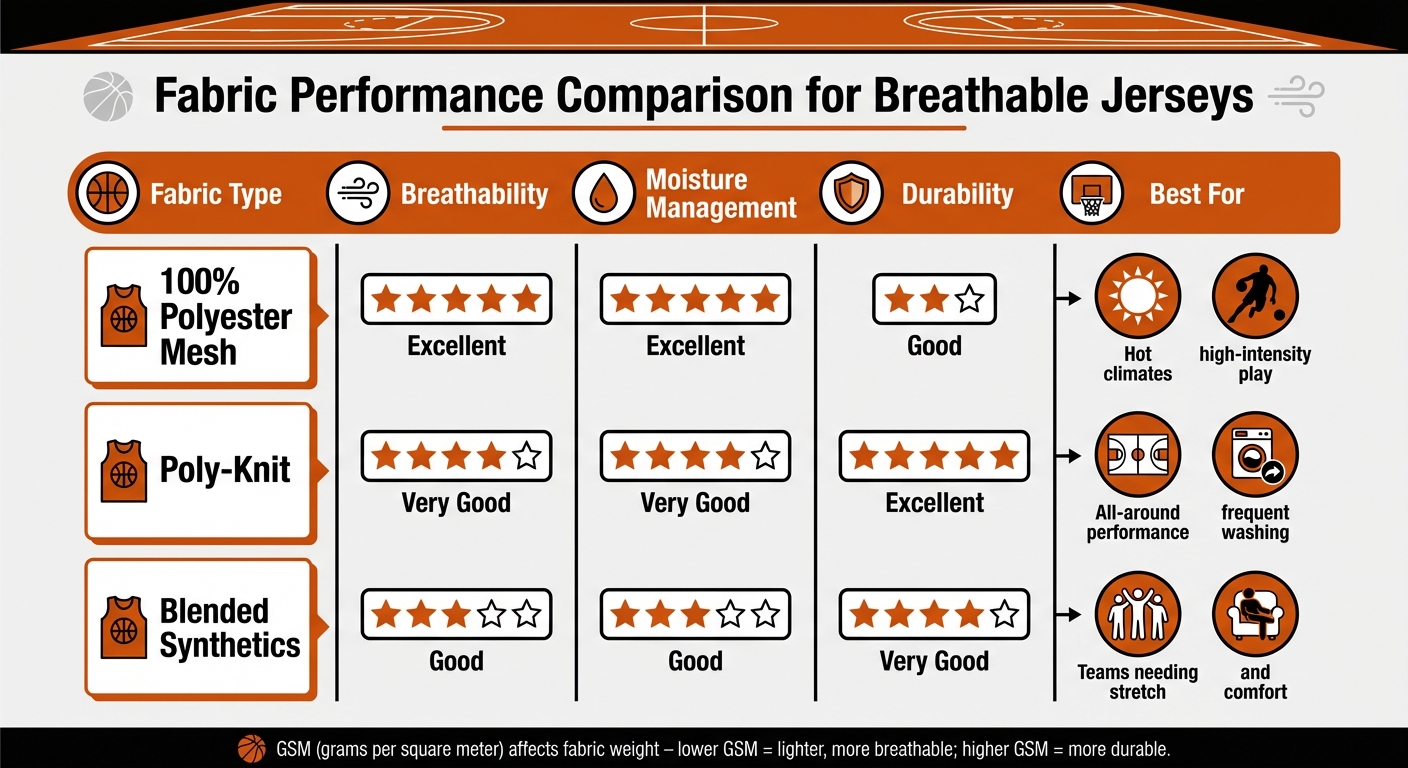
Basketball Jersey Fabric Performance Comparison Guide
Choosing the right fabric for jerseys is all about finding materials that handle moisture and heat effectively. Polyester is a popular choice for performance jerseys because it resists shrinking, dries fast, and holds onto vibrant colors. But not all polyester is created equal – factors like weave, weight, and construction can dramatically affect how well a jersey deals with sweat and heat during play.
Fabric Performance Comparison
Each type of fabric offers its own benefits on the court. Poly-knit fabrics are durable and have a smooth finish, making them ideal for frequent use. Mesh fabrics are unbeatable for airflow but may not allow for intricate designs. Blended fabrics, which combine polyester with other synthetics, strike a balance between stretch, comfort, and durability. The key is to match the fabric to the team’s specific needs. For example, lightweight and ventilated materials are better for hotter conditions, while thicker, more durable fabrics work well in cooler environments.
| Fabric Type | Breathability | Moisture Management | Durability | Best For |
|---|---|---|---|---|
| 100% Polyester Mesh | Excellent | Excellent | Good | Hot climates, high-intensity play |
| Poly-Knit | Very Good | Very Good | Excellent | All-around performance, frequent washing |
| Blended Synthetics | Good | Good | Very Good | Teams needing stretch and comfort |
Fabric density, measured in GSM (grams per square meter), also plays a big role. Lighter fabrics with lower GSM are better for cooling and ventilation, while higher GSM fabrics are tougher and more durable. For teams playing in hot, humid gyms, lighter fabrics are the way to go. On the other hand, cooler, air-conditioned settings might call for thicker, more durable materials.
But fabric choice is only part of the equation – modern technologies can take jersey performance to the next level.
Modern Fabric Technologies
Sublimation printing is a game-changer for breathability. By embedding ink directly into polyester fibers, it preserves the fabric’s pores, ensuring maximum airflow. Many performance fabrics now also include antimicrobial treatments to fight odor-causing bacteria, keeping jerseys fresher for longer. Additionally, advanced moisture-wicking knits are designed with special channels that pull sweat away from the skin, helping athletes stay cool and maintain a stable body temperature.
At Wooter Apparel, we combine these cutting-edge technologies with carefully selected fabrics to craft jerseys that deliver on breathability, durability, and comfort for every athlete.
Design Features That Improve Breathability
When it comes to crafting high-performance jerseys, design choices play a huge role in enhancing breathability. Beyond fabric selection, thoughtful construction elements like panel placement and stretch materials can transform a standard jersey into an effective cooling system. These design tweaks work hand in hand with fabric strategies to keep athletes comfortable and focused.
Mesh Panels and Seam Placement
Placing mesh panels in the right spots makes all the difference. Areas like the underarms, back, and sides tend to generate the most heat and sweat, so adding ventilation here is crucial. At the same time, seams need to be positioned carefully to avoid blocking the fabric’s natural airflow and creating "hot zones."
"Brands are using data-driven placement of mesh panels to optimize airflow where athletes need it most, blending engineering with aesthetics for a truly functional design." – BTO Sports
Another important consideration? Avoid anything that hinders the fabric’s breathability. Traditional screen or vinyl printing, for example, can clog up the mesh and reduce airflow. Sublimation printing, on the other hand, keeps the fabric’s pores open, allowing designs to enhance rather than limit ventilation.
Stretch Features for Comfort
To complement ventilation, incorporating stretch materials ensures both comfort and mobility. Flexible fabrics paired with contoured designs allow athletes to move freely without sacrificing airflow. Sublimation printing also helps here, as it keeps the material lightweight and maintains its stretch properties. In contrast, heavier prints or thick graphics can make the jersey feel stiff and restrictive.
Using lower GSM (grams per square meter) fabrics for high-intensity jerseys further reduces weight and drag. This thoughtful design approach ensures athletes experience full freedom of movement while staying cool. At Wooter Apparel, we rely on sublimation printing for all our custom basketball jerseys, ensuring that every design prioritizes breathability and performance.
Combining Performance, Durability, and Design
While breathability is crucial, a jersey must also handle the rigors of gameplay and maintain its visual appeal. A well-designed jersey doesn’t just breathe – it survives games, practices, and countless washes while still looking sharp. Achieving this balance means carefully considering how the jersey is constructed, the materials used, and the printing techniques applied.
Building Jerseys That Last
Durability starts with reinforced seams and selecting the right fabric weight. High-performance materials like TS Exo-Tech provide excellent airflow while standing up to the physical demands of contact sports. Choosing the correct fabric weight is equally important; while lighter fabrics may improve breathability, they can compromise longevity. Polyester knits and meshes strike a solid middle ground, offering both strength and ventilation.
To ensure jerseys perform over time, advanced fabric treatments are essential. Features like quick-dry and anti-pilling finishes help maintain their quality through intense use, while antimicrobial and anti-UV coatings keep jerseys fresh and resistant to wear from various conditions. This combination of durability and performance ensures that players are equipped to handle the demands of the court.
Crafting Eye-Catching Custom Designs
Durability isn’t the only factor – great design is just as important for fostering team spirit and identity. Vibrant, long-lasting designs can make a team stand out without sacrificing functionality. Dye-sublimation printing is a standout technique, embedding colors directly into fabric fibers for intricate, wash-resistant designs. This method ensures that logos, patterns, and colors remain vivid even after repeated washes.
At Wooter Apparel, we offer fully sublimated polyester jerseys that combine bold, fade-resistant designs with the lightweight, breathable performance athletes need. Our free custom design service allows teams to create uniforms that are as striking as they are practical. From bold logos to intricate patterns, dye-sublimation ensures professional-grade results that elevate both style and functionality.
Designing for Different Playing Conditions
When it comes to jerseys, one size – or design – doesn’t fit all. Teams playing in various climates and venues need jerseys that adapt to their specific playing conditions. Factors like fabric weight, ventilation, and compatibility with layers can make a big difference in both comfort and performance.
Hot and Humid Climates
In hot, sticky weather, jerseys should focus on keeping players cool and dry. Lightweight fabrics with a lower GSM (grams per square meter) help reduce weight and prevent the material from clinging to the skin. These lighter materials also speed up moisture evaporation, which is key in such conditions. Sublimation printing is particularly effective here because it doesn’t interfere with the fabric’s natural ability to ventilate. As Zoe DeCaro explains:
"Sublimation printing continues to lead the industry because it maintains ventilation, reduces weight, and preserves the athlete’s comfort through every movement."
Strategically placed mesh panels, especially in high-sweat areas like the underarms, back, and sides, further enhance airflow and help prevent localized overheating.
Cooler Weather and Layering
On the flip side, cooler conditions call for jerseys that balance breathability with the ability to layer. Even in cold weather, breathability is crucial for managing moisture. Sweat that lingers on the skin can cool the body up to 25 times faster, making players feel colder. Moisture-wicking fabrics are essential here, as they pull sweat away from the body, keeping players dry and comfortable even under warmup layers.
Design features like zippered necks and tailored fits allow players to fine-tune their body temperature. This is especially important for preventing overheating during warmups while still staying comfortable as they transition into play. At Wooter Apparel, for instance, custom basketball jerseys are designed to pair perfectly with warmup jackets, giving players the flexibility to adapt to changing conditions. Starting activity with a slightly cool sensation – rather than feeling overly warm – ensures players are comfortable as their body temperature rises during the game.
Conclusion
Breathable basketball jerseys focus on three key elements: the right fabrics, advanced printing methods, and balanced durability. Polyester remains a top choice because it dries quickly, resists shrinking, and holds colors well. When paired with sublimation printing, it maintains the fabric’s natural ventilation, ensuring players stay cool without unnecessary bulk.
Smart design choices, like adding mesh panels in high-sweat areas and avoiding vinyl graphics that restrict airflow, further improve comfort. Lightweight fabrics with lower GSM are ideal for hot conditions, while higher GSM fabrics offer extra durability for more physical gameplay. Together, these strategies create jerseys that not only look sharp but also enhance player performance.
"The most effective custom jerseys feel almost invisible during play, letting athletes focus on performance rather than discomfort" – Zoe DeCaro, Author
Whether playing in scorching heat or cooler conditions, these design principles help teams perform at their best from warmups to the final buzzer. They don’t just elevate individual performance – they strengthen team identity and unity on the court. The right jersey is more than just gear; it’s a tool for success.
At Wooter Apparel, we bring these principles to life by combining sublimation printing with high-performance fabrics to create custom pro basketball jerseys that breathe, perform, and endure. A well-designed jersey not only looks great – it gives your team a true competitive advantage.
FAQs
What GSM should my team choose for our jerseys?
For basketball jerseys, the ideal GSM (grams per square meter) range falls between 130 and 180, with most teams opting for 140–160 GSM. This range strikes the perfect balance between being lightweight for ease of movement and durable enough to hold up during intense gameplay.
Will our logos or numbers reduce breathability?
When logos and numbers are added using sublimation, they don’t interfere much with the fabric’s breathability. This technique embeds the designs directly into the material, allowing it to retain its airflow and moisture-wicking abilities, so the fabric stays breathable.
Where should mesh panels go on a basketball jersey?
Mesh panels work best when positioned in high-heat areas like the sides, shoulders, and underarms. These spots are crucial for improving airflow and ventilation, helping players stay cool and comfortable during intense games by targeting areas prone to overheating.