
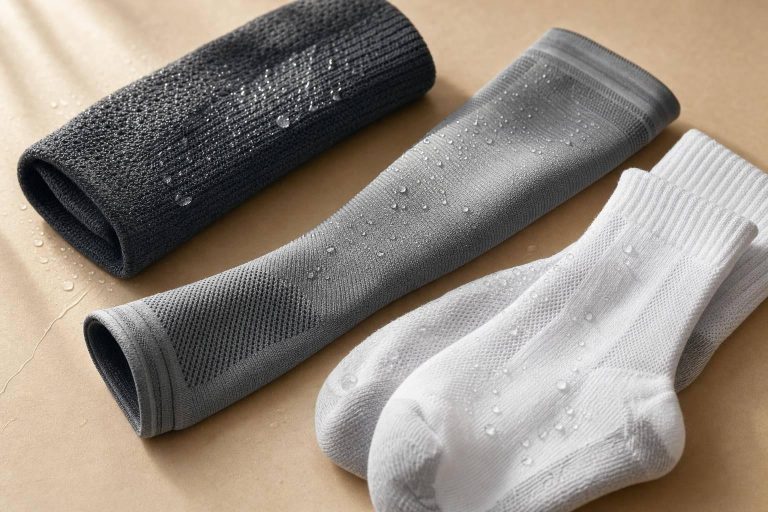
The short answer: I’d choose moisture-wicking add-ons by checking fabric, fit, sport, weather, and care first. The right headband, arm sleeve, or sock helps move sweat off the skin, which can lower friction, cut down on blisters and chafing, and help with grip and focus.
Here’s the main takeaway in plain English:
- Headbands help keep sweat out of your eyes and need a snug fit that stays put.
- Arm sleeves should wick sweat, fit close, and allow full movement.
- Socks matter most for moisture control because damp feet can push friction up by as much as 50%.
- Polyester is a common pick for hot, high-effort play.
- Merino wool blends work well for cold-weather socks.
- Flatlock seams, mesh zones, and the right spandex % can improve comfort and fit.
- Don’t use fabric softener – it can hurt wicking over time.
- For teams, plan for extra pairs, size mix, and reorders before the season starts.
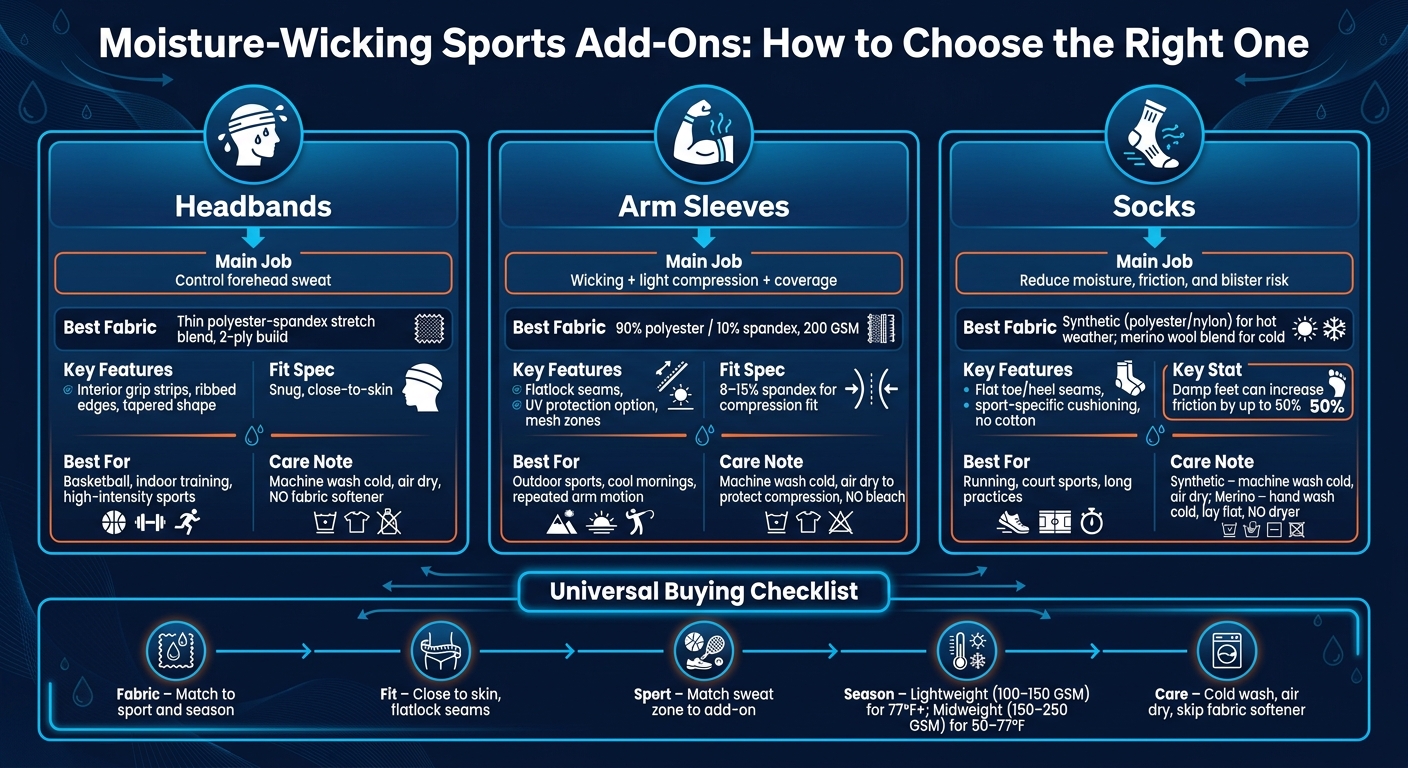
Moisture-Wicking Sports Add-Ons: Headbands vs Arm Sleeves vs Socks
Quick Comparison
| Add-on | Main job | What I’d look for | Best use case |
|---|---|---|---|
| Headbands | Control forehead sweat | Snug fit, grip strip, thin stretch fabric, 2-ply build | Basketball, training, indoor play |
| Arm sleeves | Wicking + light compression + coverage | Polyester/spandex blend, flat seams, snug fit, UV option | Outdoor sports, cool mornings, repeated arm motion |
| Socks | Reduce moisture, friction, and blister risk | Synthetic fibers or merino blend, flat seams, sport-based cushioning | Running, court sports, long practices |
If I were buying today, I’d keep it simple: pick the add-on by sweat zone, use fabric that matches the weather, and make sure the fit stays close to the skin without feeling too tight. That’s the core of the whole article.
sbb-itb-4d95ad3
2. Core Factors to Check Before You Buy
Three things should guide every buying decision: fabric, fit, and budget. Nail those first, and the rest gets a lot simpler.
Choose the right fabric blend for your sport and season
For high-intensity play and hot weather, polyester is usually the go-to. It repels water and pulls sweat away from the skin, which helps it dry faster. Nylon blends stand up better to abrasion, so they make sense for team sports where gear takes more abuse. For cold-weather socks, merino wool does a nice job with moisture. It can absorb sweat while still feeling dry, and it helps control odor well.
A simple rule works here:
- Use lighter polyester for headbands and sleeves
- Use merino blends for cold-weather socks
Fabric weight also changes by season. Lightweight fabrics in the 100–150 GSM range work best above 77°F. Midweight options, around 150–250 GSM, fit cooler conditions between 50°F and 77°F.
Once you’ve got that sorted out, the next move is simple: match the item to the body area it’s meant to protect.
Match fit and construction to movement and sweat level
Moisture-wicking works best when the fabric stays close to the skin. If a headband is loose or an arm sleeve hangs baggy, it won’t do the job as well as a snug fit.
For stretch, 4–8% spandex works for most general athletic use. If you’re buying compression arm sleeves, look for 8–15% spandex for a firmer compression fit. It’s also smart to check the seams. Flatlock seams help cut down on friction during long practices or games. And if the item has mesh panels in high-sweat areas, that can help evaporation by about 15–20% compared with solid-weave fabric.
Here’s an easy test: put a little water on the inside of the fabric. It should spread out fast, not sit there in beads. If it beads up, you’re looking at water-resistant fabric, not moisture-wicking fabric.
After that, think about how the sport moves and how much players sweat. Sleeves, bands, and socks should match that workload.
Balance performance needs with team budget and reorders
If you’re buying for a full roster, keep your eye on three things: consistent sizing, durability, and easy reordering. Polyester is usually the most budget-friendly pick, and it holds up well through a full season. For contact sports or heavier wear, a nylon-polyester blend gives you better abrasion resistance without slowing down drying time.
Custom accessories – headbands, socks, and arm sleeves that match your custom pro football jerseys – can help pull the team look together. Custom headbands can start as low as $6.99 per unit, and custom basketball socks start at $13.99 per pair. When you plan quantities, leave room for mid-season replacements, new roster additions, and reorders. That’s why it helps to work with a supplier that has consistent sizing charts and dependable turnaround times.
With fabric, fit, and budget locked in, the next step is choosing the right add-on for each role. Next, compare headbands, arm sleeves, and socks by the job each one has to do.
3. How to Choose the Right Add-On by Type
Once fabric, fit, and budget are locked in, pick the add-on based on the body area that needs the most sweat control.
Headbands: keep forehead sweat under control without slipping
Start with forehead sweat. It’s usually the first place where problems show up, especially when sweat runs into your eyes or the band starts sliding around.
Moisture control matters, but grip matters just as much. Look for interior grip strips or ribbed edges that help keep the band in place during sharp cuts and fast changes in direction. A thin stretch blend usually works best because it sits close to the skin. A tapered shape can help too, with more coverage across the forehead and a secure fit in the back.
For basketball and other high-intensity sports, a wider band is often the better pick. For lighter workouts, a lower-profile band is usually enough. A 2-ply build can add absorption without making the band feel bulky. Sublimated designs keep logos from cracking or peeling.
Arm sleeves: combine wicking, light compression, and coverage
A good arm sleeve should balance light compression, breathability, and a secure fit. It helps manage sweat while adding light coverage, which is handy for outdoor play.
High-performance sleeves often use a 90% polyester / 10% spandex blend at 200 GSM. Flatlock seams help cut down chafing during repeated arm movement. If the sport happens outdoors, UV protection is worth looking for.
The fit should feel snug and flexible, not tight or restrictive.
Socks: cut down on moisture, friction, and blister risk
Socks need the toughest moisture control of the three. Once socks get wet, friction goes up fast, and that’s when blisters start.
Synthetic fibers like polyester and nylon pull sweat away from the foot and dry faster than cotton. Cotton absorbs and holds moisture, which leaves socks heavy and can increase blister risk. Cushioning placement and sock height should also match the sport. Flat seams help reduce irritation around the toe and heel.
For teams, it’s smart to buy extra pairs so players can rotate them more often and help cut down wear and odor buildup.
4. Build a Team-Ready Setup for Conditions, Branding, and Ordering
After you’ve picked the fabric and fit, the next step is simple: make sure those choices hold up in the conditions your team actually faces.
Pick add-ons based on weather, venue, and season schedule
Buy for the hardest conditions on your calendar, not the nicest day of the season.
| Setting | What to Prioritize |
|---|---|
| Indoor gym (climate-controlled) | Breathable, low-bulk headbands and socks focused on sweat control and grip |
| Outdoor summer tournament | Lightweight, fast-drying headbands; thinner socks; custom long sleeve compression shirts that wick without trapping heat |
| Early spring or fall practice | Arm sleeves that manage sweat on warm-up laps while adding light warmth during cool morning starts |
Once the performance side is handled, use those same accessories to keep the team look in sync.
Use custom accessories to match uniforms and team identity
Mismatched accessories can make even a well-designed uniform look less put together. Stick to one color palette and one logo treatment across headbands, sleeves, and socks. They don’t have to match piece for piece. They just need to feel like they belong together.
Wooter Apparel offers custom coordinated designs across jerseys, warmups, and accessories to create a consistent team identity on the field, in warmups, and in team photos.
Plan quantities, sizes, and reorder timing for your team
Get size picks before you place the order, especially for arm sleeves and socks. These can vary more than people think based on forearm, calf, and shoe size.
It also helps to build in a small buffer. Add a few extra medium and large items so you have backups ready if a player loses gear or needs a different fit.
For socks, order one to two backup pairs per athlete. They’re more likely to get lost, stretched out, or needed at the last minute. If you’re ordering custom sublimated items, lead times are longer than stock gear. Work backward from your first tournament date and leave room for proofing, production, and shipping before that deadline hits.
Track wear from the first event so replacements are easy to handle later.
5. Care, Replacement, and a Final Buying Checklist
Once you pick the right add-ons, care is what decides how long they keep working.
How to wash and dry moisture-wicking accessories
Moisture-wicking gear needs the right care to keep doing its job. The big rule: never use fabric softener. It coats the fibers and can permanently weaken wicking.
| Accessory | Wash Method | Drying Method | Avoid |
|---|---|---|---|
| Headbands | Machine wash cold, mild detergent | Air dry or tumble dry low | Fabric softeners, high heat |
| Arm Sleeves | Machine wash cold | Air dry to protect compression | Fabric softeners, bleach |
| Socks (synthetic) | Machine wash cold | Air dry or lay flat | Fabric softeners |
| Socks (merino wool) | Hand wash cold, wool detergent | Lay flat to dry | Dryer – heat will shrink wool fibers |
For compression sleeves and high-spandex headbands, air drying helps them keep their stretch and fit. High heat wears down elasticity and shortens the life of the fabric.
Signs it is time to replace worn-out add-ons
At some point, washing stops bringing the gear back to its original feel. That’s usually your signal to swap it out.
If an item starts holding sweat instead of pulling it to the surface, it’s likely done. When washing no longer brings back its wicking ability, the fabric has probably failed. You may also notice headbands slipping during workouts, sleeves that no longer feel snug, or socks that keep odor even after washing. That kind of odor often points to bacterial buildup or a worn-down antimicrobial finish. Thinning fabric, pilling, and shape loss are also clear warning signs.
Final checklist: fabric, fit, sport, season, and care
Use this quick check before every reorder:
- Fabric: Go with polyester-spandex blends for long-term wicking and easier care
- Fit: Check that tapered headbands and flat-seam sleeves still keep their shape after repeated washing
- Sport match: High-intensity sports need a secure fit with silicone grips; outdoor sports get more from UV protection
- Season: In summer, focus on fast-drying gear; in cooler months, aim for moisture control that keeps you cool and dry
- Customization: Sublimated graphics put color into the fibers, which helps logos and team colors last through washing
- Care readiness: Make sure your team can wash in cold water, skip fabric softeners, and air dry when needed
- Timing: Order early enough to replace worn gear before the season starts
FAQs
Which add-on should I buy first?
It depends on what’s getting in your way during play.
A lot of athletes start with a moisture-wicking headband. It helps keep sweat and hair out of the eyes during high-intensity sessions, which can make it easier to stay locked in.
If your bigger problem is wet feet, moisture-wicking socks are often the better first pick. They can help cut down on blisters, fatigue, and plain old discomfort.
Both are practical basics, and both can be customized. The right choice comes down to where you want more comfort and better performance first.
How do I know if the fit is too tight?
A piece of gear is too tight when it feels uncomfortable, restricts your natural movement, or starts causing physical problems.
A headband should stay put without leaving pressure marks or giving you a headache. Socks should feel like a second skin, not like they’re squeezing your feet. If any item chafes, pinches, or leaves marks that stick around, it’s probably too tight.
How often should I replace moisture-wicking gear?
There’s no fixed expiration date for moisture-wicking gear. How long it lasts mostly comes down to how you care for it.
If you want it to hold up longer, wash it in cold water with a gentle detergent. Skip fabric softener, and let it air-dry when you can. High heat can shrink the fabric, change its shape, or wear down its moisture-wicking performance.