
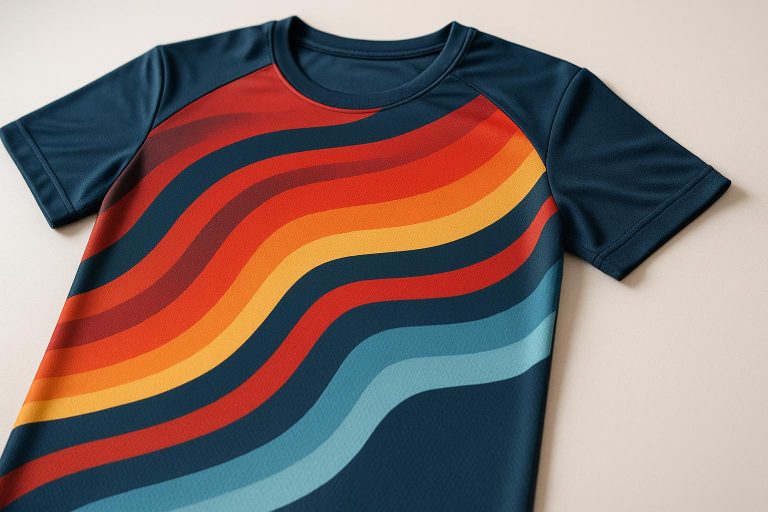
When designing sublimated jerseys, the right stretch fabric is essential for performance, comfort, and print quality. Here’s what you need to know:
- Polyester-heavy blends (85–100% polyester) are the best for sharp, long-lasting prints.
- Polyester-spandex blends (85/15 or 90/10) provide flexibility and maintain shape after repeated use.
- 4-way stretch fabrics ensure unrestricted movement for athletes.
- Moisture-wicking materials like technical knits or poly-spandex blends keep players cool and dry.
- Durability depends on fabric weight (GSM) and washing resistance. Heavier options (200+ GSM) last longer but may feel warmer.
- Mesh and pinhole knits are ideal for ventilation but slightly less durable than solid fabrics.
To ensure the best results, test fabric samples for stretch, print compatibility, and comfort before committing to bulk orders. Proper care, like washing in cold water and air drying, helps maintain the fabric’s elasticity and print quality over time.
Polyester/Spandex Knit Fabric For Dye Sublimation
What to Look for When Choosing Stretch Fabrics
Choosing the right stretch fabric for sublimated jerseys is all about finding a balance between performance, comfort, and durability. Here’s what to keep in mind to ensure your jerseys look great and perform well over time.
Durability and Wash Resistance
When it comes to durability, fabrics with high polyester content (at least 85%) are a solid choice. They resist wrinkles, shrinkage, and fading better than most other materials. Combine that with a tight knit and a higher GSM (grams per square meter), and you’ve got a fabric that can handle frequent washing and the wear and tear of sports.
Polyester-spandex blends are especially reliable. The spandex adds stretch, while the polyester ensures the fabric keeps its shape and color, even after hundreds of washes. For sports like football or soccer, where jerseys endure constant physical contact, a higher GSM fabric is particularly useful – it’s more resistant to abrasion and tearing.
Flexibility and Range of Motion
Athletes need jerseys that move with them, not against them. That’s why a 4-way stretch fabric is a must. This type of stretch allows the material to expand both horizontally and vertically, ensuring unrestricted movement during intense plays. Whether it’s a basketball player pivoting or a soccer player reaching for a ball, flexibility is key.
"Most comfortable uniforms my players had" – Alex A., Verified Reviewer, Wooter
When evaluating stretch fabrics, check how easily they stretch and how much give they have. Some suppliers even offer rating systems to help you find the right fit for your sport’s specific demands.
Print Compatibility and Color Vibrancy
A jersey isn’t just functional – it’s also a statement. For sharp, vibrant designs, the fabric’s surface quality is critical. Smooth-face polyester or polyester-rich blends are your best bet for sublimation printing. These materials allow for crisp, vivid prints, while fabrics with less polyester content or rougher textures can dull colors or blur images.
Sublimation printing works by turning dye into gas, which then bonds with the polyester fibers. This process is most effective on 100% polyester fabrics, ensuring team logos and designs pop with clarity and precision.
Moisture Wicking and Breathability
Athletic performance often hinges on how well a jersey handles sweat. Polyester fibers naturally wick moisture away from the skin, and technical knit structures take it up a notch by improving airflow and evaporation. Lightweight technical knits and poly-spandex blends with features like micro-perforations are particularly effective in keeping athletes cool and dry.
Some fabrics incorporate advanced moisture-management technologies like Dri-Gear and Maxdri, which enhance sweat-wicking and help maintain comfort during high-intensity games.
Comfort and Skin Safety
Performance features are important, but comfort can’t be overlooked. Jerseys are worn for long periods, so they need to feel good against the skin. Fabrics with soft hand finishes or peached interiors provide a smooth, pleasant texture. Poly-spandex blends are especially popular – they’re soft, reduce the risk of chafing, and hold up well during demanding practices or games.
"The team absolutely loves the fit and comfort of the warm ups and wears them with pride." – Tammy S., Customer Representative, Wooter
Additionally, hypoallergenic properties are worth considering, especially as jerseys incorporate more technical features. Look for fabrics free of rough seams or harsh chemical treatments to ensure they’re gentle on sensitive skin. After all, a jersey should enhance performance, not cause irritation.
Common Stretch Fabric Types for Sublimated Jerseys
Choosing the right stretch fabric for your sublimated jerseys can make a big difference in both performance and print quality. Each fabric type offers its own perks, from flexibility to cooling capabilities, so understanding these options can help you find the best fit for your team.
Poly-Spandex Blends
Poly-spandex blends are often considered the top choice for sublimated jerseys. These blends usually consist of 85-90% polyester and 10-15% spandex, striking a balance between vibrant prints and athletic functionality. The polyester ensures bright, long-lasting designs, while the spandex provides the stretch athletes need to move freely.
With 4-way stretch, these fabrics expand both horizontally and vertically, allowing for maximum mobility. They’re also wrinkle-resistant, which means less upkeep and consistent performance over time.
Some blends, like peached poly-spandex, have a soft inner layer and a smooth outer surface that’s ideal for sharp, detailed prints. These fabrics come in a range of weights, from 180 to 240 GSM, with tougher, scratch-resistant options available up to 270 GSM, catering to both durability and performance needs.
Recycled Polyester Options
Recycled polyester is becoming a popular choice for teams aiming to reduce their environmental impact without compromising quality. This fabric offers moderate stretch and a smooth surface, making it a strong contender for sublimation printing.
The eco-friendly benefits are clear – recycled polyester helps reduce plastic waste and minimizes reliance on new petroleum-based materials. However, there are some challenges to keep in mind. Recycled polyester can be more prone to dye migration and changes in color sheen, and it has a lower heat tolerance compared to virgin polyester. Testing is crucial to ensure your designs maintain their appearance and durability.
This option is ideal for teams balancing sustainability goals with performance requirements.
Lightweight Technical Knits
Lightweight technical knits are designed for high-performance sportswear, offering advanced stretch, breathability, and moisture-wicking abilities. Fabrics like N-Knit, Icy SuperFLEX, and semi-matte tricot are engineered to meet the demands of intense athletic activities.
What makes these knits stand out is their thoughtful construction. They keep athletes cool and comfortable while providing a smooth surface for vivid sublimation prints. Despite their lightweight feel, these fabrics are built to handle the rigors of competitive sports.
Take semi-matte tricot, for example – it offers excellent 4-way stretch and a polished look that works both on and off the field. These fabrics are especially popular for sports like basketball and tennis, where mobility is key.
For situations where airflow is more important than stretch, mesh fabrics are another option to consider.
Mesh and Pinhole Knits
When it comes to maximizing ventilation, mesh and pinhole knits are hard to beat. Fabrics like Bird’s Eye Mesh, Fusion Mesh, and Blink Mesh feature open structures that allow for excellent airflow, keeping athletes cool during intense games.
These fabrics are particularly useful for sports played in hot climates or indoor settings where heat can build up quickly. Teams in sports like basketball, soccer, and football often choose mesh knits for their superior cooling properties. Despite the open structure, the solid areas of the fabric still provide a great surface for sublimation printing, ensuring logos and designs come out crisp.
Pinhole knits offer a balance between breathability and durability, with tiny perforations that enhance airflow without compromising the fabric’s strength. This makes them a good option for sports that demand both cooling and resilience.
The stretch in mesh fabrics can range from 2-way to 4-way, depending on their construction. While they may not stretch as much as poly-spandex blends, their cooling benefits make them a go-to choice for teams playing in challenging conditions.
sbb-itb-4d95ad3
How to Compare Stretch Fabric Options
Now that we’ve covered the key fabric characteristics, let’s dive into how to compare stretch fabric options effectively. By focusing on key performance factors, you can confidently choose the best material for your sublimated jerseys.
Start by assessing the stretch direction. This determines how much freedom of movement the fabric allows. Fabrics with four-way stretch expand both horizontally and vertically, offering maximum flexibility – ideal for high-intensity sports. Two-way stretch, on the other hand, provides less flexibility and works well for lower-intensity activities.
Next, consider fabric weight, typically measured in grams per square meter (GSM). Weight impacts both durability and breathability. Medium-weight fabrics (200–300 GSM) strike a balance between durability and comfort, while lightweight options (under 200 GSM) are great for staying cool but may wear out faster. Heavier fabrics provide more structure, making them better suited for cooler conditions, though they may feel too warm for intense sports.
Moisture management is another critical factor, especially during games. A fabric that wicks moisture effectively helps keep athletes dry and comfortable, which can impact performance.
Print quality is essential for showcasing team logos and designs. Fabrics with a high polyester content and smooth surfaces ensure vibrant, sharp prints. The smoother the surface, the better the details will appear.
Finally, evaluate durability – how well the fabric holds up to repeated washing, stretching, and general wear and tear. This includes resistance to fading, shrinkage, and loss of stretch over time. Durability is especially important for jerseys that need to last through a demanding season.
Fabric Comparison Table
Here’s a quick comparison of common fabric types based on these performance factors:
| Fabric Type | Stretch Direction | Weight (GSM) | Moisture Management | Print Quality | Durability |
|---|---|---|---|---|---|
| Poly-Spandex Blends | 4-way | 180–270 | High | Excellent | Excellent |
| Recycled Polyester | 2-way/4-way | 160–220 | Moderate–High | Very Good | High |
| Lightweight Technical Knits | 4-way | 140–200 | High | Very Good | Moderate |
| Mesh and Pinhole Knits | 2-way/4-way | 140–180 | High | Very Good | Moderate |
From this table, it’s clear why poly-spandex blends are a popular choice – they perform well across all categories. However, your priorities may lead you to other options. For instance, recycled polyester is a great choice if sustainability matters, offering strong performance with added eco-friendly benefits. If cooling is your main concern, mesh knits provide excellent ventilation, though they may not last as long.
When testing fabrics, try stretching a sample and measuring the percentage increase from its original length. For athletic wear, a stretch of at least 130% is ideal. Pre-stretching the fabric slightly before sublimation can also help prevent puckering during the printing process.
Finally, always order fabric swatches or conduct small test runs before committing to bulk orders. This allows you to check how the fabric feels, how well it prints, and how it performs during use. After all, what works on paper needs to translate into a jersey that meets your team’s real-world needs.
At Wooter Apparel, these rigorous tests are part of the process to deliver high-performance, vibrant, and durable sublimated jerseys.
Care and Maintenance for Stretch Fabrics
Taking proper care of sublimated jerseys is essential to maintain their performance and appearance. Stretch fabrics, especially those with spandex blends, are more delicate than pure polyester and need specific handling to retain their elasticity and print quality. Here’s how you can keep your jerseys in top shape.
Washing and Drying Guidelines
To protect the fabric and vibrant prints, always wash jerseys in cold water. Turn them inside out to minimize friction and prevent pilling. Use a gentle cycle with a light load to reduce mechanical stress on the fabric.
Stick to mild liquid detergents and steer clear of bleach, optical brighteners, and powdered detergents. Avoid fabric softeners or harsh chemicals, as they can weaken spandex fibers and compromise the moisture-wicking properties that make athletic jerseys perform so well.
For drying, air drying is your best bet. High heat can break down both spandex and polyester fibers. If you must use a dryer, choose a low-heat or delicate setting and remove the garments promptly to prevent overheating.
When storing, lay jerseys flat or hang them on padded hangers in a cool, dry place away from direct sunlight.
Maintaining Print Integrity
Sublimation prints are bonded directly into the polyester fibers, meaning the fabric’s condition directly impacts the design’s vibrancy and sharpness over time. To avoid dye transfer, wash jerseys with similar colors.
Handle 4-way stretch polyester/spandex fabrics carefully to prevent permanent distortion. These blends can maintain their elasticity and bold prints when cared for properly.
Avoiding Premature Wear and Tear
Proper handling not only preserves print clarity but also prevents fabric degradation. Never iron directly on printed areas; instead, iron on the reverse side or use a pressing cloth.
Wash jerseys separately from abrasive items like zippers or velcro to avoid snags. After each use, wash to remove sweat and bacteria while following gentle care instructions. For textured fabrics like mesh or pinhole knits, ensure they are thoroughly dried to prevent mildew and odors.
For specialized fabrics, such as peached polyester/spandex blends with their soft interiors, proper washing helps maintain their unique finish without affecting the smooth outer surface needed for sharp sublimation prints.
Conclusion: Picking the Right Stretch Fabric for Your Team Jerseys
When it comes to team jerseys, finding the right stretch fabric is all about balancing key factors: durability, flexibility, print quality, moisture management, and comfort. These elements come together to create uniforms that not only look great but also perform well under pressure.
Fabrics with a high polyester content (85–100%) are ideal for vibrant, long-lasting prints. Blends like 85/15 or 90/10 polyester-spandex offer the perfect mix of print clarity and four-way stretch, ensuring sharp designs that won’t fade. These blends also provide the flexibility athletes need for unrestricted movement, along with moisture-wicking properties to keep them cool and comfortable during intense games.
Investing in quality fabrics isn’t just about appearance – it’s about performance. The right materials help players move freely and keep logos and colors intact, even after countless washes. Over time, this can extend the lifespan of jerseys and reduce the need for frequent replacements, making it a smart investment for any team.
Before placing bulk orders, it’s always a good idea to request samples. Testing for stretch performance, print vibrancy, and overall feel can help you avoid costly mistakes and ensure the jerseys meet your team’s specific needs.
If your team is ready for an upgrade, Wooter Apparel offers expert guidance on fabric selection and fully customized designs. Backed by a 4.9-star rating from 1,238 reviews, Wooter Apparel is known for its quality materials and attention to detail. They even provide free custom design services, helping teams combine durability, comfort, and standout style.
"Our high quality sublimated uniforms are made to last so your players can look and feel their best." – Wooter Apparel
The right stretch fabric can turn team jerseys into high-performance gear, boosting both athletic performance and team pride. Make the right choice, and your team will feel the difference every time they hit the field.
FAQs
Why is a polyester-spandex blend ideal for sublimated jerseys?
A polyester-spandex blend works exceptionally well for sublimated jerseys, offering a mix of strength, flexibility, and excellent print results. Polyester serves as a sturdy, lightweight foundation that stands up to rigorous physical activity, while spandex introduces stretch for added comfort and freedom of movement.
This combination also delivers vibrant and enduring sublimation prints, as polyester fibers are particularly good at absorbing dye. The outcome? A jersey that not only looks sharp but also enhances performance during games or workouts.
What is GSM, and how does it affect the durability and comfort of sublimated jerseys?
GSM, short for grams per square meter, is a measure of fabric weight that significantly impacts the performance of sublimated jerseys. It’s a critical factor when considering both durability and comfort. Fabrics with a higher GSM are thicker and sturdier, making them well-suited for contact sports or heavy-duty use. In contrast, lower GSM fabrics are lighter, offering improved breathability and flexibility, which is ideal for sports that demand agility and quick movement.
When selecting a fabric, it’s all about finding the right balance. A mid-range GSM often strikes the perfect compromise, delivering both durability and comfort – making it a popular choice for most sports jerseys.
How can I care for sublimated jerseys made from stretch fabrics to maintain their elasticity and print quality?
To keep your sublimated jerseys in top shape, here are some simple care tips:
- Use cold water and a gentle cycle when washing to protect both the fabric and the print.
- Steer clear of harsh detergents, bleach, or fabric softeners – these can fade colors and reduce elasticity.
- Opt for hang drying or tumble drying on low heat to prevent shrinkage and maintain the fabric’s stretch.
- Never iron directly over the printed areas, as this can ruin the design.
By following these steps, your jerseys will stay flexible, durable, and vibrant, ready for many more seasons.