
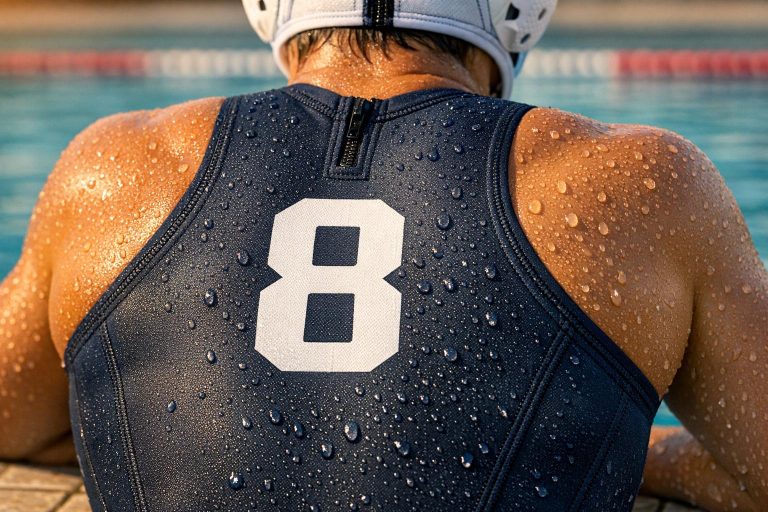
Water polo uniforms are designed to meet the sport’s intense physical demands while adhering to strict regulations. Here’s what matters most:
- Materials: Use chlorine-resistant fabrics like polyester blends to maintain elasticity and color after repeated exposure to pool water.
- Fit: Ensure a snug fit to minimize drag and prevent opponents from grabbing loose fabric. Men’s suits often feature brief cuts, while women’s suits are typically one-piece with high backs and wide straps.
- Durability: Reinforced stitching, flatlock seams, and heavy-duty fabrics are key to withstanding the sport’s physical intensity.
- Team Identity: Incorporate team colors, logos, and numbers while following size and placement rules for compliance.
- Regulations: Logos must not exceed 2.25 square inches, and uniforms should display high-contrast numbers for visibility.
Water Polo Uniform Design Requirements and Specifications Guide
Water Polo Uniform Requirements
Key Features of Water Polo Uniforms
Water polo uniforms are designed to ensure clear visibility and promote safe play. To maintain fairness, specific rules govern elements like logos, identifiers, and numbering. These features are not just functional but are also strictly regulated to uphold the integrity of the game.
Regulations and Compliance
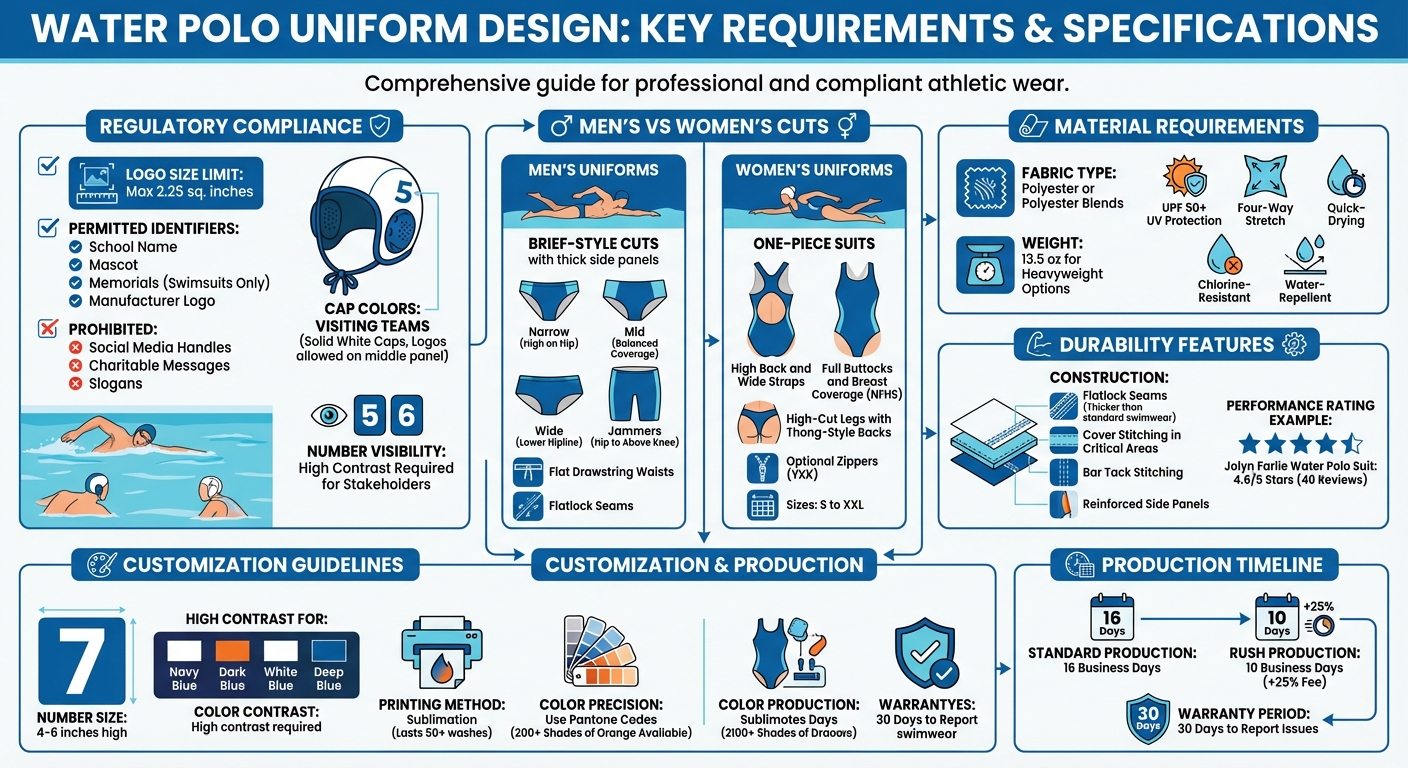
Following these regulations is about more than just fairness – it also supports optimal player performance. According to the Collegiate Water Polo Association, logos and approved text on swimsuits and caps must not exceed 2.25 square inches. Only certain identifiers are permitted, such as the school name, mascot, memorials (on swimsuits only), and the manufacturer’s logo.
However, social media handles, charitable messages, or other slogans are strictly prohibited. Cap colors also follow specific guidelines: visiting teams are required to wear solid white caps, though logos are allowed on the middle panel. Uniform numbers must be displayed in a way that ensures high contrast for easy visibility. As the association explains:
The rules for contrasting numbers and visibility are intended to provide clearly visible numbers for the stakeholders: coaches, fans, media, television audience, etc.
Non-compliance with these rules carries significant consequences. Teams using caps that do not meet the standards must replace them; failure to do so could result in a game forfeit if no resolution is reached. Additionally, players are prohibited from wearing jewelry, watches, or any other attachments that might pose a risk of injury. When designing uniforms, it’s crucial to ensure all logos remain within the 2.25 square inch limit to avoid potential issues.
sbb-itb-4d95ad3
Selecting High-Performance Fabrics and Materials
Chlorine-Resistant Materials
Chlorinated pool water can wreak havoc on standard fabrics like LYCRA™ or spandex, causing them to lose elasticity, fade, and even suffer seam damage over time. To combat this, materials like polyester or polyester blends are a better choice. They handle chlorine exposure, sunlight, and the physical demands of water sports much more effectively .
Some advanced options, such as Chloroban, offer even more perks. Along with being highly resistant to chlorine, they provide a UPF 50+ rating for UV protection. These materials maintain their shape and color even during rigorous training and competition, making them a long-lasting option for athletes. Beyond chemical resistance, the fabric must also support the athlete’s need for unrestricted movement.
Comfort and Stretch for Mobility
Freedom of movement is crucial in water sports, and four-way stretch materials help athletes stay agile during sprints, water treading, and physical contact. Polyester-spandex blends not only offer this flexibility but also stand up well against chlorine .
A smooth fabric texture can reduce distractions, allowing athletes to stay focused. Quick-drying, water-repellent fabrics are another key feature, as they prevent waterlogging and help reduce drag. For high-level competitions, some athletes opt for hydrodynamic fabrics, which are specially designed to minimize drag even further. These materials are more commonly used at professional and collegiate levels.
Designing for Fit and Mobility
Choosing the Right Cuts for Men and Women
Men’s water polo uniforms are designed with brief-style cuts featuring thicker side panels and seams, making it harder for opponents to grab during play. These briefs come in various styles – narrow, mid, wide cuts, or jammers – each tailored to reduce drag and limit grip opportunities. Narrow cuts, previously called "Euro", sit high on the hip for maximum movement range. Mid cuts strike a balance between coverage and sleekness, while wide cuts provide extra support with a lower hipline for broader body types. Jammers, on the other hand, extend from the hip to just above the knee, offering compression and further drag reduction.
Women’s uniforms are typically one-piece suits that meet NFHS regulations by fully covering the buttocks and breasts, featuring a high back and wide straps. Zippers are allowed under these guidelines. High-cut legs combined with thong-style backs reduce surface area, cutting down on drag and enabling better hip and leg mobility for eggbeater kicks. Additional options include thin straps for minimal tan lines, designs with more rear coverage, and zip-up styles with locking zippers for athletes with taller torsos.
A snug fit is crucial for both men and women, as it ensures the fabric stays close to the skin, eliminating loose areas that could be grabbed or torn during intense play. Features like flat drawstring waists and reinforced flatlock seams enhance both durability and performance. These design elements not only improve functionality but also require precise sizing to work effectively.
Ensuring Size Accuracy
Accurate sizing is a key factor in maintaining a secure, drag-free fit. Athletes should be measured while standing in a relaxed posture, focusing on chest, waist, hip, and inseam dimensions. Adding 1 to 2 inches to these measurements helps account for the stretch in high-performance fabrics. Size charts designed for snug fits are essential, and testing prototypes in water can ensure the uniforms stay in place and allow unrestricted movement. Offering a range of sizes (commonly S to XXL) accommodates various body types, and re-measuring athletes after exposure to chlorine is wise, as some shrinkage can occur over time.
Incorporating Team Identity and Customization
Customizing Colors and Patterns
Choosing the right team colors is more than just aesthetics – it’s about creating a look that represents your school or club while standing out in the pool. Opt for high-contrast combinations like dark navy paired with powder blue or orange accents. These choices not only enhance visibility under pool lighting but also add a professional touch to your team’s appearance.
Consider adding bold patterns, such as alternating panels or unique team graphics, to make your design pop. Sublimation printing is a great option here, as it embeds colors that can withstand chlorine exposure over time. Before finalizing, test your color scheme under actual pool lighting conditions. Involve your team in the process to ensure the design truly captures the spirit of your squad. Don’t forget to complete the look with logos, names, and numbers for a unified identity.
Adding Logos, Names, and Numbers
Once you’ve nailed down your colors and patterns, it’s time to incorporate logos and player identifiers. Make sure your designs follow NFHS guidelines, especially when it comes to logo size and number placement. This ensures compliance while keeping the look sharp and professional.
Position your team logo where it’s most visible, like on the chest or thigh. To ensure durability through intense gameplay, use flat prints. For numbers and names, choose bold, thick fonts that are 4–6 inches high in contrasting colors – like white on navy – for maximum legibility. Submitting vector files to your uniform provider ensures crisp, clean logos and text that won’t lose quality during production.
Ensuring Durability with Reinforced Construction
When it comes to water polo, durability is non-negotiable. The sport’s physical nature – marked by constant tugging and grabbing – demands uniforms that can handle intense wear and tear. That’s where reinforced construction steps in, ensuring performance and longevity even under the toughest conditions.
Flatlock seams are a game-changer here. Not only do they enhance durability, but they also lie flat against the skin, reducing irritation during movement. These seams are thicker than those found in typical swimwear, making them better equipped to resist the constant pulling and grabbing that water polo players face season after season. Cover stitching in critical areas adds flexibility without sacrificing structural integrity, while flat seams in high-stress zones like the sides and leg openings help prevent chafing during high-intensity action.
"The thick fabric makes it tough to grab and rip even if you are not sizing way down." – Leah, Athlete, Cal Poly Women’s Water Polo Team
Closures also play a key role in maintaining suit integrity. Flat drawstrings create secure, low-profile knots that stay in place during play. For women’s suits with back closures, YKK zippers are a reliable choice, designed to hold up even in the heat of competition.
Heavyweight fabrics, such as 13.5 oz polyester blends, further enhance resilience. These materials are tough enough to resist grabbing and can endure an entire five-month season without significant wear. The Jolyn Farlie Water Polo Suit, for instance, has earned a 4.6 out of 5 rating from 40 reviews, with users praising its reinforced stitching and controlled stretch that minimizes grabbing.
Finalizing and Ordering Your Uniforms
Reviewing Design Prototypes
Before production kicks off, take the time to carefully review your design prototypes. Double-check every detail – logos, team names, player numbers, and font styles – to prevent costly errors. Make sure to use original vector files, like .ai or .pdf, for logos. This ensures crisp, professional-quality printing.
Getting the colors right is just as important. Wooter Apparel highlights a common issue:
"One mistake people make is just saying ‘orange’. There are over 200 shades of orange in the Pantone system, so it is best to be specific!"
To avoid confusion, always provide precise Pantone color codes for the exact shade you want. If you’ve worked with multiple design variations, specify which one is the final choice.
Next, finalize your roster sheet with accurate player measurements, numbers, and names. Cross-check these measurements with Wooter’s size charts to account for any manufacturer differences. For larger teams, it might be a good idea to request a sizing kit. This allows players to try on samples, and the deposit for the kit is fully refundable. Once all the details are confirmed, you’re ready to place your order.
Placing an Order with Wooter Apparel
Once your design is approved, placing an order with Wooter Apparel is straightforward. They offer free custom design services and use advanced sublimation printing, a process that embeds the design directly into the fabric. This ensures your colors stay vibrant and won’t crack or peel, even after more than 50 washes. With a 4.9-star rating from 1,352 reviews, their customers regularly praise the quality and precision of their work.
Production begins only after the final design is approved, sizes are confirmed, and payment is completed. The standard production time is 16 business days, but if you’re in a hurry, they offer rush production in as little as 10 business days for an additional 25% fee.
All orders require a signature upon delivery, so make sure someone reliable is available to receive the package at the provided address. Once your uniforms arrive, inspect them immediately. You’ll have 30 days to report any issues or request corrections.
Conclusion
Creating high-performance water polo uniforms boils down to four key factors: chlorine-resistant fabrics, a secure fit for maximum mobility, reinforced construction, and a distinct team identity. These elements work together to ensure durability, functionality, and style.
Chlorine-resistant materials are essential for maintaining the uniform’s shape and color over time, even after repeated exposure to pool chemicals. A snug, tailored fit reduces loose areas that opponents could grab. For women, this often means higher necklines and solid backs, while men benefit from drawstring waists and flatlock seams to ensure both security and freedom of movement.
Durability is equally important. Reinforced construction, such as bar tack stitching and premium materials, ensures the uniform can endure the rigors of intense gameplay while preventing wear and tear.
Team identity plays a big role, too. Custom designs that follow NFHS guidelines allow teams to showcase their logos, colors, and player numbers with pride. By providing specific Pantone color codes – like the 200+ shades of orange available – teams can achieve their exact desired look. These elements not only boost team unity but also instill confidence in players.
Wooter Apparel simplifies the entire process with free custom design services and fully sublimated uniforms that resist fading, cracking, or peeling. Their use of chlorine-resistant fabrics and attention to detail ensures your team gets uniforms built for high performance and long-lasting style. Ready to elevate your team’s game? Start designing today and give your water polo team the edge they need to succeed.
FAQs
How do I choose the right suit style for my team?
To pick the ideal water polo suit, prioritize durability, fit, and team identity. Choose a snug, secure fit with reinforced seams to withstand the demands of intense matches. Opt for high-quality materials that ensure the suit lasts through rigorous use. Additionally, make sure the suit’s design showcases your team’s colors and branding. Customizable features, such as sublimated designs, can add a personal touch while balancing performance and style without compromising on durability.
What measurements should players submit for accurate sizing?
To get the right fit, players should take measurements for their chest, waist, hips (if necessary), shoulder width, and sleeve length. Here’s how to do it:
- Chest: Wrap a flexible measuring tape around the fullest part of the chest.
- Waist: Measure around your natural waistline, usually the narrowest part of your torso.
- Hips (if needed): Measure around the widest part of the hips.
- Sleeve Length: Start at the shoulder and measure down to the wrist.
- Shoulder Width: Measure across the back from one shoulder edge to the other.
For the best results, measure over light, snug-fitting clothing to ensure accuracy.
How can I ensure our design meets logo and number rules?
When creating team uniforms, it’s important to follow your league’s rules for logo and number placement. Check the regulations to ensure the size, position, and visibility of these elements meet the required standards. Use templates to help you correctly place logos on the chest, back, or sleeves, and make sure numbers are easy to read and appropriately sized.
For long-lasting, bold designs, sublimation printing is a great choice. To avoid issues, always test your design using mockups before moving forward with production. This step ensures everything aligns with the league’s guidelines and looks exactly how you envisioned.