
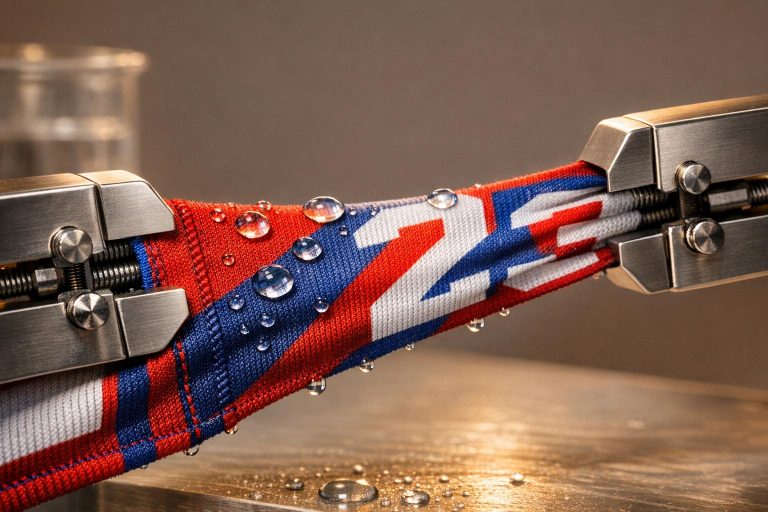
Durability matters when it comes to sports uniforms. Sublimation printing, a technique where ink bonds directly into fabric fibers, outperforms screen printing and DTG (Direct-to-Garment) printing in key areas like color retention, wash resistance, and stretch durability. Here’s why:
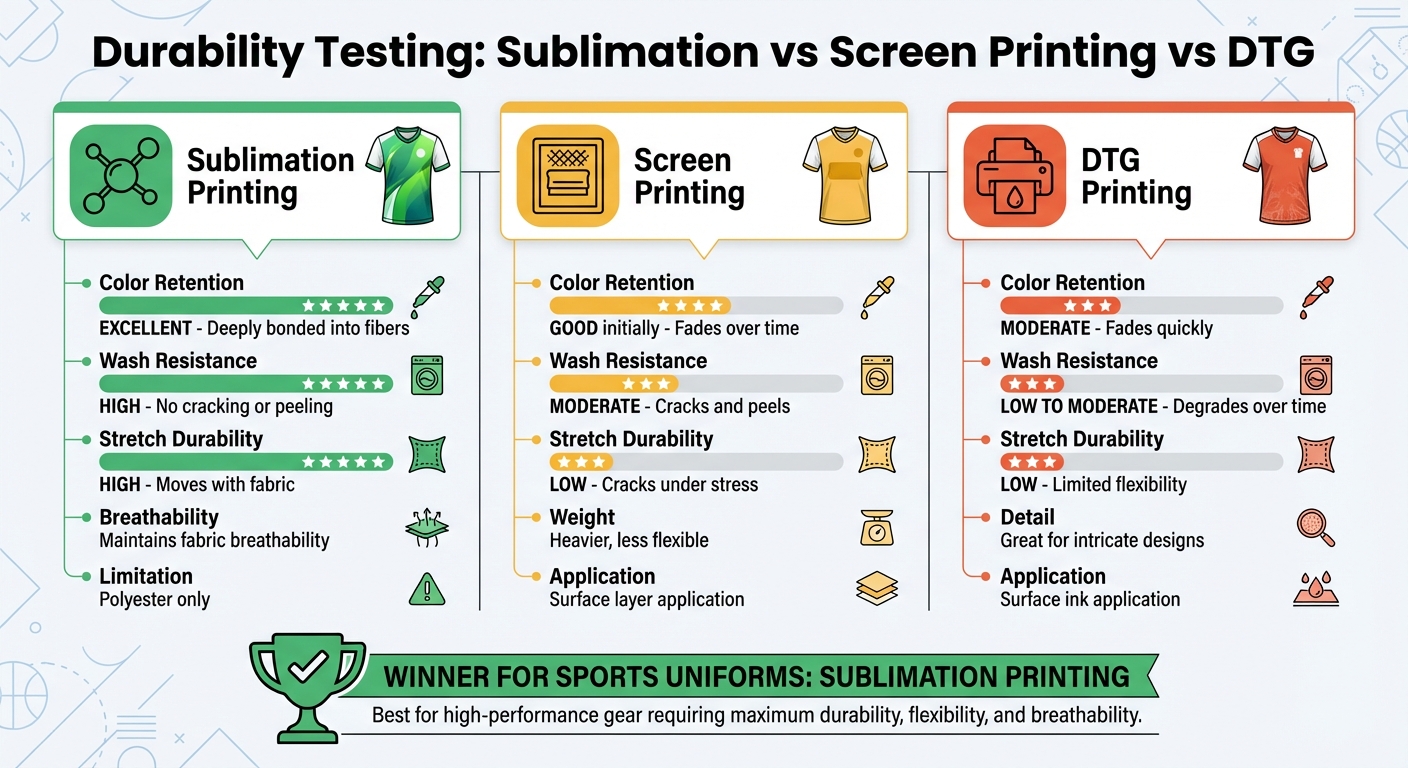
- Sublimation Printing: Designs stay vibrant, resist cracking or peeling, and maintain fabric breathability even after heavy use and frequent washing. However, it’s limited to polyester materials.
- Screen Printing: Initially bold but prone to fading, cracking, and peeling over time. The ink layer also makes the fabric heavier and less flexible.
- DTG Printing: Great for detailed designs but struggles with durability. Colors fade faster, and designs are more prone to wear after washing.
Quick Comparison:
| Feature | Sublimation Printing | Screen Printing | DTG Printing |
|---|---|---|---|
| Color Retention | Excellent – deeply bonded | Good initially – fades | Moderate – fades quickly |
| Wash Resistance | High | Moderate – cracks/peels | Low to Moderate |
| Stretch Durability | High | Low – cracks under stress | Low – limited flexibility |
For long-lasting, lightweight, and breathable uniforms, sublimation printing is the clear choice.
Sublimation vs Screen Printing vs DTG: Durability Comparison for Sports Uniforms
Sublimation vs. HTV: How long does sublimation ink last? What about printable HTV?
sbb-itb-4d95ad3
1. Sublimation Printing
Sublimation printing stands out for creating long-lasting and high-performing sportswear, especially when it comes to durability.
Color Retention
One of the most impressive features of sublimation printing is its ability to maintain vibrant colors, even after countless washes. This ensures that uniforms look as bold and fresh as the day they were made.
Wash Resistance
Sports uniforms made with sublimation printing excel in wash resistance. The ink deeply penetrates the fabric, which helps prevent cracking, peeling, or fading over time. Plus, this method keeps the material lightweight and breathable, making it perfect for active use.
Stretch Durability
Athletic uniforms face a lot of stretching during intense gameplay. Sublimation printing holds up under this pressure because the ink bonds directly with the fabric fibers, allowing the design to move seamlessly with the material. This prevents cracking or peeling while maintaining the fabric’s comfort and breathability.
These qualities make sublimation printing a top choice for crafting durable and vibrant sportswear. At Wooter Apparel, we use this advanced printing method to create custom uniforms that are built to last. Next, let’s take a look at how screen printing measures up in durability.
2. Screen Printing
Screen printing involves applying ink as a separate layer on fabric, which can influence the uniform’s durability. Here’s how it holds up in different durability tests.
Color Retention
Screen-printed designs tend to fade over time because the ink sits on the fabric’s surface rather than bonding with the fibers. This surface-level application means the colors lose their vibrancy after repeated washes, unlike sublimation designs that integrate directly into the material.
Wash Resistance
With frequent washing, screen-printed designs are likely to show signs of wear, such as cracking, peeling, or fading. To help preserve these uniforms, it’s best to wash them inside out in cold water using a mild, dye-free detergent. Avoid using bleach or fabric softeners, as they can further damage the print.
Stretch Durability
Athletic activities can put a lot of stress on uniforms, and screen-printed designs aren’t always up to the challenge. Since the ink forms a rigid layer on top of the fabric, it doesn’t stretch well, leading to cracks or peeling when the material is pulled during intense movements. This extra ink layer can also make the fabric less breathable and slightly heavier, which might compromise comfort during performance, especially in high-contact gear like pro football jerseys.
3. DTG Printing
DTG printing, or Direct-to-Garment printing, uses advanced inkjet technology to apply ink directly onto fabric. While it delivers impressive detail, it falls short in durability when compared to sublimation.
Color Retention
One of DTG’s main drawbacks is its struggle with maintaining color vibrancy. Since the ink rests on the fabric’s surface, it tends to fade after multiple washes. On the other hand, sublimation embeds ink into polyester fibers, ensuring colors remain vivid over time.
Wash Resistance
Durability is another area where DTG printing faces challenges. The ink, sitting on the fabric’s surface, can fade or blur after repeated washing. Unlike sublimation, which creates a permanent bond with polyester fibers, DTG designs are more susceptible to wear and tear over time. This highlights the durability limitations of DTG printing, setting the stage for further evaluation in the next section.
Advantages and Disadvantages
Expanding on the durability tests covered earlier, let’s dive into the strengths and weaknesses of each printing method.
Sublimation embeds ink directly into polyester fibers, resulting in vibrant colors that resist fading, even after multiple washes. It also maintains flexibility since the ink becomes part of the fabric. However, it’s limited to polyester materials, which can restrict its use.
Screen printing stands out for its bold, vibrant colors initially, but the ink sits on the fabric’s surface. Over time, this can lead to cracking, peeling, and fading, especially with repeated washing or stretching.
DTG printing shines when it comes to producing detailed, intricate designs. However, its surface-level ink application means it’s more prone to fading and wear after several wash cycles.
Here’s a quick breakdown of these methods:
| Performance Metric | Sublimation Printing | Screen Printing | DTG Printing |
|---|---|---|---|
| Color Retention | Excellent – ink penetrates fibers deeply | Good initially – fades as surface ink wears off | Moderate – surface ink fades with washing |
| Wash Resistance | High – holds vibrancy after many washes | Moderate – ink may peel or crack | Low to Moderate – ink degrades over time |
| Stretch Durability | High – no surface layer to crack | Lower – surface ink cracks under tension | Lower – surface application limits flexibility |
This comparison highlights how each printing technique impacts durability and performance, which are essential factors when aligning with sports safety requirements.
Conclusion
When it comes to durability testing across various printing techniques, sublimation printing stands out as the best choice for sports uniforms. Its process – converting ink into gas that penetrates deep into the fabric – ensures the design becomes a part of the material itself. This makes sublimated uniforms far more resistant to fading, cracking, or peeling compared to screen printing or DTG methods, even after countless washes or rigorous athletic activity.
Wooter Apparel highlights that ink fused directly into the fabric significantly boosts durability. Beyond lasting longer, sublimation printing also preserves the fabric’s lightweight and breathable nature – crucial for athletes who need gear that doesn’t compromise performance. Unlike other methods that add a surface layer, sublimation leaves the fabric free to maintain airflow and avoid unnecessary weight, keeping players comfortable during demanding games.
These advantages directly impact performance on the field. For teams seeking uniforms that endure, partnering with experts like Wooter Apparel offers access to advanced sublimation technology and top-notch design services. With a stellar 4.9-star rating from 1,366 reviews, Wooter Apparel has earned its reputation for producing high-quality, fully sublimated uniforms. Teams frequently rave about the vibrant colors and unmatched comfort their players experience.
FAQs
How do you test a sublimated uniform for durability?
Durability testing for sublimated uniforms is all about ensuring they can stand up to the rigors of real-world use. Here’s how it’s done:
- Wear and tear testing: This involves simulating repeated use and washing cycles to see how the fabric and colors hold up over time.
- Environmental testing: Uniforms are exposed to extreme temperatures and humidity levels to check their resilience in various conditions.
- Fatigue testing: Stretching or applying loads helps evaluate how well the material retains its shape and strength under stress.
- Accelerated life testing: By simulating long-term wear in a shorter period, this method provides insights into the uniform’s longevity.
These tests are designed to ensure that sublimated uniforms retain their quality, durability, and performance, even after extended use.
How many wash cycles should a uniform survive without fading?
The article doesn’t provide a specific number of wash cycles. However, it points out that dye sublimation on polyester or poly-blend fabrics ensures impressive color retention, staying vibrant even after at least five wash cycles.
Why does sublimation only work on polyester?
Sublimation is effective exclusively on polyester because the ink forms a chemical bond with polyester fibers during the process. Natural fabrics like cotton don’t have the properties needed for this bonding. However, fabrics blended with polyester can achieve partial adhesion.