
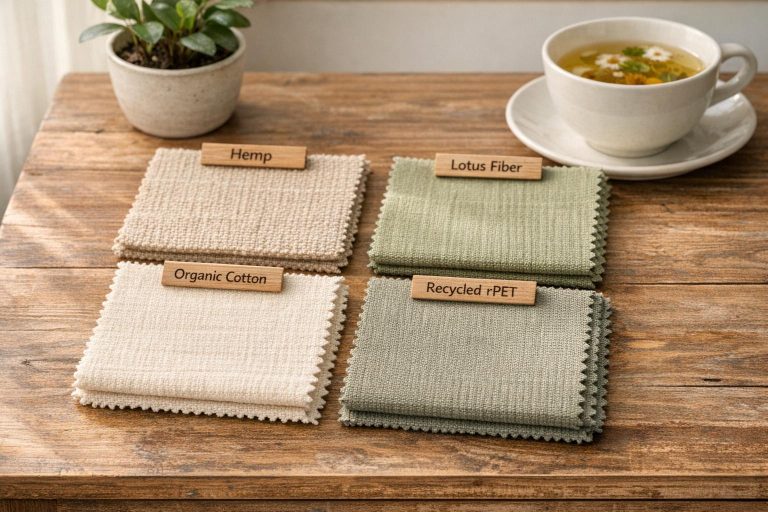
Switching to eco-friendly uniform fabrics is a smart move for sports teams and organizations. These materials reduce pollution, use fewer resources, and still meet the demands of athletic performance. Options like recycled polyester (rPET), hemp, and lotus fiber offer durability, moisture control, and comfort while addressing concerns about carbon emissions, water waste, and harmful chemicals.
Here’s what you need to know:
- Recycled Polyester (rPET): Made from plastic waste, it’s durable and moisture-wicking but releases microplastics during washing.
- Hemp: Durable, antibacterial, and UV-resistant, though pricier than cotton.
- Lotus Fiber: Premium, biodegradable, and naturally wrinkle-resistant, but expensive due to labor-intensive production.
- Organic Cotton: Soft and pesticide-free but absorbs moisture and dries slowly.
- Linen: Strong and cooling but wrinkles easily and isn’t ideal for high-intensity sports.
When selecting fabrics, consider your team’s needs for performance, budget, and environmental impact. Certifications like GOTS and GRS help verify claims, and partnering with custom uniform providers simplifies sourcing.
Key takeaway: Eco-friendly fabrics like rPET and hemp provide practical, planet-friendly options, while premium choices like lotus fiber combine luxury with sustainability for high-end needs.
Design a no Plastic Sportswear Collection
How to Select Eco-Friendly Fabrics
Choosing fabrics that align with environmental responsibility while meeting athletic demands is more important than ever. The fashion industry is responsible for about 10% of global carbon dioxide emissions, and synthetic clothing adds an estimated 7.4 million metric tons of plastic pollution to the planet annually. With these numbers in mind, understanding what makes a fabric environmentally friendly – and how it performs in sports – is key.
Fiber Source and Renewability
The first step is to look at the origins of the fiber. Plant-based materials like organic cotton, hemp, and linen are renewable options, while recycled synthetics such as rPET and regenerated nylon give existing materials a second life. For example, turning plastics into rPET helps cut down on waste. Another great choice is TENCEL Lyocell, a fiber made from sustainably harvested wood pulp. Hemp stands out for its minimal water use and pesticide-free growth, while lotus fiber offers a high-end eco-conscious alternative.
These materials should also be evaluated using clear metrics to understand their environmental impact.
Environmental Impact Metrics
A fabric’s full environmental footprint matters. Biodegradability is an important factor: wool, for instance, can decompose in about six months, while synthetic fabrics can stick around for centuries. Certifications like GOTS, Bluesign, and OEKO-TEX can validate claims about a fabric’s sustainability [2,5,9].
But beyond eco-credentials, how well these fabrics perform in sports settings is equally crucial.
Performance and Durability for Sports
Balancing sustainability with athletic performance is essential for modern sportswear. A fabric’s environmental benefits mean little if it can’t handle the rigors of competition. Recycled polyester and TENCEL are excellent at managing moisture, while natural fibers like hemp, linen, and organic cotton excel in breathability [2,6,9]. Hemp, for instance, is up to three times stronger than cotton and becomes more durable with washing. Linen, on the other hand, is about 30% thicker and stronger than cotton. Additionally, natural fibers like hemp and bamboo offer antibacterial properties and UV protection, which help reduce odors and protect the skin during outdoor activities [2,6].
However, it’s worth noting that recycled synthetics can shed microplastics during washing, contributing to ocean pollution. This trade-off is an important consideration when selecting materials.
Popular Eco-Friendly Fabric Options
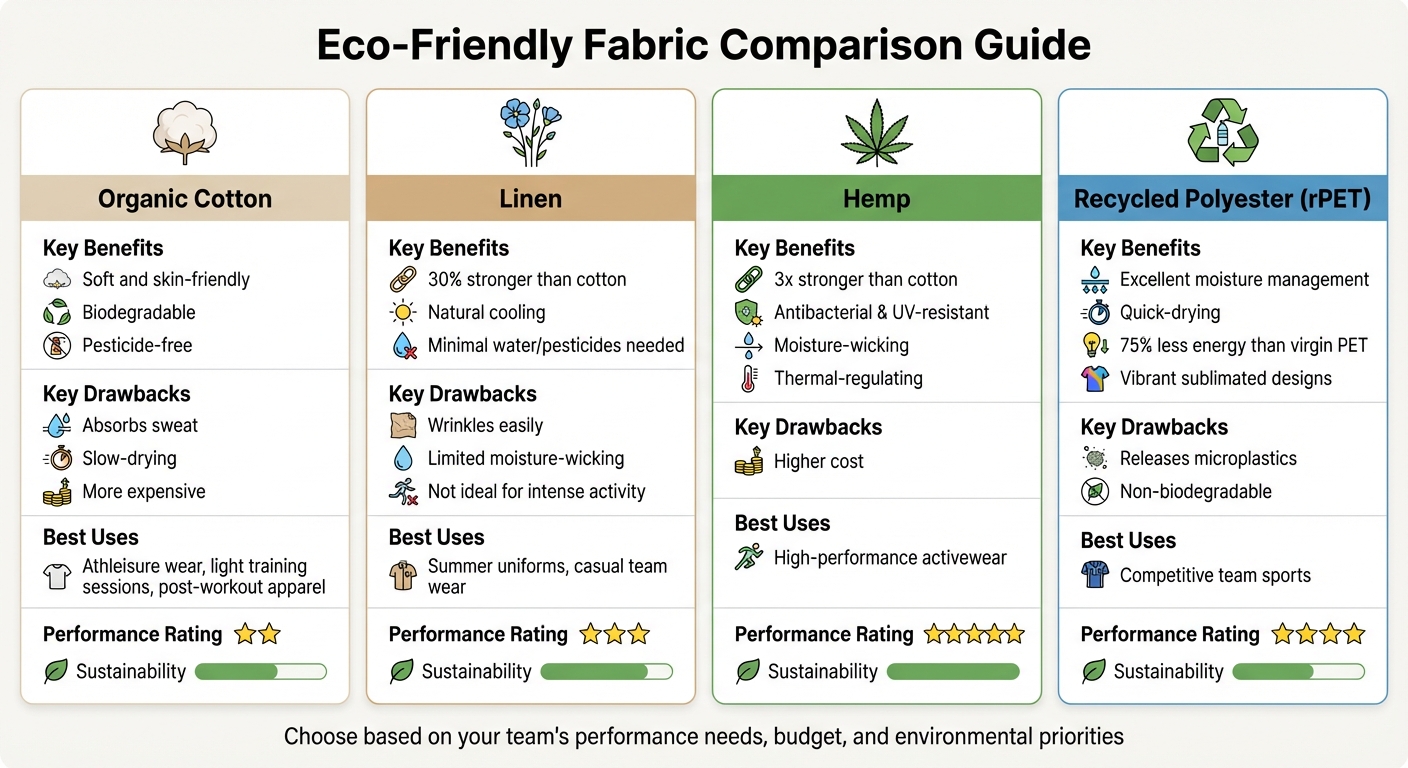
Eco-Friendly Uniform Fabrics Comparison: Benefits, Drawbacks, and Best Uses
When considering eco-friendly fabrics for team uniforms, several options stand out for their blend of sustainability and functionality. Each material has its own strengths and limitations, making them suitable for specific athletic and casual applications.
Organic Cotton and Better Cotton
Organic cotton is grown without pesticides, resulting in a soft, biodegradable fabric that’s gentle on the skin and easy to dye. However, it absorbs moisture readily, dries slowly, and tends to be more expensive. These traits make it ideal for athleisure wear, light training sessions, or post-workout apparel, rather than high-intensity sports.
Linen and Hemp
Linen, which is about 30% thicker and stronger than cotton, provides natural cooling and requires minimal water and pesticides during production. However, its limited moisture-wicking ability makes it less effective for intense physical activities. It works best for summer uniforms or casual team wear.
Hemp, on the other hand, is exceptionally durable – up to three times stronger than cotton – and becomes softer with each wash. It also boasts antibacterial, UV-resistant, moisture-wicking, and thermal-regulating properties. While its cost is higher, hemp is an excellent choice for high-performance activewear where durability and sustainability are key priorities.
Recycled Polyester (rPET)
rPET matches the performance of virgin polyester, offering excellent moisture management, quick-drying properties, and durability. It also uses 75% less energy during production compared to virgin PET. Additionally, rPET supports vibrant sublimated designs, making it visually appealing. However, it has environmental drawbacks, including the release of microplastics and being non-biodegradable. Despite these concerns, rPET remains a practical option for competitive team sports, where moisture control and shape retention are essential.
Below is a quick comparison of these fabrics:
| Fabric | Key Benefits | Key Drawbacks | Best Uses |
|---|---|---|---|
| Organic Cotton | Soft, skin-friendly | Absorbs sweat, slow-drying | Athleisure, light training |
| Linen | Strong, cooling | Wrinkles easily | Summer uniforms, casual wear |
| Hemp | Antibacterial, UV-resistant | Higher cost | High-performance activewear |
| rPET | Moisture-wicking, durable | Releases microplastics | Competitive team sports |
sbb-itb-4d95ad3
Lotus Fiber Textiles: A Premium Option
When it comes to eco-friendly fabrics, lotus fiber stands out as a trailblazer. It not only prioritizes environmental responsibility but also meets the rigorous performance standards required for team uniforms. With its combination of luxury and sustainability, lotus fiber offers unmatched qualities. However, its high production costs make it a niche choice, reserved for teams willing to invest in premium, high-end uniforms. Let’s take a closer look at how this extraordinary fabric is made and what makes it so special.
How Lotus Fiber Is Made
The creation of lotus fiber is an intricate, entirely manual process that demands precision and patience. Artisans begin by snapping the stems of Nelumbo nucifera and extracting 20 to 30 filaments, each just 6–8 microns thick, within 24 to 72 hours of harvesting. Beyond this window, the fibers become brittle and unusable. On average, a single artisan can process only 200 to 250 stems daily, and it takes around 6,500 stems to produce just one length of hand-woven fabric. To support the production of enough fiber for one weaver, 20 to 25 women are typically involved in the extraction process.
The weaving stage is equally delicate. Threads must be kept moist with water to avoid breaking, and the entire process remains free from oil, electricity, gas, or harmful chemicals.
"Lotus fabric is the most ecological fabric in the world. … Waste is transformed into a quality textile that doesn’t use any polluting resources such as oil, electricity, gas or any toxic chemicals during any stage of the production process." – Binoy Ravjani, CEO, Hero’s Fashion Pvt Ltd
Environmental and Sustainability Benefits
The meticulous production of lotus fiber translates into impressive environmental advantages. Lotus plants thrive naturally in aquatic environments without the need for fertilizers, pesticides, or irrigation. What’s more, the process turns agricultural waste – stems that would otherwise be discarded after harvesting seeds and flowers – into high-quality textiles. The fabric is entirely biodegradable, ensuring it leaves no lasting environmental impact.
Beyond its eco-friendly appeal, lotus fiber production often supports fair-trade practices. For instance, Samatoa Lotus Textiles, founded by Awen Delaval in Cambodia in 2003, employs local women under fair conditions, offering living wages, health insurance, and union rights. Their efforts earned them the UNESCO "Award of Excellence" in 2012 for their innovative blends of lotus and silk.
Performance Features for Team Uniforms
Lotus fiber isn’t just sustainable – it’s also packed with performance features that make it ideal for premium team uniforms. The fabric offers a unique feel, combining the softness and luxury of silk with the breathability and raw texture of linen. It’s naturally wrinkle-resistant, stain-resistant, and waterproof, making it both elegant and practical. Additionally, it can absorb up to 30% of its weight in moisture and provides protection from 98% of harmful UV rays, all without requiring chemical treatments.
The downside? The cost. Producing lotus fiber can run up to $200 per meter, making garments crafted from it a significant investment. Luxury brand Loro Piana has been working with villagers at Inle Lake in Myanmar since 2009 to source lotus fibers, creating items like blazers and scarves that sell for around $5,600. Given its price point, lotus fiber is best suited for executive-level uniforms, limited-edition collections, or ceremonial attire – perfect for organizations looking to combine sustainability with unmatched quality and performance.
How to Choose Eco-Friendly Uniform Fabrics
Selecting eco-friendly uniform fabrics means finding the right balance between performance, cost, and sustainability. Start by assessing your team’s specific needs for performance and design.
Define Your Team’s Needs
For high-intensity sports, prioritize fabrics with moisture-wicking properties. Blends like 90% polyester and 10% spandex provide the flexibility and durability needed for demanding activities. Opt for full sublimation for your designs instead of screen printing or embroidery. Sublimation ensures designs won’t peel, crack, or fade over time. Additionally, flatlock stitching is a smart choice for seams, offering both durability and comfort.
Balance Sustainability Goals with Budget
Recycled polyester is an affordable, sustainable option. Did you know it takes about 8 to 9 recycled plastic bottles to make a single t-shirt from this material? This makes it a great choice for teams working within tighter budgets.
If you have more financial flexibility, consider a tiered strategy. Use cost-effective recycled synthetics for practice gear, and save premium materials like organic hemp or regenerated nylon for game-day uniforms. Bulk ordering can also help reduce costs. For instance, custom compression shorts from Wooter Apparel drop from $29.99 to $19.99 per unit when ordered in larger quantities.
To ensure your materials meet sustainability standards, ask for certifications like GOTS (Global Organic Textile Standard) or GRS (Global Recycled Standard). These certifications help confirm the authenticity of eco-friendly claims and protect against greenwashing.
Work with Custom Uniform Providers
Partnering with a custom uniform provider can simplify the process. Companies like Wooter Apparel offer free design consultations to help incorporate eco-friendly fabrics into your uniforms while maintaining high quality. They also come highly recommended for their flexible delivery options and customer support.
Custom providers take care of sourcing sustainable materials and verifying certifications, saving you from dealing with suppliers who might exaggerate their environmental claims. Plus, they offer practical perks like no order minimums and direct-to-home shipping, making it easy to replace lost items or outfit last-minute team members. Wooter Apparel’s fully sublimated designs even include unlimited logos and color options at no extra cost, eliminating hidden fees often associated with traditional printing methods.
Conclusion
Opting for eco-friendly fabrics in team uniforms is a smart way to combine top-tier performance with environmental care. Materials like recycled polyester, organic hemp, and regenerated nylon provide the moisture-wicking, durability, and comfort athletes need – all while helping to reduce your team’s environmental footprint.
These sustainable fabrics not only perform well but also contribute to waste reduction and healthier choices. For example, certified sustainable options limit exposure to chemicals like BPA, commonly found in traditional petroleum-based textiles. Natural fibers such as hemp bring additional perks, like antibacterial properties and UV protection, without relying on pesticides during cultivation.
"Picking sustainable fabrics for your apparel collection not only helps the planet but helps your customers, too." – Meredith Maier, Author
Sustainability doesn’t mean compromising on quality or cost. Recycled polyester, for instance, matches the performance of virgin polyester while significantly lowering carbon emissions. Plus, a tiered selection process can help balance your budget with quality goals. With consumer interest in "sustainable fashion" tripling between 2016 and 2019, choosing eco-friendly uniforms sends a strong message of responsibility and forward-thinking to players, parents, and the broader community.
FAQs
What are the benefits of choosing eco-friendly fabrics for team uniforms?
Choosing eco-friendly fabrics for team uniforms isn’t just about helping the planet – it’s a smart, practical choice too. Materials like recycled polyester, hemp, and wool not only cut down on waste and conserve resources but also help lower carbon emissions. Take recycled polyester, for instance: it’s made from repurposed plastic bottles and uses much less energy compared to traditional polyester. Hemp, on the other hand, is biodegradable, requires very little water, and grows quickly, making it a sustainable standout.
But it’s not just about the environment – these fabrics are great for performance as well. Wool and hybrid blends are natural pros at wicking away moisture, regulating temperature, and fighting odors, keeping athletes comfortable no matter the conditions. Recycled polyester stands out for its durability and quick-drying capabilities, while hemp adds breathability and natural antimicrobial properties to the mix. Plus, these materials are built to last, meaning uniforms stay in good shape longer, reducing the need for frequent replacements and saving teams money over time.
By choosing sustainable fabrics, teams send a clear message – they care about the planet and their players. And with companies like Wooter Apparel, creating custom, eco-friendly uniforms that meet your team’s specific needs has never been easier.
What should I consider when choosing eco-friendly fabric for my team’s uniforms?
When choosing eco-friendly fabrics for your team’s uniforms, it’s important to align the material with your sport, climate, and budget. For natural temperature control and odor resistance, Merino wool blends are a solid choice. These fabrics wick away moisture, adjust to temperature changes, and decompose quickly, making them an environmentally friendly option. If you need something lightweight and fast-drying, recycled polyester (rPET) offers durability and moisture-wicking properties while being a more sustainable alternative to virgin polyester. For a mix of breathability and flexibility, hybrid fibers like bamboo-polyester or Merino-spandex blends work well, especially for high-intensity sports.
To find the perfect fabric for your team, start by assessing the physical demands of your sport. Then, choose materials that suit your climate and balance durability with cost. Look for certifications like the Responsible Wool Standard or Global Recycled Standard to confirm the fabric’s sustainability credentials. Testing fabric samples and following care guidelines, such as washing in cold water and air drying, can also help your uniforms last longer.
Wooter Apparel offers custom uniform options with a range of eco-friendly fabrics, allowing your team to perform at its best while prioritizing sustainability and style.
What certifications should I look for to ensure uniform fabrics are eco-friendly?
When selecting eco-friendly uniform fabrics, it’s important to check for certifications that uphold both environmental and ethical standards. For example, OEKO-TEX® STANDARD 100 certifies that fabrics have been tested for over 1,000 harmful substances, ensuring they are safe for direct skin contact. Similarly, the Global Organic Textile Standard (GOTS) requires at least 95% organic fibers and enforces rigorous chemical and social responsibility guidelines.
For natural fibers like wool, certifications such as the Responsible Wool Standard (RWS) focus on sustainable farming practices and animal welfare. The ZQ certification adds another layer of assurance, covering ethical and environmental considerations.
If you’re working with Wooter Apparel to create custom team uniforms, their team can assist in verifying whether these certifications apply to the fabrics you select. Choosing certified materials not only supports sustainability but also guarantees high-quality uniforms.