
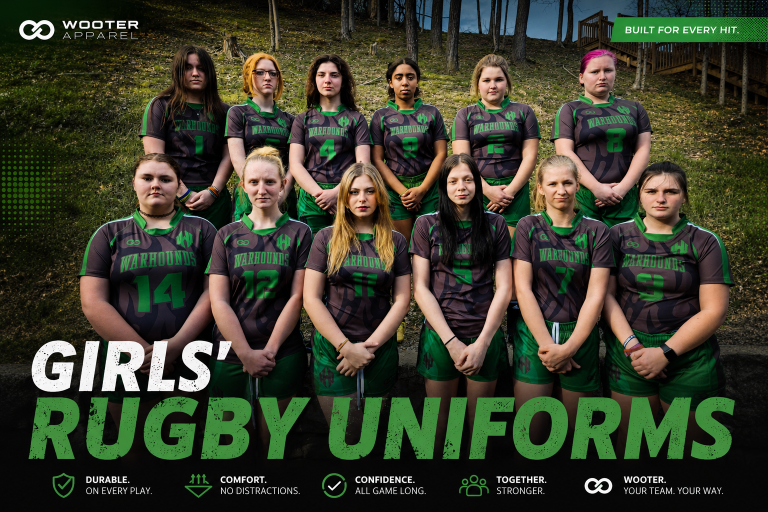
Starting a girls’ rugby team is a major win. Outfitting it can quickly become the first real test.
Who supplies the jerseys? What should players wear to training? Does the team need home and away kits? How many spare uniforms should you order?
Here is the quick answer:
A new girls’ rugby team needs match jerseys, rugby shorts, socks, suitable boots and properly fitted mouthguards. Training shirts, weather layers and a few spare uniform pieces can make the season easier to manage.
The goal is not to buy everything immediately. It is to get every player safely and confidently onto the field without wasting the first-season budget.
Let’s build the team’s apparel plan in the right order.
Key Takeaways
- Start with jerseys, shorts, socks, boots and mouthguards.
- Use female, youth or adult sizing based on measurements.
- Confirm competition rules before approving the uniform.
- Plan for late registrations and replacements.
- Add warm-ups, bags and supporter apparel as the program grows.
Why Girls’ Rugby Uniforms Matter Right Now
Girls’ rugby is entering a major growth period in the United States.
Female registrations increased by 19% between 2022–23 and 2023–24, according to USA Youth & High School Rugby.
During 2024–25, overall youth and high school rugby membership grew by another 9%. Female participation continued to rise, while more than 30 state organizations recorded double-digit registration growth. USA Youth & High School Rugby’s end-of-year report provides the latest figures.
That growth is creating new school, club and community programs. Many are now placing their first complete uniform orders.
A strong first order does more than prepare players for one match. It creates an identity that can stay consistent as the program grows.
What Should a Girls’ Rugby Team Order First?
Do not treat every possible product as a first-season essential.
Divide the apparel plan into stages.
| Priority | Items | Purpose |
|---|---|---|
| Order First | Rugby jerseys, shorts and socks | Match-day uniform |
| Players Provide | Boots, mouthguards and personal training basics | Individual fit and safety |
| Add During the Season | Training shirts, weather layers and spare pieces | Practices and roster changes |
| Add as the Team Grows | Warm-ups, bags and supporter merchandise | Extend the team identity |
This keeps the first order focused. It also prevents families or sponsors from paying for products the team does not need yet.
Start With the Match-Day Rugby Uniform
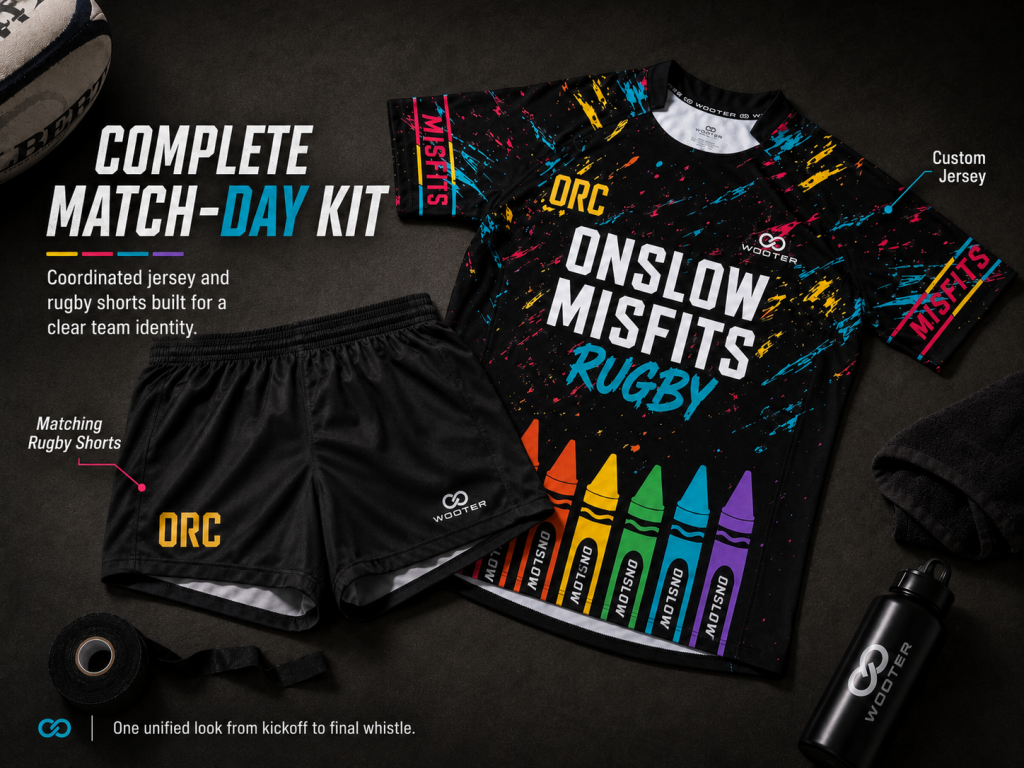
The first purchase should be the match kit:
Rugby jersey + rugby shorts + rugby socks
These pieces should look like one uniform. More importantly, they must support running, tackling and quick changes of direction.
Choose Girls’ Rugby Jerseys for Movement and Contact
A rugby jersey has a demanding job.
It must remain comfortable during fast movement and repeated contact. It also needs to display the team identity and player number clearly.
Look for:
- Breathable fabric
- Moisture management
- Durable construction
- Comfortable shoulder movement
- High-contrast player numbers
- Girls’, women’s and youth sizes
- A design that can be reordered later
Avoid choosing a jersey only because its mock-up looks impressive.
A busy design can hide the number. A restrictive fabric can become uncomfortable during a long match. A limited size range can leave some players without a suitable fit.
Wooter’s custom rugby jerseys use breathable, moisture-wicking polyester and fully sublimated designs. Teams can add their colors, logos, names and numbers instead of settling for a generic stock look.
Select Practical Rugby Shorts
Rugby shorts should support sprinting, kicking, bending and contact.
They should feel secure without restricting the hips or legs. They must also work with the jersey as one complete uniform.
Many girls’ and women’s teams prefer dark-colored shorts. They hide mud easily and can help players feel more comfortable during menstruation.
World Rugby’s squad kit and apparel recommendations note that many women’s teams have moved toward darker shorts for this reason.
Ask the players what would make them feel most comfortable before finalizing the color. Teams can also coordinate their jerseys with custom rugby shorts.
Finish With Coordinated Socks
Choose socks that connect the jersey and shorts. Confirm whether the competition requires a specific color or style.
Players should also test the socks with their rugby boots. A complete kit must remain comfortable during play.
How Should Girls’ Rugby Uniforms Fit?
Sizing is where many first orders fail.
A player’s everyday T-shirt size is not a reliable rugby jersey size. Youth, women’s and unisex cuts can all fit differently.
A smaller men’s jersey is not always an appropriate substitute for female-cut apparel.
World Rugby recommends female-cut kit for women’s teams. It also advises organizers to test apparel because sizes vary between manufacturers.
Use This Sizing Process
- Check the supplier’s latest size chart.
- Collect the required body measurements.
- Separate youth and adult players.
- Use a sizing sample when available.
- Let players test their movement.
- Record each approved size.
- Ask every player to confirm her details.
The final roster should include:
- Player’s full name
- Name printed on the jersey
- Player number
- Jersey size
- Short size
- Confirmation status
Wooter’s sizing chart section can help teams check the measurements available for different rugby products.
Avoid this mistake: Never approve an order using messages such as “I normally wear a medium.” Use measurements and written confirmation.
What Should Girls Wear to Rugby Training?
The match uniform is only one part of the first season.
Players also need practical apparel for training sessions.
The basic training list may include:
- Breathable training shirt
- Rugby shorts or permitted athletic leggings
- Rugby socks
- Suitable rugby boots
- Properly fitted mouthguard
- Water bottle
- Safe weather layers
Training apparel will face sweat, mud, rain and frequent washing. It should be comfortable, durable and easy to maintain.
Safety also matters during contact training. Avoid clothing with exposed zippers, hard fasteners or rigid pieces that could injure another player.
World Rugby’s Law 4 controls permitted clothing. A referee can require dangerous or illegal items to be removed before a player participates.
Wooter can supply coordinated training shirts, shorts, warm-ups and bags. Specialist products such as boots, mouthguards and protective equipment will usually need to be purchased separately.
Do Sevens and 15s Teams Need Different Uniforms?
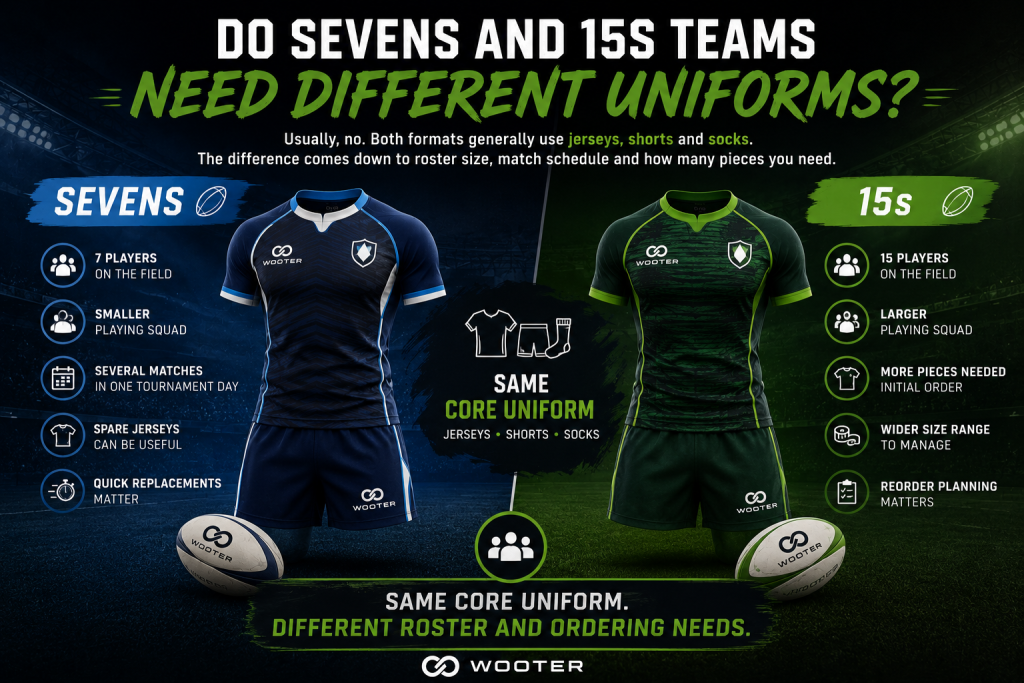
Usually, no.
Both formats generally use jerseys, shorts and socks. The main difference is the number of pieces the organizer may need.
A sevens team has fewer players on the field. However, tournament teams may play several matches in one day.
That can make the following useful:
- Spare jerseys
- Additional training shirts
- Quick access to replacements
- Clear player numbers
- Comfortable tournament apparel
A 15s team normally has a larger roster. It may require more uniform pieces from the beginning.
A club playing both formats can keep the same logo, colors and identity. It does not need two unrelated designs unless it wants to distinguish the squads.
How to Design a Girls’ Rugby Uniform That Works
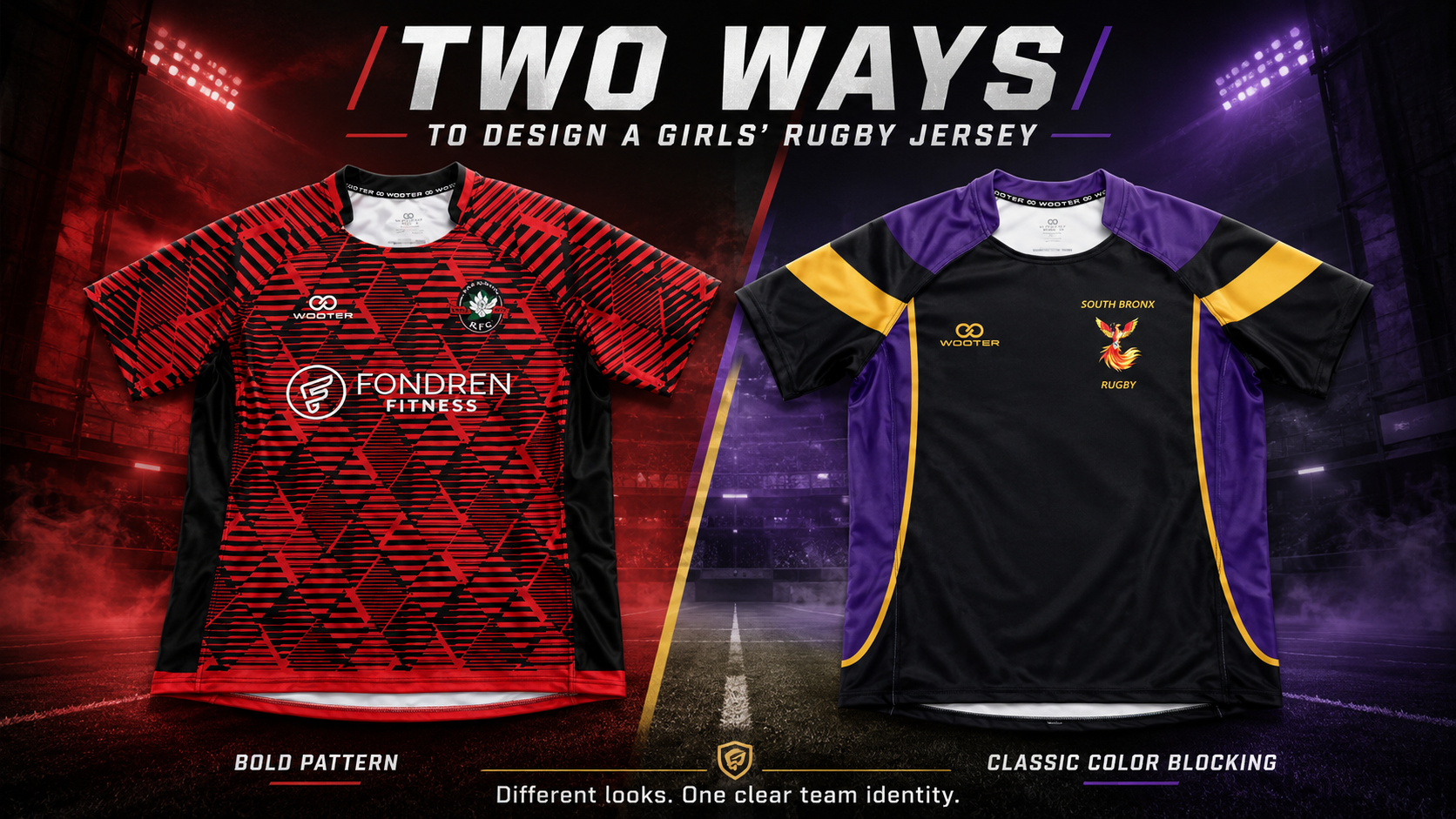
A good design should look strong from the sideline, not only in a close-up image.
Start with:
- Team or school name
- Club crest
- Primary and secondary colors
- Mascot
- Existing typography
- Approved sponsors
Then simplify.
The jersey should communicate one identity. It should not look like several designs competing for attention.
Keep Player Numbers Clear
Use strong contrast between the number and background.
Avoid:
- Thin fonts
- Similar number and background colors
- Busy patterns behind the number
- Heavy decorative outlines
- Sponsor marks too close to player details
A coach, official or spectator should be able to identify the player quickly.
Plan Every Logo Placement
Map the position of:
- Team crest
- School or club name
- Sponsor logos
- Player name
- Player number
- Manufacturer mark
Trying to make every element large will leave the jersey crowded.
Check the competition’s placement rules before approving production.
Design Beyond One Season
The first jersey may later inspire training shirts, warm-ups, bags, coach apparel and supporter merchandise.
The products do not need to look identical. Their colors, logo and style should still feel connected.
Bring Your Rugby Uniform to Life
Test your colors, upload your logo and personalize your team’s names and numbers online.
How Many Girls’ Rugby Uniforms Should You Order?
Start with the confirmed roster. Then prepare for realistic changes.
New programs often gain players after the first few practices. Jerseys may also be damaged, misplaced or entered with incorrect details.
Follow this process:
- Confirm the active roster.
- Assign unique numbers.
- Collect player measurements.
- Ask everyone to approve their details.
- Confirm the first-match date.
- Check the production timeline.
- Consider a few spare pieces.
- Save the approved design and roster.
- Confirm how future reorders work.
Do not order random spare sizes. Review the team’s current size distribution first.
Wooter lists an estimated three-to-four-week turnaround after design approval for its custom rugby jerseys. Confirm the current delivery date before ordering.
Teams should also understand how uniform reorders work before approving their first design.
First-season rule: Do not approve production until every name, number and size has been checked twice.
What Can the Team Add Later?
A new team does not need everything before its first match.
Begin with the match kit and essential training apparel. Add other products when the roster and budget become more stable.
Future additions may include:
- Training shirts
- Warm-up jackets and pants
- Custom team bags
- Coach apparel
- Tournament shirts
- Travel apparel
- Parent and fan merchandise
- Championship apparel
The program may also launch a Wooter Fan Shop later. This can give families and supporters access to approved merchandise without making the coach collect every order manually.
The first jersey establishes the identity. Future apparel helps that identity grow across the team’s community.
Frequently Asked Questions About Girls’ Rugby Uniforms
What does a girl need to start playing rugby?
A new player generally needs training clothes, rugby boots, a fitted mouthguard and a water bottle. For matches, she will also need a team jersey, rugby shorts and socks.
What do girls wear for a rugby match?
Girls normally wear a rugby jersey, rugby shorts and long socks with suitable boots. A mouthguard is also commonly required for contact play. Exact requirements depend on the competition.
How should a girls’ rugby jersey fit?
The jersey should allow full shoulder, arm and torso movement without leaving excessive loose fabric. Use the manufacturer’s measurements rather than relying on everyday clothing sizes.
Do sevens and 15s teams wear different uniforms?
Both formats generally use jerseys, shorts and socks. The main ordering differences involve roster size, tournament schedules and spare pieces.
Does a new rugby team need home and away jerseys?
Only if its competition requires them or if its primary colors may clash with an opponent. Some teams can use one main kit and a separate alternate jersey.
How early should a team order custom rugby jerseys?
Work backward from the first match. Allow time for sizing, roster approval, design revisions, production and delivery. Always confirm the supplier’s latest turnaround before ordering.
Build the First Kit for the Team You Are Becoming
Start with breathable jerseys, practical shorts, coordinated socks and sizes based on real measurements.
Confirm the rules. Check every name and number. Leave enough time for design approval, production and delivery.
Most importantly, choose an identity the program can keep as it adds new players, teams and supporters.
Wooter helps new rugby programs turn their colors, logo and roster into coordinated custom apparel.
Make the First Match Look Official
Get custom rugby jerseys designed around your team colors, logo, roster and first-season deadline.