
Insulated fabrics are essential for winter sports teams, offering warmth, moisture control, and weather protection. They help athletes maintain body heat, stay dry, and perform comfortably in cold conditions. Here’s what you need to know:
- Key Materials: Popular options include synthetic fibers (e.g., polyester fleece), natural materials (e.g., Merino wool), and hybrid blends. Each material balances warmth, breathability, and durability.
- Performance Factors: Insulated fabrics focus on heat retention (e.g., loft, clo value), moisture management (e.g., wicking, breathability), and weather resistance (e.g., windproof, water-resistant coatings).
- Types of Insulation:
- Synthetic: Affordable, durable, and retains warmth when wet.
- Down/Down-Blends: Lightweight, warm, but loses insulation when wet unless treated.
- Fleece: Soft, breathable, and quick-drying, ideal for layering.
- Sport-Specific Needs:
- Skiers/Snowboarders: Use layered systems with synthetic insulation for wet conditions.
- Ice Hockey/Figure Skating: Moisture-wicking base layers and lightweight insulation for cold arenas.
- Outdoor Field Sports: Waterproof, windproof outer layers with synthetic fills for sideline warmth.
Pro Tip: Choose fabrics based on activity level, temperature, and sport-specific challenges. Proper care, such as cold washing and air drying, extends gear life. For custom team gear, sublimated designs ensure durability and consistent branding without compromising performance.
Which Layering Fabrics Are Best For Winter Sports? – The Winter Sport Xpert
Performance Features of Insulated Fabrics
Insulated fabrics are essential for maintaining optimal performance in winter sports and activities. Their design focuses on three key areas: heat retention, moisture control, and weather protection.
Heat Retention and Warmth
The ability of a fabric to retain heat depends on factors like clo value, loft, and fiber type. For example:
- Clo Value: A clo value of 1.0 or higher is suitable for moderate cold, while 2.0+ works well in extreme conditions.
- Loft: Fabrics with greater loft trap more insulating air, improving warmth.
- Fiber Type: Materials like down (600+ fill power) or synthetic fleece provide excellent warmth-to-weight ratios.
Advanced materials like aerogel thermal paddings – such as ShowarmX® – offer superior insulation with minimal bulk. These paddings also maintain their performance under compression, making them a top choice for gear like ski suits.
But warmth alone isn’t enough – managing moisture is equally critical.
Moisture Control and Breathability
When fabrics get damp, insulation can drop by over 90%, making moisture control a priority. Moisture-wicking materials pull sweat away from the skin to the fabric’s surface, where it evaporates. At the same time, breathable fabrics allow airflow, preventing overheating during intense activities.
For instance, base layers made from a blend of polypropylene and Merino wool enhance breathability by efficiently transferring sweat. Additionally, SKINS Thermal gear incorporates compression technology, which improves blood flow by 20–30%, helping to reduce muscle fatigue in cold environments.
Weather Protection and Durability
Effective winter gear doesn’t just insulate – it shields against harsh weather. Key features include:
- Windproof Fabrics: These block convective heat loss, as wind can strip away up to 70% of body heat.
- Water-Resistant Coatings: Hydrophobic layers repel moisture, keeping you dry.
- Abrasion-Resistant Materials: Durable synthetics withstand falls, friction from equipment, and repeated use, ensuring your gear lasts throughout the season.
Types of Insulated Fabrics for Winter Sports

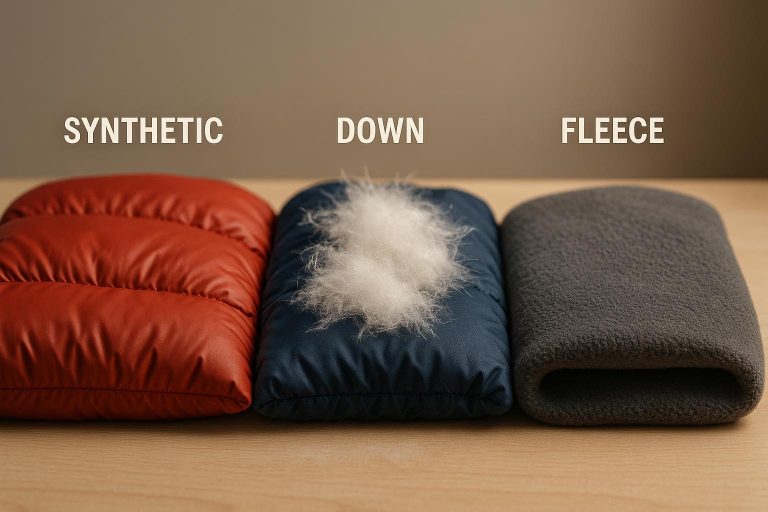
Synthetic vs Down vs Fleece Insulation Comparison for Winter Sports
Selecting the right insulation for winter sports gear can significantly impact your team’s comfort and performance in cold conditions. The three main types – synthetic fills, down and down-blends, and fleece – each cater to specific needs, whether you’re on the field, ice, or slopes. These options tie into the broader considerations of insulation, moisture control, and durability.
Synthetic Insulation Fabrics
Synthetic insulation, made from polyester-based fiberfill, is designed to trap air and provide consistent warmth – even in wet conditions. It stands up to frequent machine washing without losing its loft, making it a practical choice for sideline parkas, bench jackets, and warmup shells.
Cost is another big advantage. Outfitting an entire team with synthetic-insulated jackets is typically far more budget-friendly than using down, and synthetic options require less maintenance. Unlike down, synthetic fills bounce back after compression and resist clumping during laundering, making them ideal for shared team gear that sees heavy use.
Here’s a quick look at how synthetic insulation compares to natural down:
| Feature | Synthetic Insulation | Natural Down |
|---|---|---|
| Warmth-to-weight | Good, though heavier for the same warmth | Excellent; sets the standard |
| Wet performance | Insulates when damp; dries quickly | Loses most warmth when wet unless treated |
| Durability | Withstands frequent washing; tough for heavy use | Needs careful cleaning to avoid clumping |
| Cost per garment | Budget-friendly for teams | Higher, especially for premium fill-power |
| Best uses | Sideline coats, practice jackets, bench parkas | Travel jackets for cold, dry climates |
Down and Down-Blend Insulation
Natural down, sourced from duck or goose clusters, is prized for its exceptional warmth-to-weight ratio. Jackets with 700+ fill-power down are lightweight, compressible, and incredibly warm, making them a favorite for coaching staff parkas, travel jackets, or pre-game warmups in very cold, dry conditions.
However, down has a major drawback – it loses insulation when wet and takes a long time to dry. That’s where down-blend insulations come into play. By combining natural down with synthetic fibers or treating the clusters with water-resistant coatings, manufacturers create fills that resist moisture better while retaining much of down’s warmth and packability. These blends are especially useful for multipurpose jackets, perfect for teams transitioning between heated buses, icy arenas, and snowy parking lots.
Fleece and Brushed Knit Fabrics
Fleece, a synthetic knit fabric, is brushed to create a soft, airy texture that traps heat without adding bulk. It’s breathable and dries quickly, making it ideal for high-energy activities where athletes may sweat. Unlike cotton, which holds moisture and causes chills, fleece wicks sweat away and keeps athletes comfortable.
This makes fleece a go-to choice for midlayers and training gear. Ski teams often wear fleece tops under waterproof shells, hockey players use fleece jackets between shifts, and outdoor athletes rely on fleece joggers and hoodies for practice in moderate cold. While fleece provides decent insulation even when damp, it doesn’t block wind, so pairing it with a shell is key for game-day protection. Lightweight fleece works well for intense activities in mild cold, while thicker fleece suits low-activity settings or colder temperatures, like standing on the sidelines or bench.
sbb-itb-4d95ad3
Fabric Recommendations by Sport
Winter sports each come with their own challenges, and the right fabric choices can make all the difference. A ski racer battling wind and snow, a hockey goalie standing still in a cold rink, or a soccer midfielder alternating between sprints and downtime on a freezing field – each scenario calls for a tailored approach. By aligning insulation, layering, and outerwear with the demands of the sport, athletes can stay comfortable and perform at their peak.
Ski and Snowboard Teams
For ski and snowboard athletes, a reliable three-layer system is essential. Start with a moisture-wicking base layer made from polyester, polypropylene, or a Merino wool blend. Add a fleece midlayer (100–200 weight) or lightweight synthetic insulation for warmth without bulk. Finish with a waterproof, windproof, and breathable outer shell featuring taped seams and ventilation zips.
Synthetic insulation is the go-to for jackets and pants in these sports. It holds up well under repeated compression, retains warmth even when wet, and dries quickly – key when falls or wet conditions are part of the game. While down or down-blend pieces can be useful for coaches or extremely cold, dry race days, they lose effectiveness when damp. Teams can adjust the thickness of their layers to match altitude and temperature: lighter layers for mild resort conditions and thicker options for high-altitude or deep-winter training. This system ensures athletes are ready to handle the unpredictable conditions of mountain environments.
Ice Hockey and Figure Skating Teams
Indoor sports like hockey and figure skating require a different strategy. Arenas are cold but humid, making moisture management the top priority. Athletes should wear snug base layers made from polypropylene, polyester, or Merino wool to wick sweat and dry quickly, avoiding the chill that sets in during breaks. Cotton is a no-go – it traps moisture and cools the body too fast.
For warmups and rink-side wear, thin synthetic insulation (40–80 g/m²) or brushed fleece offers moderate warmth without restricting movement. Quilted synthetic fills in stretch-woven jackets are also a smart choice for staying warm between shifts while maintaining flexibility. Figure skaters often prefer brushed-knit or fleece-lined stretch fabrics that move with them and breathe during high-intensity routines. Coaches can benefit from stretch fleece or softshell jackets with wind resistance to stay comfortable in colder rinks without adding unnecessary bulk.
Outdoor Field and Court Sports
Outdoor sports like football, soccer, lacrosse, and basketball bring the challenge of fluctuating activity levels in harsh weather. For these athletes, waterproof, windproof outer layers with good breathability are a must. Base layers under uniforms keep skin dry, while lightweight insulated midlayers provide warmth during training. Managing the switch between high-intensity sprints and idle periods is critical.
For sideline time, insulated parkas or pullovers with synthetic fills are practical for quick warmth. Coaches and substitutes often need heavier, longer jackets for better coverage, while active players prefer lighter shells that can be easily removed or handed off when returning to play. In wet regions like coastal areas or near the Great Lakes, synthetic fills and waterproof shells are better than down, which loses its insulating properties when damp. Teams can also work with custom uniform providers like Wooter Apparel to coordinate base, mid, and outer layers that balance performance needs with team branding.
How to Choose Custom Insulated Team Gear
Reading Fabric Specifications
When selecting insulated team gear, understanding fabric specifications is key to ensuring it performs well under the conditions your team faces. GSM (grams per square meter) is a measure of fabric weight and density. A higher GSM means greater warmth, but it may reduce breathability. For mild winter conditions (32–50°F), fabrics in the 150–200 GSM range work well. In freezing temperatures, look for 250+ GSM to keep athletes warm and comfortable.
Loft refers to the thickness and air-trapping capacity of insulation. Higher loft provides better heat retention without adding unnecessary weight. For down insulation, aim for ratings above 550 cubic inches per ounce. While synthetic insulation doesn’t follow the same scale, thicker baffles generally indicate greater warmth.
The total garment weight also matters, especially for mobility. Lightweight fleece under 10 ounces per square yard is ideal for active sports where players generate their own heat. Heavier options, at 12+ ounces per square yard, are better suited for coaches or substitutes who spend more time stationary in colder weather. Always test sample gear under your local conditions before committing to a bulk order.
Care and Maintenance
Proper care extends the life of your team gear. Fleece and synthetic insulations are durable and handle repeated washing well, retaining their insulating properties through 50+ laundry cycles when washed in cold water without fabric softeners. These materials also dry three to five times faster than wool and maintain 80–90% of their warmth even when damp.
To avoid damage, air-dry gear after each use. Storing damp items in duffel bags can lead to odors and degrade the insulation. When washing, use a mild detergent and tumble dry on low heat. Tossing in a few clean tennis balls during drying can help restore the loft in synthetic fills. At the end of the season, store clean garments by hanging them loosely or placing them in breathable bags. Avoid compressing them, as this can flatten the insulation and leave permanent creases.
Customizing Insulated Team Apparel
For team apparel, fully sublimated designs are a smart choice. Unlike vinyl or screen-printed graphics, sublimated designs are integrated directly into the fabric. This prevents moisture trapping, cold spots, and cracking after repeated washes. Sublimation also ensures designs stay vibrant and doesn’t compromise the breathability or flexibility of the gear.
Brands like Wooter Apparel provide free custom design services, allowing teams to create coordinated winter wardrobes with consistent branding across all pieces. Their design team ensures logos and graphics are placed strategically, avoiding insulation baffles and stretch zones to maintain performance. With over 2,000 five-star reviews highlighting their durable sublimated uniforms, they offer a balance between budget-friendly options and long-lasting quality.
When ordering custom gear, share details about your team’s climate, sport, and usage needs with your provider. For example, a ski team in Vermont will require different insulation weights than a soccer team in the Pacific Northwest. Discussing temperature ranges, activity levels, and laundering frequency helps ensure the selected fabrics and insulation align with how your team trains and competes.
Conclusion
Choosing the right insulated fabrics can make all the difference when it comes to performance, comfort, and safety in cold weather. The right materials not only keep heat in but also wick away moisture, shield against harsh conditions, and still allow for easy movement. Throughout this guide, we’ve explored how specific fabric choices cater to the unique needs of winter sports, offering practical insights for staying warm and mobile.
Modern insulated fabrics bring plenty of benefits to the table. For example, synthetic materials retain warmth even when wet, while fleece provides a lightweight, breathable option for high-intensity activities. By understanding key details like GSM ratings, loft levels, and garment weight, you can strike the perfect balance between warmth and flexibility.
Custom team gear takes functionality to the next level, blending performance with team identity. Wooter Apparel excels at crafting winter gear that combines professional-grade fabrics with seamless team branding. With over 2,000 five-star reviews applauding their durable and well-designed uniforms, they help teams stay unified in appearance without sacrificing performance. Whether you’re hitting the slopes or the ice, their gear ensures you look and feel ready for action.
FAQs
What are the top insulated fabrics for skiing and snowboarding?
When you’re gearing up for skiing or snowboarding, the ideal insulated fabrics are those that deliver a balance of warmth, breathability, and moisture-wicking capabilities. These features ensure you stay comfortable, even in freezing and snowy conditions. Materials like PrimaLoft, Thinsulate, and Polartec Alpha stand out as top contenders. They’re lightweight, offer exceptional insulation, and help manage body temperature during high-energy activities.
For teams aiming to stay warm and perform at their peak, investing in gear made with these advanced materials can truly elevate the experience on the slopes.
How does synthetic insulation perform compared to down in wet conditions?
Synthetic insulation stands out because it keeps you warm even when it gets wet, making it ideal for unpredictable or damp weather. On the other hand, down insulation loses its loft and ability to insulate when exposed to moisture, which can leave you feeling chilled. For winter sports teams dealing with snow or wet conditions, synthetic insulation offers a more dependable solution.
How can I take care of insulated sports gear to make it last longer?
To keep your insulated sports gear in great shape, wash it carefully using mild soap and cold water. Skip the dryer – air drying is the way to go to protect the fabric. Store your gear in a cool, dry spot, away from direct sunlight, to avoid potential damage. Make it a habit to check for any signs of wear or small tears before each use, as these can become bigger problems if ignored.