
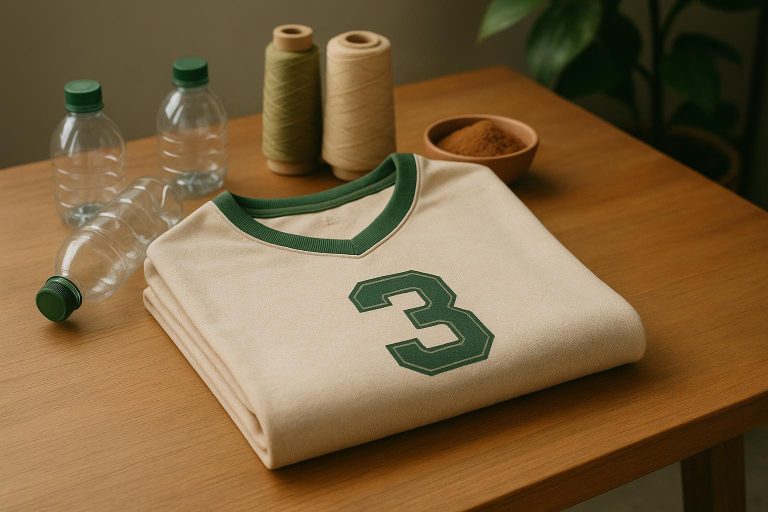
Eco-treated sports uniforms solve three major problems: poor durability, discomfort during play, and wasteful production practices. By using recycled materials like polyester from plastic bottles, safer dyes, and efficient manufacturing methods, these uniforms last longer, feel better, and reduce pollution. While they cost more upfront, their longevity and reduced replacement needs make them a smart investment for teams. Plus, they cut water use, CO₂ emissions, and textile waste, offering a practical way for sports teams to make environmentally conscious choices.
Key Takeaways:
- Durability: Recycled polyester resists wear, lasting 2–3x longer than regular fabrics.
- Comfort: Natural fibers like bamboo and organic cotton improve moisture-wicking and reduce odor.
- Eco-Friendly Production: Safer dyes, sublimation printing, and recycled materials lower pollution and resource use.
- Cost Savings: Fewer replacements save money over time.
These uniforms combine performance, cost efficiency, and eco-consciousness, making them a smart choice for teams looking to improve their gear while reducing their environmental impact.

Eco-Treated vs Conventional Sports Uniforms: Benefits Comparison
Problems with Conventional Sports Uniforms
Short Lifespan and Wear Issues
Sports uniforms made from low-cost polyester often don’t hold up well over time. These fabrics tend to pill, fade, and lose their elasticity after just a few washes or games. This means families, schools, and sports leagues frequently need to replace them, which can quickly become a financial burden. On top of that, when uniforms deteriorate, they can reduce an athlete’s comfort and performance on the field.
Discomfort During Play
Polyester, while affordable, isn’t always the best choice for comfort. Its rigid nature tends to trap heat and sweat – especially during the hot outdoor sports seasons common in the U.S. This can lead to discomfort, chafing, and even skin irritation, making it harder for athletes to focus on their game. And while this discomfort directly affects performance, it also connects to broader environmental concerns.
Environmental Impact of Production
The problems with conventional uniforms don’t stop at the field. The frequent need for replacements drives up production, contributing to more textile waste and higher CO₂ emissions. This cycle of waste and pollution highlights the need for better solutions, such as eco-friendly treatments, which can help cut down on manufacturing frequency and resource consumption.
Design a no Plastic Sportswear Collection
What Are Eco-Treatments for Sports Uniforms?
Eco-treatments offer a cleaner, more sustainable way of producing sports uniforms by tackling common issues like short durability and discomfort. These treatments replace harmful chemicals and waste-heavy processes with safer, resource-efficient alternatives. By focusing on better materials, safer coloring methods, and smarter manufacturing techniques, eco-treatments improve the entire production process. Not only do they reduce environmental harm, but they also enhance the performance, durability, and comfort of the uniforms.
Eco-Friendly Materials and Coatings
The fabric is where it all begins. Using recycled polyester made from post-consumer bottles is a game-changer – it diverts waste from landfills and requires 33–59% less energy to produce compared to virgin polyester. This material delivers the durability and moisture-wicking athletes need. Pair it with organic cotton or bamboo for added comfort and natural odor resistance.
For antibacterial and odor control, natural solutions like plant-based extracts, chitosan, or mineral technologies are key. These alternatives curb bacterial growth without leaving toxic residues, making the uniforms safer for skin and reducing chemical pollution during washing.
Safer Dyes and Low-Impact Coloring
Traditional dyes often contain harmful chemicals that can contaminate water supplies. Low-impact dyes are a safer option – they bond more effectively to fibers, which reduces waste and pollution. This method significantly cuts down chemical discharge and lightens the load on water treatment systems.
Certifications such as OEKO-TEX and bluesign ensure that dyes meet strict safety standards. For U.S. teams and schools, these certifications guarantee that uniforms are safe for players and align with sustainability goals. Athletes benefit directly from this, as it lowers the risk of skin irritation and other health issues caused by prolonged exposure to treated fabrics.
Resource-Efficient Production Methods
How uniforms are made matters just as much as the materials and dyes. Sublimation printing – a process that uses dry heat to transfer ink directly into polyester – uses far less water than traditional dyeing methods. Techniques like digital printing and dope dyeing (adding color during fiber production) further reduce water usage and chemical waste. Closed-loop water systems also help by recycling water within the production process.
Energy use is another critical factor. Manufacturers can cut carbon emissions by switching to renewable energy, using heat recovery systems, and streamlining production workflows. When combined with made-to-order sublimated uniforms, these methods not only save resources but also eliminate unnecessary inventory waste, ensuring that production aligns closely with actual demand.
How Eco-Treatments Extend Lifespan and Improve Comfort
Longer-Lasting Uniforms
Using recycled polyester made from repurposed plastic bottles gives uniforms a serious edge in durability. These yarns resist stretching, shrinking, and abrasion, allowing uniforms to last two to three times longer compared to those made with virgin materials. On top of that, advanced weaving techniques help reduce fiber shedding during washing, cutting microplastic release by up to 30%.
Another key factor is the use of non-toxic, bio-based resin coatings. These coatings protect fabrics from UV damage and friction, which is especially helpful for high-impact sports. Even after heavy use, these treatments significantly reduce wear, extending the uniform’s lifespan. Sustainable construction methods, like reinforced seams and high-quality stitching, also play a role. They ensure uniforms can handle repeated use and even seasonal storage without falling apart prematurely.
Better Comfort Features
Durability is only part of the story – these treatments also make uniforms more comfortable to wear.
Blended natural fibers, such as bamboo and organic cotton, come with built-in antimicrobial properties that can neutralize odor-causing bacteria for up to 50 washes, all without relying on synthetic silver treatments. Bio-coatings applied to recycled polyester take moisture management to the next level, improving both sweat absorption and evaporation. Fabrics like bamboo and Tencel are also popular for their excellent moisture-wicking and cooling properties, helping athletes stay dry and comfortable during intense play. Plus, washing uniforms in cooler water can reduce microfiber loss by as much as 30%.
sbb-itb-4d95ad3
Environmental Benefits of Eco-Treated Uniforms
Eco-treatments for uniforms go beyond improving their durability and comfort – they also bring a range of environmental advantages.
Lower Water and Energy Use
Eco-friendly fabrics like hemp and bamboo are game-changers when it comes to resource efficiency. Hemp uses far less water compared to traditional cotton while still offering a strong, reliable material. Bamboo, on the other hand, requires minimal irrigation, which helps cut down on water waste during production.
Recycled polyester is another standout, as it saves energy during fiber manufacturing. Plus, growing organic cotton and bamboo without harmful chemicals helps protect water supplies and surrounding ecosystems. These combined efforts contribute to a smaller carbon footprint.
Cutting Down CO2 Emissions
Using eco-treatments and recycled materials can significantly reduce carbon emissions during production. Renewable energy practices also play a big role in minimizing CO2 output. For context, the fashion industry generates 62 million tons of greenhouse gases annually just from washing practices alone. Opting for recycled polyester instead of virgin materials can make a noticeable dent in these emissions. Besides helping the planet, these measures can lead to long-term savings for schools, sports leagues, and teams.
Biodegradable at the End of Their Life
One of the standout features of eco-treated uniforms is their ability to break down naturally. Fabrics like organic cotton, bamboo, and hemp decompose over time, unlike synthetic materials that often pile up in landfills. This natural breakdown reduces textile waste, ensuring that sustainable uniforms continue to benefit the environment even after they’ve served their purpose.
Using Eco-Treatments in Custom Team Uniforms
Eco-treated uniforms offer a blend of personalization and top-notch performance. Today’s production techniques make it possible to combine environmentally conscious practices with the bold designs and athletic functionality of traditional uniforms.
Crafting Eco-Friendly Sublimated Designs
Fully sublimated uniforms can integrate eco-treatments without sacrificing color vibrancy or graphic detail. By pairing recycled polyester or organic cotton-blend fabrics with low-impact, non-toxic inks, teams can achieve full-color designs that stay vivid even after multiple washes . Low-VOC inks, combined with optimized heat-transfer methods, ensure logos and gradients remain sharp while cutting down on chemical usage. Recycled polyester – sourced from post-consumer plastic bottles – works just as well as virgin polyester when it comes to sublimation printing, delivering durable and vibrant graphics every time. These eco-conscious techniques allow for stunning, customizable visuals that reflect both team pride and sustainability.
Performance and Team Identity
Eco-treated uniforms don’t just perform well – they also help teams stand out. High-resolution sublimation on recycled polyester ensures precision in reproducing team colors (including Pantone matching), logos, and even photographic details. With all-over printing options, teams can incorporate sustainability stories directly into their designs. Whether it’s subtle patterns inspired by local ecosystems, "made with recycled bottles" labels, or green accents, these uniforms become more than just gear – they’re a statement of values . Wooter Apparel takes this to the next level with fully sublimated custom designs that use eco-friendly materials while delivering the bold colors and personalized graphics teams need to shine on the field or court.
Conclusion
Eco-friendly treatments tackle key challenges like durability, comfort, and environmental concerns in sports uniforms. By using materials such as recycled polyester and organic cotton, along with low-impact dyes and resource-efficient production techniques, these uniforms not only last longer and feel great during play but also significantly cut down on water use, energy consumption, and CO₂ emissions – addressing the performance and ecological issues raised earlier.
This shift toward sustainability is gaining momentum in U.S. sportswear. Teams and leagues nationwide are increasingly turning to uniforms made from organic or recycled materials, acknowledging the broader environmental impact of their decisions .
Beyond the environmental benefits, these eco-treated uniforms offer practical advantages. Reduced need for replacements translates to cost savings over time , while aligning with sustainability goals helps teams connect more deeply with fans and sponsors .
Wooter Apparel provides fully sublimated custom designs that blend high-performance features with eco-conscious materials, vibrant colors, and personalized graphics. Discover sustainable options that let your team excel on the field while contributing to a greener future.
FAQs
How do eco-friendly treatments make sports uniforms more durable?
Eco-friendly treatments boost the longevity of sports uniforms by reinforcing the fabric fibers, helping them stand up better to wear and tear. These treatments also shield the fabric from things like UV rays and moisture, keeping the uniforms in top shape for extended periods. The best part? They manage all this without the use of harsh chemicals, offering a safer and more environmentally conscious alternative.
How do recycled materials benefit the environment when used in sports uniforms?
Using recycled materials in sports uniforms can make a real difference for the planet. It cuts down on the waste piling up in landfills, saves precious natural resources, and uses less energy compared to creating brand-new materials. The result? Fewer greenhouse gas emissions and a step toward a cleaner, healthier environment.
When teams opt for eco-conscious uniforms, they’re not just making a practical choice – they’re sending a message. It’s a way to show they care about the environment and are invested in preserving it for the generations to come.
Are eco-friendly treatments for sports uniforms worth the investment?
Yes, choosing eco-friendly treatments for sports uniforms is a wise decision. These treatments make uniforms tougher, so they last longer and don’t need to be replaced as often. This not only saves money but also cuts down on waste, offering a more sustainable option.
On top of that, fabrics treated with eco-friendly methods often provide better comfort and performance. They’re typically made to be breathable, lightweight, and ideal for active wear. When you combine long-lasting durability with improved functionality, it’s clear these uniforms are a smart and budget-friendly choice for teams of all levels.