
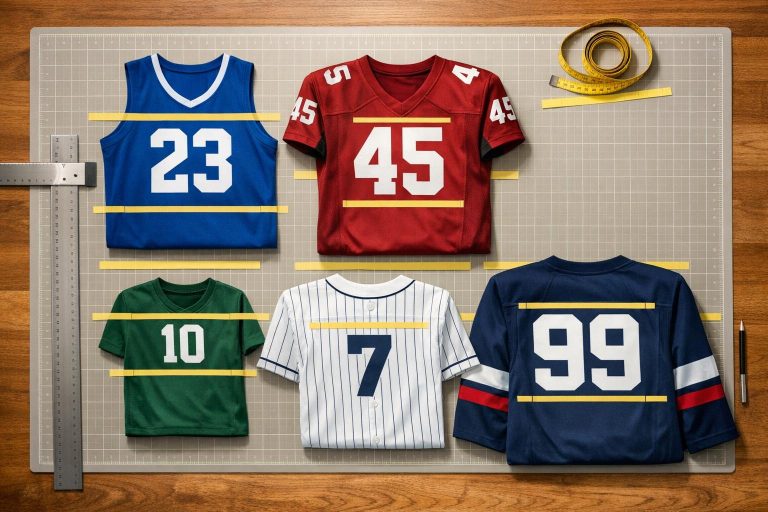
Jersey number sizing is all about visibility, compliance, and functionality. Different sports have specific rules for number sizes and placements to ensure players are easily identifiable by referees, spectators, and coaches. Here’s a quick breakdown:
- Basketball: 8-inch back numbers, 4-inch front numbers. Legal numbers include 0–5, 10–15, etc., to allow one-handed referee signals.
- Football: 10-inch numbers on front and back, 4-inch shoulder numbers. Numbers are assigned based on player positions (e.g., 1–19 for quarterbacks).
- Baseball/Softball: 8-inch back numbers, 4-inch front numbers. No additional numbering on shorts or sleeves.
- Soccer: 8-inch back numbers, 4-inch front numbers, and optional 4-inch shorts numbers.
- Hockey: 10-inch back numbers, 4-inch front and sleeve numbers. Includes captain patches (4 inches for adults).
Youth jerseys scale down sizes proportionally, with back numbers often consistent at 8–10 inches for visibility. Always confirm league-specific rules to avoid penalties or reprints.
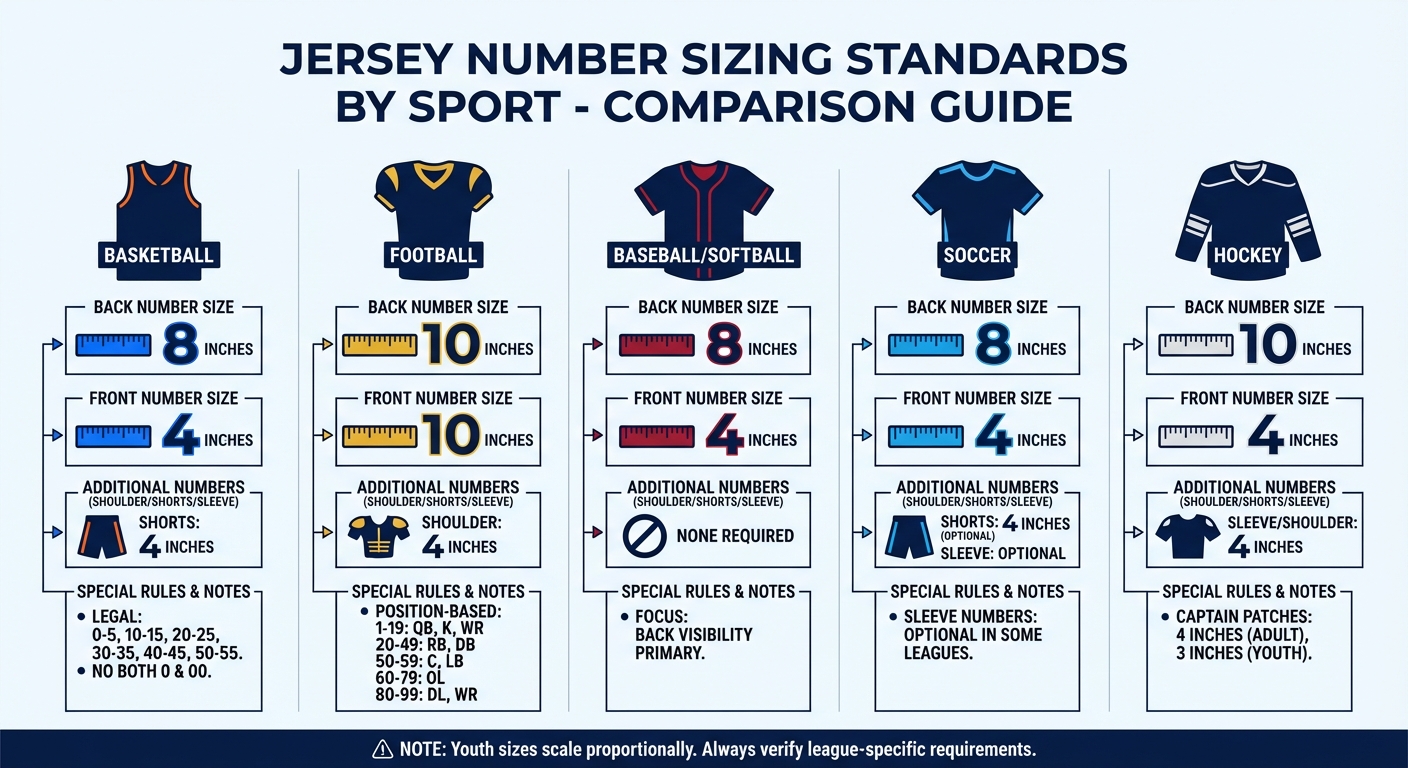
Jersey Number Sizing Standards by Sport: Quick Reference Guide
Why Jersey Number Sizing Standards Matter
Standardized jersey number sizing plays a crucial role in ensuring sports run smoothly. It’s not just about how a uniform looks – it’s about functionality. Properly sized numbers help referees identify players quickly, allow spectators to follow the game more easily, and ensure teams comply with uniform regulations. Without these standards, teams risk penalties or even having players sidelined due to non-compliant jerseys.
Take basketball as an example. Governing bodies enforce strict rules around number placement and sizing, and even regulate which numbers can appear on rosters. For instance, teams cannot include both 0 and 00 to avoid confusion during scoring. As Wooter Apparel explains, "Wooter designs uniforms to meet common league requirements, but teams should always confirm specific rules for their league or governing body before final approval".
Visibility is another key factor. In most sports, adult jerseys feature back numbers ranging from 8 to 10 inches, making them easy to read during fast-paced games. For younger players, the numbers are adjusted to fit their jerseys proportionally – youth basketball jerseys, for instance, typically use 6-inch back numbers instead of 8-inch ones. This ensures the numbers are clear without overwhelming the uniform.
Ultimately, these standards ensure clarity and fairness, benefiting everyone involved in the game, from players to officials to fans.
Standard Number Sizes by Sport
Jersey number sizes are tailored to each sport to ensure easy identification and adherence to rules. Here’s a closer look at the typical standards for various sports.
Basketball Jersey Number Standards
In basketball, adult jerseys feature 8-inch numbers on the back and 4-inch numbers on the front. Numbers on the shorts are also common, measuring about 4 inches. Legal numbers are restricted (e.g., 00, 0–5, 10–15, etc.) to make one-handed signaling by referees easier.
Football Jersey Number Standards
Football jerseys prioritize visibility with 10-inch numbers on both the front and back, while 4-inch numbers are displayed on the shoulders. Position-based numbering helps officials and players quickly identify roles. For example:
- 1 to 19: Quarterbacks, kickers, receivers, and tight ends
- 20 to 49: Running backs and defensive backs
- 50 to 59: Centers and linebackers
- 60 to 79: Offensive linemen
- 80 to 99: Defensive linemen, linebackers, receivers, and tight ends (in some leagues)
Baseball and Softball Jersey Number Standards
Baseball and softball jerseys focus on back visibility, with 8-inch numbers on the back and 4-inch numbers on the front. Unlike other sports, additional numbering on shorts or sleeves is generally unnecessary since identification is primarily needed from behind.
Soccer Jersey Number Standards
Soccer jerseys share sizing similarities with basketball. Adult jerseys typically include 8-inch numbers on the back and 4-inch numbers on the front. Some teams add 4-inch numbers on the shorts for better identification. Optional sleeve numbers are allowed in certain leagues, but the back number remains the primary focus.
Hockey Jersey Number Standards
In hockey, fast-paced action demands clear identification. Adult jerseys feature 10-inch numbers on the back and 4-inch numbers on the front. Additional 4-inch numbers may appear on sleeves or shoulders for better visibility. Hockey jerseys also include special patches for captains ("C") and alternate captains ("A"), sized at 4 inches for adults and 3 inches for youth players.
Youth vs Adult Jersey Number Sizes
When it comes to jersey design, youth and adult jerseys differ significantly in terms of number and lettering sizes. Youth jerseys are tailored to smaller proportions, with front numbers typically reduced by 1–2 inches compared to adult sizes. For instance, in sports like basketball, baseball, soccer, and hockey, youth front numbers are usually 3 inches tall, while adult jerseys feature 4-inch numbers. This adjustment ensures the numbers remain legible without overcrowding the jersey.
However, for sports where back numbers need to be visible from a distance – such as collegiate football jerseys, soccer, and hockey – the sizes are often consistent across youth and adult jerseys, ranging from 8 to 10 inches. This consistency helps officials and spectators easily identify players on large fields or rinks.
Nameplate lettering is also scaled down for youth jerseys, with letters around 2 inches tall compared to 2.5 or 3 inches for adults. Similarly, shoulder and sleeve numbers are reduced to 3 inches for youth jerseys, while adults get 4-inch numbers. These adjustments ensure numbers are proportionate to the jersey size while maintaining visibility.
For accurate sizing and compliance with regulations, it’s essential to consult NFHS or NCAA guidelines before placing orders. Adhering to these standards not only ensures a polished look but also aligns with official requirements.
Comparison Table: Youth vs Adult Sizes
| Sport | Placement | Youth Size | Adult Size |
|---|---|---|---|
| Basketball | Front Number | 3" | 4" |
| Back Number | 6" | 8" | |
| Name | 2" | 2.5" | |
| Football | Front Number | 8" | 10" |
| Back Number | 10" | 10" | |
| Shoulder Number | 3" | 4" | |
| Soccer | Front Number | 3" | 4" |
| Back Number | 8" | 8" | |
| Shorts Number | 3" | 4" | |
| Baseball/Softball | Front Number | 3" | 4" |
| Back Number | 6" | 8" | |
| Name | 2" | 3" | |
| Hockey | Front Number | 3" | 4" |
| Back Number | 10" | 10" | |
| Sleeve/Shoulder | 3" | 4" |
These differences are vital for achieving proper proportions and ensuring jerseys are both functional and visually appealing.
Official Regulations and Legal Number Requirements
Jersey number regulations are in place to ensure teams comply with league standards. Each major sport has specific rules about which numbers players can wear, where those numbers should be placed, and how big they must be to remain visible during games.
Referees rely on these numbers to quickly identify players and communicate with scorekeepers, while coaches and broadcasters need them to recognize players from different distances and angles. Ignoring these rules can lead to penalties like equipment violations, yellow cards, point deductions, or even player bans. Here’s a closer look at how these rules apply to basketball and football.
Basketball Number Regulations
Basketball has some of the strictest rules when it comes to jersey numbers. Players can only wear numbers that referees can signal with one hand: 00, 0-5, 10-15, 20-25, 30-35, 40-45, and 50-55. This system is designed to make it easier for referees to communicate player numbers to the scorer’s table during the fast pace of a game.
One important rule: a team cannot have both 0 and 00 on the roster simultaneously. If you’re customizing basketball jerseys, double-check the team’s roster to avoid breaking this rule.
Football Position-Based Numbering Rules
In football, jersey numbers are assigned based on player positions. Here’s how the numbering works:
- 1-19: Quarterbacks, kickers, receivers, and tight ends
- 20-49: Running backs and defensive backs
- 50-59: Centers and linebackers
- 60-79: Offensive and defensive linemen
- 80-89: Receivers and tight ends (alternate option)
- 90-99: Defensive linemen and linebackers
This system helps referees quickly identify eligible receivers and enforce formation rules during play. Football jerseys also feature the largest numbers of any sport to ensure visibility across the field. For adult jerseys, numbers must be at least 10 inches tall on the front and back. Additionally, "TV numbers" (the smaller numbers on the shoulders) must be 4 inches tall for adults and 3 inches tall for youth jerseys, ensuring they are visible from side angles during broadcasts.
These rules are designed to maintain fairness and clarity on the field while ensuring that jerseys meet both practical and visual standards.
sbb-itb-4d95ad3
Best Practices for Visibility and Legibility
When it comes to live gameplay, ensuring jersey numbers are clearly visible and easy to read is essential. Beyond sizing regulations, here are some practical tips to enhance visibility and legibility.
Start with font selection and sizing. Block-style fonts with thick, continuous strokes work best for quick identification. For custom pro football jerseys, the NFHS specifies a minimum stroke width of 1½ inches to maintain clarity. Decorative fonts, while visually interesting, can make numbers harder to read, especially from a distance – so steer clear of those.
Color contrast is another key factor. Numbers should stand out sharply against the jersey color. According to modern NFHS rules, numbers must use a solid, contrasting color to ensure they remain visible under various lighting conditions. This simple design choice not only aids visibility but also keeps uniforms compliant with official guidelines. Teams looking to ensure their designs meet these standards can get an instant quote for fully compliant uniforms.
Placement matters, too. Numbers should be horizontally centered on the jersey, with a minimum size of 8 inches on the front and 10 inches on the back. They should also be presented in a single, solid color without borders to avoid unnecessary distractions.
Stroke width plays a crucial role in legibility. Numbers with sufficient thickness maintain their shape even when players are in motion, helping referees and spectators identify players quickly and accurately.
Finally, material and finishing choices can influence how numbers appear under stadium lights. Glossy or reflective materials might cause glare, while overly textured fabrics can blur the edges of numbers. For consistent visibility, matte or semi-matte finishes are recommended, as they reduce glare and maintain clarity from all angles.
Custom Jersey Sizing Options with Wooter Apparel
Wooter Apparel ensures its custom jerseys meet established sizing standards while prioritizing durability and visibility.
Using full sublimation printing, Wooter embeds designs and numbers directly into the fabric. This method prevents issues like cracking or fading, ensuring numbers stay clear and vibrant – even after 50+ washes. The result? Jerseys that maintain their professional look throughout the season and beyond.
To cater to different sports, Wooter offers sport-specific sizing charts for activities like basketball, football, and soccer. These charts account for the unique fits and cuts required for each sport. For instance, a basketball jersey needs a looser fit compared to a football uniform. To ensure accuracy, it’s recommended to measure a well-fitting garment rather than relying solely on body measurements, as manufacturing tolerances may vary by ±5%. These tailored charts make it easier for teams to choose sizes that ensure numbers are correctly positioned on each uniform.
Teams can also enjoy individual customization for each jersey, including player names and numbers. This flexibility is perfect for accommodating roster changes or unique numbering requests. Wooter provides free mockups during the design phase, allowing teams to review number placement, sizing, color contrast, and spelling before production begins. This ensures everything meets expectations before entering the 20–25 business day production window. For those on tighter schedules, rush orders are available in 10 business days for an additional 25% fee.
Wooter’s uniforms are made with flexible, stretchy fabrics, ensuring comfort and proper number placement during gameplay. For athletes – especially youth players – who may fall between sizes, opting for the larger size allows for growth and unrestricted movement without sacrificing visibility.
Conclusion
Adhering to jersey number sizing standards is essential for maintaining both professionalism and practicality in team sports. For example, basketball and soccer typically use 8-inch numbers, while football and hockey rely on 10-inch numbers to ensure clear visibility and rule compliance at every level of play.
Before placing a jersey order, always double-check your league’s specific numbering requirements. This simple step can save you from costly reprints and potential eligibility problems. A polished, consistent look not only boosts team morale but also showcases a well-organized and unified roster.
FAQs
How do I confirm my league’s exact number rules?
To make sure your jersey numbers follow your league’s rules, start by reviewing the league’s official regulations or rulebook. Look for specifics like the size of the numbers, their placement on the jersey, the contrast requirements, and the range of allowed numbers.
If anything seems unclear, reach out to league officials for clarification. Many leagues also offer templates or resources to help you stay within the guidelines. Always double-check with official documents or directly communicate with the league to avoid any compliance problems.
What number font is easiest to read during games?
Bold, block-style fonts, such as the College Font Family, are known for their readability during games. Their design ensures they remain clear and easy to recognize, even from a distance or when displayed at various sizes.
What should I do if a player’s number is not allowed?
If a player’s jersey number doesn’t meet league rules, it’s important to adjust the jersey to match the required size, placement, and contrast standards. For instance, high school football typically mandates 8-inch numbers on the front, whereas youth soccer only requires 4-inch front numbers. To ensure compliance, resize or reprint the number as needed to meet these regulations and guarantee proper visibility before the game begins.