
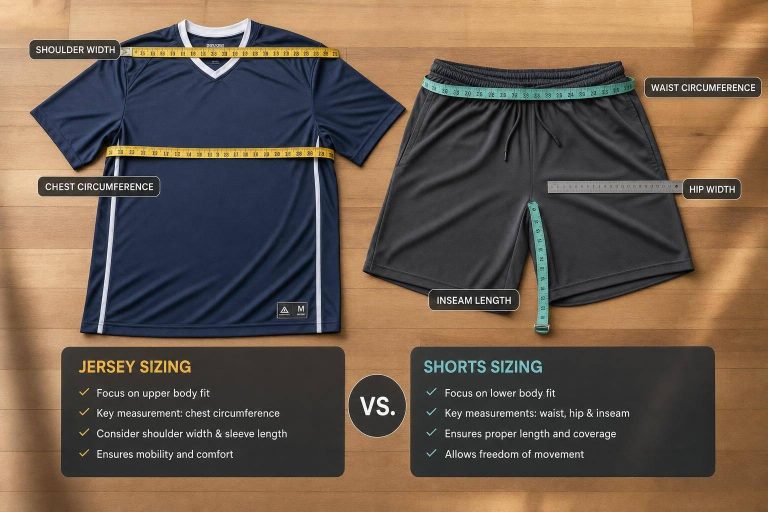
Jersey size and shorts size should not be picked as one matching set. I’d check them separately every time because jerseys are based on chest, shoulders, and length, while shorts are based on waist, hips, and inseam.
Here’s the short version:
- Jerseys = upper-body fit
- Shorts = lower-body fit
- One player can need 2 different sizes
- Team orders should track top and bottom sizes on separate lines
- A current size chart matters more than an old order
- A youth sizing kit or sample can cut fit mistakes before you buy
That last point matters for team orders. If even 10% to 20% of players end up in the wrong fit, returns, swaps, and delays can stack up fast. I’d rather measure once and order with fewer surprises.
What I’d check first:
- Chest for the jersey
- Shoulders and jersey length
- Waist for the shorts
- Hips and thigh room
- Inseam and total short length
- Youth vs. adult sizing
Bottom line: I wouldn’t assume a medium jersey means medium shorts. I’d match each garment to the body area it covers, then confirm movement, coverage, and length before placing the order.
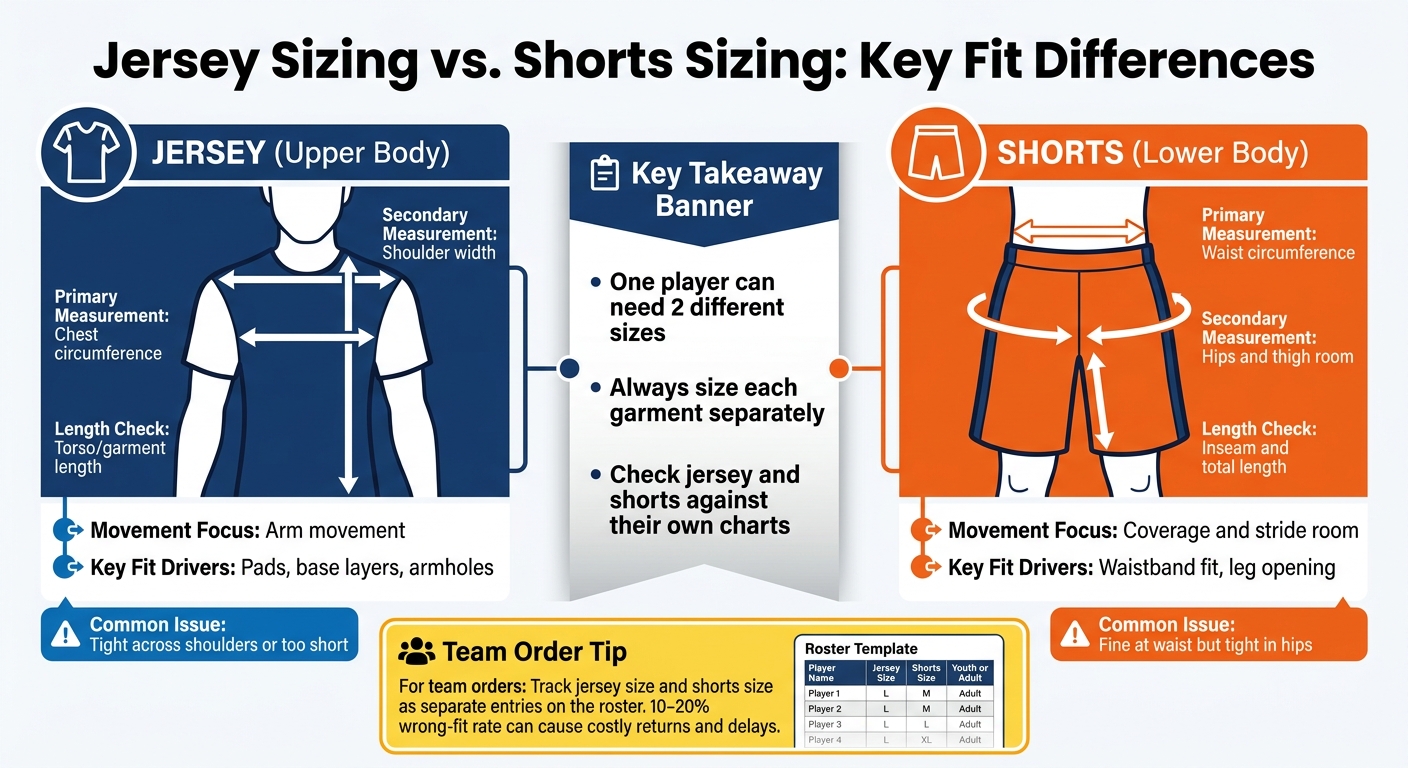
Jersey Sizing vs. Shorts Sizing: Key Fit Differences at a Glance
Quick Comparison
| Fit Area | Jersey | Shorts |
|---|---|---|
| Main measurement | Chest | Waist |
| Next checks | Shoulders, length | Hips, thigh room, inseam |
| Focus during play | Arm motion | Coverage and leg motion |
| Common issue | Tight across shoulders or too short | Fine at waist but tight in hips |
| Best ordering method | Size on its own chart | Size on its own chart |
If I were ordering for a team, I’d treat jersey sizing and shorts sizing as two separate decisions, not one.
sbb-itb-4d95ad3
Jersey Sizing vs. Shorts Sizing: The Core Differences
Jersey and shorts sizing follow different fit rules. A jersey is built around the upper body: chest, shoulders, and length. Shorts are built around the lower body: waist, hips, and inseam. Because of that, the two sizes often don’t match.
Use these fit points to compare jersey and shorts sizes side by side.
| Sizing Factor | Jersey (Upper Body) | Shorts (Lower Body) |
|---|---|---|
| Primary Measurement | Chest circumference | Waist circumference |
| Secondary Measurement | Shoulder width | Hips and thigh room |
| Length Check | Torso/garment length | Inseam and total length |
| Movement Focus | Arm movement | Coverage and stride room |
| Key Fit Drivers | Pads, base layers, armholes | Waistband fit, leg opening |
Jersey Sizing: Chest, Shoulders, and Length
Sizing for custom pro football jerseys starts with the chest measurement. After that, the next two checks that matter most are shoulder width and garment length. If a jersey feels too tight across the shoulders, arm movement can get limited fast.
This matters even more for athletes who wear pads or a base layer underneath. The jersey needs enough room to sit over those layers without pulling, bunching, or riding up. If the torso length is too short, the jersey can shift during play, which gets annoying in a hurry.
Shorts Sizing: Waist, Hips, and Inseam Length
Shorts sizing starts at the waist, but that isn’t the whole story. Hips and thigh room matter just as much. A pair of shorts can fit fine at the waist and still feel too tight through the hips, which can limit stride and make movement feel off. The waistband also plays a big part in day-to-day comfort.
Inseam length and outseam set the amount of leg coverage. For taller players, this can be a sticking point, since a standard inseam may leave the shorts sitting higher on the thigh than expected. Before locking in a size, check both the inseam and outseam against the player’s measurements. Then measure those same points the same way for every player before ordering.
How to Take Measurements for Jerseys and Shorts
Once you know which fit points matter, the next step is simple: measure them the same way for every player. Do this before you place the order. That keeps sizing more consistent across the team and cuts down on guesswork.
Where to Measure: Chest, Waist, and Hips
Match chest to the jersey chart, and waist and hips to the shorts chart. A player may need one size for a jersey and a different size for shorts.
Steps to Get Accurate Measurements Before Ordering
Check each player’s measurements against the current size chart for every order. That’s worth stressing because sizing can vary by product line, so the chart from a past order may not line up with the next one.
Wooter Apparel provides size charts and sizing kits to help teams confirm fit before placing a full order. Sizing kits and sample garments also help teams confirm fit before placing a full order.
After you record the measurements, compare the jersey and shorts charts side by side.
Size Chart Comparison: Why the Same Player May Need Two Different Sizes
Once you’ve got the measurements, compare each player against the jersey chart and shorts chart separately. That matters because these two pieces are sized from different body measurements. So yes, the same player can end up in two different sizes.
A player with broad shoulders, for example, might need a larger jersey but smaller shorts. That’s normal. The best move is to check both charts side by side instead of assuming one letter size will work for the whole set.
Reading Jersey and Shorts Charts Side by Side
| Garment | Primary Measurement | Supporting Measurements | Key Fit Considerations |
|---|---|---|---|
| Jersey | Chest circumference | Length, shoulder width | Neck and sleeve design can affect fit. |
| Shorts | Waist | Hips, inseam | The waistband should feel secure without being restrictive. |
Wooter Apparel’s jersey and shorts sizes can be selected independently within the same set. In plain English, that means you don’t have to force a player into the same size top and bottom. You can match each piece to the player’s actual fit.
How to Collect Sizes for a Team Order
For team orders, record jersey size and shorts size as separate entries. The simplest way to do this is on the roster itself.
A clean setup usually looks like this:
- Player name
- Jersey size
- Shorts size
- Youth or adult sizing
Also, separate youth and adult sizes, and use the current product chart for any player who falls between chart sizes.
Fit Checks Before Ordering and Final Takeaways
Check Mobility, Coverage, and Length Together
After you measure and compare sizes, do one last fit check before placing the order.
Check the jersey and shorts together for mobility, coverage, and length. That matters because a good fit isn’t just about each piece on its own. The jersey and shorts need to work as a set, so players can move well and stay covered during play.
Wooter Apparel can provide a sizing kit before a bulk order, which gives teams a chance to test the fit in person. Use the current size chart along with the sizing kit to confirm the final fit, since sizing in one product line may differ from past uniforms. That last check helps prevent mismatched jersey-and-shorts sizing.
Key Points to Remember
Check jerseys and shorts separately, then confirm both sizes before ordering.
FAQs
How do I measure if I’m between sizes?
If you’re between sizes, it’s usually best to size up – especially for youth players. A slightly larger size leaves room for growth and helps keep the uniform comfortable all season.
For the best fit, you can request sizing kits from Wooter Apparel or contact them to go over sample sizes and fit questions.
Should I size up for pads or base layers?
Whether you should size up for base layers comes down to how you want them to feel. Most base layers are made to fit close to the body for performance.
If you like a less snug, less compressive fit, going up a size may feel better. That said, it’s still smart to check the manufacturer’s size chart so the garment fits properly and can manage moisture the way it’s meant to.
What’s the best way to collect sizes for a team?
The best move is to use Wooter Apparel’s physical sizing kits so players can try on a few sizes before you place the final order. That gives you a much better shot at getting the fit right, which matters a lot because custom-made products can’t be returned or exchanged.
Have each player confirm their size and send in their name and number for the roster sheet. Then check those details against Wooter’s official sizing charts to make sure everything lines up.