
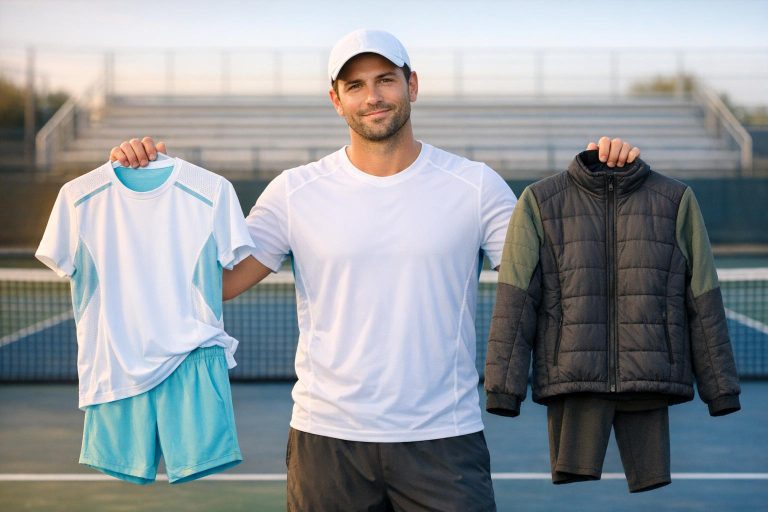
When choosing tennis uniforms, the right fabric can significantly impact your comfort and performance. Here’s the bottom line:
- Moisture-wicking uniforms keep you cool and dry by pulling sweat away from your skin, making them ideal for hot and humid conditions.
- Insulated uniforms retain body heat, helping you stay warm during cold or windy weather.
Key Differences:
- Moisture-wicking fabrics (like polyester and nylon) dry quickly, regulate sweat, and are lightweight.
- Insulated fabrics (like Merino wool or fleece) trap warmth, prevent muscle stiffness, and are better suited for cooler climates.
The choice depends on the weather. For hot days, go with moisture-wicking gear. For colder conditions, opt for insulated layers. Combining both types can help you stay comfortable in unpredictable weather.
Quick Comparison:
| Feature | Moisture-Wicking Uniforms | Insulated Uniforms |
|---|---|---|
| Best For | Hot and humid conditions | Cold and windy conditions |
| Moisture Control | High | Moderate |
| Heat Retention | Low | High |
| Drying Time | Fast | Slower |
| Weight | Lightweight | Heavier |
Choose the right gear to stay focused and perform your best on the court.
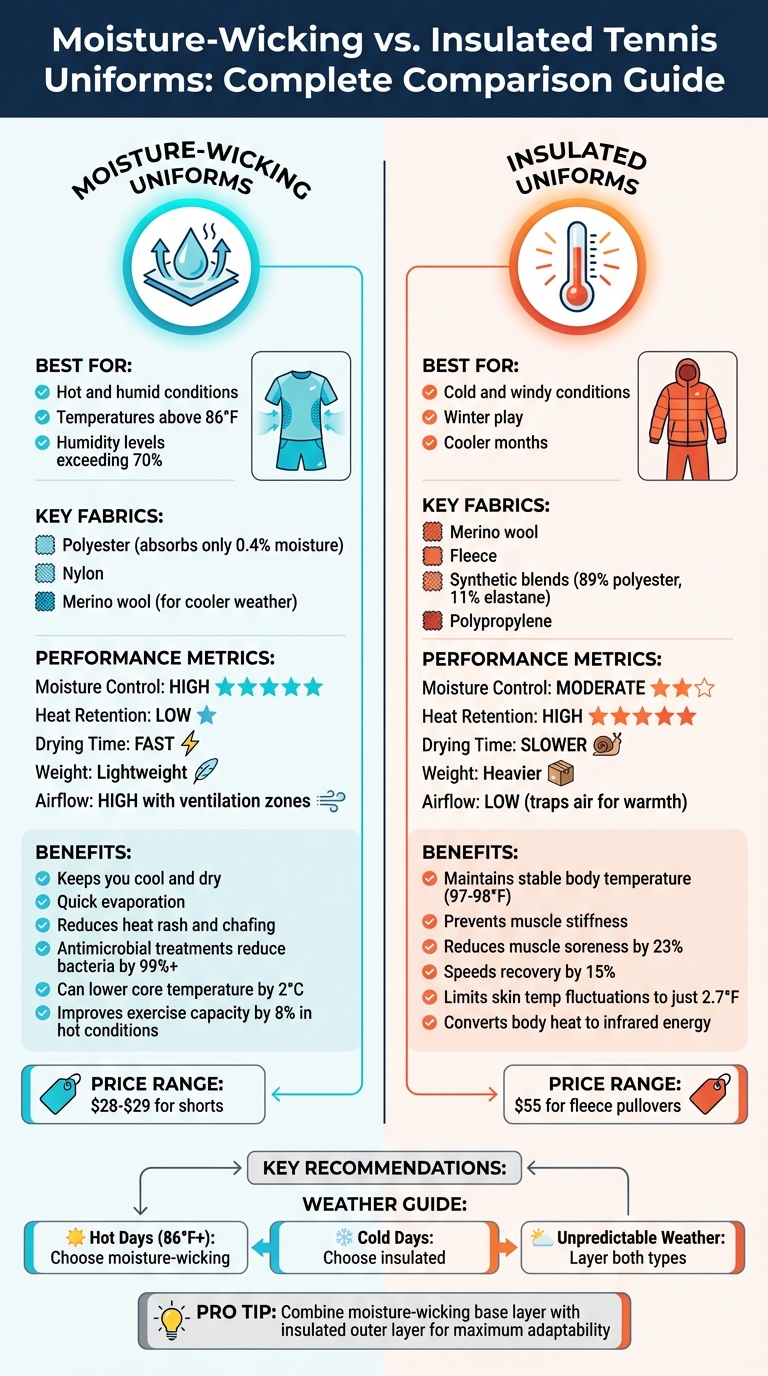
Moisture-Wicking vs Insulated Tennis Uniforms Comparison Chart
Moisture-Wicking Tennis Uniforms Explained
How Moisture-Wicking Technology Works
Moisture-wicking fabrics rely on capillary action to pull sweat away from your skin and move it to the outer surface of the garment. This process works through molecular forces like adhesion, cohesion, and surface tension, creating tiny channels between fibers that efficiently transport moisture. Unlike cotton, which absorbs large amounts of water, fabrics like polyester and nylon are hydrophobic, meaning they repel water and allow sweat to evaporate quickly. For instance, polyester absorbs only about 0.4% of its weight in water, while cotton can hold up to 7%, making it heavier and less effective during exercise. Some materials are further enhanced with chemical treatments to boost water-repelling abilities. These advanced treatments can even lower core body temperature by as much as 2°C during physical activity. This combination of properties provides a noticeable edge in performance.
Benefits of Moisture-Wicking Uniforms
These fabrics excel at managing sweat, allowing for faster evaporation that helps regulate body temperature. They also reduce the risk of heat rash, chafing, and skin infections while staying lightweight throughout play. In contrast to cotton, which becomes heavy and uncomfortable when wet, moisture-wicking materials minimize drag and muscle fatigue. Additionally, their quick-drying capabilities, often paired with antimicrobial treatments, can reduce bacterial growth by over 99%.
As TCA explains:
"Moisture-wicking fabrics have revolutionised athletic wear technology, providing significant benefits for athletes by efficiently managing sweat".
This technology becomes particularly important during intense matches or extreme weather, where staying dry can make a huge difference in performance.
When to Wear Moisture-Wicking Uniforms
These uniforms shine in conditions above 86°F with humidity levels exceeding 70%. They are especially effective during high-intensity matches lasting longer than 45 minutes, where the body generates considerable heat. For example, during the Tokyo Olympics, where temperatures averaged 90°F with 70% humidity, moisture-wicking fabrics played a key role in maintaining athletes’ performance and safety. Chemically treated polyester has even been shown to improve exercise capacity by about 8% in hot, humid environments compared to untreated versions. In cooler weather, Merino wool offers an alternative that combines moisture management with natural warmth, making it a versatile option for varying climates.
sbb-itb-4d95ad3
Insulated Tennis Uniforms Explained
How Insulation Technology Works
Carolina Quintero Rodriguez, Senior Lecturer and Program Manager at RMIT University, describes modern tennis wear as:
"Modern tennis wear functions as a mini climate-control system that responds to the athlete’s physiological changes in real time".
These uniforms use heat-sensitive polymer structures that trap air in small pockets between fibers. This design helps retain body heat while allowing moisture to escape. Thousands of microscopic vents adjust automatically based on body temperature, keeping the skin temperature steady – between about 97°F and 98°F. Some materials even convert body heat into infrared energy, which can improve local blood circulation.
Common fabrics include Merino wool, known for its natural warmth and breathability, and synthetic blends (typically 89% polyester and 11% elastane) that offer stretch and freedom of movement. This combination of materials and technology makes these uniforms particularly effective in cold or windy conditions.
Benefits of Insulated Uniforms
Insulated uniforms are designed to keep players warm without restricting movement. By maintaining a stable body temperature, they help ensure that muscles receive adequate oxygen, even in cold weather. This allows athletes to conserve energy for performance rather than using it to stay warm. Additionally, many insulated uniforms incorporate compression features, which have been shown to reduce muscle soreness by 23% and speed up recovery by 15%.
Dan Leraris, General Manager of Men’s Training at Under Armour, emphasizes this benefit:
"Athletes still get their favorite cold-weather gear but will now have a little more left in the tank at the end of the fourth quarter or in the 90th minute when it matters the most".
Technical fabrics in these uniforms limit skin temperature fluctuations to just 2.7°F above or below normal, even during intense activity. This stability helps maintain the body’s chemical processes, which can slow down when temperatures drop.
When to Wear Insulated Uniforms
Insulated uniforms are particularly useful in cold or windy weather, such as during winter play. These garments are ideal for cooler months when low temperatures can lead to muscle stiffness or discomfort. Cold weather forces muscles to work harder due to reduced oxygen flow, increasing the risk of tissue damage. Insulated uniforms help counteract these effects.
For the best results, look for options like zip-up hoodies or leggings that provide warmth without limiting mobility. A next-to-skin fit is key for conserving heat while still allowing a full range of motion. Pairing insulated layers with moisture-wicking base pieces is also important to prevent sweat from soaking the fabric, which could lead to rapid cooling. These features make insulated uniforms a smart choice for maintaining peak performance in challenging weather conditions.
Revolutionizing Sportswear with Textile Technology: A Deep Dive into the Latest Innovations
Moisture-Wicking vs. Insulated Uniforms: Direct Comparison
This section takes a closer look at how moisture-wicking and insulated uniforms stack up against each other in terms of performance and practicality.
Performance Metrics Compared
Here’s a side-by-side comparison of key performance features for both types of uniforms:
| Performance Metric | Moisture-Wicking Uniforms | Insulated Uniforms |
|---|---|---|
| Temperature Range | Hot to warm conditions; adaptable to cool weather | Cold to cool weather |
| Moisture Control | High; draws sweat away from the skin to keep you dry | Moderate; prioritizes heat retention |
| Drying Time | Fast; dries quickly | Slower; dense fabrics take longer to dry |
| Airflow | High; includes ventilation zones and mesh panels | Low; traps air to preserve warmth |
| Heat Retention | Low; designed for cooling | High; keeps core body temperature stable |
| Garment Weight | Lightweight | Heavier; uses dense materials for warmth |
As Balmelli Sport explains:
"Dressing properly doesn’t just mean being comfortable; it also supports agility, breathability, and movement stability".
Moisture-wicking uniforms shine in warmer weather, keeping athletes cool and dry, while insulated uniforms are ideal for staying warm in colder environments. These distinctions make it easier to assess which option is better suited to specific conditions.
Advantages and Disadvantages of Each Type
Performance metrics only tell part of the story – practical benefits and limitations also play a major role in choosing the right tennis apparel.
Moisture-wicking uniforms are perfect for hot, humid conditions, as they efficiently manage sweat, dry quickly, and often come with UPF 30 or higher sun protection for outdoor activities. However, they fall short in providing warmth, making layering necessary when temperatures drop.
Insulated uniforms, on the other hand, are designed to maintain warmth in cold or windy weather, helping muscles stay loose and reducing the risk of stiffness. But their heavier, less breathable fabrics can lead to overheating in warmer climates. As InPhorm NYC highlights:
"Heavy fabrics slow you down. Lightweight materials reduce drag and help you move swiftly across the court".
Ultimately, the best choice depends on the weather conditions you’ll face. Each type of uniform is tailored to excel in its intended environment, ensuring comfort and performance.
Selecting the Right Fabric for Your Uniform
When it comes to uniforms, the fabric you choose can make all the difference. The right material not only impacts comfort but also boosts performance and ensures durability under specific playing conditions. Let’s break down the options.
Common Fabrics for Moisture-Wicking Uniforms
If you’re aiming to stay dry and comfortable, polyester is a top choice. Known for its moisture-wicking abilities, it’s often blended with spandex or nylon to add flexibility and improve movement.
Another key player is nylon, which dries quickly, resists mildew, and holds up well after repeated washes. These traits make it perfect for high-energy matches. Both polyester and nylon help regulate body temperature by speeding up moisture evaporation, which keeps your clothing light and prevents overheating.
For those who prefer a natural option, merino wool is a standout. It wicks away moisture while helping regulate body temperature. However, it’s better suited for cooler weather since it retains heat. For example, quick-dry tennis shorts, often made from polyester or nylon blends, typically cost around $28 to $29.
If you’re playing in colder conditions, look for fabrics that combine insulation with moisture management.
Common Fabrics for Insulated Uniforms
When warmth is the priority, insulated uniforms rely on materials that trap heat without limiting mobility. Synthetic blends like polyester and spandex are commonly used in items like leggings and hoodies. These garments often include features like mesh panels or laser-cut details to balance warmth with airflow during intense play.
Polypropylene is another excellent option for cold-weather gear. It offers the moisture-wicking benefits of polyester but with better thermal insulation, making it a strong alternative to wool. On the other hand, cotton, while naturally insulating and soft, absorbs moisture and dries slowly, which can be a drawback in active settings. For instance, heavier items like fleece pullovers designed for colder weather are typically priced around $55.
Price and Longevity Factors
Durability and cost are also crucial when picking the right fabric. Synthetic materials like polyester and nylon generally last longer than natural fibers like merino wool. While merino wool shines in temperature regulation and odor resistance, it tends to wear out faster than its synthetic counterparts. Nylon’s resistance to mildew and quick-drying properties make it particularly durable in damp environments like tennis courts.
One downside of synthetic fabrics is their tendency to retain odors and support bacterial growth, so proper care is essential. To extend the life of your uniforms, skip fabric softeners when washing moisture-wicking gear – they can block the fibers’ ability to wick moisture. Instead, use mild detergents and air dry your clothing to preserve its performance.
| Fabric Type | Durability | Typical Price Range | Best For |
|---|---|---|---|
| Polyester | High | $28–$29 | Hot weather, frequent use |
| Nylon | High | $28–$29 | High-intensity play, moisture resistance |
| Merino Wool | Lower | Higher premium | Cold weather, odor control |
| Polypropylene | High | Mid-range | Cold weather with moisture management |
Combining Moisture-Wicking and Insulation Features
Match-day weather can be unpredictable, making it essential to balance staying dry and keeping warm. A combination of moisture-wicking and insulated layers can help you adapt to these shifts.
Layering Techniques for Changing Weather
The key to managing variable weather is layering effectively. Start with a moisture-wicking base layer made from materials like polyester, nylon, or merino wool. These fabrics pull sweat away from your skin, helping you stay dry.
When the temperature drops, add an insulated outer layer, such as a zip-up hoodie or an athletic jacket, over your base. For cooler months, pairing a moisture-wicking tank or short-sleeve top with leggings can provide warmth without sacrificing the mobility you need on the court. During intense rallies, you can easily remove the outer layer while maintaining sweat control underneath.
Synthetic materials like polyester, nylon, and polypropylene are particularly effective for both moisture management and insulation.
If layering isn’t practical, modern fabric innovations offer a more streamlined alternative.
Dual-Function Fabric Technology
Advancements in fabric technology now allow for garments that combine moisture-wicking and insulating properties in a single piece. For instance, performance leggings manage sweat while keeping you warm, and lightweight athletic jackets offer warmth without retaining moisture. These garments typically feature performance polyester blends with spandex, ensuring breathability, moisture control, and temperature regulation.
Materials like Micromodal provide a soft, silk-like feel while offering temperature-regulating benefits. Hybrid fabric blends combine synthetic durability with thermal qualities, and modern designs often include mesh panels or laser-cut details to improve airflow.
Dual-function garments are perfect for early morning matches or consistently cool-weather play. However, traditional layering systems remain a flexible option for rapidly changing conditions. Together, these approaches showcase how combining advanced fabrics and layering techniques can elevate your performance, no matter the weather.
Conclusion
When it comes to extreme weather, the right gear can make all the difference. In hot, humid conditions, custom tennis polo shirts works to pull sweat away from your body, helping you stay dry, light, and agile. On the flip side, insulated uniforms are key in cold weather, trapping heat to prevent stiffness and maintain your core temperature.
The numbers back this up. For instance, polyester blends absorb just 0.4% of moisture, whereas cotton soaks up much more, which can weigh you down significantly.
"In cooler weather, staying dry is more than just a comfort issue – it’s essential for maintaining your body temperature and preventing hypothermia." – Power Woman
This highlights the importance of choosing the right uniform. To perform at your best, rely on moisture-wicking base layers year-round, and layer with insulation as temperatures drop.
FAQs
What’s the best way to layer moisture-wicking and insulated tennis gear?
To stay comfortable and prepared for changing weather on the court, a three-layer system works best. Here’s how it breaks down:
- Base Layer: Start with a moisture-wicking fabric like polyester, nylon, or wool. This layer pulls sweat away from your skin, keeping you dry during intense matches.
- Mid-Layer: Add an insulating layer, such as fleece, to retain warmth. This is especially important for cooler conditions.
- Outer Layer: Top it off with a waterproof and windproof jacket. This layer shields you from rain and wind while still allowing sweat to escape.
This combination keeps you warm, dry, and flexible, no matter the weather.
How do I choose the right fabric blend for my local weather?
Picking the right fabric starts with understanding your local weather. If you’re dealing with cooler temperatures, moisture-wicking fabrics are a smart choice. They help keep you dry, reducing the risk of feeling cold from dampness.
On the other hand, for hot and humid climates, steer clear of heavy synthetics like polyester or nylon. These materials can trap heat and make you uncomfortable. Instead, go for breathable and lightweight options such as cotton, linen, or advanced moisture-wicking fabrics designed specifically for warm weather. Selecting the right fabric based on your environment can make a huge difference in both comfort and functionality.
How should I wash moisture-wicking uniforms so they keep working?
To keep your moisture-wicking uniforms in top condition, always wash them in cold water. This helps maintain their shape and color. Skip the fabric softeners – these can disrupt the fabric’s moisture-wicking properties. When drying, use a low heat setting on your tumble dryer to avoid damaging prints or decorations, as high heat can cause harm.