
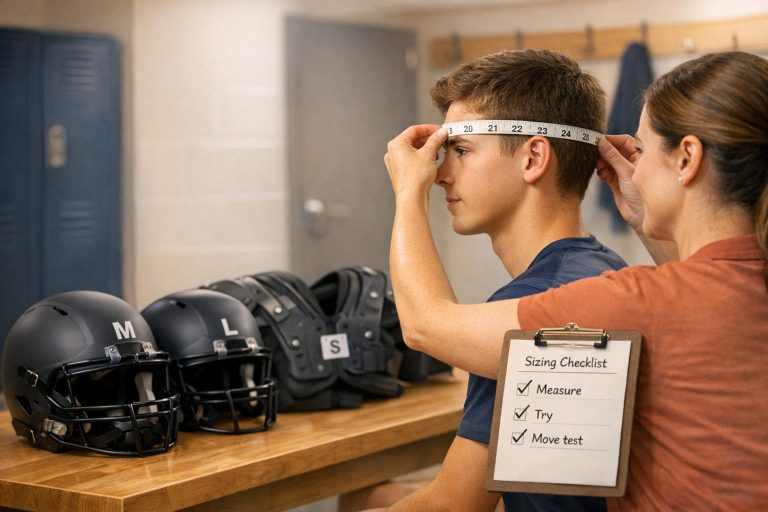
Properly fitted sports gear is crucial for safety and performance. Poor sizing can lead to injuries, discomfort, and reduced focus during play.
Key insights:
- Injury Risks: Loose gear can trip athletes or leave key areas unprotected. Tight gear restricts movement and circulation, increasing strain and fatigue.
- Performance Impact: Ill-fitting uniforms cause distractions, drag, and discomfort, making it harder for athletes to perform at their best.
- Protective Gear Importance: Helmets, pads, and braces must fit snugly to provide proper protection during impacts.
To ensure a good fit:
- Use sport-specific sizing charts.
- Measure athletes accurately, accounting for style preferences.
- Test gear with sizing kits before ordering.
Brands like Wooter Apparel help simplify the process with precise charts, customizable designs, and durable materials. Proper sizing supports safety, comfort, and focus, keeping athletes ready for the game.
Problems Caused by Improper Sizing
Restricted Movement and Skin Irritation
Tight uniforms can make basic athletic movements – like sprinting, pivoting, and stretching – much harder to execute. This limitation directly impacts an athlete’s ability to perform at their best. As AthleticForce1 points out:
"The closer a sport is to moving, the closer it is to performance. Ill-fitting uniforms can limit an athlete’s ability, limiting sprinting, pivoting, and stretching."
On top of movement restrictions, tight uniforms create constant friction, leading to chafing and blisters. This kind of discomfort can pull an athlete’s focus away from their game. Even high-performance fabrics designed to manage moisture and improve ventilation fall short when the fit isn’t right. Instead of keeping athletes cool and dry, poorly fitting uniforms trap heat and sweat, making the situation worse. On the other hand, customized team uniforms and oversized gear bring their own challenges, especially when it comes to safety.
Injury Risks from Oversized Uniforms
When uniforms are too loose, they can become a hazard. Excess fabric might catch on equipment or obstacles, increasing the risk of tripping. Protective gear like padding or helmets that don’t fit snugly can shift during play, leaving critical areas exposed during impacts. AthleticForce1 highlights this concern:
"With athletes, you have loose padding or helmets that shift around, so you may not be protected",
Beyond protective gear, oversized uniforms create drag, slowing athletes down and reducing their agility. Loose sleeves or waistbands often need constant adjustment, pulling players’ attention away from the game. These distractions can lead to mistakes or even injuries during key moments. And when gear doesn’t fit properly, it doesn’t just pose safety risks – it also drains energy.
Fatigue and Discomfort During Play
Ill-fitting uniforms don’t just compromise safety; they also sap an athlete’s endurance. Loose clothing increases drag, while tight gear adds resistance, forcing athletes to expend more energy than necessary. This extra effort leads to faster muscle fatigue and reduced stamina over the course of a game.
Compression gear, which is meant to support blood flow and stabilize muscles, becomes counterproductive when it doesn’t fit correctly. Instead of improving performance, poorly sized compression wear can strain muscles and accelerate fatigue. Whether it’s chafing, restricted movement, or excess drag, all these discomforts add up, undermining both confidence and overall performance during competition.
sbb-itb-4d95ad3
How Poor Fit Affects Athlete Safety
Blood Flow Restriction and Muscle Fatigue
When custom uniforms are too tight, they can restrict blood flow, limiting oxygen delivery to muscles. This not only accelerates fatigue but also increases the likelihood of cramps. Game-Patch highlights this issue:
"When your clothing is too tight, it can restrict your movements and lead to muscle strains or even tears."
Compression gear is meant to improve circulation and support muscles, but it only works when it fits properly. If it’s too tight, circulation suffers, leading to muscle strain and reduced endurance. This leaves athletes more vulnerable during crucial moments. Over time, poor circulation from tight gear can contribute to chronic injuries, compounding the risks.
Long-Term Injury Risks
The dangers of ill-fitting uniforms extend beyond short-term discomfort. Overly tight clothing forces muscles to work harder against the fabric, which can lead to chronic strains or tears. Footwear and compression gear that don’t fit properly can also increase the risk of stress fractures and recurring sprains. AthleticForce1 stresses the importance of proper sizing:
"The correct shoe size and compression gear are crucial, even in noncontact sports, to avoid injuries such as sprains or stress fractures."
Loose protective gear poses its own hazards. If pads, helmets, or braces shift during impact, they leave joints and critical areas exposed to injury. For example, poorly fitted gear can lead to severe injuries like athletic pubalgia (sports hernias), which involve tears in the lower abdominal or groin muscles. Even more serious, inadequate groin protection can result in testicular torsion, ruptured testicles, or pelvic fractures. These injuries carry long-term consequences, including low testosterone levels and infertility. Ensuring proper fit is essential for minimizing these risks and safeguarding athletes’ health.
Football Guide to Padded Apparel
How to Measure Athletes for Proper Fit
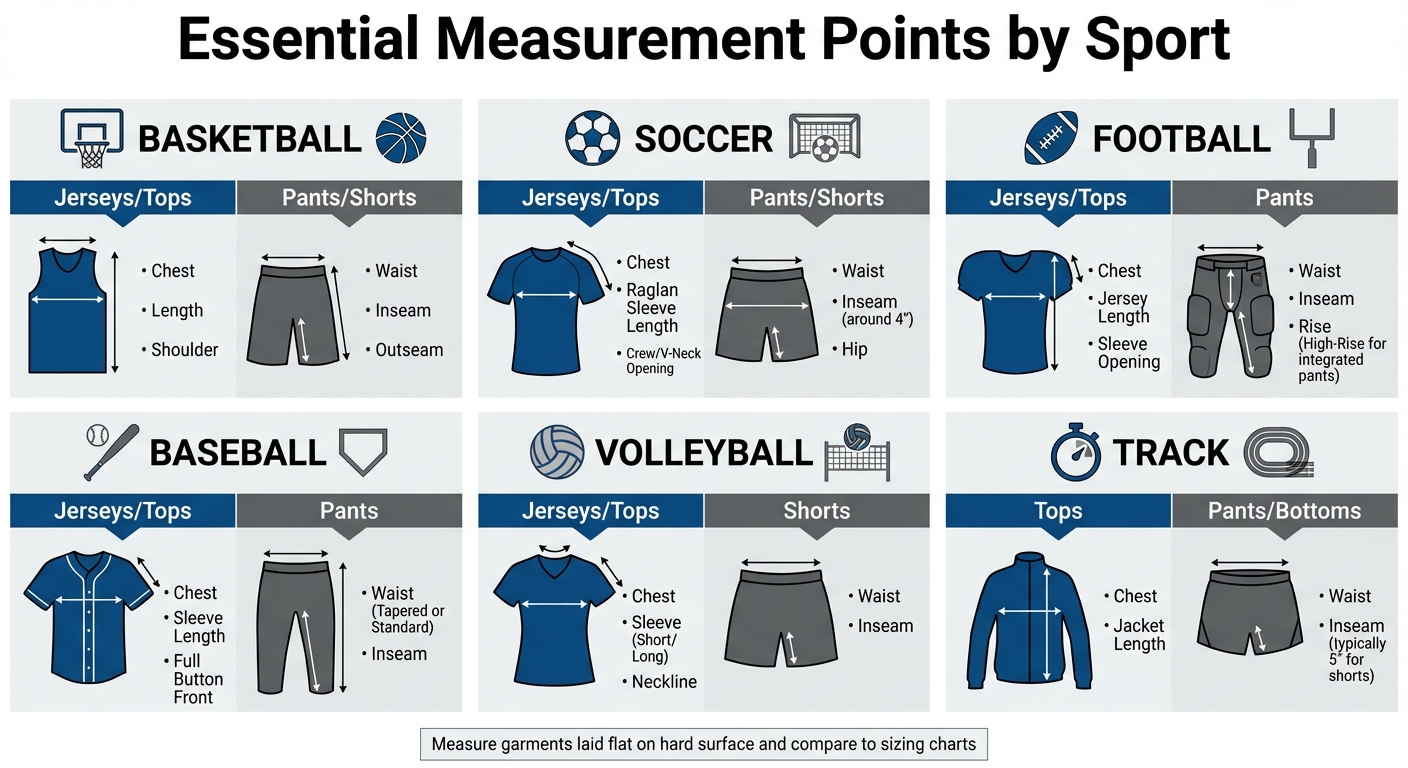
Sport-Specific Uniform Measurement Guide for Athletes
Measurement Tips for Different Sports
Getting accurate measurements starts with understanding that sizing charts typically reflect the dimensions of the garment – not the athlete’s body. As Wooter Apparel notes, "Most of our sizing charts give the exact measurements of our custom uniforms and apparel – not the measurements of the player". To ensure accuracy, measure a similar, well-fitting garment by laying it flat on a hard surface and noting key dimensions like chest width and length. Compare these numbers to the sizing chart. Keep in mind that manufacturing tolerances can vary by up to ±5%, and stretchy fabrics can provide some flexibility.
Different sports focus on specific measurement points. For basketball jerseys, you’ll need chest, length, and shoulder measurements, while basketball shorts require waist, inseam, and outseam dimensions. Soccer uniforms emphasize chest and raglan sleeve (or crew/V-neck) openings for tops, along with waist, inseam (often around 4"), and hip measurements for shorts. Football gear requires chest, jersey length, and sleeve opening measurements for tops, and waist, inseam, and rise for integrated pants. Baseball jerseys are measured by chest, sleeve length, and full button-front details, while pants need waist (tapered or standard) and inseam measurements.
Following these guidelines ensures accurate sizing, setting the foundation for a reliable team sizing chart.
Creating a Team Sizing Chart
Before placing a full team order, request sport-specific sizing kits. These kits allow athletes to try on sample items – such as baseball pants, football integrated pants, or wrestling singlets – to find their best fit. This step is especially crucial because custom uniforms are generally non-returnable and non-exchangeable.
When gathering measurements, take each athlete’s style preference into account. Some might prefer a relaxed fit, while others lean toward a more tailored look. Record each athlete’s measurements and preferences, and always refer to the correct chart for the specific cut – whether men’s, women’s, or youth – as dimensions can vary significantly. For example, Wooter Apparel, which has a 4.9-star rating from 1,366 reviews, is often noted for running "a bit bigger", so athletes who usually wear an XL might find a Large fits better.
Measurement Table by Sport
| Sport | Key Measurement Points (Jerseys/Tops) | Key Measurement Points (Pants/Shorts) |
|---|---|---|
| Basketball | Chest, Length, Shoulder | Waist, Inseam, Outseam |
| Soccer | Chest, Raglan Sleeve Length, Crew/V-Neck Opening | Waist, Inseam (around 4"), Hip |
| Football | Chest, Jersey Length, Sleeve Opening | Waist, Inseam, Rise (High-Rise for integrated pants) |
| Baseball | Chest, Sleeve Length, Full Button Front | Waist (Tapered or Standard), Inseam |
| Volleyball | Chest, Sleeve (Short/Long), Neckline | Waist, Inseam (Shorts) |
| Track | Chest, Jacket Length | Waist, Inseam (typically 5" for shorts) |
This table outlines the essential measurement points for various sports uniforms, helping ensure athletes achieve a fit that supports comfort, safety, and performance.
Solutions for Proper Sizing with Wooter Apparel
Sizing Charts and Free Design Services
Wooter Apparel tackles sizing issues with a unique approach: garment-based sizing charts. As the company explains:
"Most of our sizing charts give the exact measurements of our custom uniforms and apparel – not the measurements of the player"
This method allows teams to measure a well-fitting garment laid flat and match those dimensions to the chart, removing the need for guesswork.
In addition to these charts, Wooter offers sport-specific sizing guides, free custom mockups, and revisions to ensure the perfect fit before production begins. The process is thorough, requiring three steps: finalizing the design, submitting accurate sizes, and completing payment. Only then does production start, ensuring every uniform meets the standards of comfort and durability.
Fully Sublimated and Durable Uniforms
Wooter Apparel uses full sublimation technology to embed designs directly into the fabric:
"Wooter produces fully sublimated uniforms, meaning designs are embedded directly into the fabric, not printed on top. This delivers vibrant colors that won’t crack, peel, or fade, even after 50+ washes"
This process sets sublimation apart from traditional screen printing by keeping the fabric lightweight and breathable, avoiding the stiff or heavy feel that can restrict movement.
The material is slightly stretchy and flexible, which accommodates minor size variations. With manufacturing tolerances generally within ±5% of the listed measurements, this stretchiness is especially helpful for youth athletes who may grow during the season. Combined with their detailed design process, Wooter’s technology ensures players stay comfortable and perform at their best.
Complete Uniform Packages for Teams
For teams looking for an all-in-one option, Wooter’s MVP Uniform Package includes jerseys, shorts, and warmup gear, starting at $199.99 per package. Standard production takes 20–25 business days, with a rush option available in 10 business days. Proper sizing in these packages enhances mobility and reduces injury risk, addressing key safety concerns highlighted earlier.
To simplify the ordering process, Wooter Apparel offers an online platform where coaches can manage roster sizing, and players or parents can place individual orders. This ensures each athlete gets the right size, making the experience hassle-free for everyone involved.
Benefits of Well-Fitted Uniforms
Premium team uniforms do more than just look good – they play a critical role in boosting performance and ensuring safety.
Better Mobility and Comfort
A properly fitted uniform allows athletes to move without limitations. As Game-Patch puts it:
"Properly fitted clothing allows your body to move freely and efficiently, enhancing your biomechanics and movement patterns."
When gear fits correctly, athletes can focus entirely on their performance instead of being distracted by uncomfortable clothing. Materials like moisture-wicking fabrics also help by keeping them dry and preventing issues like chafing.
Lower Risk of Injuries
The right fit doesn’t just improve comfort – it can also prevent injuries. Well-fitted gear ensures proper circulation and secures protective equipment, reducing risks like muscle strains or tripping over loose clothing.
Compression gear, when sized correctly, supports muscles and joints, improving blood flow and reducing fatigue. This is especially important in high-impact sports like football or hockey, where protective pads need to stay in place during collisions. Misaligned gear can leave vital areas unprotected, increasing the chance of injury.
Improved Team Confidence and Performance
Uniforms that fit well don’t just protect the body – they also boost the mind. Athletes feel more prepared and confident when their gear fits properly, which can directly enhance their performance on the field. Additionally, matching, well-fitted uniforms foster a sense of unity, allowing players to focus on teamwork and their shared goals.
Conclusion
When it comes to athlete safety, proper sizing isn’t just about looks – it’s about protection and performance. The right fit minimizes risks like restricted movement, skin irritation, or injuries caused by loose clothing. It’s a key factor in ensuring athletes can focus on their game without distractions.
Custom uniforms add another layer of importance to sizing since they can’t be exchanged easily. Precision is essential, not just for the athletes’ comfort but also for managing team logistics and budgets effectively. High-quality sportswear often incorporates flexible fabrics that provide a bit of natural stretch, making them adaptable for athletes who fall between sizes.
Wooter Apparel simplifies the sizing process with sport-specific charts and garment-based measurements. Their sizing kits take the guesswork out of the equation, ensuring every athlete gets a uniform that fits just right. Plus, their fully sublimated designs aren’t just comfortable – they’re durable, standing up to over 50 washes without cracking or peeling.
It’s no surprise that Wooter Apparel has earned a 4.9-star rating from 1,366 reviews. As one satisfied customer, Alex A., shared:
"Most comfortable uniforms my players had"
When uniforms fit perfectly, athletes can channel all their energy into the game instead of worrying about their gear. Accurate measurements and reliable sizing tools not only enhance safety but also build confidence and help players perform their best.
FAQs
How do I measure for the right uniform size?
To get the perfect fit for your uniform, take a look at Wooter Apparel’s sizing charts. These charts include detailed measurements for men’s, women’s, and youth sizes. Be sure to measure yourself accurately and compare your numbers with the charts. Keep in mind, there might be a slight variation of about +/- 5% due to manufacturing tolerances, so double-check your measurements to ensure the best fit before placing your order.
Should I size up or down if I’m between sizes?
If you find yourself between sizes, it’s generally a good idea to go with the larger option. This is particularly important when it comes to sportswear, as manufacturing variations can differ by as much as 5%. Wearing gear that fits well doesn’t just enhance comfort – it’s also crucial for staying safe while being active.
How can I tell if my protective gear fits safely?
To make sure your protective gear fits properly, it should feel snug but not so tight that it limits your movement or causes discomfort. Critical areas need full coverage – helmets should rest firmly on your head without shifting, and pads should stay secure without pinching or rubbing. Getting the right fit boosts both safety and comfort, so always take the time to try on your gear and fine-tune straps or adjustments as necessary.