
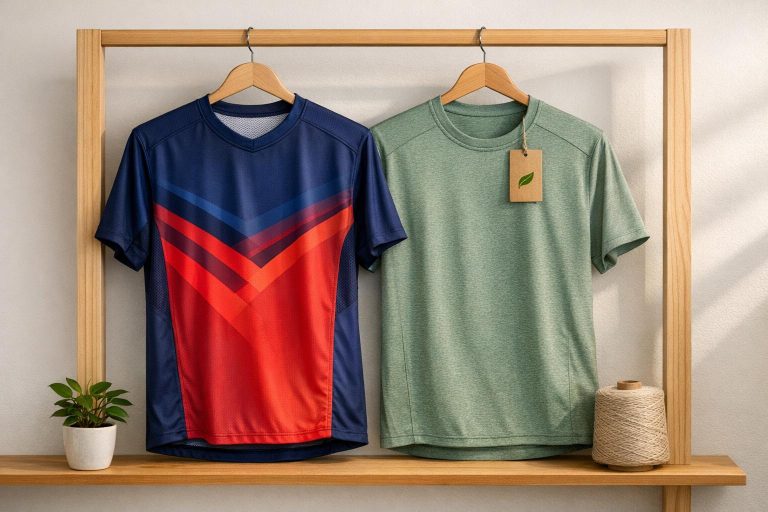
When choosing custom team uniforms, two popular options are sublimated uniforms and carbon-neutral uniforms. Here’s a quick breakdown:
- Sublimated Uniforms: These are made using a heat-press process that embeds ink into polyester fibers, creating vibrant, long-lasting designs. They excel in durability, moisture-wicking, and detailed customization but require synthetic fabrics like polyester or recycled polyester (rPET).
- Carbon-Neutral Uniforms: These focus on reducing carbon emissions by using recycled or natural materials (like rPET, cotton, or hemp) and offsetting production impacts. However, their design options are more limited, and natural fibers may not match the durability of sublimated options.
Quick Overview:
- Design: Sublimated offers intricate, fade-resistant designs; carbon-neutral leans toward simpler, muted aesthetics.
- Durability: Sublimated lasts longer with no cracking or peeling; carbon-neutral depends on materials and printing methods.
- Comfort: Sublimated uses moisture-wicking polyester; carbon-neutral varies, with natural fibers prioritizing softness.
- Eco-Friendliness: Sublimated minimizes waste with efficient production, while carbon-neutral achieves net-zero emissions through recycling and offsets.
Quick Comparison:
| Feature | Sublimated Uniforms | Carbon-Neutral Uniforms |
|---|---|---|
| Design Complexity | High; detailed and vibrant | Simpler; muted tones |
| Durability | Long-lasting, fade-resistant | Material-dependent |
| Comfort | Moisture-wicking polyester | Soft natural fibers |
| Eco-Focus | Low waste, efficient process | Net-zero emissions |
Sublimated uniforms are ideal for teams prioritizing bold, durable designs, while carbon-neutral uniforms suit those focused on lowering their environmental footprint. Both have their strengths – your choice depends on your team’s needs and values.
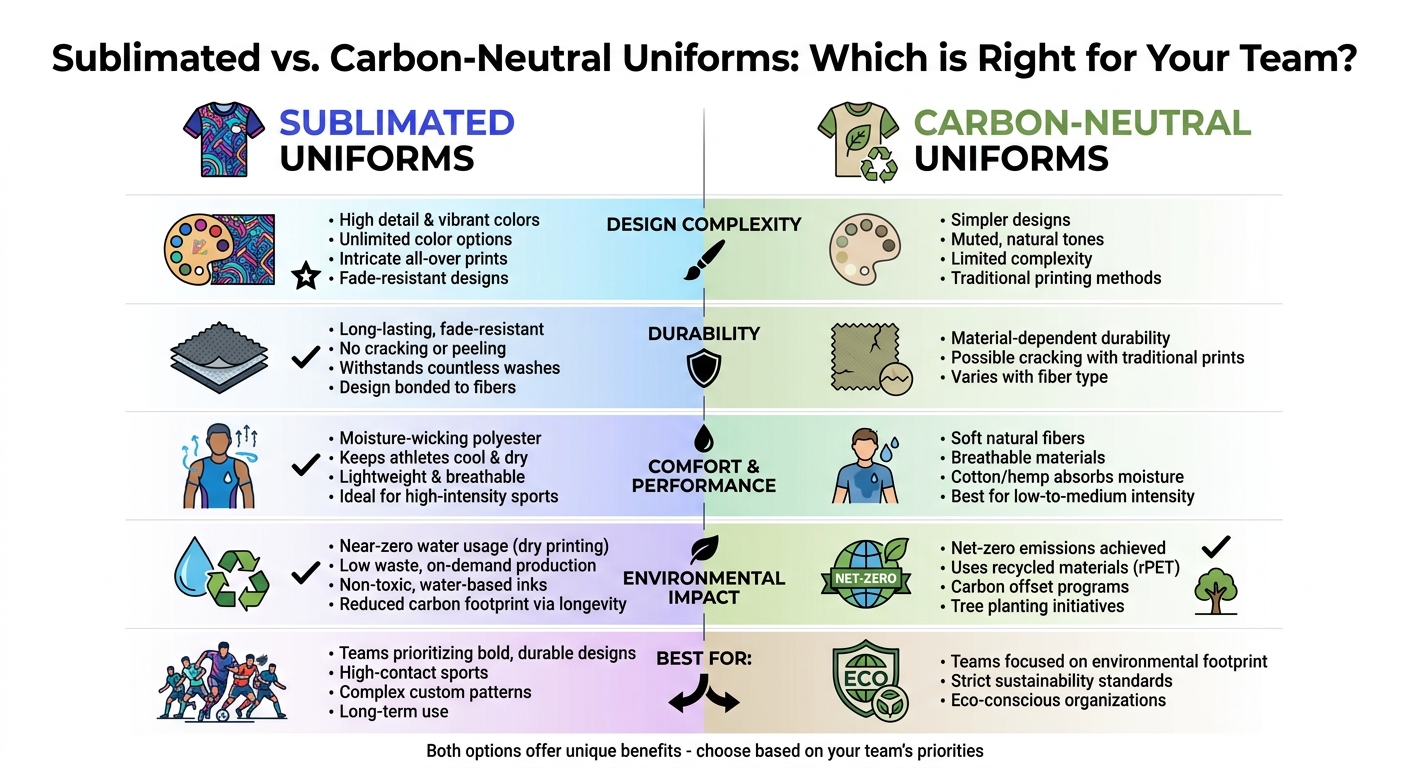
Sublimated vs Carbon-Neutral Uniforms Comparison Chart
Design Options: Sublimated vs. Carbon-Neutral Uniforms
Customization and Visual Quality
When it comes to design, the choice between sublimated and carbon-neutral uniforms plays a big role in both how the final product looks and how well it performs.
Sublimated uniforms shine in the customization department, offering unlimited design possibilities. They feature vibrant, fade-resistant colors, detailed logos, and intricate all-over prints without any restrictions on color usage. This is thanks to the sublimation process, which embeds ink directly into polyester fibers. The result? Complex gradients, sharp graphics, and seamless designs that traditional printing methods can’t match.
On the other hand, carbon-neutral uniforms, often made from organic cotton, hemp, or recycled fibers, lean toward a more natural and muted aesthetic. These materials don’t work well with sublimation inks, which limits the complexity of designs. Instead, traditional printing methods are used, where the ink sits on the fabric’s surface. Over time, this can lead to issues like cracking or peeling.
However, sublimation has its own limitations. For example, it doesn’t use white ink. Instead, it relies on the base fabric to provide white areas, which means designs look their best on white or light-colored materials. As Vik Patel explains:
Sublimation bonds with polyester or a polymer-coated surface. It does not fuse with cotton, uncoated wood, or bare metal.
This limitation can cause designs to appear dull or even disappear on darker fabrics. So, the material and color of the fabric play a big role in shaping the final design.
How Materials Affect Design
The material you choose has a direct impact on the design potential of your uniform. For example, pure polyester delivers bold, vibrant colors, while blends (such as 65% polyester) produce a more subdued, vintage look. This happens because the intensity of colors increases with the polyester content in the fabric.
Recycled polyester (rPET) strikes a balance – it offers the same high-detail, all-over design flexibility as virgin polyester but aligns with sustainability goals. Many sublimated uniforms now use rPET made from recycled plastic bottles, combining eco-consciousness with design versatility. On the flip side, natural fibers used in eco-friendly uniforms tend to have a more rustic texture. Prints on these materials often feel heavier and may lack the sleek finish of polyester-based designs.
Here’s a quick comparison of the design features:
| Feature | Sublimated (Polyester/rPET) | Carbon-Neutral (Organic/Natural Fibers) |
|---|---|---|
| Design Complexity | High; supports intricate patterns and all-over prints | Simpler; limited by natural fiber dye absorption |
| Color Options | Unlimited colors and gradients on light bases | Muted, natural tones |
| Ink Bonding | Fuses into fibers; permanent | Sits on surface; prone to cracking |
| Durability of Design | Resists cracking, peeling, and fading | Wears and fades with natural dyes |
Each material brings unique characteristics to the table, influencing both the look and longevity of the design. The choice ultimately depends on your priorities – whether it’s bold visuals or a more eco-conscious approach.
sbb-itb-4d95ad3
Durability and Performance Comparison
Lifespan and Wear Resistance
Sublimated uniforms are built to last, thanks to their unique dye-sublimation process. This method permanently embeds the ink into the fabric, ensuring the design stays sharp and vibrant over time. As Panther Design explains:
"Dye-sublimation ensures permanent, crisp artwork, even after countless washes." [Panther Design]
This durability means no cracking, peeling, or fading, even during intense physical activities. The polyester panels used in these uniforms are specifically designed to endure the rigors of stretching, diving, and sliding, making them an ideal choice for high-contact sports.
On the other hand, the durability of carbon-neutral uniforms depends largely on the materials used. Recycled polyester can come close to matching the resilience of sublimated uniforms while aligning with eco-friendly goals. However, natural fiber options, such as cotton or hemp, may show wear differently. Additionally, traditional printing methods like heat-pressed vinyl or screen printing are more prone to damage, meaning sublimated designs maintain their appearance longer and require fewer replacements.
Durability aside, how a uniform feels and performs during use is equally important for athletes.
Comfort and Performance Features
Durability ensures longevity, but comfort is key to peak athletic performance. Sublimated uniforms use polyester fabrics that are not only durable but also highly effective at wicking moisture away from the skin. This keeps athletes cool and dry, even during the most intense games, while maintaining the fabric’s integrity.
In contrast, carbon-neutral uniforms crafted from natural fibers like cotton or hemp prioritize softness and breathability. However, these materials tend to absorb moisture rather than wick it away, which can leave athletes feeling damp during prolonged activity. Recycled polyester options within the carbon-neutral category offer a middle ground, providing moisture-wicking properties similar to sublimated uniforms while supporting sustainability goals.
To break this down further, here’s a side-by-side comparison of their key performance traits:
Durability and Performance Comparison Table
| Feature | Sublimated Uniforms | Carbon-Neutral Uniforms |
|---|---|---|
| Fade Resistance | High – ink is bonded to fibers | Variable – depends on dye and material |
| Cracking/Peeling | None – design becomes part of the fabric | Possible with traditional printing methods |
| Wash Cycles | Withstands countless washes | Varies with fiber type |
| Maintenance | Low – requires simple cold wash and air dry | Moderate – may need specific care for natural fibers |
| Moisture-Wicking | Excellent – performance polyester | Moderate to high with recycled polyester; lower for natural fibers |
| Suitability | Ideal for high-intensity, high-contact sports | Best for low-to-medium intensity and eco-conscious teams |
This table highlights the strengths and limitations of each option, helping teams choose the best fit for their specific needs.
Environmental Impact Comparison
Production Methods and Resource Use
Sublimated uniforms stand out for their minimal water usage. Unlike traditional dyeing methods, which require large amounts of water, sublimation relies on a dry printing process. This approach uses water-based, non-toxic inks that don’t contain volatile organic compounds (VOCs) or heavy metals. This makes it safer for workers and significantly reduces environmental harm. Additionally, the ink is infused directly into the fabric, eliminating waste. With on-demand production, there’s no risk of overproduction or inventory surplus. The entire process is streamlined with a single heat-press step, cutting down resource use from start to finish.
On the other hand, carbon-neutral uniforms focus on recycling and operational efficiency. Many manufacturers use recycled polyester (rPET) from plastic bottles, which reduces the need for new petroleum-based materials. They also incorporate energy-saving laundering systems, which lower energy use. While water is still used in these processes, it’s significantly less than in conventional production methods. These efficient practices not only ensure durability, like that found in custom pro football jerseys, but also reduce the overall ecological impact.
Carbon Footprint and Offset Strategies
Carbon-neutral uniforms achieve net-zero emissions through targeted initiatives. Companies invest in projects like reforestation and renewable energy to offset their carbon output. For example, Westpeak, a New Zealand-based company, plants at least 500 trees annually as part of its sustainability efforts. Meanwhile, Alsico, which produces over 18 million garments each year, aims to achieve full carbon neutrality by 2030.
These manufacturers also embrace circular economy principles. In 2025, Westpeak launched the Enviropeak™ recycling program, which repurposes old uniforms into new applications. Similarly, Cintas Corporation operates a garment recycling initiative that transforms old uniforms into products like industrial rags, insulation, and carpet padding – keeping textiles out of landfills.
Sublimated uniforms contribute to environmental benefits through their longevity. Since the designs are chemically bonded to the fabric, they resist cracking or peeling, reducing the need for frequent replacements. This durability means less manufacturing, shipping, and waste over time, ultimately lowering their carbon footprint.
The table below highlights the environmental advantages of both uniform types.
Environmental Impact Comparison Table
| Feature | Sublimated Uniforms | Carbon-Neutral Uniforms |
|---|---|---|
| Water Usage | Near-zero; dry printing process | Reduced through efficient dyeing and recycled materials |
| Energy Consumption | Lower; single-stage heat-press | Reduced via energy-efficient manufacturing and laundering |
| Waste Generation | Minimal; on-demand production, no excess ink | Managed through recycling and repurposing programs |
| Carbon Footprint | Reduced via long lifespan and efficient logistics | Net-zero achieved through rPET use and carbon offsets |
| Chemical Impact | Non-toxic, water-based inks (no VOCs) | Focused on sustainable materials like organic cotton/rPET |
When to Choose Sublimated Uniforms from Wooter Apparel
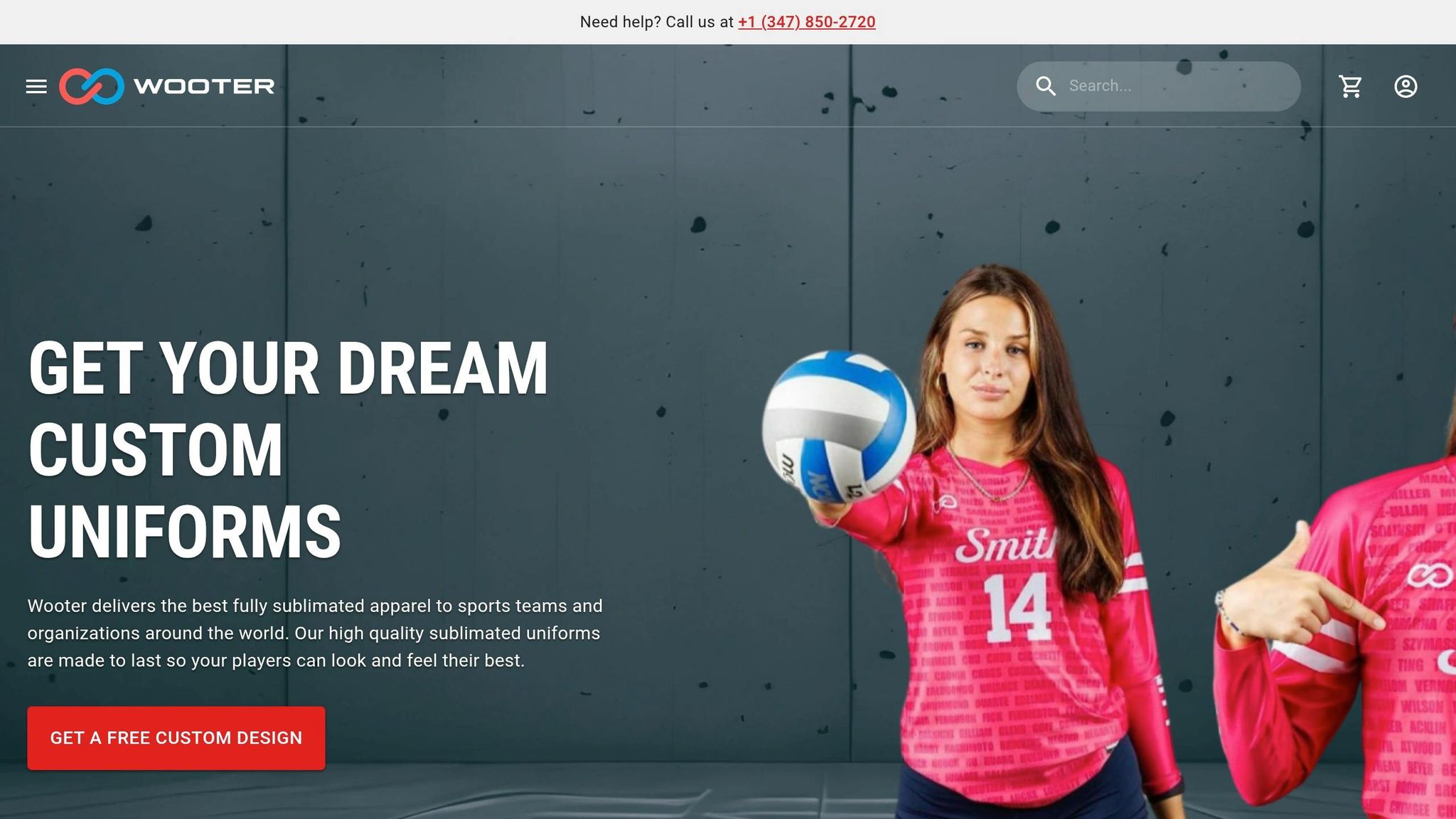
Wooter Apparel’s Fully Sublimated Uniform Features
Wooter Apparel’s fully sublimated uniforms offer endless design possibilities while delivering durability and performance. The sublimation process embeds the ink directly into the fabric fibers, ensuring the design won’t crack, peel, or fade – even after countless washes. This means logos and intricate patterns stay vibrant over time.
The production process is water-free and designed to minimize waste, making it a more eco-friendly option. Plus, because the design is part of the fabric itself, the uniforms retain their lightweight and breathable qualities – essential for high-energy sports like basketball, soccer, and football. Wooter Apparel’s complete uniform packages, starting at $199.99, include jerseys, shorts, and warmup gear, all crafted with durability and sustainability in mind.
These features make sublimated uniforms an excellent choice when your team prioritizes both performance and standout design.
Matching Team Needs with Uniform Type
Sublimated uniforms are the perfect fit for teams that require complex, full-coverage designs with a wide range of colors. If your team wants intricate patterns or gradients that traditional screen printing can’t achieve, sublimation is the way to go. They’re also ideal for teams needing uniforms that last multiple seasons, as the bonded design outperforms vinyl and screen-printed alternatives in durability.
While carbon-neutral uniforms meet strict sustainability standards – requiring carbon offsets and recycling programs – Wooter Apparel’s sublimated uniforms still offer environmental advantages. Their extended lifespan and waste-reducing production methods contribute to a smaller ecological footprint. As Graham Sporting Goods highlights:
The longer a jersey lasts, the fewer replacements are needed, reducing waste and overall consumption.
The sublimation process is also more energy-efficient than screen printing, relying on a single heat-press step rather than lengthy drying times. With simple care – like cold washing and air-drying – these uniforms can maintain their quality for years.
Heat Transfer VS Sublimation (Sportswear Secrets)
Conclusion
When comparing the two uniform options, it’s clear that each has its strengths, tailored to meet different team priorities. Sublimated uniforms shine when it comes to design flexibility and durability. The process fuses ink directly into polyester fibers, resulting in vibrant, all-over designs that stay intact season after season. This longevity not only saves on replacement costs but also reduces waste over time. On the other hand, carbon-neutral uniforms focus on sustainability, often incorporating recycled materials to lower their environmental impact.
Sublimation stands out as a method that combines top-tier performance with eco-conscious production. Its waterless, energy-efficient process minimizes waste while enabling on-demand manufacturing, which helps avoid overproduction and unnecessary landfill contributions.
Wooter Apparel’s sublimated uniforms offer a winning combination of durability, moisture-wicking performance, and eco-friendly production. This process eliminates hazardous ink waste and ensures the designs retain their quality for years, which, in turn, reduces the environmental impact tied to frequent replacements. As highlighted by IMARC Group:
Dye sublimated clothing provides crisp, neat and clear prints and designs with brighter and vibrant colors.
This approach not only delivers eye-catching uniforms but also supports sustainability by cutting down on waste and conserving resources.
For teams that value intricate designs and long-lasting quality, sublimated uniforms offer the ideal solution. Whether outfitting a youth basketball league or a competitive soccer team, Wooter Apparel’s sublimated uniforms bring together standout aesthetics, reliable performance, and environmental consideration in one well-rounded package.
FAQs
Can sublimated uniforms be made on dark fabrics?
Sublimated uniforms aren’t the best choice for dark fabrics. This is because sublimation works most effectively on light-colored or white polyester fabrics, where the dye can bond seamlessly with the polyester fibers. On darker fabrics or materials that aren’t polyester, the colors struggle to stand out, which results in reduced print quality and less vibrant designs.
Are carbon-neutral uniforms still moisture-wicking?
Yes, carbon-neutral uniforms can absolutely be moisture-wicking. The environmental benefit of being carbon-neutral doesn’t interfere with performance features like moisture management. Moisture-wicking depends on the fabric’s ability to draw sweat away from the skin, a quality that can be achieved using eco-friendly materials. By choosing a carbon-neutral uniform, you get the best of both worlds: high performance and a step toward sustainability.
Which option costs less over multiple seasons?
Sublimated uniforms tend to be a more budget-friendly option over several seasons. Their durability and resistance to wear and fading mean fewer replacements or repairs are needed, keeping costs low in the long run. On the other hand, carbon-neutral uniforms prioritize environmental considerations but may use materials that are less durable or require special care, which can drive up costs over time. For those focused on durability and long-term savings, sublimated uniforms often come out ahead.