
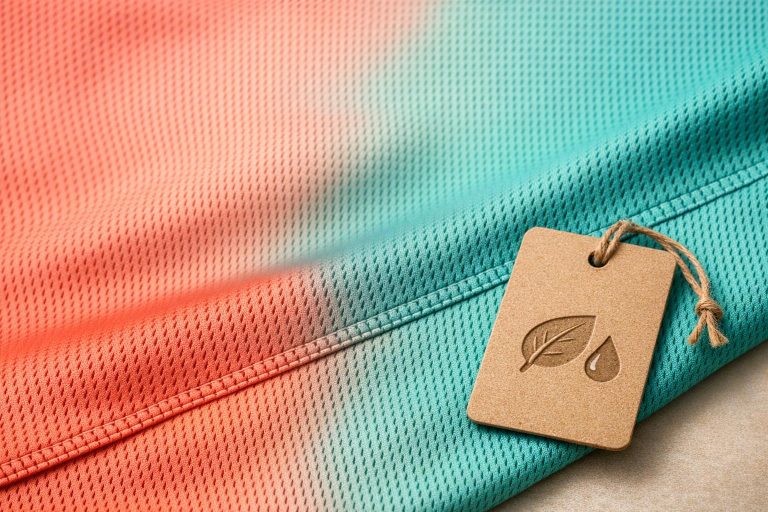
Sublimation printing is changing how sportswear is made by offering a durable, long-lasting alternative to older printing methods. Unlike screen printing or heat transfer, which apply ink to the surface of fabric, sublimation embeds the ink into polyester fibers. This process helps sportswear maintain its color and quality even after repeated use and washing.
Key benefits of sublimation printing include:
- Durability: Designs resist cracking, peeling, and fading.
- Breathability: The fabric stays lightweight and comfortable.
- Eco-friendly production: Minimal water and material waste compared to traditional methods.
- Versatility for polyester: Works well with recycled polyester, supporting greener practices.
Fabric Sublimation Printing | Clothing Manufacturers | Fashion Design & Sustainable Manufacturing
sbb-itb-4d95ad3
How Sublimation Printing Works
Sublimation printing turns solid ink into gas without passing through a liquid phase. The process begins by printing a design onto specialized transfer paper using sublimation dyes. This paper is then placed on the fabric and subjected to heat between 380°F and 420°F under pressure. The heat causes the ink to vaporize and bond permanently with the polyester fibers.
This method works exclusively on 100% polyester or polyester blends because the gaseous ink binds with polymer fibers. It doesn’t work on natural fabrics like 100% cotton. Unlike traditional printing methods, where ink sits on the surface, sublimation ink becomes part of the fabric itself. As Wooter Apparel explains:
The nature of sublimation means that the prints are never heavy or thick. The garment is unchanged by the process, save for the addition of your art.
This ensures sublimated sportswear remains breathable and lightweight, making it ideal for athletic performance. Since there’s no thick, plastic-like layer, the fabric doesn’t trap heat, allowing unrestricted movement.
Another key benefit is the durability of sublimated designs. They won’t crack, peel, or fade, even with frequent use. The process also supports vibrant colors, intricate gradients, and all-over prints without increasing costs for additional colors. This makes it an efficient choice for small team orders and custom designs.
The production process involves printing the design on transfer paper, heat-pressing it onto white polyester fabric reels, and then cutting and sewing the panels. This ensures the artwork covers every part of the garment – including seams – resulting in a polished and professional look. This efficient workflow not only boosts durability but also highlights sublimation’s advantages over more traditional printing methods.
1. Sublimation Printing
Resource Efficiency
Sublimation printing stands out for its ability to conserve resources while maintaining the fabric’s natural qualities. Unlike traditional printing methods, it doesn’t add a bulky layer of ink to the surface. This means the fabric stays lightweight and breathable, making it perfect for athletes who need fully sublimated team apparel that last through extended use without losing functionality.
Another advantage? It simplifies the printing process. Multi-color designs and gradients are applied in a single pass, bonding directly with the fabric fibers. This reduces production time and cuts down on material usage.
Waste Reduction
One of the key benefits of sublimation printing is how it minimizes waste. Its durability ensures that garments last longer, which means fewer replacements and less waste over time. Because the ink bonds at a molecular level rather than sitting on the surface, designs hold up against fading, cracking, and peeling – even after countless washes.
"Because the ink is absorbed into the fabric, it is less likely to fade, crack, or peel over time. This means that sublimated sports apparel can last longer and retain its vibrant colors and designs even after multiple washings." – Wooter Apparel
This process not only reduces waste but also enhances the longevity of sportswear, making it ideal for demanding athletic use.
Durability and Longevity
Sublimation printing forms a permanent bond between the ink and fabric, ensuring designs can handle the wear and tear of athletic activities. The gaseous ink penetrates deep into polyester fibers, preventing issues like cracking or flaking during use. This durability significantly extends the garment’s lifespan, meaning replacements are needed far less often.
Plus, because there’s no extra layer of ink sitting on top, the fabric retains its original texture and performance. Athletes won’t experience the "heavy" feel often associated with traditional prints, allowing them to perform at their best while the garment maintains its quality over time. Wooter Apparel’s 4.9-star rating from 1,362 customer reviews highlights this real-world durability, with customers frequently praising the vibrant colors and lasting quality.
2. Screen Printing and Heat Transfer
Resource Efficiency
Screen printing and heat transfer methods require significantly more resources compared to sublimation. Screen printing, for instance, involves high water usage for cleaning screens and removing leftover ink. On top of that, it consumes a lot of energy during its multiple production stages. Heat transfer printing isn’t much better – it demands large amounts of energy for steaming and washing. Both methods rely on chemical-heavy inks – screen printing uses plastisol inks, while heat transfer often involves solvent-based materials – which require careful handling and disposal.
These traditional techniques place a heavy strain on environmental resources. The multi-step process of screen printing, in particular, requires equipment cleaning between each color, which multiplies water and energy consumption for every design change. This adds to the challenges of managing waste and ensuring long-lasting results.
Waste Reduction
When it comes to waste, screen printing and heat transfer methods fall short. Screen printing generates waste from leftover ink, solvents, and disposable screens. Heat transfer, while producing less waste overall, still leaves behind chemical residues that need proper disposal. Additionally, both methods can pollute water systems with harmful chemicals.
The waste problem is made worse by the shorter lifespan of garments produced using these techniques. Prints from screen printing often crack or peel, while heat transfer designs fade after only a few washes. This means uniforms need to be replaced more frequently, creating a cycle of overconsumption and waste. The environmental impact of this cycle is hard to ignore.
Durability and Longevity
Unlike sublimation, screen printing and heat transfer prints lack durability. Designs created through screen printing are prone to cracking and peeling over time, and heat transfer prints tend to fade or wear out after just a few washes. This short lifespan increases the need for replacements, which in turn amplifies resource use and waste. For teams, this means higher costs and a greater environmental footprint from repeated production cycles.
Material Compatibility
Material compatibility is another area where screen printing and heat transfer methods face limitations. While screen printing inks can work on a variety of fabrics, they often restrict eco-friendly practices. Heat transfer is primarily suited for cotton, which limits its use with high-performance synthetic fabrics. On the other hand, sublimation thrives with polyester, including recycled PCR polyester, offering a more sustainable and efficient option. Sublimation avoids the need for mixed materials, which simplifies recycling, and ensures sportswear remains both functional and environmentally conscious.
Pros and Cons
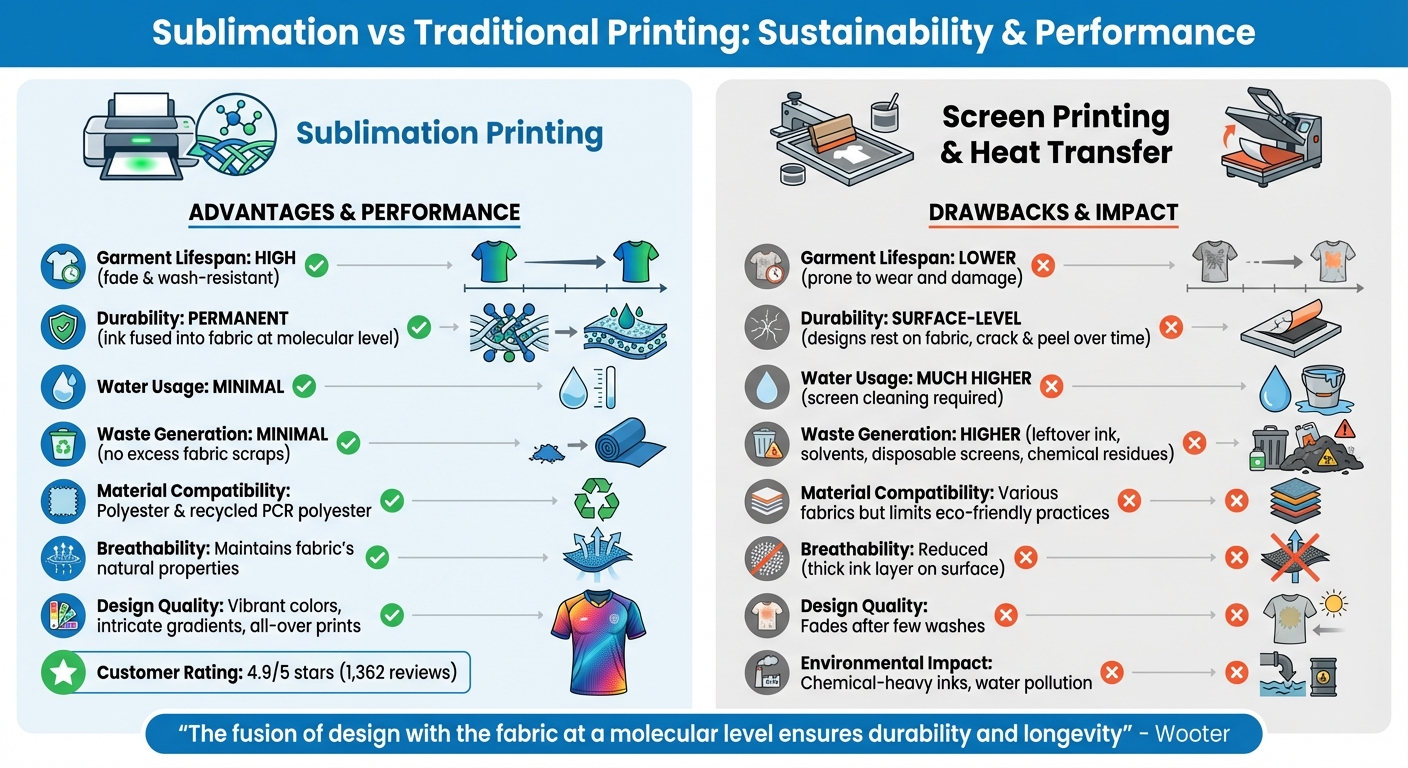
Sublimation vs Traditional Printing Methods: Sustainability Comparison
When comparing printing methods, sublimation stands out for its long-lasting and eco-friendly qualities. Unlike traditional methods, which apply ink on the surface of fabric, sublimation embeds the ink directly into the material. This creates a print that’s highly resistant to fading and washing over time. Traditional methods, on the other hand, are more prone to wear and tear. Sublimation also uses very little water and avoids creating excess fabric scraps, while older techniques tend to generate far more waste during production. Here’s a quick breakdown of the key differences:
"The fusion of design with the fabric at a molecular level ensures durability and longevity." – Wooter
| Feature | Sublimation Printing | Screen Printing / Heat Transfer |
|---|---|---|
| Garment Lifespan | High: Fade- and wash-resistant | Lower: More prone to wear and damage |
| Durability | Permanent: Ink fused into fabric | Surface-level: Designs rest on fabric |
| Water Usage | Minimal | Much higher |
| Waste Generation | Minimal; no excess fabric scraps | Produces more waste |
When it comes to material compatibility, sublimation and traditional methods serve different needs. Sublimation works best with polyester, including recycled options, making it ideal for environmentally-conscious sportswear. Traditional methods, while more versatile in terms of fabric types, can’t match sublimation’s sustainability edge. Sublimation’s ability to pair with recycled PCR polyester allows teams to enjoy custom v-neck soccer jerseys that not only look and perform better but also align with eco-friendly practices.
Wooter Apparel: Sublimation for Sustainable Sportswear
Wooter Apparel has embraced sublimation printing as the foundation of its sustainable sportswear production. This method allows the company to create custom team uniforms with a focus on reducing environmental impact. Their efficient 5-step process transforms initial designs into finished products within just 2–3 weeks, highlighting their commitment to both speed and sustainability. By embedding ink directly into the fabric, Wooter ensures their uniforms are durable, reducing the need for frequent replacements.
One standout offering is the MVP Bundle, priced at $199.99. This bundle includes jerseys, shorts, and warmup gear, all crafted from breathable polyester through sublimation printing. The process keeps the garments lightweight and breathable – key features for optimal athletic performance. Additionally, the durability of sublimation-printed fabrics extends the life of each uniform, contributing to less waste over time.
Wooter Apparel’s sublimation techniques have earned widespread praise, reflected in their impressive 4.9 out of 5-star rating from 1,362 customer reviews. Customers often highlight the vibrant colors and long-lasting quality of the materials, showcasing how this advanced printing method enhances both aesthetics and functionality.
Sublimation represents a shift away from older methods like screen printing and heat transfers, which were popular from the 1970s through the 1990s. Wooter’s approach permanently bonds ink to the fabric, ensuring vivid colors and structural integrity. This allows for intricate, multi-colored designs while reducing waste and energy use. By adopting this process, Wooter Apparel reinforces its commitment to creating eco-conscious, high-performance sportswear.
Conclusion
Sublimation printing offers a standout alternative to traditional methods like screen printing and heat transfer for creating sportswear. What makes it special? The ink becomes part of the fabric itself, rather than sitting on the surface. This integration boosts the garment’s longevity, meaning fewer replacements and less textile waste over time.
Another big plus? Sublimation keeps the fabric lightweight and breathable – key features for athletic wear. As Wooter Apparel explains:
"Because the ink is absorbed into the fabric, it does not create an additional layer on the surface of the garment. This means that the fabric remains lightweight and breathable, which is important for athletic clothing".
The quality speaks for itself. Wooter Apparel’s stellar 4.9 out of 5-star rating from 1,362 reviews highlights how much customers appreciate sublimated sportswear. From vibrant colors to long-lasting designs, it’s clear this method delivers on both performance and style.
FAQs
Can sublimation be done on cotton?
No, sublimation doesn’t work on cotton. The process relies on dyes bonding with synthetic materials, like polyester. Cotton doesn’t have the chemical structure required for the sublimation dye to adhere properly.
Is sublimation printing safe for recycled polyester?
Sublimation printing is a safe and effective method for use with recycled polyester. It reduces material waste and integrates perfectly with recycled polyester fabrics, making it an environmentally conscious option for creating sustainable sportswear.
How should I wash sublimated uniforms to make them last longer?
To keep sublimated uniforms looking their best for longer, wash them in cold water on a gentle cycle with a mild detergent. Turn the uniforms inside out to safeguard the design. Steer clear of bleach and fabric softeners, as they can damage the fabric and colors. Whenever possible, air dry the uniforms. If you need to use a dryer, opt for a low-heat setting. For storage, keep them in a cool, dry place, away from direct sunlight, to maintain their colors and fabric integrity.