
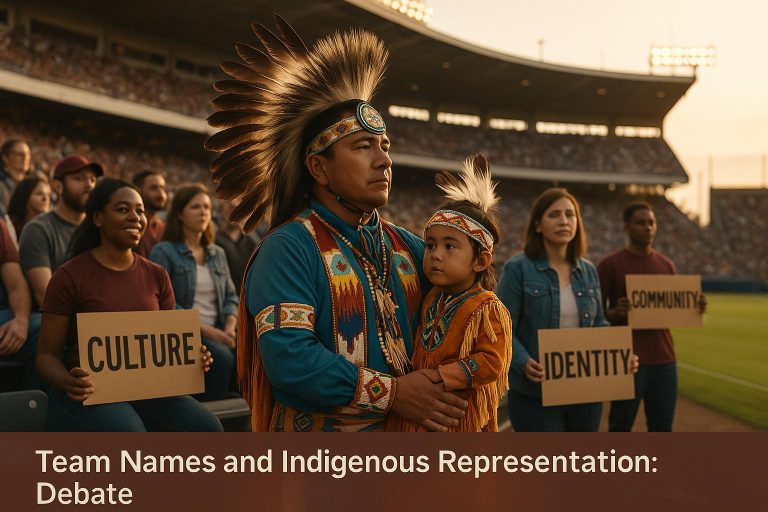
The debate over using Indigenous names and symbols in sports is about more than just branding. Critics argue these practices perpetuate harmful stereotypes and disrespect Indigenous communities, while supporters claim they honor heritage and tradition. Recent years have seen significant changes, such as the rebranding of the Washington Commanders and Cleveland Guardians, driven by advocacy, public pressure, and corporate influence. However, teams like the Kansas City Chiefs and Chicago Blackhawks continue to face scrutiny for retaining Indigenous-themed names. Research shows these mascots harm Indigenous youth and reinforce stereotypes, sparking calls for more respectful branding practices.
Key points:
- Indigenous-themed names often perpetuate stereotypes, harming communities.
- Advocacy and public pressure have led to major rebranding efforts.
- Some teams have made partial changes but still face criticism.
- Collaboration with Indigenous groups is essential for respectful representation.
The article explores the history, arguments for and against these practices, and the broader social and legal impacts.
INDIAN MASCOTS "UNDERSTANDING THE HARM: THE NATIONWIDE MOVEMENT TO ELIMINATE INDIAN MASCOTS"
History of Indigenous-Themed Team Names
Indigenous-themed names and symbols in American sports have a history that dates back to the early 20th century. These names were originally adopted to embody qualities like strength, bravery, and a fighting spirit. However, over time, they became the focus of criticism for perpetuating cultural appropriation and stereotypes.
Origins and Early Adoption
In the early 1900s, sports teams began using Indigenous-themed names to establish bold and memorable identities. Teams like the Washington Redskins (NFL) and Cleveland Indians (MLB) became prominent examples of this trend. While many teams claimed their names and mascots honored Native American traits, these decisions were made without consulting Indigenous communities and often relied on stereotypes. Some teams, such as the Florida State Seminoles, referenced specific tribes, while others used broad or offensive terms with little connection to local Indigenous culture.
Changing Perceptions Over Time
By the 1960s, advocacy groups started challenging the use of Native-themed mascots. Organizations like the National Congress of American Indians (NCAI) and the American Indian Movement (AIM) led protests, filed lawsuits, and pressured sponsors to eliminate these mascots. Research has shown that such imagery reinforces harmful stereotypes, fosters discrimination, and negatively impacts the mental health and sense of belonging among Native communities. For instance, studies reveal that exposure to these mascots increases stereotyping not only of Indigenous peoples but also of other minority groups. Public opinion shifted significantly over time; in 2013, 79% of surveyed fans supported keeping Washington’s NFL team name, but sustained advocacy and corporate pressure eventually led to the team changing its name by 2020.
Key Moments in Rebranding
Several key events accelerated the push for rebranding. In 2005, the NCAA prohibited culturally insensitive team names from championship tournaments. Corporate influence also played a critical role, with major sponsors threatening to withdraw support from teams with controversial names. In one instance, investment firms and shareholders managing $620 billion in assets pressured sponsors to advocate for change. The Cleveland Indians’ transformation into the Cleveland Guardians marked another turning point. After retiring their "Chief Wahoo" logo in 2018, the team announced a full name change in 2020, completing the rebrand before the 2022 MLB season.
Legislation has further fueled these changes. States like New York and California now require schools to replace team names and imagery that are deemed offensive. Meanwhile, some teams, such as the Kansas City Chiefs and Chicago Blackhawks, have taken partial steps, like banning Native headdresses and face paint at games. However, critics argue that these measures do not fully address the deeper issues tied to cultural appropriation.
The history of Indigenous-themed team names in American sports highlights how persistent advocacy, combined with legal and financial pressures, has driven shifts toward more respectful branding. This evolution provides critical context for ongoing debates about whether to keep or replace these names.
Arguments For and Against Indigenous-Themed Team Names
This section delves into the key arguments surrounding the retention or rejection of Indigenous-themed team names. The debate sparks strong opinions from various stakeholders, each influenced by personal experiences, cultural values, and research. Understanding these perspectives sheds light on why this issue remains so divisive in American sports.
Arguments Supporting Retention
Those in favor of keeping Indigenous-themed team names often base their stance on several main points. The "honor and veneration" argument is a central pillar, with supporters claiming that these names celebrate Native American cultures and heritage rather than diminish them. Some Indigenous groups also believe that names like "Indians" and "Chiefs" help preserve cultural visibility in mainstream America.
Another common defense is the significance of tradition and history. Advocates argue that these names represent decades of brand identity and fan loyalty, emphasizing that their origins stem from tradition rather than malice. They contend that eliminating these names could sever important ties between teams and their communities.
The complexity argument highlights that not all Indigenous-themed names carry the same level of controversy. For instance, Florida State University’s Seminoles retained their name after gaining explicit approval from the Seminole Tribe, showcasing how respectful partnerships can exist.
Finally, some supporters view the opposition as an overreaction or an example of "cancel culture", suggesting that critics misunderstand the intent behind these names. They argue that many names highlight positive traits like strength and bravery rather than perpetuating stereotypes.
Arguments Opposing Retention
Critics, on the other hand, point to the harm and misrepresentation caused by these names. Research-backed psychological effects form the crux of their argument. Studies show that such mascots promote stereotypes of Native peoples as "primitive", "aggressive", or "savage", leading to dehumanization and likening them to animal mascots. The American Psychological Association has raised particular concerns about the impact of these mascots in schools, where they reinforce stereotypes during critical developmental years.
The broader impact of discrimination is another significant concern. Research indicates that exposure to Native American mascots increases discriminatory behavior among white college students toward other minorities, while offering no benefits beyond a self-esteem boost for white individuals. Critics also highlight disrespectful fan behaviors, such as wearing sacred symbols like eagle feathers and headdresses as costumes.
The historical context further strengthens the opposition. Terms like "Redskins" are widely recognized as racial slurs, rooted in a history of violence and oppression. Since the 1960s, major Indigenous organizations have consistently opposed these names, representing the voices of affected communities.
Lastly, issues of consent and representation are central to the debate. Opponents argue that genuine respect requires involving Indigenous communities in decisions about how they are portrayed.
Comparison Table: Pros and Cons
Below is a table summarizing the key arguments from both sides:
| Aspect | Arguments for Retention | Arguments Against Retention |
|---|---|---|
| Cultural Impact | Maintains Native culture in mainstream America; offers educational opportunities | Reinforces stereotypes; increases discrimination against minorities |
| Intent vs. Impact | Names aim to honor traits like strength and bravery | Positive intent doesn’t outweigh documented harm and dehumanization |
| Community Voice | Some Native groups support these names (e.g., Native American Guardian’s Association) | Major Indigenous organizations oppose them; broad Native opposition exists |
| Historical Value | Preserves decades of tradition and fan loyalty; part of team identity | Some terms are racial slurs tied to colonial oppression |
| Financial Impact | Rebranding costs money and risks alienating fans | Corporate pressure and sponsor withdrawals pose greater financial risks |
| Educational Value | Can encourage learning about Native American culture and history | Especially harmful in schools, where stereotypes are reinforced during development |
The divide between these arguments highlights deeper issues of respect, representation, and who has the authority to determine appropriate cultural usage. Supporters emphasize intent and tradition, while opponents focus on evidence of harm and the need for Indigenous communities to have a say in their portrayal. This fundamental conflict often leads to external intervention – whether from corporations, courts, or governing bodies – rather than resolution through mutual agreement.
Next, we’ll explore the legal, social, and community impacts of these naming practices.
sbb-itb-4d95ad3
Legal, Social, and Impact of Team Naming Practices
The discussion surrounding Indigenous team names has grown into a multifaceted issue, touching on civil rights, corporate accountability, and respect for cultural identity. Legal battles, evolving public sentiment, and the real-world effects of these practices have brought sports branding under increased scrutiny.
Legal Developments and Policies
The legal landscape has seen considerable changes over the past 30 years. A landmark case began in 1992 when activist Suzan Shown Harjo filed a lawsuit against the Washington NFL team, which had been using the name "Redskins" since 1933. The lawsuit challenged what many consider one of the most offensive slurs against Native people, but it faced stiff resistance from the team’s ownership for decades.
Efforts to challenge Native stereotypes date back even further. In 1968, the National Congress of American Indians (NCAI) launched a formal campaign to end the use of Native-themed names and imagery, later joined by groups like the American Indian Movement (AIM). These organizations used protests, lawsuits, and corporate advocacy to push for change. On the collegiate level, the NCAA took a decisive step in 2005, banning culturally insensitive team names from championship tournaments. Exceptions were made for schools with explicit tribal support, such as Florida State University, which retained its Seminoles name with the backing of the Seminole Tribe.
While some teams have made minor symbolic changes, critics argue these efforts fall short of addressing the deeper issues. These legal and policy shifts highlight the broader implications of sports branding on Indigenous communities.
Impact on Indigenous Communities
As legal challenges intensified, the harmful effects of Native-themed mascots on Indigenous communities became increasingly clear. Research led by Professor Stephanie Fryberg at the University of Michigan found widespread opposition to such mascots among diverse Native populations. Studies reveal that these mascots perpetuate stereotypes that paint Native people as "primitive" or "aggressive", dehumanizing entire communities. This stereotyping becomes even more damaging when Indigenous names are placed alongside animal mascots like "Bears" or "Lions", a practice critics have termed "zoomorphication".
The impact extends beyond Indigenous communities. Studies show that exposure to Native mascots can lead white college students to adopt discriminatory attitudes toward people of color. The American Psychological Association has also warned that schools, as spaces for learning and growth, risk reinforcing damaging stereotypes when such imagery is present. Notably, the only documented benefit of these mascots is a boost in self-esteem for white individuals. Adding to the harm, fans often appropriate sacred cultural symbols like eagle feathers and headdresses, reducing them to mere costume props.
Public Opinion and Corporate Influence
Public opinion and corporate actions have played a pivotal role in pushing for change. In 2013, 79% of Americans supported keeping Indigenous team names, but this shifted dramatically following the social justice movements of 2020. The murder of George Floyd marked a turning point in the debate. Crystal Echo Hawk, founder and CEO of IllumiNative, explained:
What changed was the murder of George Floyd. And it changed everything in this country.
Corporate sponsors soon joined the conversation, adding financial pressure to the mix. FedEx, the title sponsor of the Washington NFL stadium, called for the team to change its name. Meanwhile, 87 investment firms managing $620 billion in assets sent letters urging major sponsors to cut ties with teams using controversial names. One letter to Nike, referencing the Black Lives Matter movement, urged the company to:
make their opposition to the racist team name clear, and to take tangible and meaningful steps to exert pressure on the team to cease using it.
As USA Today columnist Doug Farrar pointed out, financial pressure ultimately forced change:
The [team] didn’t change their name from that offensive moniker until there was massive pressure from advertisers and minority shareholders. Owner Daniel Snyder had said for years that he would never change the name, and he held fast on that for 20 years until money talked.
Despite these shifts, as of November 2025, three major professional sports teams – the Kansas City Chiefs (NFL), the Atlanta Braves (MLB), and the Chicago Blackhawks (NHL) – continue to use Indigenous-themed names. These teams claim to honor Native heritage, but ongoing activism and public scrutiny keep the issue alive.
The intersection of social movements, corporate influence, and growing public awareness demonstrates how financial considerations can drive change after years of resistance. This underscores the role of corporate accountability in shaping the future of team branding and addressing its broader legal and social implications.
Best Practices for Team Naming and Custom Uniform Design
Creating respectful team identities requires thoughtful planning, meaningful community engagement, and collaboration with skilled uniform designers. By following established guidelines, teams can build strong, inclusive brands while steering clear of harmful stereotypes or cultural insensitivity.
Guidelines for Respectful Team Names
A respectful team name starts with thorough research and open dialogue with the community. Teams must consider the cultural significance and sensitivities tied to any Indigenous-inspired name. For instance, the National Congress of American Indians, which has opposed Native stereotypes since 1968, stresses the importance of engaging in genuine conversations with affected communities.
Direct consultation with Indigenous groups is a critical step. Teams should involve local tribal leaders and cultural advisors early in the process through forums, focus groups, or advisory committees. This approach ensures that names and logos reflect shared values and honor cultural heritage. Some organizations have successfully collaborated with tribes to co-create names and designs that resonate positively with both communities and fans.
The Cleveland Guardians’ recent rebranding is a great example of this inclusive process. By incorporating extensive community input and fan feedback, they achieved a name change that was both respectful and widely embraced.
Teams should avoid using sacred symbols, ceremonial imagery, or references tied to historical oppression. Additionally, pairing Indigenous names with animal mascots – like "Bears" or "Lions" – has been criticized for perpetuating "zoomorphication", a term used to describe the dehumanization of communities through animal imagery.
Educational institutions face heightened scrutiny in this area, as schools play a pivotal role in shaping perceptions and challenging stereotypes. In 2005, the NCAA banned culturally insensitive team names from championship tournaments, though schools with explicit tribal support – such as Florida State University and its Seminoles – were permitted to retain their names. In total, seven schools successfully appealed to keep Indigenous-themed names under NCAA guidelines.
By following these principles, teams can create identities that are not only respectful but also meaningful.
How Wooter Apparel Supports Better Branding

Wooter Apparel plays a key role in helping teams align their branding with community values. Their free custom design service connects teams with experienced designers who prioritize cultural sensitivity. This ensures that uniforms avoid offensive imagery while still maintaining a strong visual identity.
Using high-quality, fully sublimated designs, Wooter Apparel allows teams to develop personalized uniforms without relying on problematic symbols. Their expert designers assist with everything from color schemes to typography and logo placement, offering multiple design options and making quick adjustments based on feedback.
The company’s commitment to personalized service has earned it widespread praise. With over 2,000 five-star reviews and an impressive 4.9-star rating from 1,238 reviews, customers frequently commend Wooter Apparel’s collaborative approach. Their extensive product range – covering jerseys, shorts, warmup gear, and accessories for sports like basketball, football, baseball, softball, and soccer – ensures teams can maintain consistent branding across all apparel. For example, their custom basketball team uniform packages start at $199.99 [website].
By focusing on original designs inspired by team colors, local landmarks, or community values, Wooter Apparel helps organizations create authentic brands that resonate with fans while avoiding cultural insensitivity.
U.S.-Specific Considerations for Team Branding
In the United States, teams must navigate specific legal and cultural expectations when developing their branding. Federal and state laws increasingly require respectful naming practices. For example, states like New York and California have passed legislation mandating schools to change Indigenous-themed names and imagery. Staying informed about these regulations is essential to ensure compliance.
Corporate accountability has also influenced team branding decisions. In 2020, 87 investment firms managing $620 billion in assets urged sponsors to sever ties with teams using controversial names. This financial pressure highlights the need to consider long-term sponsorship relationships when choosing a name.
Teams can also strengthen their branding by embracing regional identity. For instance, the Atlanta Braves have worked with the Eastern Cherokee Nation to promote education about Indigenous history through ballpark exhibits and an educational foundation. Such efforts build meaningful connections without resorting to cultural appropriation.
Public opinion in the U.S. has shifted significantly in recent years. In 2013, 79% of Americans supported keeping Indigenous team names, but attitudes changed dramatically after the social justice movements of 2020. Maintaining transparency and documenting the naming process can demonstrate a team’s commitment to respectful practices and help build trust with both communities and fans.
Conclusion: Moving Forward
The controversy surrounding Indigenous-themed team names goes beyond sports – it’s part of a larger dialogue about race, identity, and tradition in modern American society. For decades, Indigenous rights groups, such as the National Congress of American Indians, which began advocating for change in 1968, have pushed for greater cultural awareness in sports. Today, the sports world has reached a critical moment where respect and cultural understanding must guide decisions.
Public opinion has shifted dramatically. In 2013, 79% of Americans supported keeping Indigenous-themed team names, but this changed significantly after the racial justice movements following George Floyd’s murder in 2020. Corporate sponsors, including major players like FedEx, Nike, and PepsiCo – representing $620 billion in shareholder value – added pressure by threatening to end partnerships with teams that refused to address these concerns.
This corporate influence was a driving force behind long-overdue changes. Teams like the Washington Commanders and Cleveland Guardians, which resisted rebranding for years, ultimately made the shift. These examples show that meaningful change often requires a combination of public, corporate, and legal pressures. Now, teams face a clear mandate to redefine their identities in a way that respects all communities.
The path forward is about collaboration, not superficial gestures. Florida State University offers a model for success: by building a genuine partnership with the Seminole Tribe, they’ve shown how mutual respect and shared decision-making can lead to positive outcomes for everyone involved. Such efforts require ongoing dialogue and a commitment to honoring Indigenous perspectives.
Rebranding isn’t just about changing a name or logo – it’s an opportunity to strengthen ties with communities and create inclusive spaces for fans and athletes. By working with partners like Wooter Apparel, teams can design custom uniforms and branding that reflect their values without relying on harmful imagery. This approach ensures their visual identity aligns with community ideals while preserving the team spirit fans love. Meanwhile, legal developments, such as state laws requiring schools to retire Indigenous-themed names, continue to push this movement forward.
The goal isn’t to erase tradition but to merge it with respect. Teams can still celebrate their history and pride while building identities that honor all members of their communities. Research from the American Psychological Association highlights the critical role schools and sports organizations play in either perpetuating stereotypes or fostering inclusivity.
FAQs
How do Indigenous-themed mascots affect the mental health and well-being of Indigenous communities, especially youth?
Indigenous-themed mascots can deeply impact the psychological well-being of Indigenous communities, especially young people. Studies reveal that these portrayals often reinforce stereotypes, which can leave individuals feeling marginalized, erode self-esteem, and weaken their connection to their cultural identity.
For Indigenous youth, the presence of such mascots can amplify harmful biases and create environments that feel invalidating or even hostile. This not only takes a toll on their mental health but also makes it harder for them to embrace pride in their heritage. Advocacy groups and experts frequently call for a reassessment of these mascots, encouraging a shift toward more respectful and inclusive representation in sports and media.
What role have legal and public pressures played in sports teams rebranding Indigenous-themed names?
The rebranding of sports teams with Indigenous-themed names has been heavily shaped by legal challenges and public pressure. Advocacy efforts by Indigenous communities, coupled with a growing societal focus on cultural awareness, have driven the push for change. Legal issues, such as trademark disputes or concerns over potential discrimination, have further compelled organizations to rethink their branding choices.
On top of that, corporate sponsors and partners have played a pivotal role. Many now demand branding that reflects inclusivity and respect, with some even threatening to cut ties if teams fail to make changes. These combined pressures have led numerous teams to adopt new names and logos that align with evolving standards of respect and representation.
What steps can sports teams take to respectfully involve Indigenous communities during a rebranding process?
When sports teams consider rebranding, it’s essential to focus on forming genuine connections with Indigenous communities. This starts with actively engaging local Indigenous leaders, cultural experts, and community members. Listening to their perspectives, learning about their traditions, and understanding their concerns can help ensure their voices are respected throughout the process.
It’s equally important to steer clear of stereotypes or cultural inaccuracies. Collaborating with Indigenous artists and designers can lead to the creation of symbols or names that carry real meaning and respect. Beyond the visual aspects, educating fans and staff about the importance of Indigenous cultures can deepen understanding and build a sense of respect. Maintaining transparency and fostering ongoing collaboration can help create a brand that not only celebrates Indigenous heritage but also brings the team and its supporters closer together.