
Ordering team uniforms still feels stuck in 2010.
Spreadsheets get emailed around. Sizes come back wrong. Design proofs bounce between inboxes. Reorders start from scratch every season. Coaches lose hours chasing approvals. League admins fight data chaos. Brands struggle to keep identity consistent across teams.
Yet almost every other industry has already moved on.
Retail runs on platforms. Logistics runs on systems. Payments run on software.
Sports apparel, until recently, did not.
That is now changing.
A new category is emerging: software-first uniform companies. These are not traditional jersey vendors that happen to have a website. They are platforms that treat uniforms like infrastructure, using structured rosters, digital design workflows, and production-ready automation to remove friction from every step of the process.
This shift is redefining how teams order, manage, and scale custom apparel. And companies like Wooter are leading it by building technology first, then wrapping apparel around it.
This is the future of custom sports uniforms.
Most uniform companies still operate on email threads and spreadsheets.
That system was never designed to support growing teams, multi-season leagues, or fast reorders. It was built for one-off orders.
Today, it creates operational debt.
Traditional uniform ordering relies on disconnected tools:
Each step adds friction. Each handoff introduces risk.
What begins as a simple order turns into weeks of back-and-forth.
The problems usually surface in the same places:
Roster chaos
Because rosters live in spreadsheets, there is no validation or structure.
Approval bottlenecks
Teams lose track. Vendors lose time.
Sizing mistakes
One mistake is manageable. Ten mistakes become expensive.
Reorders that start from scratch
Instead of improving with each season, teams repeat the same work again.
This is not a convenience problem.
It is an infrastructure problem.
Teams do not struggle because jerseys are hard to make. They struggle because uniform ordering is still manual.
A software-first uniform company builds digital systems first, then apparel around them.
Instead of treating uniforms as isolated products, it treats them as part of a connected operational workflow.
This is a fundamental shift.
A software-first uniform company operates as a uniform management platform, not just a vendor.
It replaces spreadsheets and inboxes with structured data, automation, and centralized control.
A true software-first model includes:
Not free-text spreadsheets. Every player exists inside fixed fields with validated sizes, numbers, and attributes.
This eliminates duplicate entries and prevents production errors.
Designs and roster formats persist across seasons.
Teams do not start over. They build forward.
New players get added to existing templates. Returning players keep their profiles.
Approved artwork becomes production-ready output.
No manual recreation. No re-exporting files.
This is design-to-production automation.
All designs, rosters, approvals, and order history live in one system.
Coaches see everything. League organizers maintain consistency. Brands control identity.
This creates digital ordering infrastructure where every step connects.
Traditional companies sell jerseys.
Software-first companies build systems.
They help teams:
Uniforms stop being one-time purchases.
They become managed assets.
Software-first uniform companies are not just improving how teams order gear.
They are building operating systems for sports organizations.
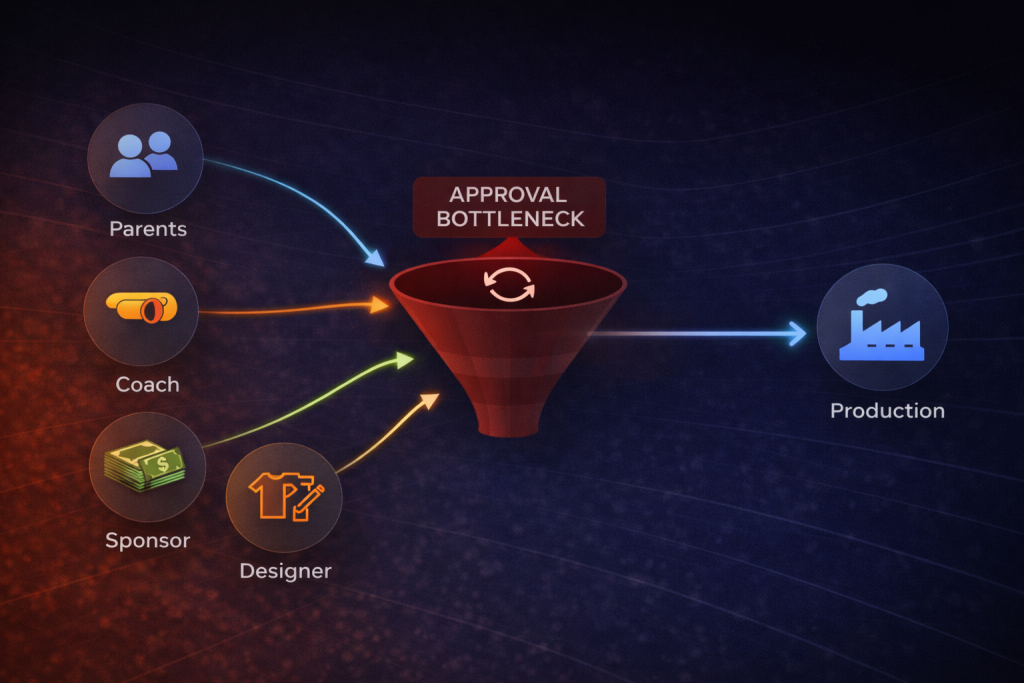
Proof approval used to be where everything slowed down.
Designs were sent by email. Feedback came back in fragments. Someone missed a message. Another person approved the wrong version. Production waited while teams tried to confirm what was final.
In manual workflows, approval is an interruption.
In software-first systems, approval is built into the process.
Instead of scattered inbox conversations, teams review proofs in one place. Every change is tracked. Final designs are clearly marked. Production always knows which version is approved.
Modern platforms now guide teams through approving custom uniform designs inside a centralized workflow, replacing email chains with structured feedback and clear sign-off points.
This shift enables:
When approvals live inside the platform, they stop being a bottleneck and start becoming a control point.
That is a critical difference.
Great design means nothing if the data is wrong.
One incorrect size can affect an entire order.
One duplicated jersey number can delay production.
One late roster change can ripple across dozens of uniforms.
Youth leagues feel this most.
Players join mid-season. Kids grow between tournaments. Parents submit sizes in different formats. Manual rosters turn these changes into expensive mistakes.
Most teams focus on how their uniforms look.
Software-first platforms focus on whether the data is clean.
Accurate rosters depend on structured player information, not free-text spreadsheets.
This includes:
Modern sizing frameworks now help teams avoid uniform sizing mistakes before production even begins, especially in youth and league environments where rosters change constantly.
Sizing is not an afterthought. It is part of the platform.
When roster data is structured, teams move faster. Errors drop. Reorders become simple.
Design creates excitement.
Accuracy creates reliability.
And reliability is what lets programs scale.
The difference comes down to continuity. Traditional vendors handle one-off orders. Software-first platforms manage teams over time.
| Feature | Traditional Uniform Vendor | Software-First Uniform Platform |
|---|---|---|
| Ordering model | One-off purchases | Ongoing team management |
| Roster handling | Spreadsheets and free-text | Structured player profiles |
| Design storage | Files sent by email | Saved digital templates |
| Proof approvals | Email chains | Centralized approval system |
| Reorders | Start from zero every season | Template-based repeat orders |
| Sizing control | Manual entry | Validated size fields |
| Team continuity | None | Persistent team profiles |
| Production workflow | Manual handoffs | Design-to-production automation |
| Season consistency | Hard to maintain | Built into the platform |
| Best for | Single orders | Growing teams and leagues |
Instead of rebuilding everything, teams build on what already exists. That’s where UniformOS comes in, a roster-based uniform ordering system that stores designs, player rosters, size sets, and production formats in one connected workflow.
Every season improves on the last. Returning players stay on file. New players slot into existing templates. Uniforms stop being isolated projects and become part of an ongoing operational system.
This is not abstract technology.
Software-first workflows directly improve how real apparel gets ordered, produced, and managed.
Take custom basketball uniforms as an example.
Home and away kits are created from the same design foundation. Reversible jerseys use shared templates for both sides. League-wide orders apply consistent sizing rules and branding across multiple teams.
Because everything runs through a centralized system, teams can:
Basketball team apparel benefits especially from this structure, where fast turnaround, frequent reorders, and growing rosters are common.
The platform handles complexity in the background so teams can focus on the game.
This is how software connects directly to product.
Not as a marketing promise, but as an operational advantage.
Platform first. Apparel second.
That is what makes software-first uniform companies different.
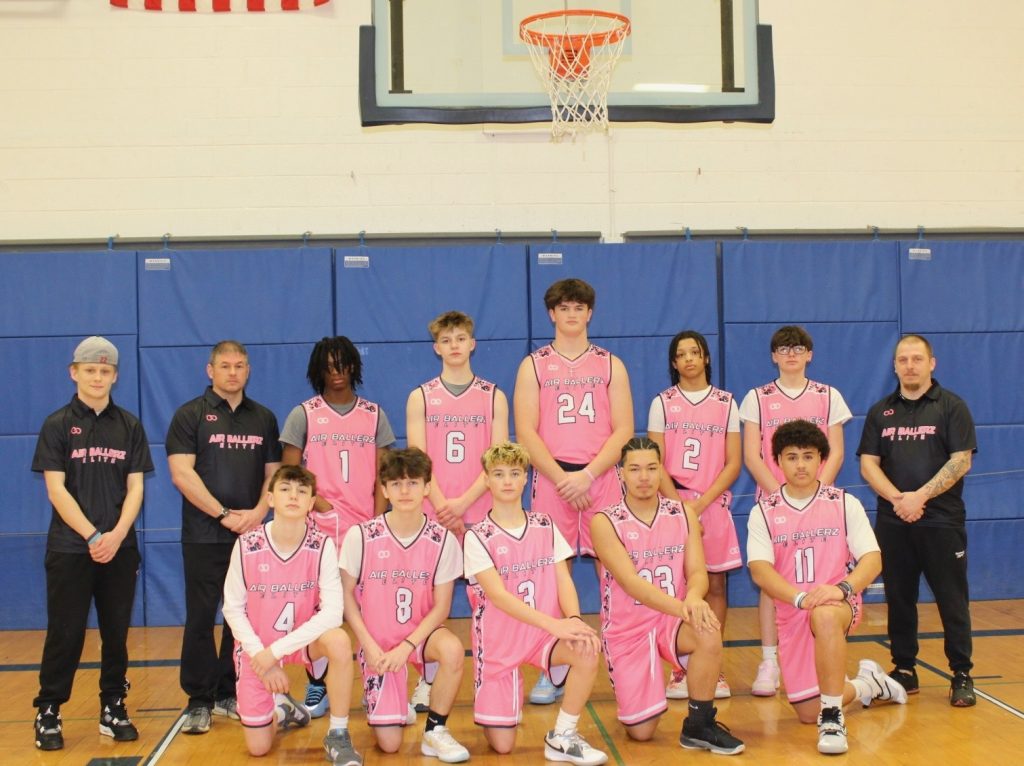
All this technology only matters if it delivers real outcomes. Here’s what software-first uniforms change for every buyer.
Spend less time managing uniforms. More time coaching.
No chasing rosters or approvals
Reorder in minutes using saved templates
Fewer mistakes from structured player data
Result: You manage teams, not spreadsheets.
Run multiple teams without chaos.
Standardized uniform templates across divisions
Faster onboarding for new teams
Centralized sizing rules.
Result: Every program stays aligned.
Protect your identity at scale.
Consistent designs across seasons
Centralized logo and color control
One source of truth for all team apparel
Result: Your brand stays consistent everywhere.
For decades, teams asked:
“Where do we buy jerseys?”
Soon, they will ask:
“What platform runs our uniforms?”
That shift matters.
Software-first uniform companies are not selling shirts.
They are building operating systems for sports organizations.
They replace manual workflows with structured data.
They replace one-off orders with repeatable systems.
They replace chaos with continuity.
This is the future of custom sports apparel.
And companies like Wooter are leading that shift by building technology first, then wrapping apparel around it.
Uniforms are no longer just gear.
They are infrastructure.
A software-first uniform company builds digital systems before apparel. Instead of relying on spreadsheets and email, it uses structured rosters, centralized approvals, and automated production workflows to manage team uniforms across seasons.
Traditional vendors process one-off orders. Software-first platforms manage teams long-term by saving designs, rosters, and sizing rules so every season builds on the last.
Yes. Designs and player data persist inside the system. Teams can reorder using saved templates instead of starting from zero.
Roster errors cause production delays and sizing mistakes. Software-first platforms use structured player fields to prevent duplicates, validate sizes, and reduce costly errors before manufacturing.
Absolutely. Youth programs change rosters frequently. Platforms make it easy to add new players, update sizes, and maintain consistent branding across teams.
Approvals happen inside the platform. Feedback is centralized, versions are tracked, and final designs are clearly marked, which speeds production and reduces mistakes.
No. Small teams benefit too. Even a single coach can save time using digital rosters, reusable designs, and streamlined approvals.
Yes. The same workflow applies across basketball, soccer, youth leagues, and other team sports where rosters, sizing, and reorders matter.
Yes. Teams still get fully custom uniforms. The difference is that designs live inside a system that supports approvals, production, and future reorders.
Continuity.
Instead of rebuilding every season, teams reuse designs, preserve roster data, and operate inside one connected system.
That saves time, reduces errors, and scales with growth.
Stop rebuilding orders every season.
Design once. Save rosters. Approve faster. Reorder in minutes.
That is what a software-first uniform system gives you.
Wooter helps teams move from spreadsheets and email chains to a centralized platform where designs, player data, and production workflows live in one place.