
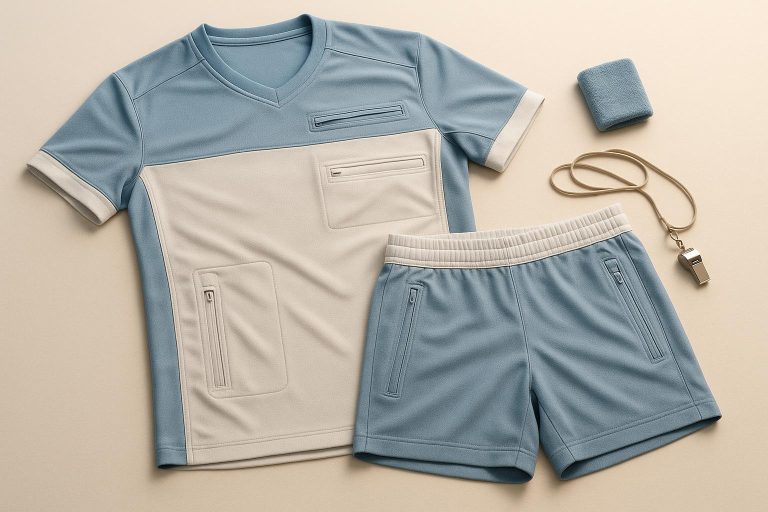
Hidden compartments in sports uniforms are designed to provide athletes with discreet, secure storage for essentials like mouthguards, medical supplies, or small personal items. These compartments are carefully placed to avoid interfering with movement or performance, using durable materials and subtle designs to maintain a professional look. They solve common problems with traditional pockets, like bulkiness or safety risks, making them especially useful for sports like basketball, football, soccer, and baseball.
Key considerations include:
- Placement: Waistbands, side seams, or underarm areas for easy access without disrupting gameplay.
- Materials: Reinforced fabrics to withstand wear, sweat, and frequent washing.
- Customization: Teams can tailor compartment size, closure type (zippers, Velcro, magnetic), and placement to their needs.
While hidden compartments add functionality, teams must weigh potential downsides like added costs, bulk, and compliance with league rules. For athletes needing secure storage during games, these designs offer a practical solution without sacrificing performance or style.
Design Principles for Hidden Compartments
Building on the earlier discussion of performance benefits, hidden compartments in athletic uniforms are most effective when they focus on three key principles: strategic placement, durable materials, and seamless integration. These elements ensure athletes can perform at their best without being hindered by added storage.
Placement and Access During Games
The location of a hidden compartment can make or break its usefulness. Smart placement prioritizes areas that allow quick and easy access while maintaining natural movement. For example, compartments inside the waistband of shorts let players retrieve items with a simple downward reach. Similarly, side seams on jerseys are particularly handy for sports like basketball or soccer, where brief pauses in play provide opportunities to grab stored items.
It’s also important to avoid high-friction zones, as these can disrupt movement or cause discomfort. Timing matters too – compartments for items needed during active play, such as mouthguards, should be positioned differently from those meant for breaks. These considerations directly influence the choice of materials and integration techniques, which are critical for functionality.
Materials and Long-Term Durability
Hidden compartments endure more stress than standard uniform fabric, making material selection crucial. The constant opening and closing, combined with the weight of stored items, calls for reinforced, high-performance fabrics. Polyester blends with moisture-wicking properties are a popular choice because they resist shrinking and hold their shape even after numerous washes. Micro-mesh panels can also be added to improve breathability and keep stored items dry.
To ensure durability, use double-layered construction and reinforced stitching at stress points. Adding water-resistant linings protects items from sweat and bad weather. Since team uniforms typically go through 50–75 wash cycles per season, it’s essential to use colorfast materials that maintain their appearance and integrity. Once durable materials are in place, the next step is to tailor compartment designs to meet specific team needs.
Adding Compartments to Custom Uniform Designs
Incorporating hidden compartments into custom uniforms requires balancing functionality with aesthetics. Sublimation printing is a useful technique here, allowing precise alignment of patterns around compartment areas so that graphics flow naturally without interruption.
For example, Wooter Apparel developed custom football jerseys featuring hidden compartments in the waistband. These compartments were designed for small items like keys or recovery aids, using reinforced stitching to ensure they stayed discreet and durable during play.
Custom designs should address the specific storage needs of a team. A basketball team might prioritize compartments for mouthguards, while soccer players may benefit from small pockets for medical supplies. Tailoring the placement of compartments is critical to avoid distorting the uniform’s fit or interfering with sponsor logos and team branding. Sublimation printing can be adjusted to integrate compartments seamlessly into the design. Teams can also choose the size of compartments and closure types – like concealed zippers or Velcro – based on how secure and accessible they need the storage to be during games.
Practical Uses for Hidden Compartments
Hidden compartments have become a practical solution for athletes to keep essential items secure during play. These clever storage options vary by sport but share a common purpose: ensuring easy access to important items without hindering performance.
What Athletes Keep Secure During Games
Athletes often use hidden compartments to store items like mouthguards, medical supplies, keys, cash, and even small pieces of jewelry. Medical supplies are especially important – players with asthma rely on quick access to inhalers, while those with severe allergies may store epinephrine pens, medical alert tags, and identification cards for emergencies.
For personal items, hidden compartments come in handy when secure lockers aren’t available. Keys, cash, and IDs are commonly tucked away, and some athletes even store sentimental jewelry that can’t be worn during games due to safety rules.
How Hidden Compartments Are Used Across Sports
Different sports have adapted hidden compartments to suit their specific needs. For example:
- Football: Uniforms often feature compartments for play cards or strategy notes, sometimes integrated into wristbands.
- Basketball and Soccer: Gear includes discreet pockets for mouthguards or emergency medical supplies.
- Baseball and Softball: Players use compartments for items like batting gloves or rosin bags.
- Track and Field: Energy gels are a popular item stored by runners for quick access during events.
Youth soccer teams, in particular, have embraced shorts with concealed pockets for storing medical alert tags and inhalers, ensuring these critical items are always within reach.
Enhancing Safety and Focus
Hidden compartments do more than just store items – they help athletes stay focused and safe. By keeping essentials secure and out of sight, players face fewer distractions and reduce the risk of loose objects becoming hazards on the field.
The safety aspect can’t be overstated. Quick access to inhalers or allergy medications can be life-saving for athletes managing chronic conditions. For youth sports, having medical information and emergency contacts on hand provides peace of mind for parents and coaches alike.
Ultimately, athletes often feel more confident and prepared knowing their essential items are safely tucked away but easily accessible. This sense of readiness not only boosts focus but also enhances overall performance on the field.
Customization Options and New Features
Modern hidden compartments have come a long way, blending practicality with thoughtful design. Today, customization options allow these compartments to be fine-tuned for specific needs, ensuring they serve both functional purposes and aesthetic goals. From size and placement to closure mechanisms, every detail can be tailored to meet the demands of athletes and teams.
Size and Placement Options
Hidden compartments can be as small as 2–4 inches for single items or as large as 6–10 inches to accommodate bulkier gear. Placement depends on the type of uniform. For example, in shorts, compartments are often discreetly added along side seams or tucked into waistbands, offering easy access without disrupting the outfit’s look. Jerseys might feature hidden storage in side panels, underarm areas, or along the back hem, keeping the compartments nearly invisible. Warmup gear, like jackets, can include compartments in pockets, hood linings, or sleeves. Each placement is carefully chosen to balance functionality with a sleek, seamless design.
Closure Types and Security Features
The choice of closure plays a big role in usability and security. Zippers provide the strongest hold, ensuring items stay secure during intense activity. Velcro offers quick access, making it ideal for fast-paced situations. Magnetic closures, on the other hand, deliver a smooth, polished finish. Additional features, such as reinforced stitching, tamper-evident designs, and interior labels, add another layer of security and help prevent mix-ups.
Wooter Apparel‘s Custom Storage Solutions

Wooter Apparel takes hidden compartments to a new level of precision and customization. Using advanced sublimation printing and detailed digital mockups, they seamlessly integrate compartments into custom uniforms. This process ensures the storage areas align perfectly with team designs and practical needs. Their free design services allow teams to visualize compartment placement before production, guaranteeing the final product meets both aesthetic and functional expectations. Different sports have different needs – basketball and soccer teams often prefer lightweight, low-profile compartments, while baseball and softball teams might require larger spaces for storing protective gear or medical supplies. Wooter’s tailored solutions adapt to these varying demands, making them a go-to for teams looking for both performance and style.
sbb-itb-4d95ad3
Benefits and Drawbacks of Hidden Compartments
Hidden compartments in team uniforms come with advantages and limitations that teams need to weigh carefully. Having a clear understanding of both sides can help teams decide if these features align with their sport’s needs.
Pros and Cons of Hidden Compartments
Hidden compartments offer security, convenience, and enhanced focus for athletes. They provide a secure place to store valuables like keys, medical devices, or emergency contact information, reducing the risk of theft or loss during games. This eliminates the need to leave personal items on the sidelines or in locker rooms, which can be a major source of distraction.
For instance, basketball players can easily access their mouthguards during breaks, and baseball players can keep medical supplies on hand for quick use. This convenience not only saves time but also allows athletes to stay locked in on their performance rather than worrying about misplaced items.
The focus factor is a big deal. When athletes know their belongings are safe and accessible, they can fully concentrate on the game, free from mental distractions.
On the flip side, there are some challenges. Added bulk and weight can be problematic. Poorly designed compartments might create visible bulges, affecting the uniform’s look and an athlete’s comfort. Even minor changes can disrupt movement, especially in sports like soccer or basketball that demand agility.
Another downside is higher manufacturing costs. Adding hidden compartments requires specialized design, which can strain budgets – especially for teams with limited resources. Maintaining a sleek, functional design while integrating compartments isn’t cheap.
Lastly, sport-specific regulations can be a major roadblock. Many leagues, including NCAA and professional organizations, enforce strict uniform rules that may restrict or ban such modifications. Teams must thoroughly review these guidelines to avoid penalties or disqualification.
| Benefit/Drawback | Description | Impact Level |
|---|---|---|
| Security | Keeps valuables safe during play | High |
| Convenience | Quick access to essential items | High |
| Improved Focus | Reduces distractions about belongings | Medium |
| Added Bulk | Can create visible bulges or discomfort | Medium-High |
| Increased Costs | Higher manufacturing expenses | Medium |
| Regulation Issues | May violate league uniform rules | High |
Teams need to carefully evaluate these factors to determine if the advantages outweigh the drawbacks.
When Teams Should Use Hidden Compartments
Deciding whether to include hidden compartments in uniforms depends on several factors. First and foremost, league regulations must be reviewed. Sports like football, basketball, and baseball often allow more flexibility in uniform design, while sports such as swimming or track and field tend to enforce stricter standards.
Next, consider the specific needs of the players. Teams with athletes who rely on medical devices, such as insulin pumps or emergency medications, can greatly benefit from secure storage options. Similarly, teams that frequently travel or play in areas with security concerns may find these compartments useful for safeguarding personal items.
The impact on performance is another critical factor. Placing compartments in strategic areas, like along seams or less restrictive zones, can help minimize interference with movement.
Budget constraints also play a role. Hidden compartments add value, but teams – especially youth or amateur ones – need to ensure the costs align with their overall budget and priorities.
Lastly, think about the types of items athletes need to store. If players rarely carry small items, the added expense and complexity might not be worth it. However, for teams with consistent storage needs for essentials like medical supplies, keys, or protective gear, compartments can be a game-changer.
Testing and player feedback are crucial. Teams can collaborate with custom uniform providers, like Wooter Apparel, to create prototypes and gather input during practice. This ensures the final design meets both functional and comfort requirements before full production.
Ultimately, the decision comes down to balancing the benefits against the challenges, all while staying within budget and adhering to sport-specific rules.
Conclusion
Hidden compartments in uniforms offer a smart way to securely store essentials while maintaining a polished and professional appearance. Their effectiveness comes down to thoughtful placement, durable materials, and customization tailored to specific needs.
The best designs strike a balance between accessibility and minimal interference, ensuring players can focus without distractions during critical moments. Today, customization options are more varied than ever. Providers now offer flexibility in size, placement, and closure types – whether it’s zippers, Velcro, or snaps. Teams can even match the compartment fabric and color to their uniform, seamlessly blending functionality with team identity. For example, Wooter Apparel includes custom storage solutions as part of their free design process, allowing teams to specify exactly what they need. This approach merges practicality with modern design, making it easier to address both performance demands and aesthetic goals.
That said, teams must weigh the benefits against potential challenges. Factors like budget limitations, league rules, and the risk of added bulk should all be considered. For players who rely on medical devices, travel frequently, or need quick access to essentials, hidden compartments can be especially useful.
Working with experienced uniform manufacturers who understand both the functional and visual aspects of design ensures the final product enhances performance. The ultimate goal is to create uniforms that let athletes focus entirely on their game, knowing their essentials are secure and easily accessible.
As sports apparel continues to advance, hidden compartments highlight how thoughtful design can give athletes a competitive edge by boosting confidence and simplifying game-day routines. It’s a small but impactful innovation shaping the future of athletic performance.
FAQs
How do hidden compartments in team uniforms enhance an athlete’s performance and comfort during games?
Hidden compartments in team uniforms are a clever way to combine practicality with performance. These subtle pockets provide a secure spot for small essentials like mouthguards, locker keys, or energy gels, ensuring athletes can grab what they need quickly during games or practice without breaking focus.
What makes these compartments stand out is how seamlessly they blend into the uniform’s design. This means athletes can move freely without worrying about discomfort or distractions. Companies like Wooter Apparel create custom uniforms that not only include these useful features but also cater to the unique needs of each team, balancing style with functionality.
What should teams consider about league rules when adding hidden compartments to their uniforms?
When adding hidden compartments to team uniforms, the first step is to check your league’s rules and guidelines. Most leagues have clear regulations about uniform modifications, covering everything from safety standards to design limitations. Hidden compartments might be handy, but they must align with these rules to prevent penalties or even disqualification.
It’s also important to make sure these compartments don’t hinder a player’s performance or create any safety issues during the game. If you’re uncertain about any specific requirements, reach out to league officials or review the official rulebook for detailed guidance.
What are the customization options for hidden compartments in sports uniforms to suit specific team needs?
Hidden compartments in sports uniforms can be tailored to suit different team requirements, balancing practicality and aesthetics. Popular choices include adjustable pocket sizes, secure closures such as zippers or Velcro, and carefully positioned compartments that maintain easy access without hindering performance.
Teams can take customization further by adding features like waterproof linings, team logos, or color-coordinated designs that match their branding. These thoughtful additions not only improve functionality but also enhance the uniform’s overall appearance.