

A fundraising margin is a simple idea with a big impact. It is the extra amount added to a store item that goes back to your team, which means every sale can help support uniforms, travel, gear, and other program needs.
That is what makes it so useful. Instead of running a fundraiser that feels separate from your season, your team can build fundraising directly into the apparel and merchandise supporters already want to buy.
What Is a Fundraising Margin?
A fundraising margin is the extra amount added to a store item that goes back to your team, school, or organization. In simple terms, it is how a team earns money from each item sold in an online store or fan shop.
A Fundraising Margin Is the Built-In Amount
That Helps Your Team Earn
When a team store item includes a fundraising margin, part of the selling price is set aside for the team. That extra amount is added on top of the base product price, and the margin earned goes back to support your program.
This is what makes a fundraising margin so useful. It turns regular merchandise sales into a fundraising opportunity.
For teams, schools, booster clubs, and organizations, that can create a simple way to earn money without asking supporters to buy unrelated products. Instead of selling something people may not want, you are offering apparel or merchandise they can actually wear and use.
Here’s How a Fundraising Margin Works in Real Life
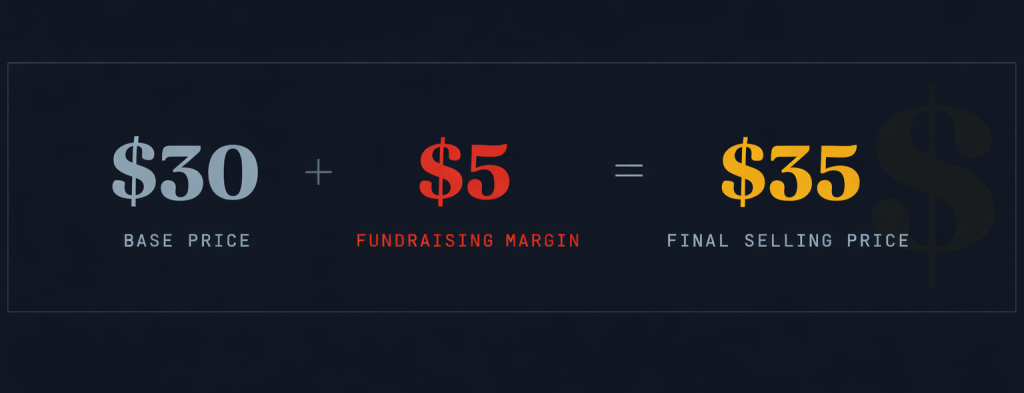
The easiest way to understand a fundraising margin is with a concrete example. Here is what happens when a $5 margin is added to a $30 hoodie in your team store.
Base Price
What the item costs before your margin is added
Fundraising Margin
The extra amount your team adds on top, earned per sale
Final Selling Price
What the buyer pays at checkout, with the margin built in
Where Does the Fundraising Money Actually Go?
The buyer pays the final listed price. The fundraising margin is already included in what the shopper sees at checkout. It is not shown as a separate donation line. It is simply part of the product price set by the store organizer.
This keeps the buying experience completely natural. Supporters shop the way they normally would, and the team earns from every qualifying purchase without asking for anything extra.
Who Pays the Extra Amount on a Fundraising Store Item?
The buyer pays the final listed price. The fundraising margin is already included in what the shopper sees at checkout. It is not shown as a separate donation line. It is simply part of the product price set by the store organizer.
This keeps the buying experience completely natural. Supporters shop the way they normally would, and the team earns from every qualifying purchase without asking for anything extra.
Supporter browses the store
Parents, fans, and alumni visit the team store and choose items they want to buy.
They see the final price
The listed price already includes the fundraising margin. No separate donation prompt. No extra step.
They buy, you earn
The supporter gets the item they wanted. Your team earns the margin from that sale automatically.
Funds go to the program
The margin earned goes directly back to your team, school, or organization to use for real program needs.
Where Does the Fundraising Money Actually Go?
The fundraising margin goes back to the team, school, booster club, or organization running the store. Teams can use that money for genuine program needs. Supporters are not just buying a product. They are helping fund the team at the same time.
Uniforms
Fund new kits, practice gear, or replacement jerseys without pulling from a tight program budget.
Travel Costs
Cover transportation, accommodation, and meal expenses for away games and tournaments.
Tournament Fees
Registration costs for leagues and tournaments can add up fast. Store earnings help offset them.
Equipment
Balls, training gear, cones, bags, and other equipment that programs constantly need to replenish.
Warmups and Spirit Wear
Keep the full team looking sharp on and off the field with coordinated warmups and fan gear.
Season Expenses
End-of-season events, banquets, awards, and team activities that build culture and community.
Fundraising Margin vs. Base Price: What’s the Difference?
This is where people often get confused. The base price is the starting cost of the item. The fundraising margin is the extra amount added on top so the team can earn from each sale. The final price is what the customer actually pays.
The fundraising margin is not the full price of the product. It is only the portion that generates money for your team. Once you understand the structure, the math becomes simple.
Why Teams Use Fundraising Margins Instead of Traditional Fundraisers
A fundraising margin gives teams a more natural way to raise money.
Traditional fundraisers often ask supporters to buy products they would not normally purchase. A team store works differently. It gives people a chance to buy something connected to the team, such as hoodies, tees, fan gear, or other custom apparel, while also contributing financially.
That creates a better experience on both sides. Supporters get something useful. The team earns money from each sale.
It can also feel easier to manage. Instead of organizing a one-time campaign, teams can use an online store to keep fundraising tied to merchandise sales over time.
Why Teams Use Fundraising Margins Instead of Traditional Fundraisers
Fundraising margins make even more sense when they are built into an online team store or fan shop.
Why? Because team stores make it easy for supporters to browse, buy, and support the program in one place. Parents can order gear. Fans can buy spirit wear. Alumni can show support. And with each qualifying sale, the team earns from the fundraising margin built into the item price.
That is what makes this model so practical. It turns regular store traffic into a fundraising opportunity.
In a more organized store setup, teams can also manage product offerings, supporter access, and fundraising goals more clearly. Instead of treating fundraising as a separate project, it becomes part of the store itself.
Frequently Asked Questions
These quick answers explain how fundraising margins work, who pays them, and why they are such a useful part of team stores.
What is a fundraising margin in a team store?
A fundraising margin is the extra amount added to a product’s price that goes back to the team, school, or organization. In a team store, it helps programs earn money from each item sold.
How does a fundraising margin work?
A fundraising margin works by adding a set amount to the base price of a product. For example, if an item costs $30 and the fundraising margin is $5, the final selling price becomes $35 and the team earns $5 per sale.
Who pays the fundraising margin?
The buyer pays the final listed price of the item, which already includes the fundraising margin. That means supporters contribute to the team simply by making a purchase through the store.
Why do teams use fundraising margins instead of traditional fundraisers?
Teams use fundraising margins because they turn regular merchandise sales into a fundraising opportunity. Instead of selling unrelated products, teams can raise money through apparel and gear supporters already want to buy.
Turn Team Store Sales Into Fundraising
A smart fundraising margin helps your team earn from every order while giving supporters something they actually want to buy. Set up your team store, choose the right products, and make every sale work harder for your program.