
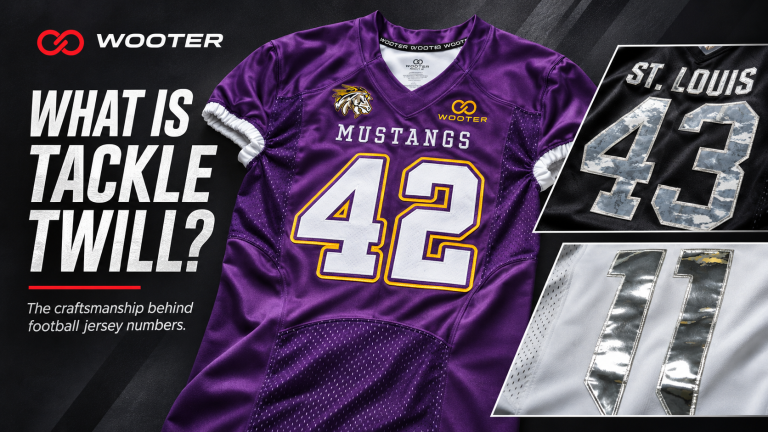
Two football jerseys. Same team colors. Same player number. Completely different looks.
One has bold, raised numbers with stitched edges you can feel beneath your fingertips. The other has smooth graphics that blend into the fabric.
The difference? Often, it comes down to tackle twill and sublimation.
Tackle twill is an apparel decoration method in which letters, numbers, or logos are cut from woven fabric and traditionally sewn onto a garment. It creates the raised, dimensional finish commonly associated with classic football jerseys and collegiate teamwear.
But how does it compare with modern printing methods, and is it the right finish for your team’s next uniform? Let’s break it down.
What Is Tackle Twill Made Of?
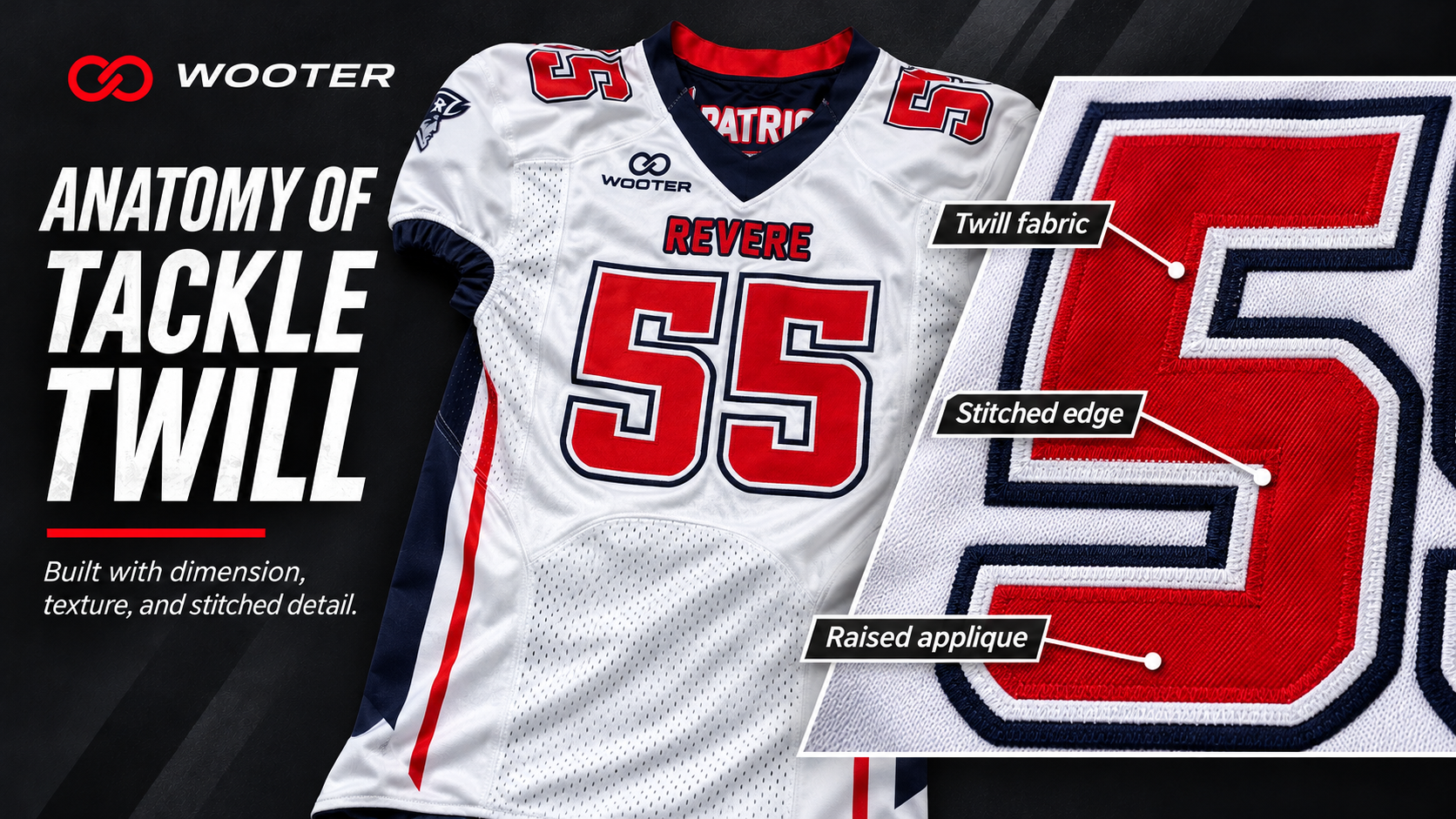
Tackle twill typically uses woven polyester fabric with a diagonal weave pattern. Unlike printed graphics, the cut fabric sits above the jersey’s surface, creating a distinct texture.
Specialist material manufacturers such as STAHLS’ produce polyester twill with an adhesive backing that helps secure the design during sewing.
On football jerseys, tackle twill is commonly used for:
- Player names and numbers
- Team names and wordmarks
- Contrasting number outlines
- Selected logos and emblems
Tackle twill isn’t the fabric of the entire jersey. It’s the material and technique used to decorate it.
How Does Tackle Twill Work on Football Jerseys?
Every raised jersey number starts as a separate piece of fabric. Here’s how traditional sewn tackle twill comes together:
- Design: The team selects its lettering, numbers, colors, and outlines.
- Cut: Individual shapes are precisely cut from twill fabric.
- Position: The pieces are aligned and secured on the jersey before sewing.
- Stitch: The edges are sewn onto the garment, commonly using zigzag or satin stitching.
The result? A number you can feel, not just see.
Bold athletic fonts are particularly well suited to this technique, while highly intricate artwork can be more challenging to reproduce.
Single-Layer vs Double-Layer Tackle Twill
The number of fabric layers can transform the look of a football jersey without changing its overall design.
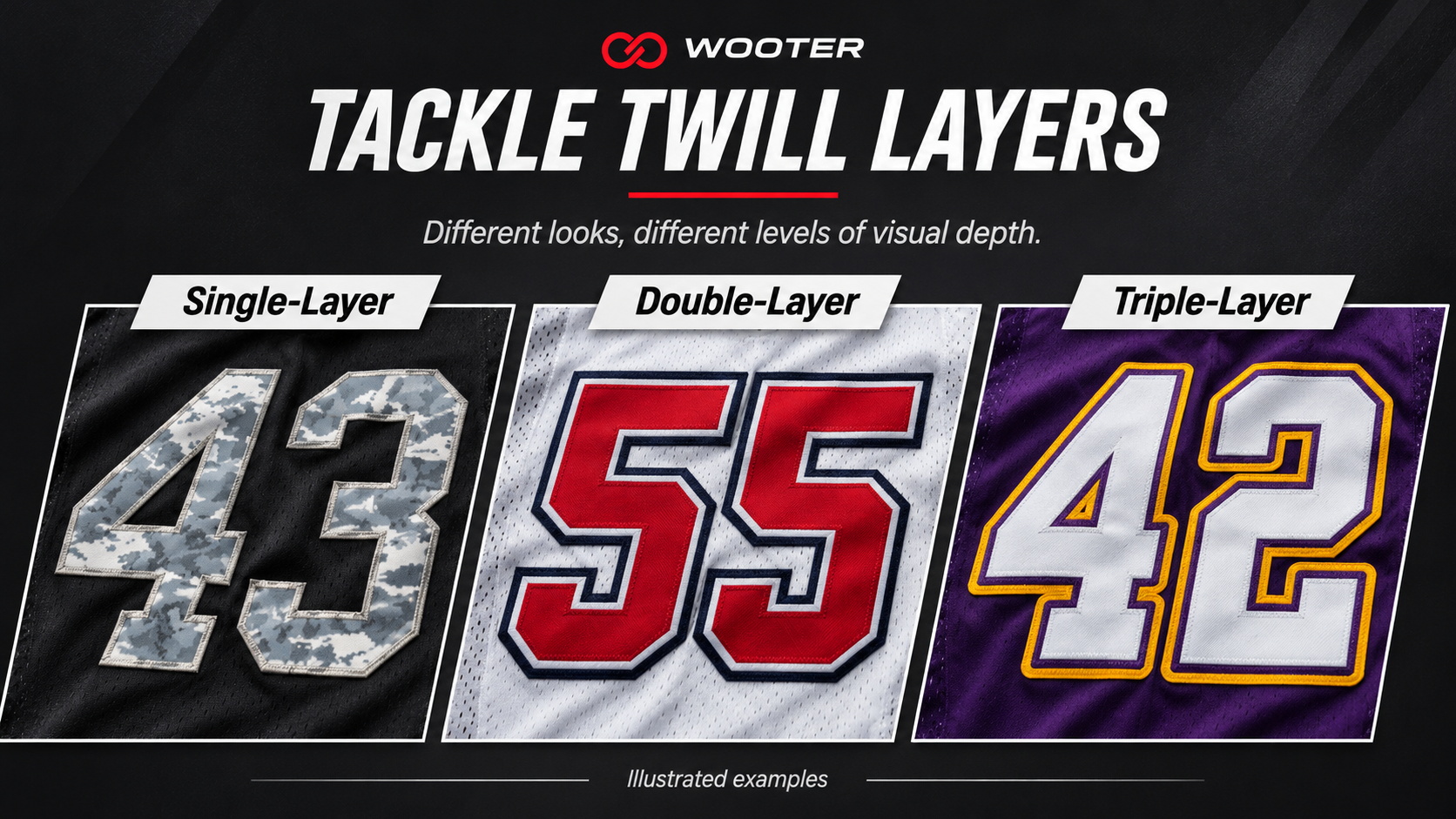
Single-Layer: Clean and Classic
Picture a black jersey with solid white block numbers. One fabric layer, strong contrast, and a traditional athletic finish.
It’s ideal for teams that prefer understated designs.
Double-Layer: Bold and Defined
Double-layer tackle twill typically places a smaller fabric shape over a larger one, creating a contrasting outline.
Think royal blue jerseys with white numbers outlined in red. The second layer introduces another team color and gives the lettering greater dimension.
Triple-Layer: Maximum Visual Depth
Three fabric layers allow for more elaborate color combinations and outlines. However, additional layers can also increase weight, stiffness, and production costs.
Design tip: More layers don’t automatically mean a better-looking jersey. Keep your numbers bold, balanced, and recognizable from the stands.
Tackle Twill vs Sublimation: Which Jersey Finish Is Right for You?
Both techniques can create standout football uniforms, but the difference comes down to how the design becomes part of the garment.
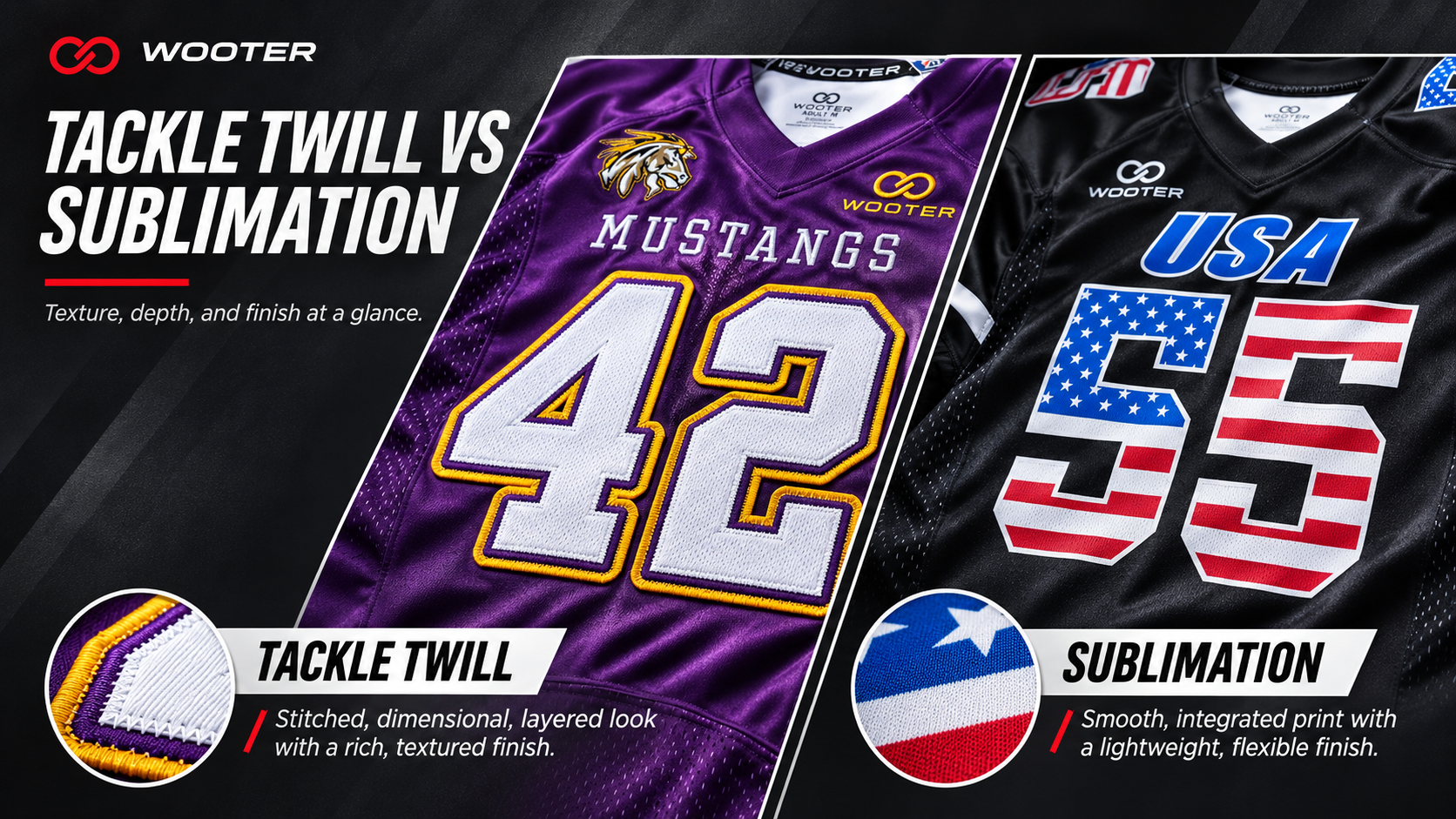
Tackle twill adds fabric to the jersey. Sublimation adds color into the fabric.
As explained in Epson’s digital printing guide, dye sublimation uses heat to transfer designs into compatible fabric, allowing detailed graphics without an additional raised layer.
| Feature | Tackle Twill | Sublimation |
|---|---|---|
| Application | Cut fabric traditionally sewn onto the jersey | Dye transferred into compatible fabric |
| Texture | Raised and dimensional | Smooth and flat |
| Design style | Classic lettering and bold numbers | Gradients, patterns, and detailed graphics |
| Added weight | Increases with fabric layers | Minimal additional decoration weight |
| Design flexibility | Depends on cutting and stitching | Extensive full-color possibilities |
| Cost | May increase with layers and stitching | Depends on garment and order specifications |
Choose Tackle Twill for Traditional Team Styling
Imagine deep burgundy jerseys, cream-colored block numbers, and contrasting stitched outlines.
The raised lettering becomes the centerpiece of the uniform without relying on complicated graphics.
Choose Sublimation for Greater Creative Freedom
Now picture a black jersey fading into electric blue, geometric shoulder patterns, and a detailed team logo.
That’s where sublimation shines.
Our Custom Pro Football Jerseys combine breathable polyester, reinforced Lycra necklines, and dazzle shoulder panels with personalized team colors, logos, names, and numbers.
Your decoration choice should also reflect how the jersey will be used. Game-day uniforms often emphasize team identity, while training apparel prioritizes everyday functionality. Explore our guide to football practice jerseys vs game jerseys to understand the differences.
Classic or Modern? Make the Look Yours.
Your team deserves a uniform that stands out for the right reasons. Share your colors, logo, and design inspiration with our apparel design team.
Tackle Twill vs Embroidery: Are They the Same?
Both methods involve stitching, but they create designs differently.
With traditional tackle twill, cut fabric forms the lettering, and stitching secures it. With direct embroidery, thread itself creates the design.
Tackle twill works particularly well for large athletic numbers and lettering, while direct embroidery is often preferred for smaller logos on suitable team polos, jackets, and staff apparel.
You can usually recognize sewn tackle twill by its raised surface, visible edge stitching, and distinct fabric texture. However, modern no-sew alternatives also exist, so confirm the application method before ordering.
Can You Combine Tackle Twill and Sublimation?
Yes. The two techniques don’t have to compete.
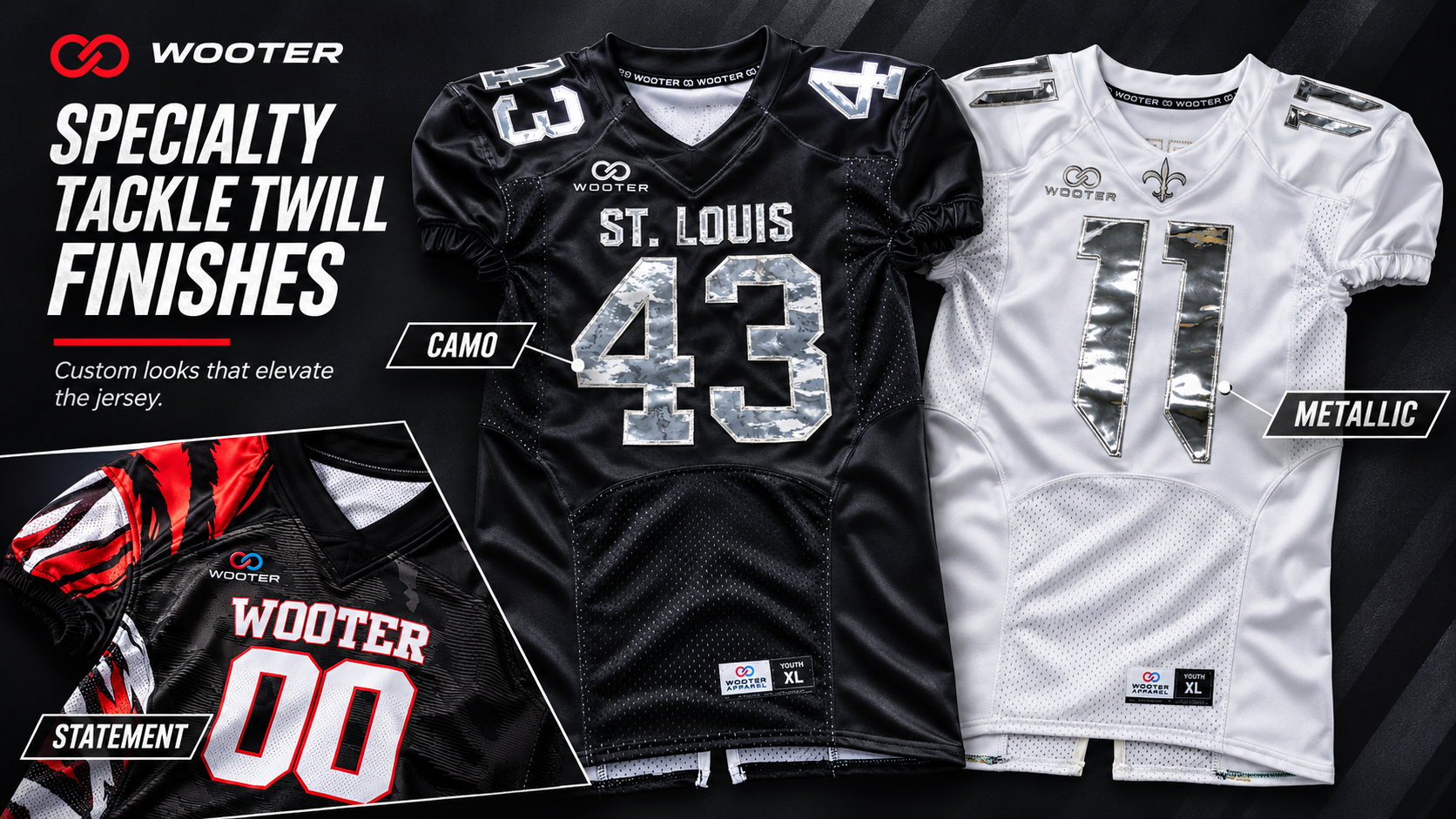
A football jersey could feature sublimated camouflage across the shoulders, a custom-colored body, and raised tackle twill numbers on the front and back.
This approach combines the creative possibilities of printed graphics with the dimensional finish of fabric lettering.
However, not every fabric or jersey construction supports both methods. Confirm material compatibility, customization availability, and pricing with your supplier before approving the design.
Is Tackle Twill Durable?
A stitched number might look tougher than a printed one, but neither decoration method is automatically more durable.
Tackle twill introduces additional fabric and stitching that can experience wear over time. Sublimated graphics have no separate lettering layer to detach, although the underlying fabric can still deteriorate.
To maintain a tackle twill jersey:
- Follow the manufacturer’s washing instructions.
- Use mild detergent when recommended.
- Avoid excessive heat and harsh washing conditions.
- Inspect stitched edges regularly for damage.
Remember, a premium-looking number can’t compensate for a poorly constructed jersey. Fabric quality, seams, fit, and decoration all matter.
What to Check Before Ordering Tackle Twill Jerseys
Before approving your team’s next football uniform, consider these four details.
Number Readability
Choose bold fonts and contrasting colors that remain recognizable across the field. Our jersey name and number sizing guide explains how proportions and placement affect readability.
Jersey Fit and Mobility
Large sewn-on graphics can influence how certain fabric panels stretch. Make sure the finished jersey accommodates shoulder pads and allows comfortable movement.
Our football jersey fit and mobility guide explains what to look for.
Design and Texture
Digital mockups show colors and proportions, but they can’t fully communicate the texture of raised lettering. Ask for close-up photographs or physical samples where available.
Pricing and Customization
Confirm the decoration method, number of fabric layers, production timeline, and final quote. Check that the approved design meets your league’s uniform requirements before production.
Frequently Asked Questions About Tackle Twill Jerseys
What does tackle twill mean on a jersey?
Tackle twill refers to fabric letters, numbers, or logos attached to a jersey, traditionally using stitching to create a raised, dimensional finish.
Does tackle twill make a jersey heavier?
It can. Larger designs and multiple layers introduce additional fabric and stitching compared with sublimated graphics.
Why are tackle twill jerseys more expensive?
Tackle twill may require additional materials, cutting, alignment, and sewing. Pricing depends on design complexity, layers, and order specifications.
Can sublimation look like a tackle twill?
Sublimation can reproduce contrasting outlines and the appearance of varsity-style lettering. However, printing alone cannot recreate the physical texture of raised fabric.
Is tackle twill only used on football jerseys?
No. It’s also used on basketball jerseys, baseball uniforms, hockey jerseys, varsity jackets, and other athletic apparel.
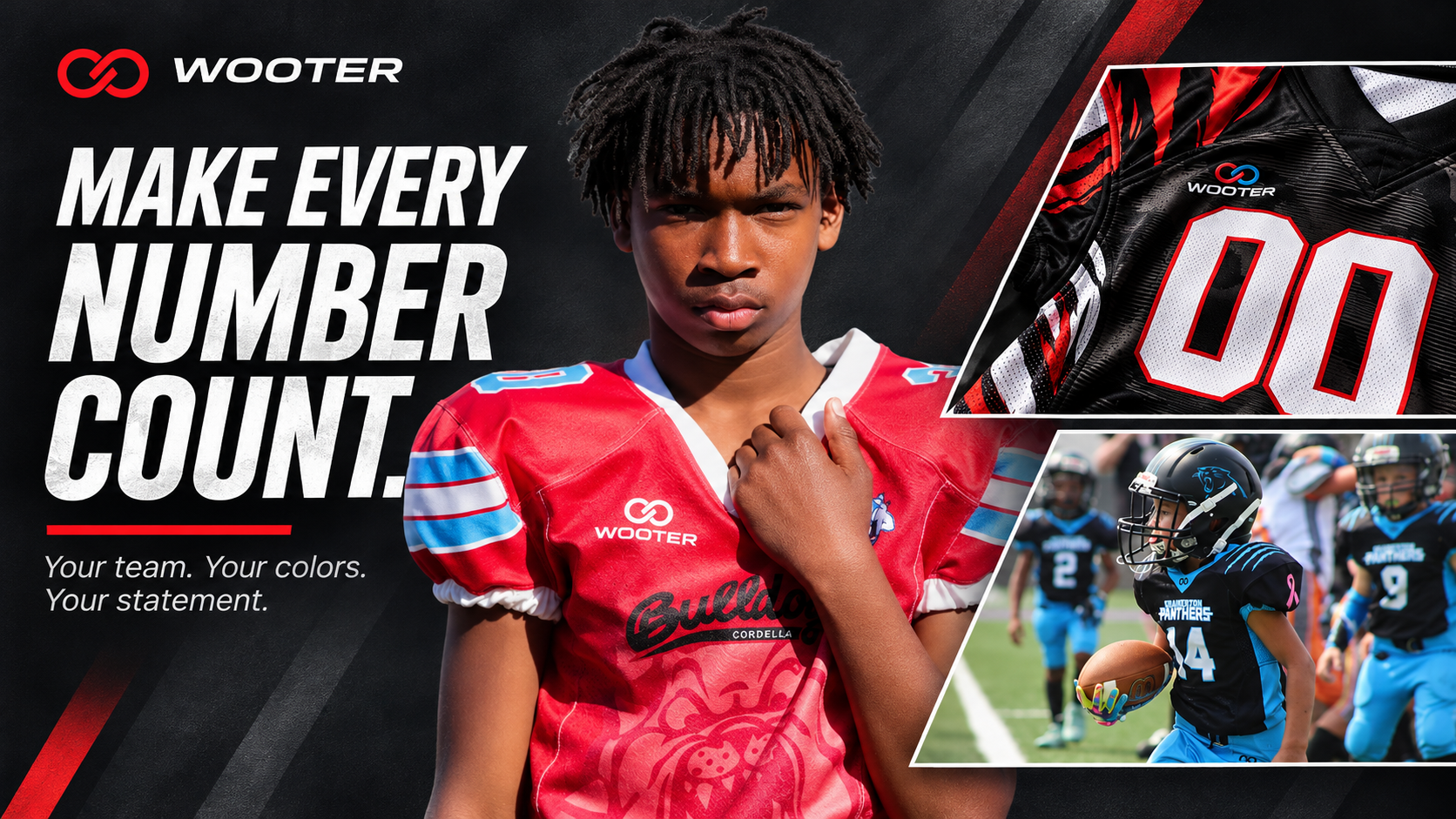
Make Every Number Count
From traditional stitched lettering to bold, fully sublimated graphics, the right jersey finish brings your team’s identity to life.
At Wooter, we help teams create custom football apparel built around their colors, logos, player names, and numbers. Because when your team takes the field, every detail represents who you are.
Your Team. Your Colors. Your Statement.
Build a game-day look that’s unmistakably yours with custom jerseys, matching pants, and complete football uniform packages.