
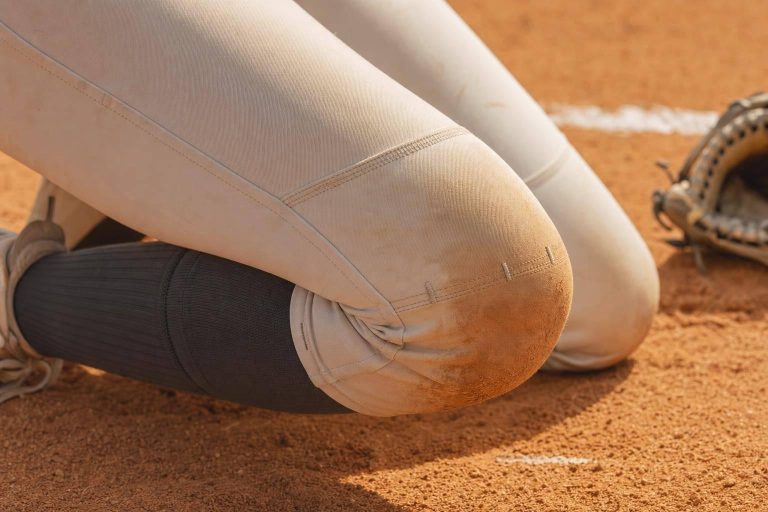
Softball pants usually fail in the same 3 spots: knees, seat, and seams. If I want pants to last longer, protect better on slides, and stay in place during play, reinforced pants are the better pick.
Here’s the short version:
- Double-layer knees help slow wear from repeated slides
- Reinforced seat panels hold up better in crouches and feet-first slides
- Stronger stitching helps cut down on seam blowouts
- Stretch fabric helps with rotation, cuts, and squats
- Cold-water washing and low heat help pants last longer
I’d match the pants to the player and field:
- Catchers and infielders: heavier wear zones and more padding
- Pitchers: more stretch through the hips and legs
- Hot weather: lighter, breathable fabric
- Youth teams: simple fit, elastic waist, mid-weight fabric
About 95% polyester / 5% spandex is a common blend for stretch, while 200–240 GSM fabric can help in hot tournaments. On rough dirt or clay, heavier double-knit material tends to last longer.
If I’m comparing options, the main trade-off is simple: reinforced pants may cost more up front, but they often mean fewer mid-season replacements and less wear after repeated slide-and-wash cycles.
| What to check | Standard pants | Reinforced pants |
|---|---|---|
| Wear at knees and seat | Faster wear | Slower wear |
| Protection on slides | Less coverage | More coverage |
| Fit during movement | More shifting and bunching | Better hold and stretch |
| Season-long value | Lower up-front cost | Fewer replacements in many cases |
So if I want softball pants that handle dirt, slides, squats, and hard cuts with less damage, reinforced pants make more sense than basic single-layer pairs.
Common Problems with Standard Softball Pants
Where Standard Pants Fail First: Knees, Seat, and Seams
The first place standard softball pants usually give out is the knees. That makes sense. Every feet-first slide drags a player’s knees across dirt, clay, or turf, and single-layer fabric just isn’t made to handle that kind of repeated friction.
The seat tends to wear out right after that. Sliding into bases, dropping low for grounders, staying in a crouch, and moving side to side all put steady strain on that area. Seams also take a beating. Basic stitching can split during a slide or blow out during the twisting motion of windmill pitching and hard base running.
That kind of wear can mean replacing pants in the middle of the season, which can push team costs up fast.
Fit and Comfort Issues During Play
A lot of standard pants just don’t match how softball players move. They often fit too loose, bunch up behind the knees, and ride up during cuts and sprints on the base paths. And that bunching isn’t just a minor hassle. It can limit the rotational movement players need for pitching and slap hitting.
Waistbands are another sore spot. Basic elastic bands can pinch or slide around during squats and lunges.
How Thin Fabric Affects Protection and Player Confidence
Thin fabric wears down faster, and it doesn’t offer much of a buffer. Lightweight, non-reinforced material gives players less protection from turf burn, abrasions, and bruises during slides and dives. That can make some players second-guess high-impact plays.
There’s also the issue no one likes to talk about but everyone notices: thinner fabric can turn translucent at the hips or knees, which adds an extra layer of self-consciousness during a game.
Those are the exact weak spots reinforced construction is meant to fix.
sbb-itb-4d95ad3
How Reinforced Pants Fix These Problems
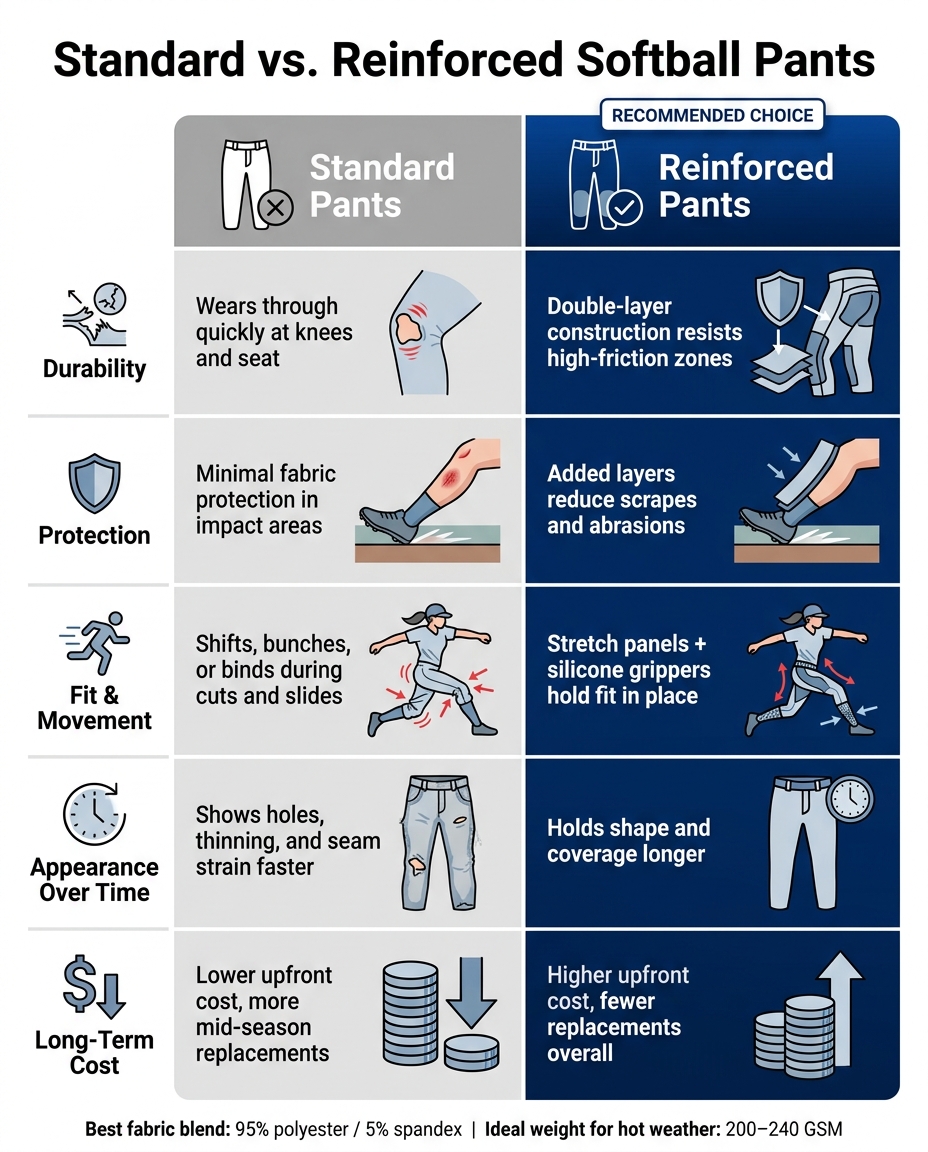
Standard vs. Reinforced Softball Pants: Full Comparison
Those weak spots are where reinforced pants earn their keep.
Construction Details That Make a Difference
Reinforcement is built around the places that usually fail first: the knees, seat, and seams. Double-layer knees add another layer of fabric from the knee down to the hem, which matters because that’s where sliding friction hits hardest. The seat gets extra help too. A reinforced seat panel helps slow down thinning and tearing during slides.
Seams matter just as much. Double stitching at stress points helps stop seams from bursting during hard, explosive movement. Some pants also use forward-set side seams, which can cut down on friction during slides.
Fabric weight plays a part as well. Heavier double-knit polyester does a better job standing up to dirt and turf abrasion.
Season-Long Protection and Mobility
The extra coverage in reinforced zones helps cut down on scrapes and minor abrasions during slides and dives.
At the same time, these pants aren’t just about adding more material. Stretch panels at the knees and hips help players keep their rotation and lateral movement. Some models also include internal silicone grippers, which help keep the waistband from shifting during play.
Standard Pants vs. Reinforced Pants: A Side-by-Side Look
The gap shows up pretty fast when you compare the two side by side.
| Factor | Standard Pants | Reinforced Pants |
|---|---|---|
| Durability | More likely to wear through at knees and seat | Better resistance in high-friction zones with double-layer construction |
| Protection | Less fabric protection in impact areas | Added layers help reduce scrapes and minor abrasions |
| Fit and movement | May shift, bunch, or bind during cuts and slides | Stretch panels and silicone grippers support movement and help hold the fit in place |
| Appearance over time | More likely to show holes, thinning, and seam strain | Holds shape and coverage longer |
| Long-term cost | Lower upfront cost, but may need more replacements | Higher upfront cost, fewer replacements |
How to Choose Reinforced Pants for Your Softball Team
Pick pants based on position, fit, and field conditions – not just price. Once you know where softball pants tend to fail, the next step is simple: choose a build that holds up where your players need it most.
Fit, Cuff Style, and Waistband Options That Affect Play
Fit usually falls into three main cuts: loose, tapered, and low-rise for women.
Knicker pants sit below the knee and pair well with high socks or stirrups. Elastic cuffs stay close to the leg, which helps limit ride-up during play. Button cuffs offer a more old-school, adjustable hem.
Waistband details matter more than they seem. Tunnel belt loops make sense for older players, while an elastic drawstring waistband is often a better match for youth teams. For base runners and infielders, silicone grippers help keep jerseys tucked and pants from shifting around mid-game.
Fabric Weight and Reinforcement by Position and Weather
Different positions need different builds. Catchers and infielders usually need heavier abrasion protection, while pitchers need more stretch for motion on the mound. A 95% polyester / 5% spandex blend gives players 4-way stretch, which helps when they need both durability and range of motion.
For hot-weather tournaments, 200–240 GSM pique or microfiber can help with breathability and moisture control.
Here’s a simple way to match fabric and reinforcement to the job:
| Condition | Recommended Fabric | Why It Helps |
|---|---|---|
| Hot summer weather | 200–240 GSM pique or microfiber | Breathability and moisture management |
| Abrasive dirt/clay surfaces | 14 oz. double-knit polyester | Maximum abrasion resistance |
| High-mobility positions | 4-way stretch (95% poly / 5% spandex) | Unrestricted movement during slides and cuts |
| Youth teams | Mid-weight with elastic waistband | Easier fit, durable enough for regular play |
Building a Complete Uniform Package with Wooter Apparel
Wooter Apparel offers fully sublimated softball uniforms with matched pants and jerseys, free custom design support, and youth-to-adult sizing in one order. Once you’ve picked the right uniform, day-to-day washing habits play a big part in how long it lasts.
Care, Maintenance, and the Bottom Line
How to Wash and Dry Reinforced Pants Without Damaging Them
Once you’ve picked reinforced pants, the next part is simple: take care of them well, and they’ll last longer.
Start by turning the pants inside out before washing. That small step helps protect the outer stitching on reinforced knee panels. It also cuts down on rubbing against sublimated or embroidered team logos during the wash cycle.
Use cold water every time. Cold-water washing helps maintain the integrity of polyester fibers and moisture-wicking technologies. Skip harsh bleach. A mild detergent is a safer choice because it helps protect the fabric finish and stretch.
When it’s time to dry them, air-dry them or use the lowest heat setting. High heat can damage waistband grippers and stretch fibers. And if the pants have elastic cuffs, low heat helps them keep their tension too.
One more plus: sublimated graphics stay sharp through repeated slide-and-wash cycles. After games, pre-treat the knees and seat right away so dirt doesn’t settle into the reinforced panels.
Final Takeaway for Teams and Players
The payoff is pretty simple: less wear, fewer replacements, and gear players can count on all season.
Standard pants tend to break down fast in softball’s high-friction zones. Custom tapered softball pants, the right fit, and steady care can cut replacement needs and help players stay focused on the game.
FAQs
Are reinforced softball pants worth the extra cost?
Yes. Reinforced softball pants are a smart buy because they tend to last longer during games and practice.
Features like double-layer construction, heavy-duty stitching, and abrasion-resistant materials help protect high-stress areas like the hips, thighs, and knees. That extra durability can help the uniform last through more of the season while also keeping players protected and comfortable.
Which players need reinforced pants most?
Players who run hard and slide often usually need reinforced pants the most. The spots that take the most punishment are the knees, hips, and outer thighs, where friction and impact hit hardest.
Fastpitch players may need this even more. Because the base paths are shorter, there’s often less time to slow down before a slide. That makes built-in padding in the hips and thighs a smart extra layer of protection.
How do I choose the right fabric weight?
Choose fabric weight based on how hard the uniform will be used and the weather your team plays in. Fabric weight is measured by the weight of 1 square yard of material.
- Pro weight (14–17 ounces): best for aggressive sliding and heavy use
- League weight (12–14 ounces): a common standard for travel and high school teams
- Lightweight (9–11 ounces): best for younger players or hot climates where breathability matters most