
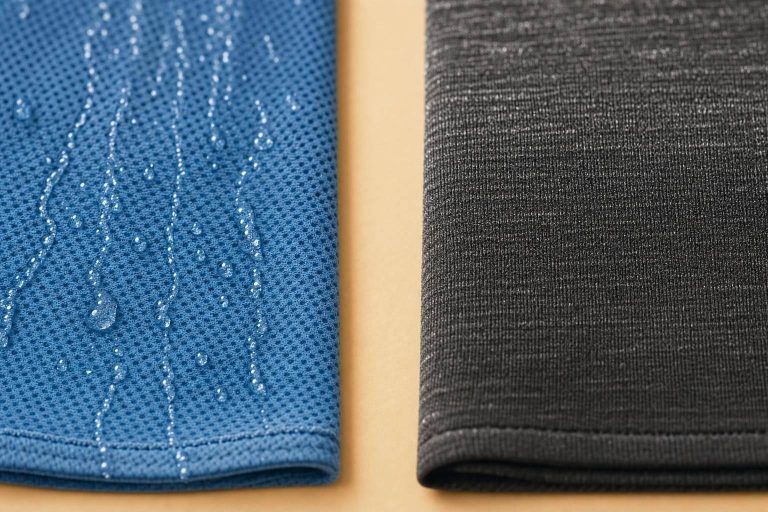
If I need uniforms for games, I pick moisture-wicking first. If I need gear to be worn again before washing, I look at odor resistance first. That’s the whole decision in one line.
Here’s the short version:
- Moisture-wicking works during play
- Odor-resistant works after play
- Polyester can absorb only about 0.4% of its weight in water, while cotton absorbs about 7%
- Performance polyester can dry in about 15–20 minutes
- 100% cotton can take 90+ minutes
- Odor control matters most for practice tops, base layers, warmups, and travel gear
- Wicking matters most for game jerseys and shorts
If I were buying for a team, I’d keep it simple:
- Pick wicking for hot weather, fast sports, and game-day comfort
- Pick odor control for back-to-back use, travel, and slow laundry cycles
- Pick both for compression wear and practice gear that sits close to the skin
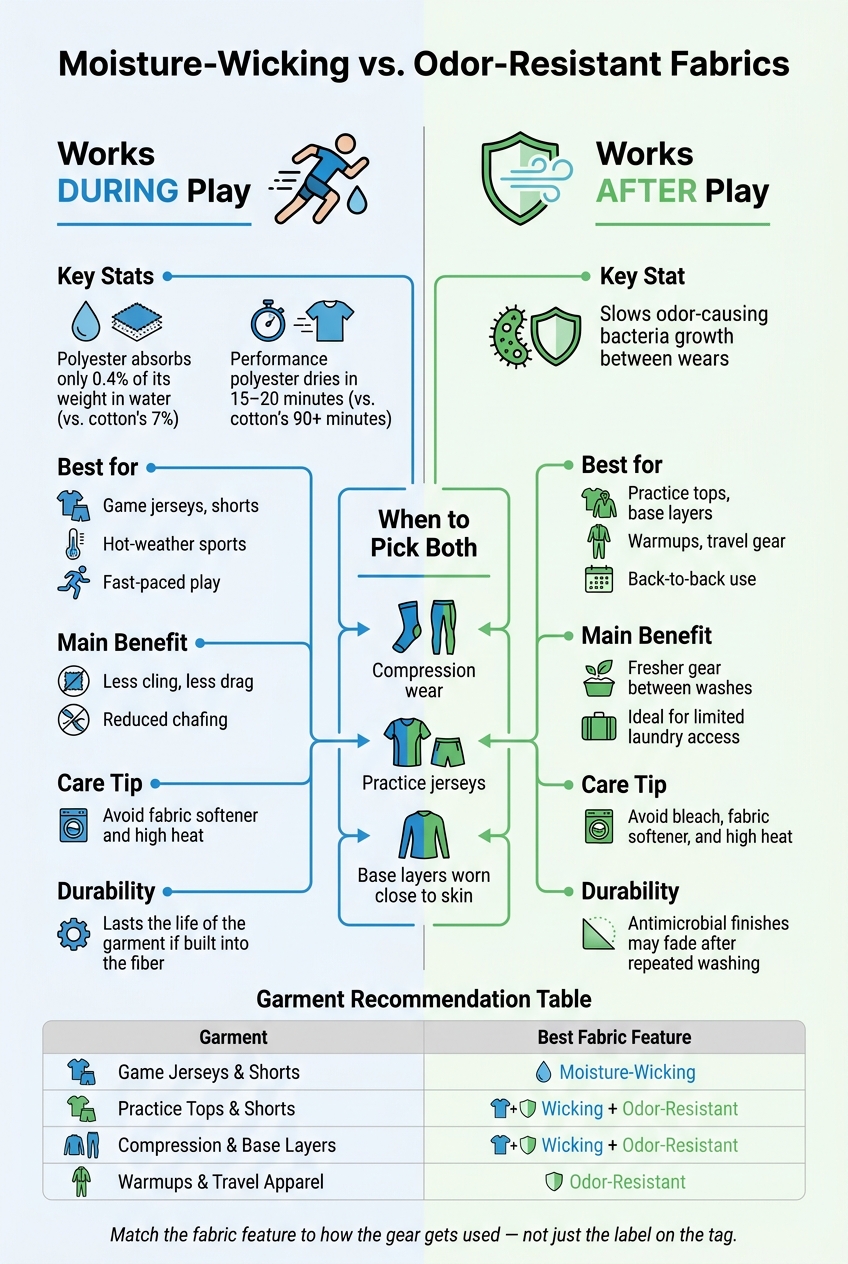
Moisture-Wicking vs. Odor-Resistant Fabrics: Quick Comparison Guide
Quick Comparison
| Point | Moisture-Wicking | Odor-Resistant |
|---|---|---|
| Main job | Moves sweat off skin | Cuts smell between wears |
| Best time it helps | During games and practice | After use and before washing |
| Feel during play | Drier, lighter, less cling | Little change in heat or sweat feel |
| Best for | Jerseys, shorts, hot conditions | Warmups, travel gear, repeat wear |
| Care concern | Skip fabric softener, avoid high heat | Skip bleach, softener, and high heat |
| Long-term wear | Usually lasts if built into fabric | Treatments may fade after many washes |
Bottom line: I’d match the fabric feature to how the item gets used, not just to the label on the tag.
sbb-itb-4d95ad3
Moisture-Wicking vs. Odor-Resistant: Side-by-Side Comparison
Here’s the practical difference: one helps players feel better during play, while the other helps gear smell better between wears.
| Feature | Moisture-Wicking Fabrics | Odor-Resistant Fabrics |
|---|---|---|
| Primary Purpose | Move sweat off the skin | Reduce smell between wears |
| Sweat Handling | Pulls sweat off the skin and spreads it to the surface | Does not move sweat; helps control odor after wear |
| Drying Speed | Fast | Natural-fiber blends usually dry more slowly |
| Odor Control | Limited unless treated; can smell quickly | Stronger odor control across repeated wears |
| Comfort During Play | Less cling, lighter feel, reduced chafing | Comfort changes little during play; the advantage shows between uses |
| Best Use Cases | Game jerseys, hot-weather sports, fast-paced play | Travel, repeated wear, and limited laundry |
| Care Notes | Avoid fabric softener; use mild detergent and low heat | Gentle wash; avoid bleach and very high dryer heat |
| Long-Term Performance | Wicking built into the fiber structure tends to last | Antimicrobial finishes can fade with repeated washing |
For teams, the choice often comes down to comfort during play versus freshness between wears. That split shows up in how the fabric handles sweat, how it holds up in the wash, and how easy it makes day-to-day gear management.
Sweat Management, Comfort, and Smell Control: Key Differences
The biggest difference is when each fabric does its job.
Moisture-wicking fabrics work during the game. Polyester absorbs only around 0.4% of its weight in water, compared with cotton’s 7%, which helps performance polyester stay lighter and dry faster under heavy sweat. In plain terms, that means less cling, less drag, and less rubbing in high-sweat spots like the underarms and back.
Odor-resistant fabrics help after wear. They slow the growth of odor-causing bacteria on the garment, so jerseys and warmups stay fresher between washes. That matters because untreated synthetics, especially polyester, can hang onto odor after repeated use. So teams often have to pick their pain point: sweat during play or smell after play.
Durability, Care, and Cost Compared
Moisture-wicking performance that’s built into the fiber itself – like engineered polyester knits – usually lasts for the life of the garment. But it still needs decent care. High heat and fabric softener can wear down how well it works.
Odor-resistant finishes are a bit different. They tend to wear off over time, especially with repeated washing or rough care habits like harsh detergent, bleach, or very hot water. Natural odor-resistant fibers such as merino wool can hold these properties longer, but they show up less often in team uniforms because they cost more and may not handle heavy use as well.
For budget-conscious programs, there’s a simple takeaway: moisture-wicking fabrics with light odor treatment often make more sense over time than heavily treated odor-control products that fade after many wash cycles.
That shifts the decision away from flashy fabric claims and toward a more practical question: How often does the team play, wash, and reuse gear?
Which Fabric Fits Your Sport, Climate, and Schedule
The best pick depends on how and where the uniform gets used. Sport, weather, and laundry access are the three big factors.
In hot outdoor sports, moisture-wicking should come first for jerseys and practice tops. When players are sweating hard, sweat control affects how they feel and how well they stay locked in.
For indoor tournaments or multi-day travel events, the math changes a little. Game jerseys still need wicking, but warmups, travel hoodies, and practice tops used across back-to-back days get more from odor resistance, especially when there’s no laundry access between games.
A simple way to think about it:
- Use wicking for game wear
- Use odor resistance for gear that gets reused
Pick based on whether your team needs drier game wear, fresher reused gear, or a mix of both.
When to Choose Moisture-Wicking Fabrics
Choose moisture-wicking fabrics when sweat control matters more than staying fresh between washes. That’s usually the case for game jerseys and shorts, since they’re often washed after each game. During play, the bigger issue is how the fabric handles sweat.
Hot Weather Games and Fast-Paced Sports
In hot, humid U.S. summer practices and tournaments, athletes sweat a lot as their bodies try to cool down. Sports with constant movement – basketball, soccer, lacrosse, track, and up-tempo football – tend to push sweat rates even higher.
In those settings, performance polyester is the practical pick. In controlled tests, it dries in about 15–20 minutes, while 100% cotton can take 90+ minutes. On the field or court, that gap shows up fast: less cling, less drag, and a jersey that doesn’t feel as heavy as sweat builds.
Cutting Down on Chafing, Weight, and In-Game Discomfort
Wet fabric doesn’t just feel bad. It also creates friction. Chafing happens when moisture-soaked material repeatedly rubs against skin, especially in high-movement areas like the inner thighs, underarms, and around waistbands. Over a long practice, doubleheader, or all-day tournament, that rubbing can get rough in a hurry.
Moisture-wicking fabrics help by shortening the time sweat stays against the skin, which lowers the risk of irritation. Pair that with athletic cuts that let air move and smooth seams that don’t dig in, and the gear feels lighter and less restrictive from start to finish. For cutters, sprinters, and shooters, a jersey that stays off the skin is one less thing to think about.
When uniforms will be worn again before washing, odor resistance matters more.
When to Choose Odor-Resistant Fabrics
When gear gets worn again before washing, odor control matters more than drying speed. Odor-resistant fabrics help between washes. They don’t cut sweat during practice or games.
Back-to-Back Practices, Travel, and Limited Laundry Access
Tournament weekends, travel games, and multi-day camps all bring the same problem: little or no access to laundry. A player may wear the same warmup top for a morning practice, then pull it back on for an evening walkthrough. That’s where odor resistance helps. Without it, reused gear starts to smell fast. With it, odor buildup slows.
This matters most for the items that get worn over and over:
- practice shirts
- warmup tops
- base layers
- compression gear
- travel gear
For youth teams, this can be an even bigger issue. Damp gear often sits crumpled in a backpack or gear bag for hours before anyone gets home and tosses it in the wash. That’s a recipe for smell.
Wash heavily used gear every one to two wears.
Long-Term Odor Buildup in Synthetic Sportswear
This shows up most in practice gear and travel items, where repeat wear is common. Polyester tends to hold more odor compounds than cotton or wool. That’s one reason repeated-use practice gear can still smell stale even after washing.
Odor-resistant treatments help by limiting the growth of odor-causing bacteria or by reducing odor retention. To help those treatments last, wash gear in cold or warm water, skip bleach and fabric softener, and dry on low heat or let it air dry. Fabric softener can get in the way of the treatment. And don’t leave gear trapped in a sealed gym bag if you can help it. Air it out right away, since sealed bags make odor buildup happen faster.
Use odor resistance on the gear you’re most likely to rewear.
Choosing the Right Fabric for Each Type of Team Apparel
Moisture-wicking helps athletes stay dry during play. Odor-resistant fabric helps gear stay fresher between washes. So different pieces of team apparel need different fabric features.
A Simple Guide to Picking Fabric Features for Jerseys, Practice Gear, and Warmups
For game-day items, moisture-wicking should come first. Game jerseys and shorts need to move sweat fast and feel light on the body. Practice tops, compression layers, and base layers usually need more than that, since they get sweaty fast and are worn again and again. Those pieces do better with odor control too. Warmups and travel gear also lean toward odor resistance because players often wear them for long stretches and may not wash them right away.
The easiest way to make the call is to match the fabric feature to the garment.
| Garment Type | Primary Need | Why |
|---|---|---|
| Game jerseys & shorts | Moisture-wicking | Direct impact on play; usually washed soon after games |
| Practice tops & shorts | Wicking + odor-resistant | High repeat wear; washing is often delayed |
| Compression & base layers | Wicking + odor-resistant | Sit close to the skin, hold sweat, and pick up odor over repeated uses |
| Warmups & travel apparel | Odor-resistant + basic sweat control | Worn for long periods, with limited laundry access and comfort needs |
Budget should follow how the gear gets used. If money is tight, start with performance wicking fabrics in game uniforms first. That’s where fabric choice has the clearest effect on play. After that, put odor-resistant tech into compression pieces and practice tops, since those are usually the hardest-working items in a team kit. Wooter Apparel‘s custom jerseys, shorts, warmups, and accessories make it easier to match fabric features to each piece.
Conclusion: Dry During Play vs. Fresh Between Wears
Pick wicking for game-day comfort. Pick odor resistance for gear that gets worn more than once before washing. When both matter, dual-technology fabrics can be worth the added cost, especially for compression tops and practice jerseys that get the most repeated, close-to-skin wear.
FAQs
Can one fabric be both moisture-wicking and odor-resistant?
Yes. Many modern sports fabrics are made to do two jobs at once: pull sweat away from the skin and help control odor. That helps athletes stay drier and feel fresher during hard workouts.
Brands usually do this by pairing synthetic fibers like polyester, which move moisture well, with antimicrobial treatments or fibers that naturally fight odor, such as Merino wool, bamboo, or hemp.
How long does odor resistance usually last?
It depends on the fabric technology. Permanent options, like silver ion integration, are built into the fiber, so they don’t wash out.
Other treatments, such as odor-capture tech and special coatings, usually stay effective for 50 or more home wash cycles. That makes durability a big factor when you’re choosing uniforms for hard athletic use.
What fabric is best for practice gear?
The best fabric for practice gear strikes a balance between moisture-wicking and odor resistance, especially when you train often. Polyester helps move sweat away from the skin, which keeps athletes drier and more comfortable.
For stronger all-around performance, look for blends that pair synthetic fibers like recycled polyester with natural options such as bamboo or merino wool. That mix can help with odor control while still handling sweat well.