
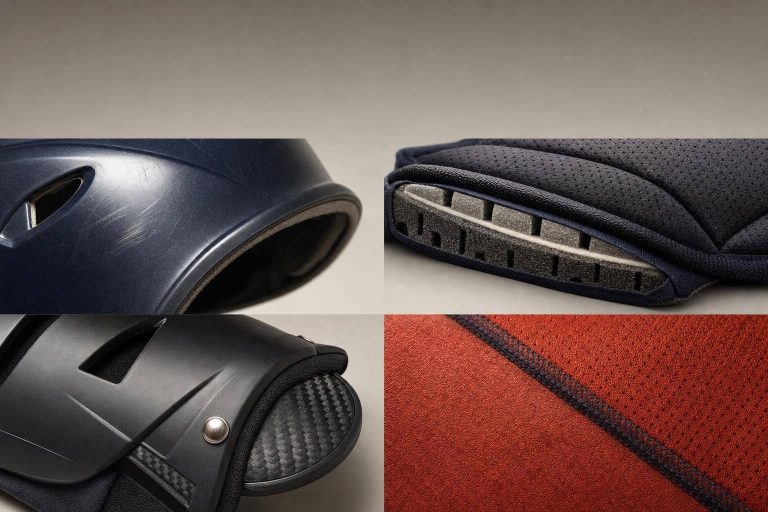
Catcher gear works when the right materials handle three things well: impact, heat, and wear. If I had to boil this guide down to one point, it’s this: pick shells for force spread, foam for shock control, metal for face safety, and liners for airflow – then replace worn parts before they fail.
Here’s the short version:
- Helmets and masks: ABS and polycarbonate shells, steel or titanium cages, and EVA or liner systems inside
- Chest and leg guards: hard plastic shells with foam backing, mesh liners, and webbed straps
- Base layers: polyester blends with thin EVA, PU, gel, or memory-foam pads
- Best setup depends on: age, game volume, fit, weather, and certification
- Watch for wear: flat foam, cracked shells, rusty hardware, loose straps, and dead padding
A few numbers stand out:
- I-Bar steel cages can improve sightlines by about 11%
- Foam often flattens after 2–3 seasons
- Helmet shells may last 2–4 seasons, or less after one hard hit
- A high school catcher may take 130–150 foul tips and backswings in one season
Safety Equipment For Baseball And Softball Catchers. What I Would Recommend.
sbb-itb-4d95ad3
Quick comparison
| Gear area | Main materials | What I’d focus on |
|---|---|---|
| Helmet / Mask | ABS, polycarbonate, steel, titanium, EVA | Head safety, weight, cage view, liner condition |
| Chest Protector | ABS, PP, PE, EVA, memory foam, mesh | Chest coverage, heat control, NOCSAE mark |
| Leg Guards | ABS, PP, PE, foam, nylon straps | Knee fit, shin coverage, strap wear |
| Base Layer | Polyester, nylon, elastane, EVA/PU/gel pads | Sweat control, pad placement, washability |
If you’re buying gear, I’d keep it simple: youth players need lighter setups, high school players need stronger shells and denser padding, and heavy-use catchers need parts that hold up in heat and long seasons. The rest of the article explains how each material affects protection, comfort, and service life.
Core Catcher Gear Components and Their Common Materials
Helmet and Mask Materials: ABS, Polycarbonate, Steel, Titanium, and Foam Liners
When a foul tip gets straight back to the catcher, the shell takes the first shot. That’s why the material matters so much.
ABS plastic is the standard in high school and college play because it helps spread force across the shell. Polycarbonate is lighter than most ABS/composite masks, which can help cut neck fatigue over long games. The tradeoff is that it flexes more on contact, so the liner has to take on more of the impact.
The cage matters too. Steel cages with I-Bar geometry improve sightlines by about 11% compared with old-school round-wire designs. That can make a difference when you’re trying to pick up a high fastball in a split second. Titanium cages sit at the top end of the market and are picked mostly for their lower weight. Some steel cages are also spring-loaded, which lets them absorb part of the force before it gets to the shell.
Inside the helmet, the liner does most of the hard work. Multi-density EVA foam shows up across many price points. Higher-end helmets may use PORON XRD or TPR suspension systems to soak up impact before it reaches the head. Over time, though, foam compresses and materials age. That wear chips away at helmet performance.
Traditional two-piece masks come off faster and usually allow more airflow. Hockey-style integrated helmets give more complete coverage for the ears and throat.
| Helmet Setup | Weight | Best For | Price Range |
|---|---|---|---|
| Polycarbonate (e.g., Easton Elite-X) | Lightest | Youth, travel ball | $170–$200 |
| ABS Composite (e.g., All-Star MVP5) | Heavier | High school, competitive play | $210–$240 |
| ABS + PORON XRD (e.g., Mizuno Samurai G5) | Heavier, with added liner protection | Competitive use | $240–$260 |
| Hybrid + Spring Cage (e.g., Force3 Defender V3) | Heaviest | Elite play or concussion history | $285–$310 |
Chest and leg guards follow the same basic idea, but the goal shifts a bit. Instead of rigid head protection, they lean harder on body coverage and airflow.
Chest Protectors and Leg Guards: Plastic Shells, EVA Foam, Mesh, and Straps
Unlike masks, chest protectors and leg guards depend on a mix of shell stiffness, foam cushioning, and ventilation. The outer shell on leg guards is usually made from ABS, polypropylene (PP), or polyethylene (PE). ABS tends to handle higher-velocity impacts better. PP and PE show up more often in mid-range gear, where lower weight matters more.
Under that shell, EVA foam and memory foam handle the padding. Some chest protectors use molded ribs or raised channels to stretch coverage without making the gear feel bulky. On the inside, you’ll usually find breathable mesh or perforated foam, which helps move heat away from the body during long innings. Straps are commonly made with nylon or elastic webbing, plus rust-resistant hardware.
For NFHS play, chest protectors should carry NOCSAE Commotio Cordis certification.
Protective Shirts and Base Layers: Polyester Blends, Elastane, and Integrated Pads
Under the main gear, the base layer handles sweat and adds thin padding where it counts. Most of these shirts use custom lightweight baseball jerseys made from polyester blends or coated nylon for durability and moisture control.
A compression-style fit keeps the shirt close to the body so it doesn’t slide around during quick movements or throws. The built-in pads usually use EVA, PU, gel, or memory foam in the chest area. That gives catchers a slim extra layer of protection without adding much bulk.
Some top-end base layers also include antimicrobial treatment and removable pads, which makes washing easier and can help the shirt last longer. In many youth leagues, padded undershirts are required, so the material quality matters more than a lot of players think.
How Catcher Gear Materials Perform: Durability, Breathability, and Protection
Once you know what the gear is made of, the next step is simple: how does it act in an actual game?
That’s where things get more interesting. A material can take a beating and still be a poor pick if it runs hot, holds sweat, or sends too much force into the padding underneath.
Durability of Plastics, Foams, Fabrics, and Metal Parts
ABS handles repeated impact well. Polycarbonate is lighter, but it flexes more, which means the liner ends up taking more of the load. So a longer-lasting shell isn’t always the best call if it traps heat or pushes impact deeper into the padding.
Steel and alloy cages also wear well, and stainless steel lasts the longest in wet conditions. Foam is a different story. EVA and memory foam can flatten after two to three seasons of regular use.
Sweat and dirt can wear foam down faster than impact alone, so catcher’s gear should be aired out after every use.
| Material | Durability | Heat Management | Protection | Best Fit |
|---|---|---|---|---|
| ABS Plastic | High | Moderate | High | High-impact play |
| Polycarbonate | Moderate | High | Moderate | Youth / younger catchers |
| EVA/Memory Foam | Moderate | Low | Moderate | All levels |
| Stainless Steel | High | High | High | All levels |
| Mesh/Polyester Liners | Moderate | High | Low | Hot-weather use |
Durability matters. But in a long game, heat buildup can hurt performance well before a material starts to fail.
Breathability and Moisture Management in Liners, Mesh, and Padding
Mesh liners like 3D Airmesh move air well and dry fast. Moisture-wicking polyester and nylon blends pull sweat away from the skin. Perforated foam sits in the middle, giving you some airflow without giving up too much padding. Solid foam traps the most heat and holds the most moisture, but it also gives the most consistent impact coverage.
There’s always a trade-off here. More airflow often means less padding.
Protection Trade-Offs: When Lighter or Cooler Materials Reduce Coverage
Thin shells and lighter masks cut weight, but they usually shift more force to the liner. The better setup is multi-layer construction: a thin outer shell, plus a blast shield or PE plate, with a foam layer underneath. That’s the difference between gear that just feels safe and gear that does its job.
Before anything else, check for NOCSAE certification and full squat coverage. The throat, collarbone, and jaw all need to stay covered.
Those trade-offs shape the material picks in the next section.
Choosing the Right Material Setup for Player Level and Playing Conditions
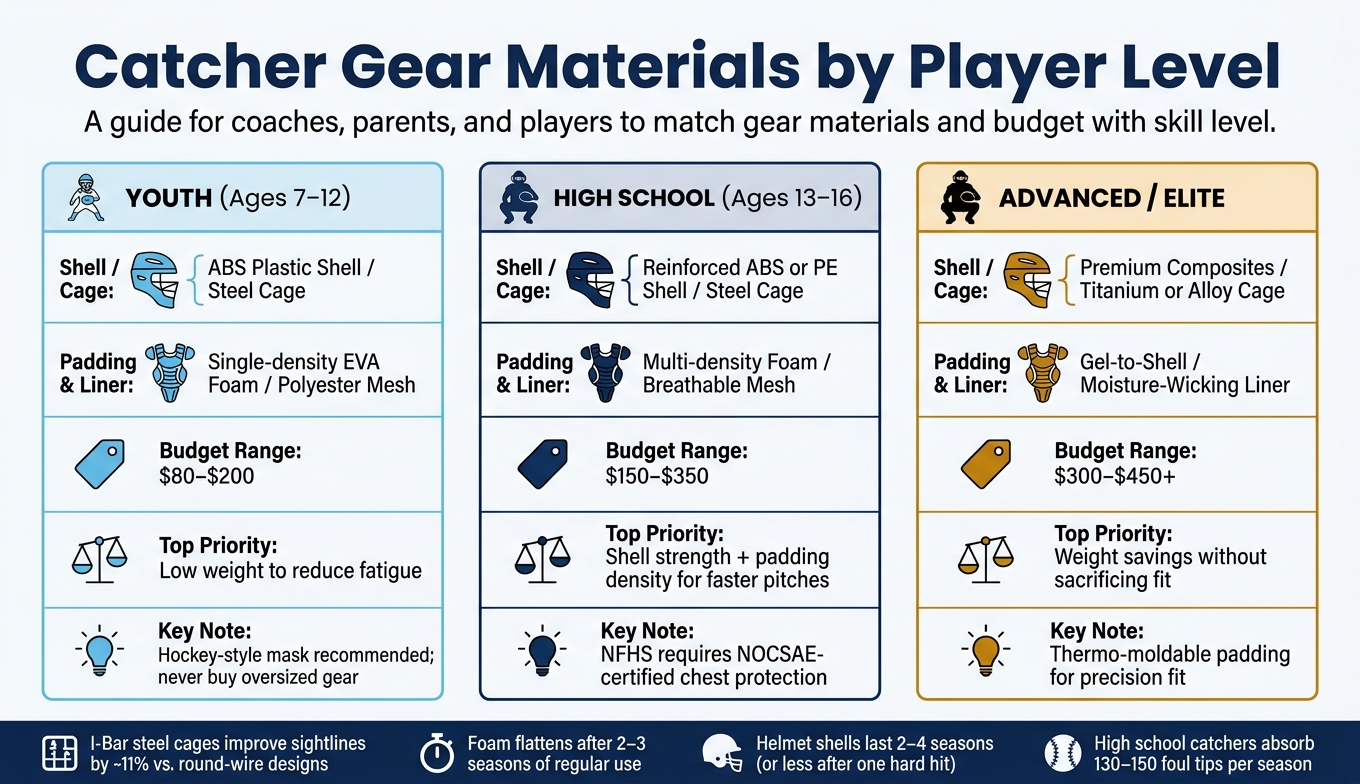
Catcher Gear Materials by Player Level: Protection, Comfort & Budget
Material choice comes down to three things: age, climate, and workload. A youth catcher doesn’t need the same setup as a varsity or college starter. The goal is simple: match the gear to the player and the pace of the season.
Recommended Materials for Youth, High School, and Advanced Catchers
For ages 7–12, the main priority is low weight. Heavy gear wears younger players down fast, especially during long practices. Go with ABS plastic shells and single-density EVA foam to help cut fatigue. A properly sized hockey-style mask matters too. Don’t buy oversized gear in hopes that a player will "grow into it." That usually leads to poor fit and less control.
As players get older and the game speeds up, the gear needs to keep up.
For ages 13–16, move to reinforced ABS or PE shells, multi-density foam, and steel hardware. At this stage, catchers are handling faster pitches and more innings, so shell strength and padding need to step up. NFHS requires NOCSAE-certified chest protection.
At the advanced level, weight savings start to matter more without giving up fit. That’s where titanium or lightweight alloy cages and thermo-moldable padding make sense. They help trim bulk while keeping the gear dialed in.
How Climate, Season Length, and Usage Frequency Affect Material Choice
Weather and season length change the buying decision more than people think. In hot, humid conditions, look for vented shells, perforated foam, and mesh liners. That setup helps the gear breathe better and feel less swampy by the middle innings.
If a catcher is logging 50+ games a year, durability starts to matter just as much as comfort. In that case, choose stainless hardware, tougher ABS shells, and washable antimicrobial liners. It may cost more up front, but gear that sees heavy use needs parts that can take a beating.
Material Selection Table: Protection, Comfort, and Budget
| Player Level | Shell / Cage | Padding & Liner | Budget Range (USD) |
|---|---|---|---|
| Youth (7–12) | ABS Plastic / Steel Cage | Single-density EVA Foam / Polyester Mesh | $80–$200 |
| High School (13–16) | Reinforced ABS or PE / Steel Cage | Multi-density Foam / Breathable Mesh | $150–$350 |
| Advanced / Elite | Premium Composites / Titanium or Alloy Cage | Gel-to-Shell / Moisture-Wicking Liner | $300–$450+ |
For team buyers, it’s smart to keep helmets, chest protectors, and leg guards in matched sets so fit and coverage stay consistent. A common-sense approach works best: save premium gear for primary starters, and use mid-range sets for reserves.
After selection, care and storage determine how long each material performs.
Care, Maintenance, and Team Apparel Pairing
Cleaning and Storage by Material Type
Care matters because the same materials that protect players during games can wear out fast when they stay wet or dirty.
After every game or practice, wipe down plastic shells and foam padding with a damp cloth and mild dish soap. Stay away from harsh chemicals or solvents. They can wear down ABS and polycarbonate parts over time.
Clean the metal cage or mask once a week with mild soap and water to remove sweat and help stop rust from forming. Dry all metal parts right away after cleaning.
Let gear air-dry overnight before you put it away in a cool, dry closet or equipment room. Trapped moisture is rough on foam, adhesives, and plastic shells. Heat and cold don’t help either.
| Component | Cleaning Method | What to Avoid | Typical Lifespan |
|---|---|---|---|
| Helmet Shell | Damp cloth + mild soap | Solvents, harsh chemicals | 2–4 seasons (or after 1 major impact) |
| Metal Cage | Weekly soap & water wipe | Leaving sweat to sit | 3–5 seasons (check welds) |
| Foam Padding | Damp cloth wipe-down | High heat, machine washing | 2–3 seasons |
| Straps & Buckles | Damp cloth | Over-stretching when wet | 1–2 seasons (replaceable) |
| Chest Protector | Surface wipe + air dry | Storing while damp | 2–5 seasons |
Even with solid care, every material reaches a point where it needs to be replaced.
Signs of Material Breakdown and When to Replace Gear
A high school catcher takes about 130 to 150 foul tips and backswings per season, so wear adds up little by little. That’s why it makes sense to inspect gear after every game.
If the shell is cracked, replace it right away. Tape won’t bring the strength back. Foam should also be replaced when it feels flat, stiff, or stays compressed. If it feels dead, especially in leg guards, it’s done.
Pay close attention to the smaller parts too:
- Check straps, Velcro, snaps, and buckles for fraying, stretching, debris, or rust.
- Replace any part that no longer locks or releases cleanly.
NOCSAE recommends replacing catcher’s helmets every two competitive seasons. Replacement chin pads and interior liner kits usually cost $35 to $60.
Conclusion: Key Material Choices for Protection, Comfort, and Long Gear Life
Every catcher gear material has its own job and its own shelf life. The best approach is simple: match the gear to the player, the climate, and the amount of use, then take care of it on a steady schedule.
The underlayer matters too. For teams that want matching base layers, Wooter Apparel offers custom sublimated baseball and softball apparel.
FAQs
Which catcher gear material is safest?
The safest catcher gear comes down less to one specific material and more to certification. Look for the SEI Certified mark and the NOCSAE logo. Those labels show the gear has passed standardized impact testing.
Safe, high-quality gear often uses energy-absorbing materials like high-density foam, Kevlar, or advanced alloys. The goal is simple: strong protection without as much extra weight. Before you buy, check for those safety stamps first.
How do I choose gear for my age and skill level?
Choose catcher gear based on fit and maturity, not age alone. Age can be a starting point, but it doesn’t tell you the whole story. If the gear doesn’t fit right, it can limit movement and leave gaps in protection.
Measure the chest protector, leg guards, and helmet with care. Those three pieces do most of the heavy lifting, so small sizing mistakes can turn into big problems behind the plate.
If you land between sizes, go with more length for the chest protector and leg guards so you get better coverage. For the helmet, do the opposite: pick the smaller size if it still fits snugly. A loose helmet can shift around at the worst time.
It also helps to know how gear categories are built. Youth, intermediate, and adult gear aren’t just different labels. They’re made for different body types and padding needs as players grow. And one more thing that trips people up: baseball and softball catcher’s gear are not interchangeable.
When should I replace catcher gear?
Replace catcher gear as soon as it shows wear, damage, or stops fitting the way it should. If a helmet, mask, or any protective part is cracked, bent out of shape, or has broken hardware, swap it out right away.
Chest protectors need to go if they ride up into your chin or leave gaps around the waist. Leg guards should be replaced if they no longer cover the ankle bone or keep the knee centered.
As a general rule, chest protectors tend to last 2–4 seasons, while leg guards and mitts usually last 3–5 seasons.