
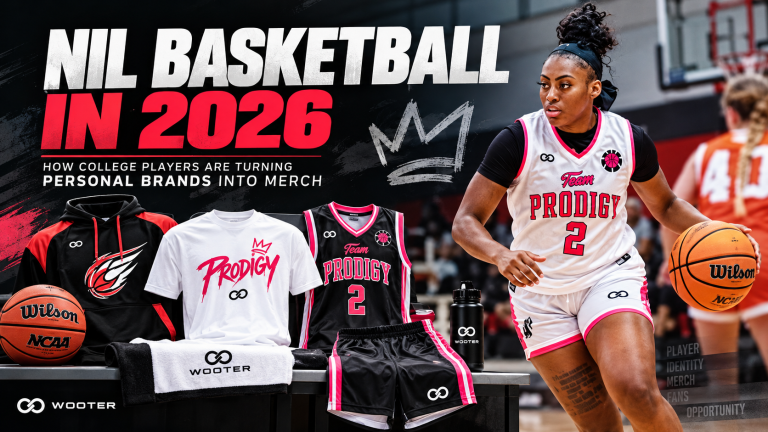
A college basketball player can now sit down with a designer in the morning, turn their personal brand into a shirt, get the design licensed, and have fans shopping it online the same day.
That happened at Big Ten Basketball Media Days in October 2026, where student-athletes worked directly with apparel designers to create custom NIL products tied to their own identities. Approved designs were then printed and released through the Big Ten Team Shop in near real time.
It shows how quickly NIL basketball is evolving.
The first era of name, image and likeness was largely about athletes promoting other businesses. In 2026, more players are learning how to build something of their own: a recognizable personal brand that can live on shirts, hoodies, jerseys, shorts and complete merchandise collections.
The opportunity is no longer simply to secure an NIL deal.
It is to build an identity people want to wear.
NIL Basketball Is Moving From Endorsements to Ownership
NIL gives student-athletes opportunities to earn money from the commercial use of their name, image and likeness.
That can include endorsements, social media campaigns, appearances, camps, licensed products and other legitimate commercial activities.
The NCAA still requires NIL deals to have a valid business purpose and prohibits pay-for-play arrangements. Athletes, schools and brands also have reporting and compliance responsibilities depending on the type and value of a deal. Teams and athletes should always check the latest NCAA NIL guidance before launching a commercial project.
But one part of the market is becoming particularly interesting: NIL merchandise.
Why?
Because an endorsement promotes someone else’s product.
A personal merchandise line can build the athlete’s own brand.
That distinction matters.
A sponsored post disappears down a social feed. A recognizable logo, phrase or apparel design can continue circulating in classrooms, gyms, arenas and social content long after the original launch.
From Media Day to Merch Drop in Hours
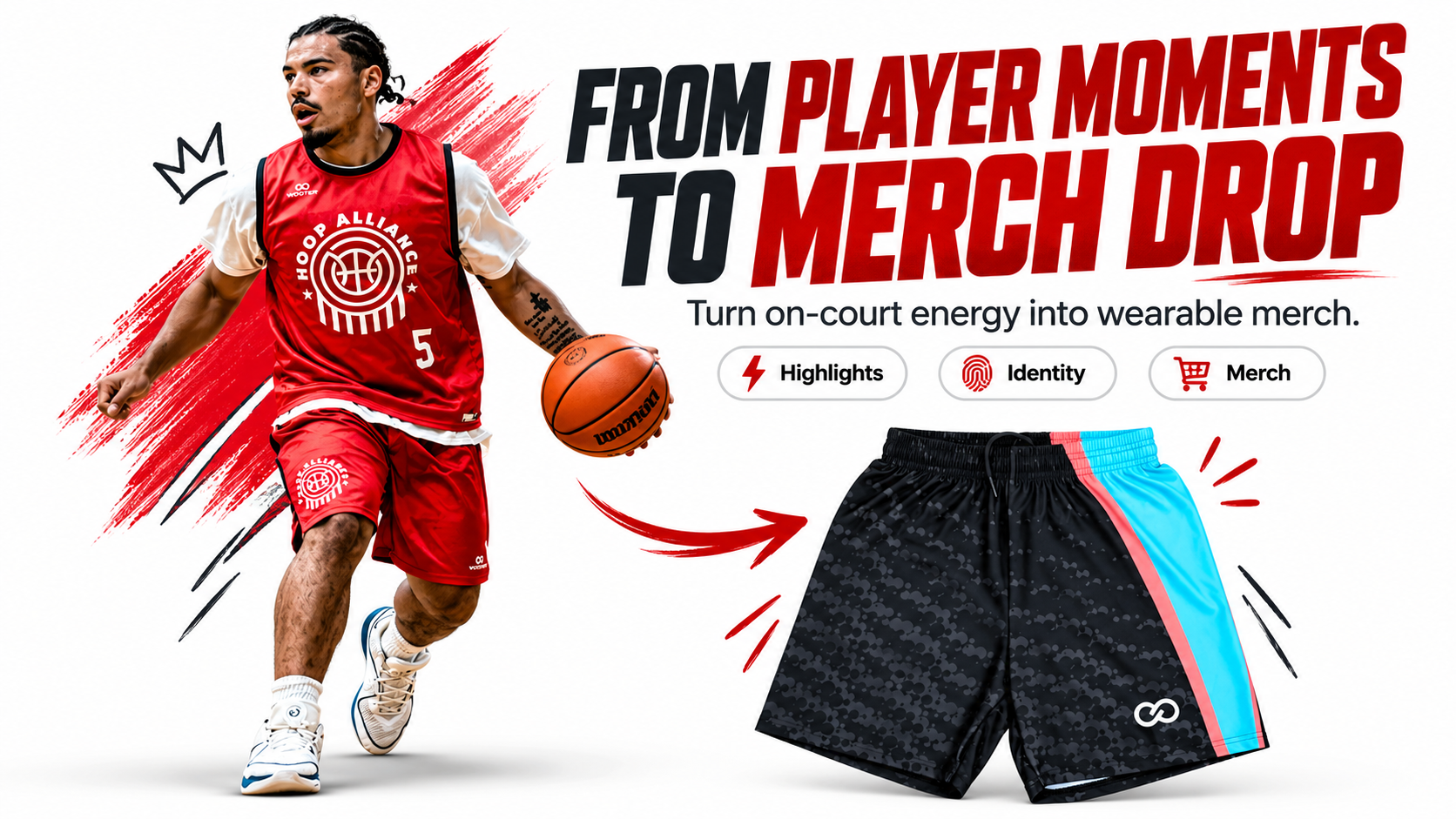
The 2026 Big Ten activation shows how much faster the process has become.
Players received one-on-one time with designers and developed apparel around their personal brands. Once licensing approval came through, products could move into production and become available to fans on the same day.
The BIG EAST also worked with NIL Store around its 2026 Basketball Media Day, continuing the growth of athlete and conference merchandise around major basketball events.
The modern NIL merch cycle can now look like this:
Moment → Idea → Design → Approval → Product → Drop
That speed creates new possibilities.
A breakout game can create attention.
A tournament run can create attention.
A viral celebration can create attention.
A major commitment, award or milestone can create attention.
If an athlete already has a recognizable identity, merchandise gives that attention somewhere to go.
Why Merch Can Be More Valuable Than a One-Off NIL Deal
Not every basketball NIL deal creates a lasting asset.
An athlete might complete a campaign, receive payment and move on.
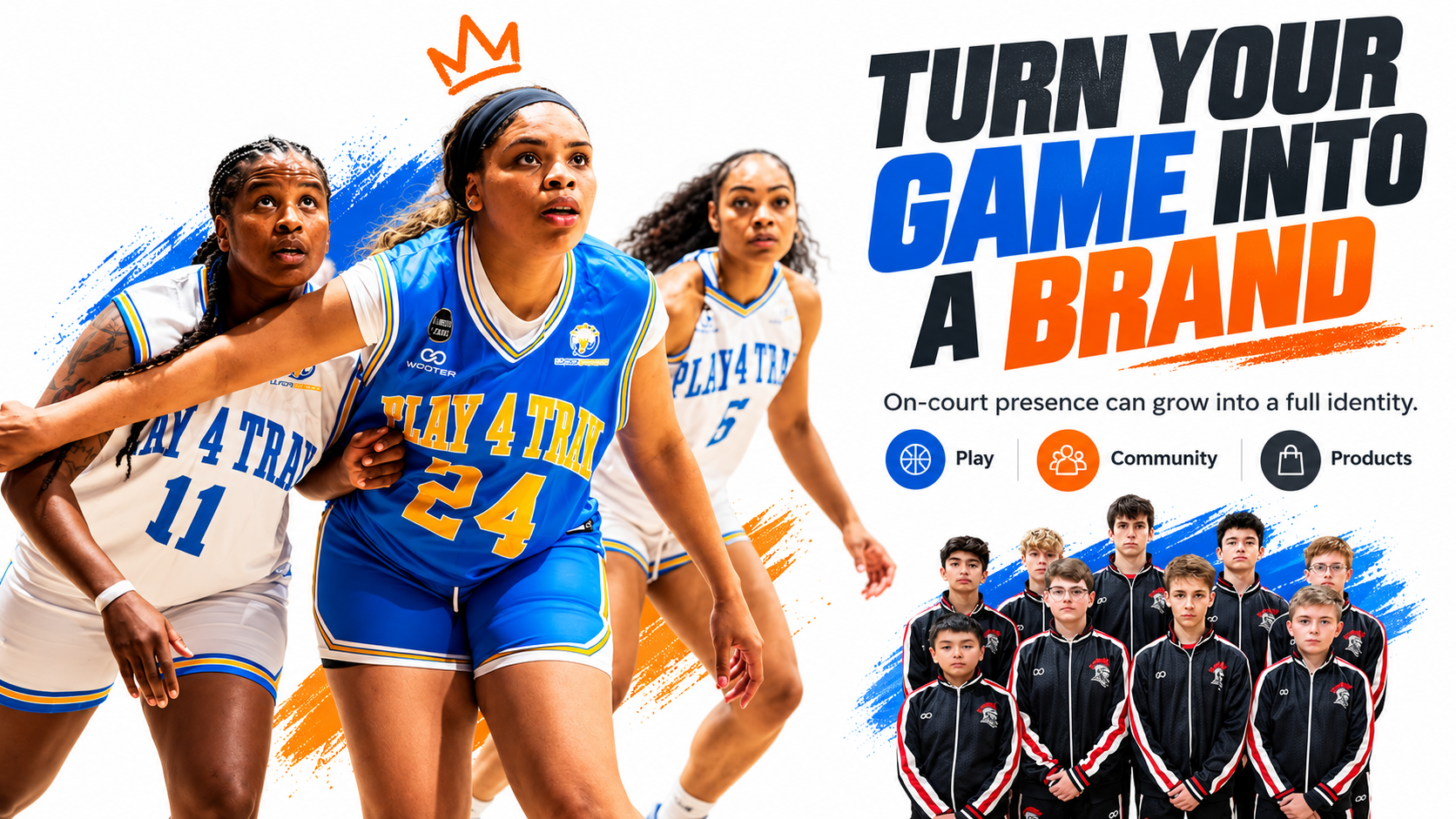
Merch can work differently because the athlete is building recognition around something they can continue using.
A personal logo can appear on the next collection.
A successful phrase can return on another product.
A recognizable color palette can carry from a T-shirt into a hoodie, jersey or camp uniform.
The brand compounds.
That does not mean every athlete needs to launch a clothing company.
It means athletes should think beyond:
“What can I sell today?”
and start asking:
“What do I want people to associate with me a year from now?”
That is where personal branding becomes more valuable than simply putting a name across the front of a shirt.
The Best NIL Merch Starts Before the Product
One of the easiest mistakes in college basketball NIL is starting with the product.
“Let’s make a hoodie.”
“Let’s put my number on a shirt.”
“Let’s make a jersey.”
Those are product decisions, not brand decisions.
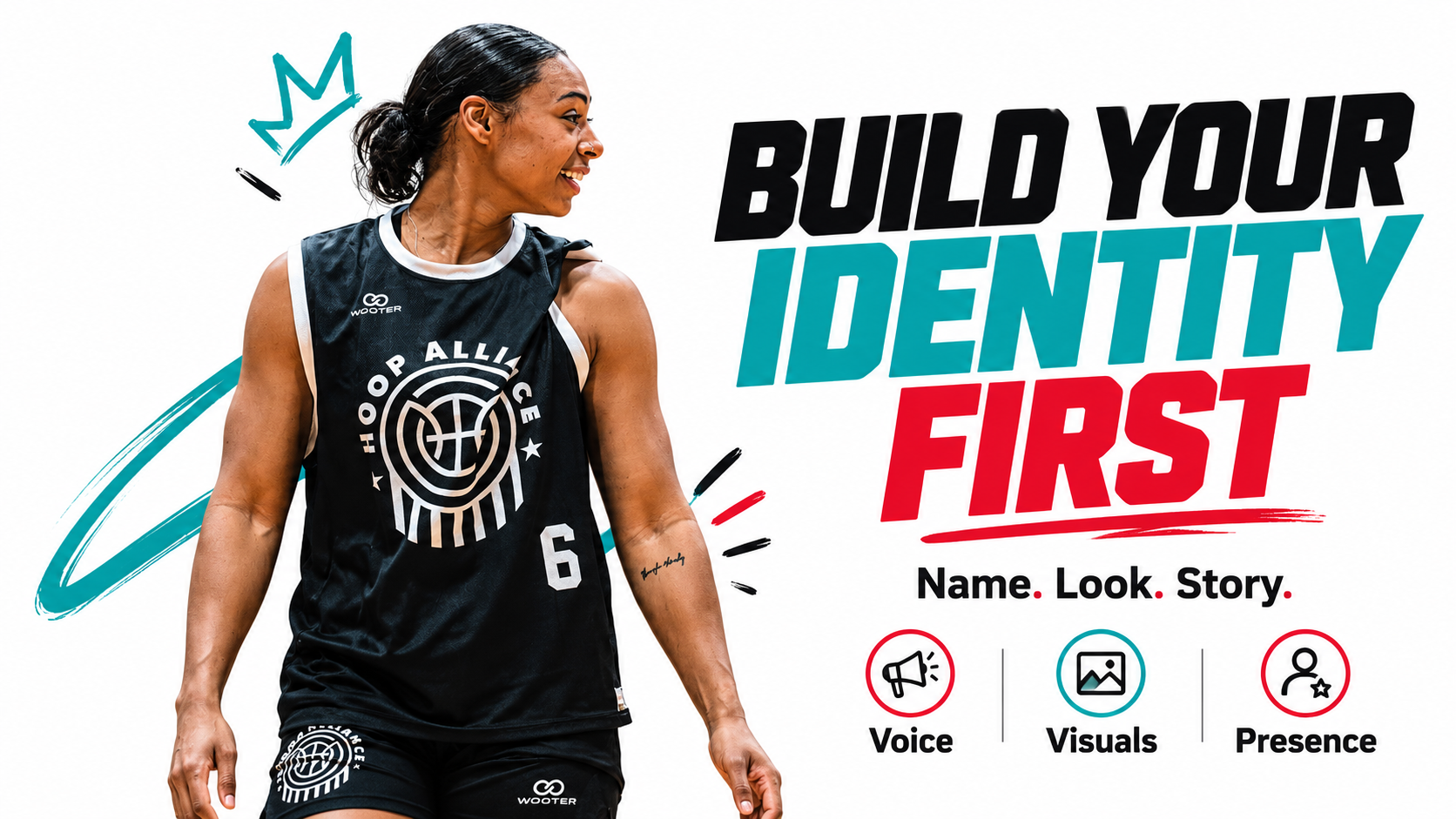
A stronger process starts by identifying what makes the athlete recognizable.
That might be:
- A nickname
- Jersey number
- Personal logo
- Signature phrase
- Hometown
- Cultural background
- Playing style
- Celebration
- Personal story
- Cause or community
- Consistent visual aesthetic
The strongest concept is usually something fans can connect with even when the athlete is not standing beside the product.
Before designing anything, ask:
What should a fan recognize as mine before they even read my full name?
That answer should influence every product that follows.
What Should Go in a First NIL Merch Drop?
A first collection does not need 12 products.
In many cases, a smaller, better-connected launch makes more sense.
1. Start With an Easy-to-Wear Hero Product
A T-shirt is a strong starting point because it works across a broad audience and gives the design room to establish the athlete’s visual identity.
A logo, number, phrase or original graphic can become the collection’s central idea.
Wooter custom T-shirts can be personalized around original logos, colors and graphics, giving athletes a simple entry point for a first apparel concept.
2. Add One Premium Piece
The next product should make the collection feel more substantial rather than simply adding another version of the same shirt.
For many athletes, that is a custom hoodie.
The larger print area gives designers more space for back graphics, secondary marks, sleeve details and stronger visual storytelling.
3. Use a Jersey When Basketball Is Central to the Brand
A jersey creates the clearest connection between an athlete’s personal identity and the sport itself.
Names, numbers, colors and graphics already carry meaning in basketball, which makes a custom basketball jersey particularly effective when the athlete’s playing identity is a major part of the merchandise concept.
The important distinction is that the jersey should feel like branded apparel, not simply a copy of the athlete’s school uniform.
4. Expand Only When the Identity Is Working
Shorts, warmups and additional apparel can extend a collection later.
Wooter custom shorts can carry the same colors, logo system and graphics once the core identity has been established.
A collection becomes stronger when every new item adds to the same story.
It becomes weaker when every product introduces a new one.
Your NIL Collection Should Look Like One Brand
This is where many merchandise collections lose impact.
One shirt uses one logo.
The hoodie introduces another typeface.
The jersey brings in new colors.
The shorts suddenly use a different graphic language.
Each item may look fine individually, but the collection does not build recognition.
Instead, create a small system.
Primary colors:
Choose two or three colors that consistently represent the athlete.
Primary mark:
Develop a logo, monogram or symbol that works at different sizes.
Typography:
Choose a consistent visual treatment for names, initials and phrases.
Signature detail:
Add something uniquely connected to the athlete.
Product hierarchy:
Decide which design is the hero and let supporting products build around it.
When those elements repeat intelligently, a fan can recognize the collection before reading the product description.
That is branding.
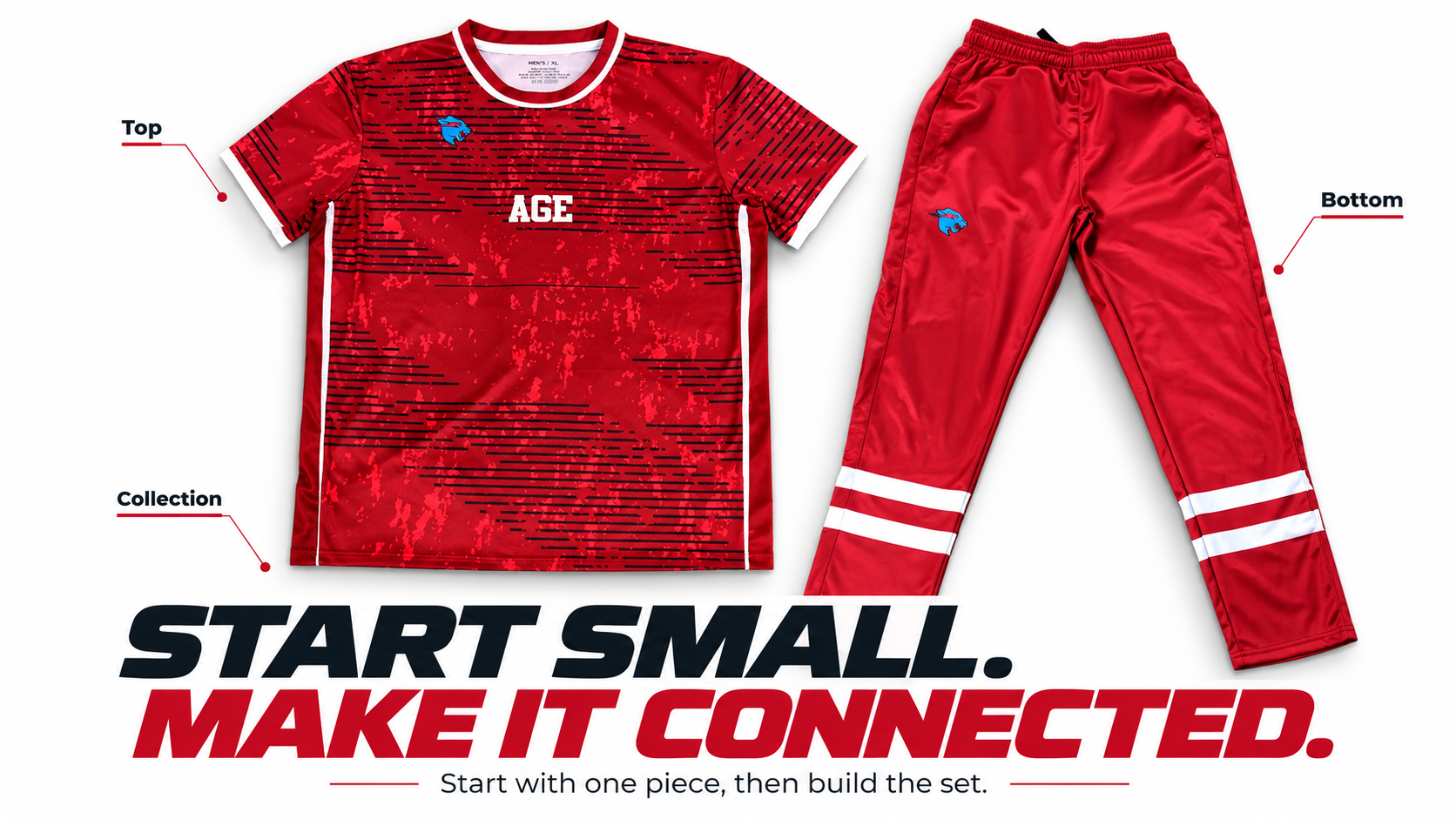
Build a Merch Collection People Can Recognize
Turn your colors, logo, number and story into a connected apparel system instead of another one-off graphic. Start with a strong identity, then carry it across the products that fit your audience.
5 Things Athletes Should Check Before Launching NIL Merch
A good design is only part of a successful launch.
Before putting products on sale, athletes should check five things.
1. Is the Identity Actually Yours?
Your own name, personal logo and original graphics are different from university logos, conference marks and other protected intellectual property.
Do not assume that controlling your NIL automatically gives you permission to use every mark associated with your school.
2. Are the Required Permissions Clear?
Licensing and NIL requirements can vary depending on the school, conference, product and commercial arrangement.
Clear the necessary approvals before production rather than redesigning merchandise after launch.
3. Would Someone Wear It Without Knowing You Personally?
This is a useful design test.
Fans may want to support an athlete, but the strongest products also work as apparel.
The better the product looks independently, the more opportunities it has to move beyond close friends and existing supporters.
4. Does the Collection Look Connected?
Lay every product beside the others.
If they look like they came from four unrelated brands, simplify.
Consistency helps recognition compound.
5. Is There a Reason to Launch Now?
Timing can turn ordinary merchandise into a meaningful drop.
A season opener, rivalry, tournament, milestone, media event or breakout performance gives fans a reason to care now rather than someday.
The Big Ten’s same-day design activation demonstrates exactly how powerful that connection between moment and merchandise can become.
Wooter Has Already Seen What Athlete-Owned Apparel Can Become
This direction is not new territory for Wooter.
After NIL opportunities expanded in 2021, Wooter began working with college athletes on personal-brand apparel. Its designers later created logos, apparel collections and online-store concepts for athletes across college sports, including basketball. (Wooter’s NIL story)
What has changed since then is the speed and maturity of the market.
NIL merchandise is no longer an experimental idea sitting at the edge of college sports.
NIL Store now works with more than 150 schools and over 30,000 student-athletes, while events such as Big Ten Basketball Media Days are turning athlete design sessions into shoppable products in near real time.
The infrastructure is getting faster.
The competition for attention is getting stronger.
That makes distinctive branding more important, not less.
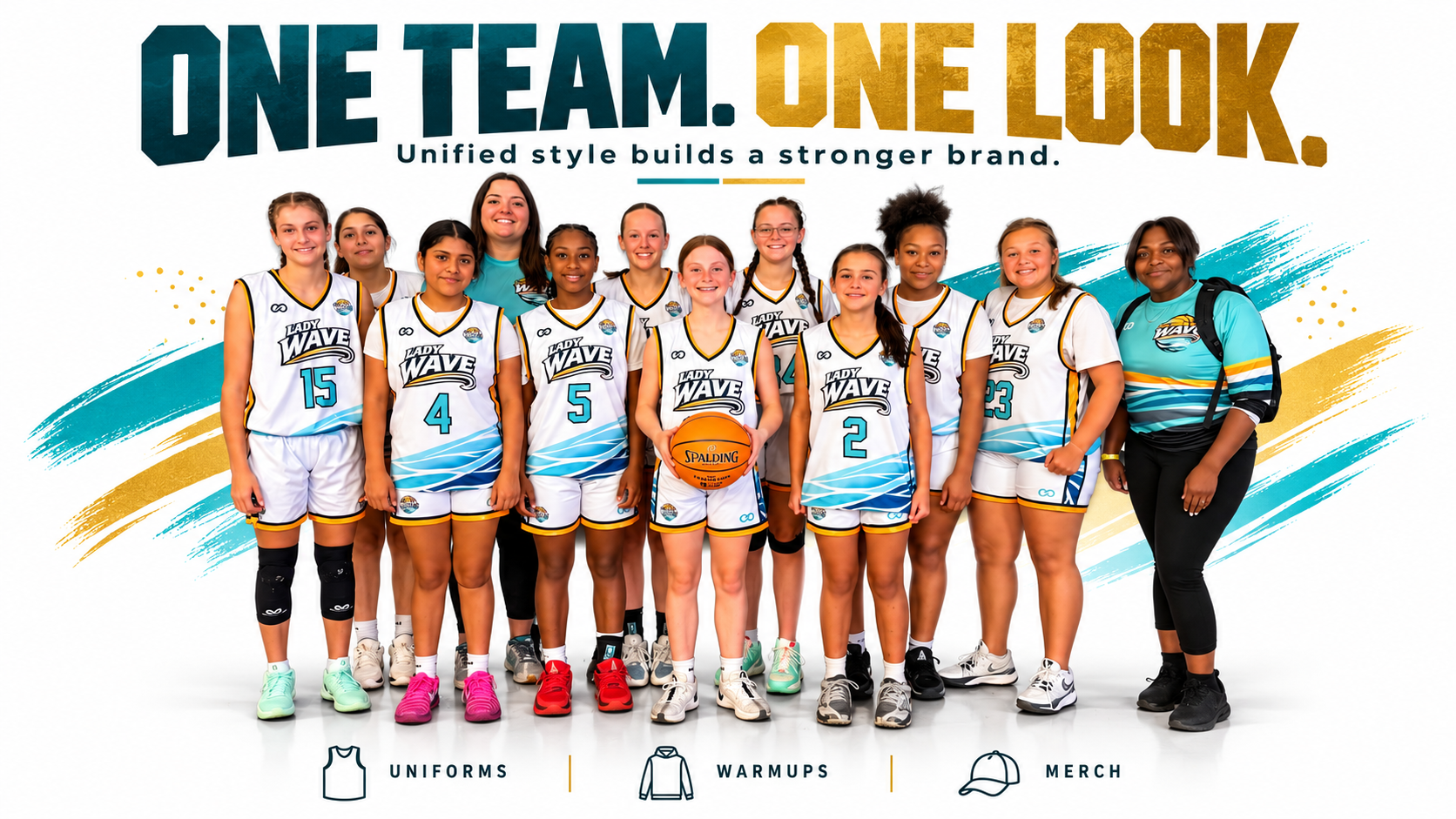
NIL Basketball FAQs: College Athlete Merch, NIL Deals & Personal Branding
What does NIL mean in college basketball?
NIL stands for name, image and likeness. It allows college basketball players to earn compensation through eligible commercial activities such as endorsements, appearances, social content and merchandise tied to their personal brands.
Can college basketball players sell their own merchandise?
Yes. College athletes can create and sell NIL merchandise built around their name, image, personal logo, number or other original branding, provided the arrangement follows applicable NCAA, school, conference and licensing requirements.
What types of NIL merch can basketball players create?
Popular options include custom T-shirts, hoodies, basketball jerseys, shorts and limited-edition apparel drops. The strongest collections usually share consistent colors, graphics and branding instead of treating every product as a separate design.
Can athletes use their school logo on NIL merchandise?
Not automatically. School, conference and other protected trademarks may require separate permission or licensing, even when an athlete has the right to commercialize their own NIL. Athletes should confirm applicable policies before producing merchandise.
How do basketball players make NIL merch stand out?
Start with a recognizable personal identity rather than simply adding a name to a shirt. A consistent logo, color palette, typography, jersey number or signature detail can help NIL apparel feel like a real athlete brand.
How quickly can NIL merchandise be launched?
The process can now move very quickly when design, licensing and production systems are already in place. At the 2026 Big Ten Basketball Media Days, athletes created custom apparel with designers and approved products could become available to fans the same day.
Where NIL Basketball Merch Goes Next
The next stage of NIL basketball will not be defined only by which athletes sign the largest sponsorships.
It will also be shaped by which players build identities that survive beyond one deal, one season and even one school.
Merchandise can become part of that foundation.
A player might begin with one T-shirt.
That shirt establishes a logo.
The logo carries into a hoodie.
The visual system expands into a jersey.
The collection grows alongside camps, appearances, collaborations or future business ventures.
At that point, the athlete is no longer simply selling merchandise.
They are building brand equity.
And that is the bigger opportunity behind NIL merch in 2026.
Build a Brand, Not Just a Product
Your name may attract the first click. A strong identity is what gives fans something worth remembering. Build custom shirts, hoodies, jerseys and apparel around one recognizable visual system that can grow with your brand.