
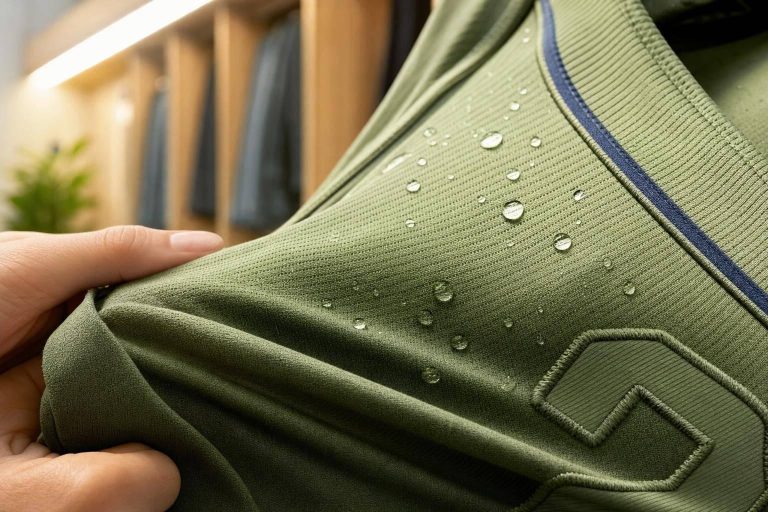
If you want team uniforms that feel cooler, stay drier, and smell less over a long season, bamboo blends are often a strong pick. From what I see in this article, the main tradeoff is simple: you may pay 20%–30% more than standard cotton, but you can get better comfort, less rubbing, and better wear when the blend is right.
Here’s the short version:
- Bamboo breathes well and can feel 2–3°F cooler than cotton
- It moves sweat off the skin through the fiber, not just a wash-out finish
- It helps with odor control, which matters for long practice days
- It feels softer and can help cut down on chafing
- It works best in blends, like 95% bamboo / 5% Spandex
- Fabric weight matters; 160–180 GSM is a common range for jerseys and tops
- It can cost more upfront, so buyers should check budget, blend, and wash wear before placing a full order
For me, the big takeaway is this: bamboo is not the top choice for every team, but it makes a lot of sense when comfort, hot-weather wear, and lower use of petroleum-based fabric matter most.
🌍 Bamboo Jersey – Eco Friendly Fabric Packed With Attributes!
sbb-itb-4d95ad3
Quick Comparison
| Trait | Bamboo Blend | Cotton | Polyester |
|---|---|---|---|
| Breathability | High | High | Varies |
| Drying speed | Medium | Slow | Fast |
| Sweat control | High | Low | High |
| Odor hold | Low | Medium | High |
| Soft feel | Very soft | Soft | Less soft |
| Shape hold | Medium to high in blends | Medium | High |
| Price | Higher | Lower | Varies |
Bottom line: I’d look at bamboo blends for practice tops, base layers, warmups, and other gear worn for hours at a time. Just make sure you ask for a sample, confirm anti-pilling options, and avoid pure bamboo if shape hold is a top concern.
Why Bamboo Fabric Works Well in Team Apparel
Bamboo solves a few plain, everyday problems that teams deal with across a long season: sweaty practices, repeated washing, and uniforms that need to stay comfortable for hours at a time.
How Bamboo-Based Fabrics Are Used in Athletic Apparel
Most bamboo team fabric is made as bamboo viscose or lyocell, then turned into performance pieces like jerseys, shorts, base layers, warmups, and training gear.
For team uniforms, bamboo is usually part of a blend. Common setups include 70% bamboo / 30% cotton and 95% bamboo / 5% Spandex. Teams tend to go with blends because they help the fabric keep its shape and last longer.
That matters on game day. A soft fabric is nice, but if it stretches out, sags, or wears down too fast, it becomes a headache.
Key Performance Traits Teams Look For
Team apparel has a tough job. It needs to handle sweat, stay comfortable during long wear, resist odor, and keep up with frequent trips through the wash.
Bamboo does well here because of the way its fibers are built. The fibers are smoother than cotton, which can help cut down on chafing and gives the fabric that silky feel. Bamboo fibers also move sweat away from the skin and toward the fabric’s surface so it can evaporate faster.
That moisture control can help limit odor buildup too. And compared with cotton, bamboo can feel cooler, which is a big plus during summer practices or in indoor gyms with poor airflow.
In day-to-day use, those traits tend to show up most in breathability and airflow.
1. Better Breathability and Airflow
That same moisture control helps with airflow too. Bamboo has tiny micro-gaps that let air pass through the fabric and pull heat away from the skin, which can help players feel cooler. Those micro-gaps also create a capillary effect, moving moisture off the skin and across the fabric surface so it can evaporate faster.
On the field or in the gym, that extra airflow can make a big difference during long practices and games. Tests have shown bamboo can run 2–3°F cooler than cotton, and that gap starts to matter during back-to-back games or long hours in uniform.
For team uniforms, a light bamboo-spandex blend is often a smart pick. It helps the fabric keep its shape without giving up breathability. Even a small amount of Spandex can help the uniform hold its shape when wet.
2. Stronger Moisture-Wicking Performance
Bamboo’s airflow helps players stay cooler, and its moisture control helps them stay drier. Beyond breathability, bamboo also wicks sweat well. Its fiber structure pulls moisture away from the skin and pushes it to the fabric surface, where it can dry faster.
For teams, that matters during long practices and back-to-back games. Bamboo keeps moving moisture away from the body as play goes on. Cotton, on the other hand, tends to hold sweat, which can leave fabric feeling heavy and damp by the end of a session. With bamboo, the moisture control is built into the fiber itself, not added as a finish that fades after washing. That means the wicking effect can last through repeated laundering.
One simple tip: skip heavy fabric softener. It can cut down on wicking. That drier feel also helps with comfort and can limit odor buildup.
3. Improved Odor Resistance
After sweat control, odor control is usually the next thing people care about. Bamboo fibers can help limit the bacteria that cause odor, and that help comes from the fiber itself.
That detail matters. Since it’s built into the fiber instead of added as a top coating, it tends to hold up through repeated washing and heavy wear. In plain terms, uniforms can stay fresher between practices and games, which is a big deal during back-to-back practices and long tournament days.
If odor control is high on your list, ask the supplier what kind of bamboo construction they use.
4. Softer Feel for All-Day Comfort
After breathability, moisture control, and odor resistance, softness is the comfort perk players notice day in and day out.
Bamboo viscose has a smooth fiber surface, which gives it a softer feel and creates less friction against the skin. In plain terms, it slides more easily instead of rubbing as much. That lower skin contact can help cut down on chafing and irritation during repeated movement.
This tends to matter even more for athletes with sensitive skin. In hot conditions, bamboo feels gentler than polyester and stays comfortable throughout the season.
For athletic tops, a 95% bamboo / 5% Spandex blend in the 160–180 GSM range helps the fabric hold its shape through repeated wash cycles. That soft feel lasts best when the material keeps its structure over the course of the season.
5. Reliable Durability Through the Season
Bamboo also stands up to weekly practices, games, and repeated washing. For uniforms, that’s a big deal. They need to handle constant use without getting stretched out or losing their shape.
Bamboo fibers are stronger than cotton and linen. So the fabric can handle pulling, twisting, and repeated wear without breaking down as fast. Those long, smooth fibers also help cut down on fraying, pilling, and bunching.
It also keeps performing after repeated trips through the wash because that durability comes from the fiber itself, not from a coating or added treatment.
That can also mean fewer uniform replacements during the season.
6. A More Eco-Friendly Fabric Choice
Bamboo is a lower-impact option for team uniforms because it grows fast, uses little water, and needs no pesticides or fertilizers.
That matters when you compare it with common alternatives. Conventional cotton often takes a lot of water and pesticide use, while polyester is petroleum-based and non-biodegradable. In that sense, bamboo is a more eco-friendly fabric choice.
Bamboo fabric is also biodegradable, so retired uniforms can create less landfill waste than synthetic options. For schools and athletic programs working toward sustainability goals, that can make a real difference. It also gives bamboo a practical edge for custom team uniforms.
Before buying, team purchasers should confirm low-input growing methods and true biodegradability. Those checks help make sure the uniform is sustainable.
7. A Good Fit for Custom Team Uniforms
For custom teams, performance comes first. But that only works if the fabric also keeps its shape, prints well, and matches the sport. Bamboo can check those boxes. The catch is simple: you need the right blend, weight, and construction for the job.
Fabric blend matters a lot. If you need stretch and shape retention, go with a Spandex blend. A common option is 95% bamboo / 5% Spandex. That mix gives athletes more freedom to move and helps the garment bounce back instead of getting baggy. If you want a bit more structure, a bamboo/cotton/Spandex blend can give the fabric a smoother drape.
Another detail worth locking in before you place an order is fabric weight. For athletic shirts and jerseys, 160–180 GSM is a solid target. Go too light, and the fabric may look sheer. Go too heavy, and it can hold too much heat. That middle range tends to work well for team wear.
Durability also deserves a straight answer. Bamboo garments can pill or wear down after repeated wash cycles, especially in spots that take a lot of friction. Think underarms, side panels, or areas where gear rubs against the fabric. It’s smart to ask about anti-pilling treatment before production. Once you have those specs, it becomes much easier to compare bamboo with cotton and polyester.
Before you commit to a full run, ask for a pre-production sample. Check the handfeel, stretch, and drape in person. That step gives you a quick read on whether the fabric fits your uniform program. If the sample feels off, it’s far better to catch it early than after a bulk order shows up at your door.
Quick Performance Comparison: Bamboo vs. Cotton vs. Polyester
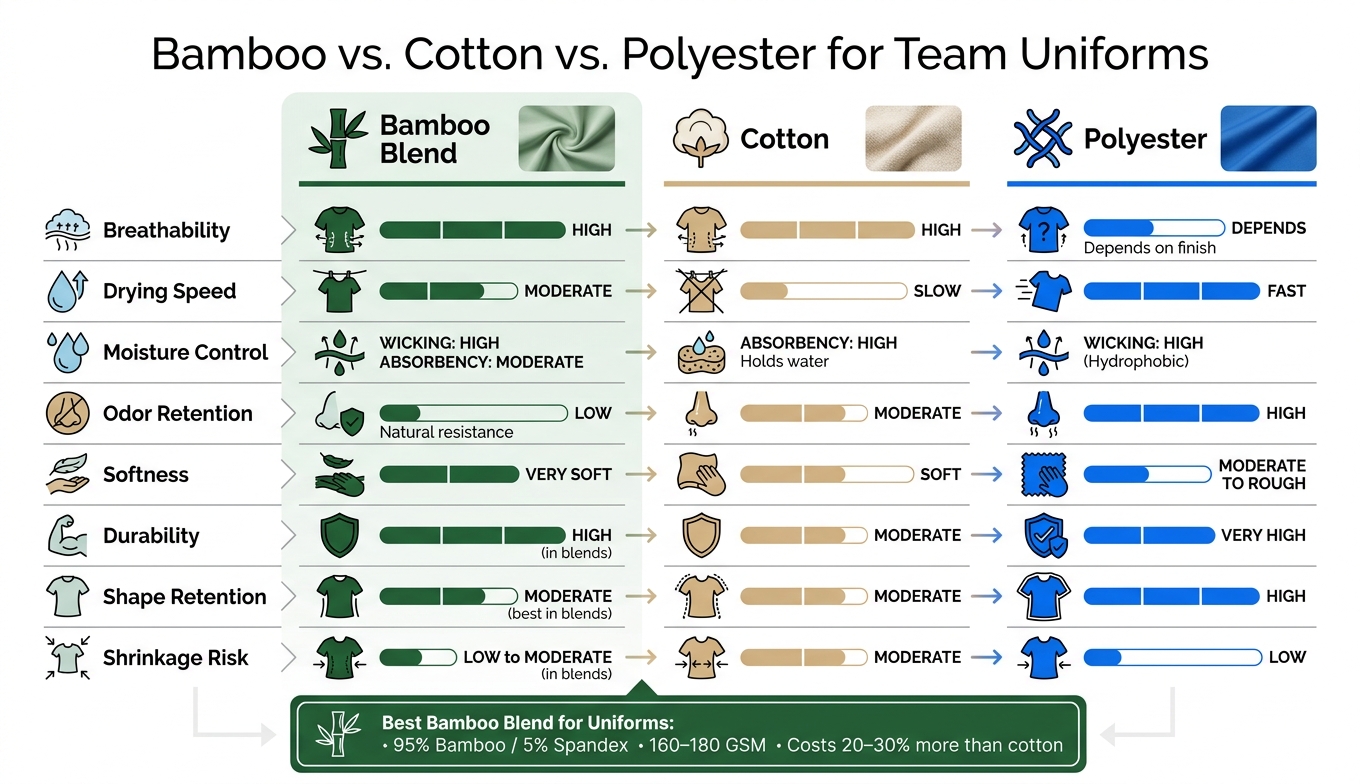
Bamboo vs. Cotton vs. Polyester: Team Uniform Fabric Comparison
After looking at each fabric on its own, this side-by-side view makes it easier to see where bamboo works best for team uniforms.
The chart below compares comfort, drying time, and wear performance at a glance.
| Performance Trait | Bamboo Blend | Cotton | Polyester |
|---|---|---|---|
| Breathability | High | High | Depends on finish |
| Drying Speed | Moderate | Slow | Fast |
| Moisture Control | High wicking; moderate absorbency | High absorbency (holds water) | High wicking (hydrophobic) |
| Odor Retention | Low (natural resistance) | Moderate | High |
| Softness | Very soft | Soft | Moderate to rough |
| Durability | High (in blends) | Moderate | Very High |
| Shape Retention | Moderate (best in blends) | Moderate | High |
| Shrinkage Risk | Low to moderate in blends; higher in pure bamboo | Moderate | Low |
Polyester dries the fastest and does the best job of keeping its shape. Cotton feels soft at first, but it tends to stay wet longer. Bamboo lands in the middle in a good way: it gives you a strong mix of comfort, airflow, and odor control, especially when used in blended uniforms.
It also does well when temperatures shift during the day, which can help in hot gyms and cooler outdoor settings. If shape hold matters, go with a bamboo-spandex blend to help cut down on sagging.
How Bamboo Works in Custom Uniform Programs
Performance matters, but team buyers also have to think about branding, comfort, and how uniforms hold up across a full season. That’s where bamboo can make sense in custom uniform programs.
Bamboo takes dye and print well, so team colors and logos can stay sharp. If your program cares as much about how the gear looks as how it feels, bamboo is worth a look.
Best Uses by Sport and Garment Type
Some garment types are a better match for bamboo than others. It tends to shine in pieces where softness and all-day wear matter most.
Training tops and practice jerseys are an easy fit. Bamboo’s soft feel can help cut down on chafing during repeated movement, which is especially helpful in high-intensity sports like basketball and soccer.
Undershirts and base layers also make sense. Bamboo is gentler on sensitive skin, so it works well for athletes who wear a base layer through long practices and layered warmups.
Warmup jackets and team travel apparel can also benefit. Bamboo’s comfort across changing temperatures helps athletes feel better during travel days, downtime, and sideline stretches.
What Team Buyers Should Check Before Ordering
Before you place a custom uniform order, make sure your supplier can work with the fabric. You’ll also want to confirm that the final garment matches your team colors, logo placement, and decoration method.
If your team also needs design support and sublimated uniforms, Wooter Apparel offers free custom design services for basketball, football, baseball, softball, and soccer.
Conclusion
Bamboo can hold up well through a full season when it’s used in a blend. It’s also a lower-impact pick, since bamboo grows fast and usually needs less water than many common fibers.
That gives bamboo clear appeal. Still, the best pick comes down to budget and climate. It tends to work best in hot, humid conditions, and it often costs 20% to 30% more than standard cotton.
If you want uniforms that last, the blend matters more than anything else. For better shape retention and stronger wash wear, go with a bamboo blend instead of pure bamboo. For teams that care most about comfort, freshness, and sustainability, bamboo is a smart choice for uniforms.
FAQs
Is bamboo better for hot-weather uniforms?
Yes. Bamboo fabric is a strong pick for hot-weather uniforms because it’s breathable, helps regulate body temperature, and pulls sweat away from the skin. That can help athletes stay cooler and drier during exercise.
For high-intensity sports in hot, humid conditions, bamboo-spandex or hybrid blends can work especially well. They pair bamboo’s cooling, odor-fighting breathability with extra stretch and better wear over time.
How long do bamboo-blend uniforms last?
Bamboo-blend uniforms are a strong pick for athletic gear and usually keep their quality through 50 or more washes. Bamboo’s natural strength helps the fabric stand up to regular practice and game-day wear.
To help them last longer, wash them in cold water and let them air dry. Wooter Apparel’s sublimation methods also help designs stay bold over time.
What bamboo blend is best for team jerseys?
The best bamboo blend comes down to what your sport asks from your gear.
For high-movement sports like basketball or soccer, bamboo with spandex is a smart pick. It offers breathability, softness, and help with friction, which matters when you’re cutting, sprinting, and changing direction all game long. You also get bamboo’s natural antibacterial benefits.
If your top priorities are durability and moisture-wicking, go with a bamboo and recycled polyester blend. It still gives you bamboo’s softness, along with antimicrobial properties, but adds the extra toughness and sweat control that many athletes want.