
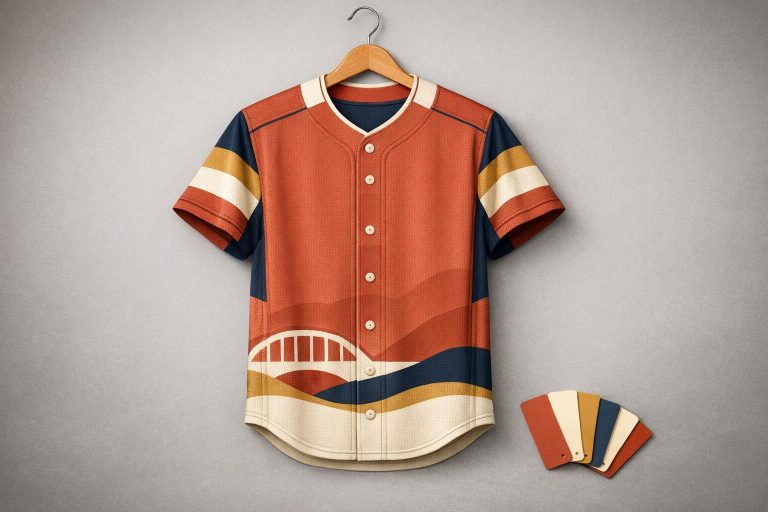
Baseball jerseys can tell stories. By incorporating local history, landmarks, and traditions into their designs, teams create uniforms that resonate deeply with their fans. From the MLB‘s City Connect series to youth leagues, jerseys have become more than sportswear – they’re a connection to community identity.
Key Takeaways:
- MLB’s City Connect series highlights local heritage, like Boston’s tribute to the Marathon and Miami’s nod to Cuban Sugar Kings.
- Designing meaningful jerseys involves researching local stories, choosing symbolic colors, and collaborating with local voices.
- Sublimation printing ensures vibrant, durable designs, ideal for custom uniforms.
This guide explores how teams can reflect their community’s spirit through thoughtful jersey designs, from selecting colors to working with production experts like Wooter Apparel.
Understanding Local Culture for Jersey Design
What Local Culture Means for Design
Local culture plays a huge role in shaping jersey designs, often drawing from geography, history, and community heritage. This could mean anything from using transit system fonts to incorporating iconic landmarks. Take the San Francisco Giants, for example – their City Connect jerseys feature fog-like textures and a Golden Gate Bridge silhouette on the sleeves, creating a strong sense of local pride.
Similarly, the Los Angeles Dodgers’ "Los Dodgers" City Connect uniforms celebrate the city’s Latino heritage with Spanish script and design elements inspired by local murals. These thoughtful details turn jerseys into more than just clothing – they become symbols of identity and pride for the communities they represent.
To achieve this level of depth and authenticity, designers need to conduct detailed research.
How to Research Local Culture
Once you’ve identified the cultural elements you want to highlight, the next step is thorough research. But don’t stop at the obvious. Sure, city seals or flags are a good starting point, but digging deeper can uncover hidden gems. Explore local sports history – especially forgotten teams – study public infrastructure like transit signs or unique architecture, and look into neighborhood-specific street art. These details can reveal a community’s true character.
"Each City Connect jersey is a unique artistic expression, incorporating elements such as local landmarks, historical references, and cultural symbols." – basesloadeddesigns.com
Engaging with the community is just as important. Talk to local historians, cultural organizations, and long-time residents – they often hold stories and insights that research alone can’t uncover. Even community slogans or missions, like "Family First" or "Road to Peace", can inspire powerful visual elements for custom button-down baseball jerseys.
Once this research is complete, the challenge becomes representing these cultural elements with care and respect.
Representing Culture Respectfully
Authenticity is key, and one way to achieve it is by collaborating with local artists. For example, Mi Orgullo partners with creators from regions like Michoacán and Jalisco to ensure their designs genuinely reflect the communities they represent.
It’s also critical to avoid falling into clichés or stereotypes. If you’re using indigenous patterns or heritage-specific imagery, involve members of those communities in the design process. This ensures the design not only respects but also celebrates the depth and diversity of the culture. By working closely with local voices, designers can create jerseys that truly honor the stories and traditions they aim to represent.
sbb-itb-4d95ad3
Building a Color Story Around Local Culture
Color Combination Types for Baseball Jersey Design
Picking Colors with Local Meaning
Colors have a unique way of connecting a jersey to its roots, drawing inspiration from local landmarks, traditions, and even the weather. Take the San Francisco Giants, for instance. Their jerseys combine orange and white with a fog-like texture on the sleeves, referencing both the iconic Golden Gate Bridge and the city’s famous marine layer.
Community events are another treasure trove for color ideas. The Boston Red Sox went bold with yellow and sky blue in their City Connect jerseys in April 2021. These colors weren’t random – they came straight from the Boston Marathon finish line, creating a powerful link to the city’s resilience.
Sports history can also be a goldmine for meaningful palettes. The Miami Marlins, for example, drew inspiration from the 1950s Cuban Sugar Kings, weaving a historical narrative into their color choices.
Balancing Visual Appeal and Practicality
While cultural significance plays a big role, a jersey also needs to perform on the field. Colors must stand out under stadium lights, in bright sunlight, and during fast-paced action. High-contrast combinations like yellow and navy blue or off-white and cherry red often maintain their visibility and appeal in these conditions.
Fabric is another key player in this equation. As Mi Orgullo Brand puts it:
"Advanced materials and innovative stitching techniques ensure that these jackets offer both style and functionality."
When using bold or dark colors tied to local heritage, it’s crucial to pick fabrics that support breathability and moisture-wicking. For example, a deep black jersey inspired by regional culture may look stunning, but it can trap heat – making fabric quality just as important as the color itself.
Building a Unified Color Scheme
After selecting culturally meaningful colors, the next step is creating a clear color hierarchy: primary, secondary, and accent. A smart approach might involve anchoring the design with two related shades – like two greens inspired by a local landscape – and using white or another neutral tone to keep the overall look light and balanced.
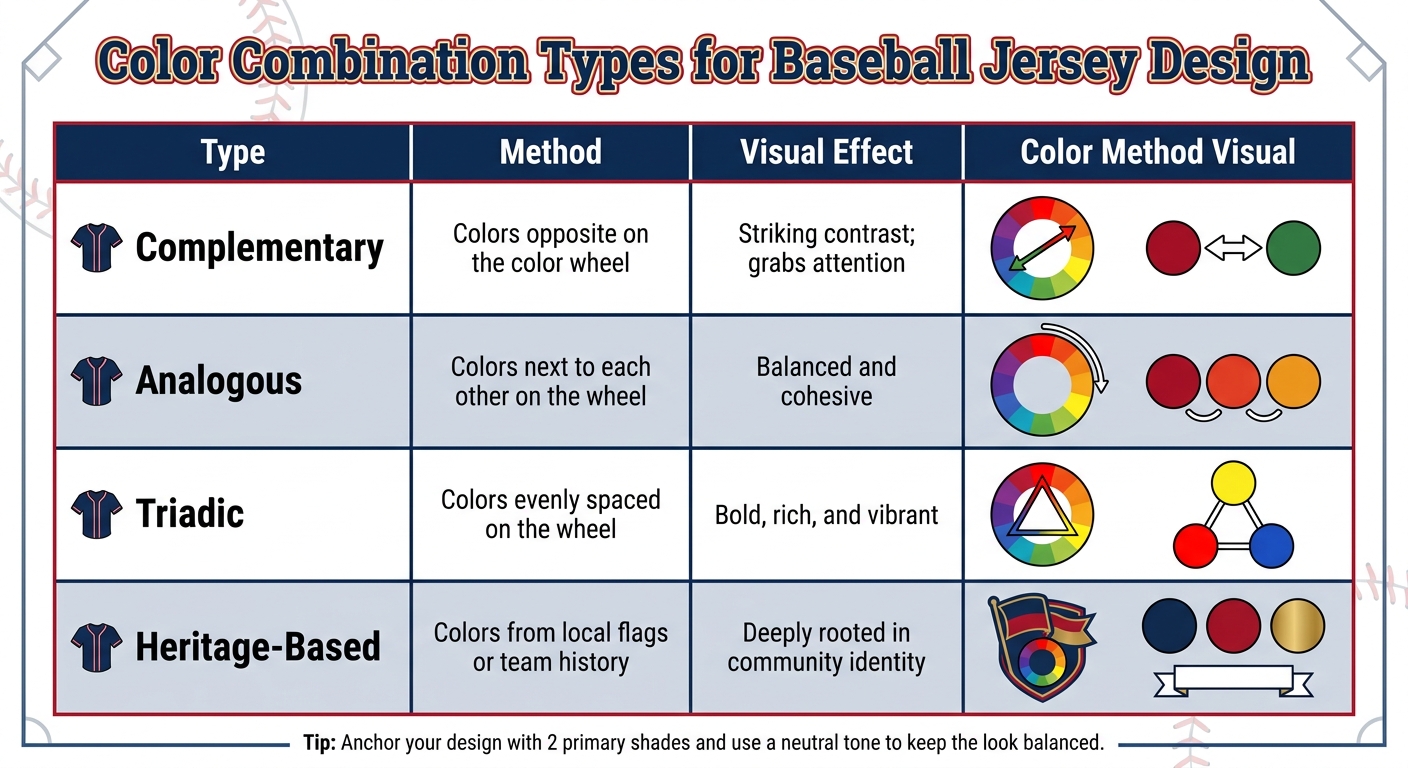
Here’s a quick guide to how different color combinations can shape the final design:
| Combination Type | Method | Visual Effect |
|---|---|---|
| Complementary | Colors opposite on the color wheel | Striking contrast; grabs attention |
| Analogous | Colors next to each other on the wheel | Balanced and cohesive |
| Triadic | Colors evenly spaced on the wheel | Bold, rich, and vibrant |
| Heritage-Based | Colors from local flags or team history | Deeply rooted in community identity |
It’s not just about the jersey – consistency across the entire uniform is essential. Use the primary color throughout the pants, cap, and accessories, while reserving accent colors for subtle details like piping, number outlines, or sleeve trims. This level of detail is especially effective on crew neck baseball jerseys where the clean neckline allows the colors to pop. This cohesive approach ensures the uniform looks intentional and polished, setting the foundation for adding custom graphics and other design elements. A thoughtful color strategy ties everything together, making the design both meaningful and visually striking.
Adding Graphic Patterns and Motifs to Jersey Designs
Types of Graphics to Consider
After locking in your color scheme, the next step is to add graphics that tell a story. The goal is to reflect your local identity while keeping the design visually appealing. You have three main options to explore: abstract patterns, heritage-inspired motifs, and local icons.
Abstract patterns – like geometric designs inspired by Indigenous textiles or wave-like shapes symbolizing a coastal vibe – add texture without being too literal. Heritage motifs take it further, drawing inspiration from historical symbols, regional flags, or traditional art. For a more direct approach, local icons can feature recognizable imagery such as a city skyline, native plants, or famous landmarks. Current trends also include graffiti-style lettering and 3D neon effects, blending urban aesthetics with classic baseball design.
To keep the design clean, decide early on how bold you want the graphics to be. Overloading the jersey with too many elements can make it look cluttered.
Where to Place Patterns on a Jersey
Once you’ve chosen your graphics, placement is key to ensuring they enhance the design without interfering with functionality. The best spots for bold patterns are the sleeves, side panels, and shoulder yokes. These areas allow for eye-catching designs while keeping the front and back clear for names and numbers.
Side panels are perfect for continuous designs, such as flowing patterns or repeating shapes, as their vertical layout provides ample space. Shoulder yokes work well for symmetrical graphics that frame the chest, while sleeves are great for intricate cultural artwork that remains visible even during movement. The golden rule? Patterns should never overlap with names or numbers – readability is critical on the field.
Sketching a rough layout can help you visualize how everything will fit together.
Technical Requirements for Printing
Once you’ve mapped out the design, understanding the printing process is crucial to ensuring your vision comes to life. Sublimation printing is the go-to method for custom jerseys. Unlike screen printing, sublimation embeds the dye directly into the fabric, keeping patterns vibrant, breathable, and resistant to peeling. This method allows for complete customization, including side panels, sleeves, and collars.
One challenge is translating flat, digital designs to a 3D jersey. As Wooter Apparel explains:
"Design sublimation sportswear by aligning on-screen designs with actual jersey contours and seam placements."
To avoid distortion, submit your files in vector formats like Adobe Illustrator (.ai) for sharp results at any size. Using Pantone Color Codes ensures patterns don’t clash with team colors. Sublimation works best with synthetic fabrics such as 100% polyester, polyester microfiber, or eco-friendly options like Repreve. These materials bond well with sublimation dyes and maintain clarity through heavy use. Production time typically ranges from 3–4 weeks, with rush options available in 2–3 weeks.
With these elements in place, you’re ready to collaborate with professionals to bring your custom jersey design to life.
Working with Wooter Apparel for Custom Jerseys
What Wooter Apparel Offers
Once your design is ready, finding a production partner who understands the intricacies of culturally inspired jerseys is key. Wooter Apparel stands out by offering free custom design services through its in-house team, helping transform cultural concepts into polished designs.
Their fully sublimated production process ensures that detailed patterns – whether they reflect Indigenous geometric designs, local flora, or iconic city landmarks – are embedded directly into the fabric rather than applied on top. According to Wooter Apparel:
"Our colors remain vibrant and durable. To achieve the best print results our color table contains the chromatic recipes in order to create the best possible definition on fabric."
For teams that rely on historically significant or specific colors, Pantone matching guarantees precise color reproduction. Even if your cultural motifs are available only as raster images, Wooter’s designers can redraw them in vector format (for a fee), ensuring clean and scalable artwork.
This seamless blend of design expertise and production capability simplifies the entire ordering process.
How the Design Process Works
The ordering process at Wooter is designed to be smooth and straightforward. Using their automated platform, you can select your apparel type, upload your design concept (or pick from existing templates), and provide team details. From there, Wooter’s in-house designers create iterative mockups – at no extra charge – until the design meets your expectations.
"Our experienced designers consistently craft unique sports team designs."
Once the final design is approved and confirmed to comply with league standards, production begins. Standard turnaround time is 3–4 weeks, with an option to expedite the process if needed.
Pricing is competitive, too. Baseball jerseys start at $24.99 per jersey, while full uniform sets begin at $49.99 per set. Plus, there are no minimum order requirements, making it accessible for teams of all sizes.
Extending Local Themes to the Full Uniform
A jersey inspired by local culture makes a strong statement, but extending that theme to the entire uniform amplifies the impact. A cohesive design across the full team kit strengthens your team’s identity far beyond the jersey. Wooter makes it easy to customize not just jerseys but also pants, socks, hats, cage jackets, and even equipment like bat backpacks and rolling bat bags – all through the same platform.
To help designers get started, Wooter offers downloadable templates in formats like Illustrator, CorelDRAW, and EPS for every garment type. This level of customization allows teams to create a unified look – like a coastal team incorporating wave-inspired patterns from jersey sleeves to the panels of a bat bag.
With a 4.9/5-star rating from 1,366 reviews, customers consistently praise Wooter Apparel for its vibrant colors and precise final products. Their attention to detail ensures that your team’s story is not only told but worn with pride.
Conclusion: Bringing Local Stories to Life on the Field
Baseball jerseys inspired by local culture start with a deep dive into the colors, symbols, and stories that define a community. The key is to make intentional design choices – selecting colors that carry real meaning, placing symbols where they’ll stand out, and choosing production methods that ensure every detail shines. Even typography plays a critical role, offering an immediate reflection of the community’s identity.
The final product, such as custom V-neck baseball jerseys, should bring every design element together seamlessly. Sublimation printing, for instance, captures intricate patterns and gradients while maintaining durability.
"The font tells your story even before you throw the first pitch on the ground." – Affordable Uniforms Online
Creating jerseys that respectfully represent a culture transforms them from ordinary uniforms into symbols of pride and connection.
FAQs
How do I find local stories worth putting on a jersey?
Creating a jersey design that resonates with your community starts by tapping into what makes it special. Think about the unique landmarks, historical events, or symbols that define your area’s heritage. These elements tell a story and give the design a personal touch.
You could also explore traditions or patterns tied to indigenous cultures in your region. Social themes or causes that matter locally can add even more depth to the design. By weaving these inspirations into the jersey, you’ll create something that feels deeply connected to the community and its identity.
How can we use cultural symbols without stereotyping?
To incorporate cultural symbols respectfully into baseball jersey designs, it’s important to focus on elements that genuinely reflect the culture’s history and identity. This could include traditional patterns, representations of local plants, or icons with deep cultural significance. Working closely with community members or cultural experts is key to ensuring the designs are accurate and avoid any form of misappropriation. By doing so, the designs can celebrate the culture in a way that promotes pride and understanding, steering clear of clichés or stereotypes.
What files and fabric work best for sublimated jerseys?
Polyester fabrics are the top choice for sublimated jerseys because sublimation ink bonds directly with polyester fibers, ensuring long-lasting and vibrant designs. Two excellent options are Peached Polyester Spandex (85/15) and polyester knits with a weight range of 161–200 GSM. These materials provide a combination of bold prints, softness, and flexibility, making them ideal for athletic wear.
On the other hand, natural fibers like cotton or rayon don’t work well with sublimation. The ink struggles to bond with these fibers, leading to dull or faded designs that lack durability.