
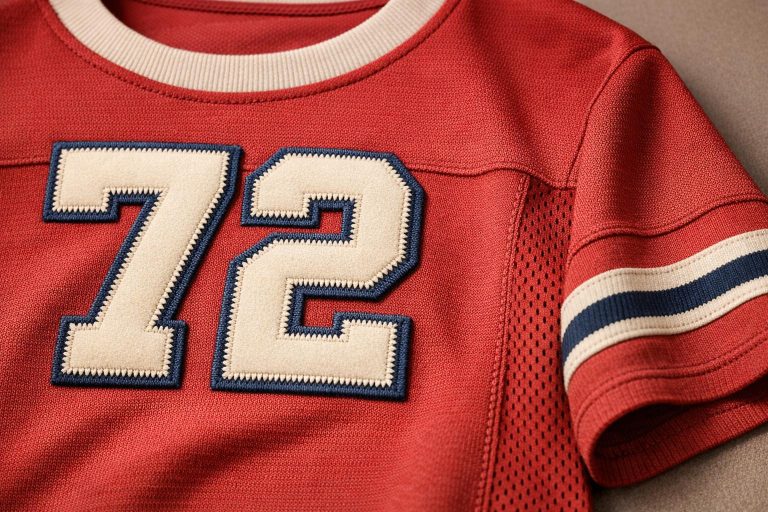
Throwback jerseys combine sports nostalgia with modern performance. They recreate historical team uniforms using vintage colors, fonts, and logos, while incorporating modern materials like lightweight, breathable fabrics for durability and comfort. These jerseys honor team heritage, celebrate milestones, and have commercial appeal as fan favorites.
Key elements for designing throwback jerseys include:
- Historical Research: Use archives like MLBCollectors.com or the Gridiron Uniform Database to ensure accuracy in colors, fonts, and patterns.
- Retro Design Features: Common elements include script wordmarks, block lettering, pinstripes, and vintage color palettes like powder blue or cream.
- Modern Compliance: Adjust retro designs to meet today’s league rules, such as number size and visibility requirements.
- Advanced Materials: Use moisture-wicking polyester and sublimation printing for durability and performance.
To bring your design to life, partner with experienced manufacturers like Wooter Apparel, who specialize in retro-inspired custom jerseys with precise color matching and quick turnaround times.
Pro Tip: Focus on the details – accurate colors, typography, and construction – while ensuring the design meets modern athletic standards.
The Rise of Mitchell & Ness Throwback Jerseys
sbb-itb-4d95ad3
Researching Historical Jersey Styles
Thorough research is the backbone of creating authentic throwback designs and making confident design decisions.
Where to Find Historical Inspiration
A wealth of archives exists to help uncover the details of historical jerseys. MLBCollectors.com is a treasure trove for baseball enthusiasts, offering a database of actual game-worn MLB uniforms and caps from 1900 to 2023. The site includes detailed photos of tags, fabrics, and other specifics. For a broader dive into baseball’s history, the SABR-Rucker Archive houses nearly 80,000 images covering Major Leagues, Negro Leagues, college teams, and international squads, spanning 150 years.
"The catalog for the SABR-Rucker Archive includes 27 distinct metadata fields, ensuring that the history contained in these images is recorded to the greatest extent possible." – Society for American Baseball Research (SABR)
Football designers can turn to the Gridiron Uniform Database, which offers a detailed history of NFL uniforms, including helmet decals. For basketball, the Basketball Jersey Archive is a go-to resource, covering NBA, WNBA, NCAA, and international team designs. It even tracks specialty jerseys, such as "Classic" and "City" editions.
Common Retro Design Elements
Vintage jerseys have a distinct style that makes them instantly recognizable. One standout feature is script wordmarks, where team names appear in elegant cursive across the chest. Other retro staples include block and Gothic lettering for numbers and city names. Pinstripes, synonymous with teams like the Yankees and Cubs, are another hallmark, while racing stripes (vertical side stripes on jerseys and pants) were a defining feature of 1980s sportswear.
Color played a pivotal role in retro designs, too. Powder blue was a favorite for road uniforms in the 1970s and 1980s, while cream or off-white home jerseys lent a softer, vintage feel reminiscent of pre-bleached fabrics. Construction details also evolved over time: full-button plackets were standard for much of the 20th century, with V-neck pullovers gaining popularity in the 1970s and 1980s. Fabric choices shifted as well – wool flannel dominated until the 1970s, when double-knit polyester became the norm.
By cataloging these elements, designers can streamline their creative process and ensure historical accuracy.
Organizing Research for Design
To stay organized, group your references by decade and league. This approach allows you to track changes in key elements like stripe thickness, numeral fonts, and sleeve cuts over time.
Tim Brulia from the Gridiron Uniform Database highlights the importance of reliable sources:
"Whenever possible, I’ve relied upon newspaper photos from the era, as opposed to general magazine photos or pictorial books… at times I may be skeptical of the dates listed for the non-newspaper photographs." – Tim Brulia, Researcher, The Gridiron Uniform Database
Document every detail – stripe patterns, fonts, silhouettes, and color schemes. Since many early photos are in black-and-white, cross-referencing visual archives with written descriptions can help verify colors. Be sure to note any league rule changes that might have influenced uniform designs.
Balancing Retro Aesthetics with Modern Requirements
Once the historical research is complete, the next challenge is adjusting those retro designs to meet current regulations. Vintage styles often predate today’s league requirements, so tweaks are essential to ensure compliance while preserving the nostalgic charm.
Understanding Modern Uniform Rules
Every sport operates under its own set of uniform guidelines. For example, in NBA basketball, front numbers must be at least 6 inches tall, while back numbers need to measure a minimum of 8 inches for clear visibility. Similarly, organizations like Little League and the NCAA enforce rules regarding logo size, patch placement, and color contrast to ensure uniforms remain functional and easy to read on the field.
Typography is another area where rules come into play. Script fonts, often popular in older designs, are generally prohibited for numbers because they can be difficult for officials to read during fast-paced action. Instead, block or sans-serif fonts are preferred as they meet compliance standards while maintaining clarity. These rules ensure that designers can incorporate retro elements without compromising legibility.
Adapting Retro Features for Compliance
The good news is that most retro elements can be adapted with only minor changes. For instance, a powder blue road jersey from the 1970s can maintain its signature color and stripe pattern, but the number size might need to be increased to meet modern visibility requirements. Rather than viewing these rules as limitations, they can be seen as an opportunity to creatively blend old and new.
When working with logos, using vector formats like .SVG or .AI files ensures they scale properly across different jersey sizes without losing detail. If historical logos are trademarked, designers can create custom versions inspired by the era’s style – matching the color schemes, letterforms, and overall aesthetic – without directly copying the original. This approach pays homage to vintage designs while avoiding legal complications.
"The transition from 2D sketches to 3D environments has reduced design production times by nearly 25% while allowing for much more daring aesthetic choices." – Marcus Sterling, Lead Apparel Consultant, Elite Athletics
A great example of blending retro authenticity with modern standards comes from Manchester United. In 2008, the team wore a kit styled after their 1958 uniform, featuring a traditional 1–11 numbering system and no sponsor logos or branding. While such exceptions are rare, they show how historical accuracy and modern compliance can work together when the design’s intent is clear.
Retro vs. Modern Compliance: Side-by-Side Comparison
Here’s a quick look at how historical design elements are adapted to meet today’s standards:
| Design Element | Historical Version | Modern Adaptation |
|---|---|---|
| Number font | Ornate script or hand-lettered | Bold block or clean sans-serif |
| Number size | Varied, often undersized | Front: min. 6 in.; Back: min. 8 in. |
| Fabric | Heavy wool flannel | Lightweight polyester double-knit or micro-mesh |
| Logo artwork | Hand-painted or embroidered originals | Vector-based, scalable files (.SVG/.AI) |
| Helmet color | Era-accurate alternate colors | Historically accurate designs allowed post-2022 rule change |
| Patch placement | Unregulated, decorative | League-specified zones and size limits |
| Number contrast | Inconsistent, era-dependent | High contrast required for official visibility |
Key Design Components for Throwback Jerseys
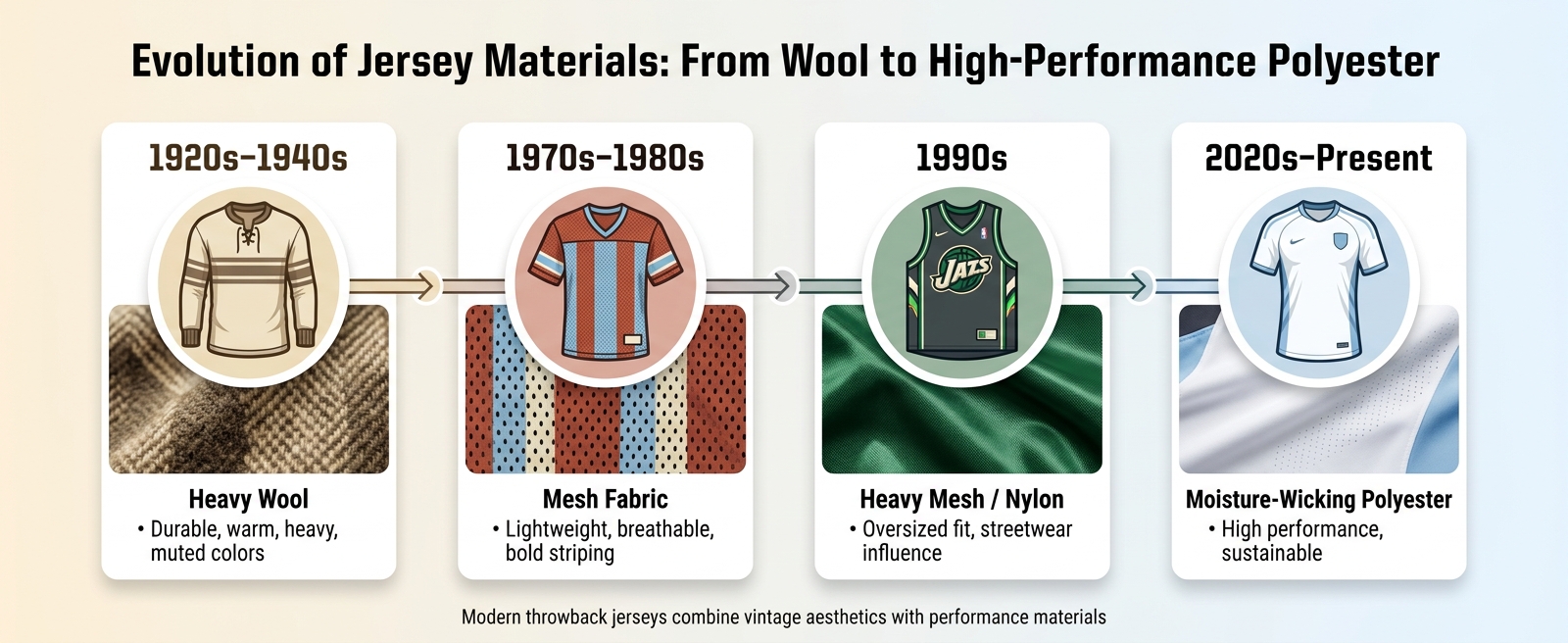
Evolution of Jersey Materials: From Wool to High-Performance Polyester
Throwback jerseys combine historical inspiration with modern functionality, creating custom uniforms that celebrate the past while meeting today’s performance standards.
Retro Color Palettes and Striping
The hallmark of a throwback jersey lies in its use of deep, muted colors rather than bright, primary shades. Colors like Cobalt Blue, Plum Noir, Jade, and Persimmon are staples of the retro look. To enhance the vintage feel, many designs replace stark white with a softer, cream-based tone known as Cloud Dancer, especially popular in soccer and softball kits. Bold chest panels and wide shoulder stripes, often accented with neon trims, ensure the jersey is both visually striking and highly legible from any angle.
"Vintage fonts, classic stripe patterns, monochrome crests, and muted color palettes give these jerseys a timeless feel while modern moisture-wicking fabrics ensure contemporary performance." – Camille Dupont, Creative Director, RareCustom
Typography and Logos
Typography plays a crucial role in evoking the feel of past decades. Retro and slab-serif fonts with heavy, squared-off serifs are ideal for capturing the spirit of the 1970s through the 1990s. Script lettering remains a go-to for team names on baseball jerseys, but it’s best avoided for numbers or player names, where readability is critical. A good rule of thumb is to stick to two typefaces: one script for team names and a clean block font for numbers, ensuring the design stays cohesive and uncluttered. Chest lettering should be 2–4 inches tall and must remain legible even when scaled down to 10% of its actual size on a screen.
"An ornate script ‘3’ is nearly impossible to read from the stands at speed." – Camille Dupont, Creative Director at RareCustom
The choice of fabric further anchors the retro aesthetic while delivering modern-day performance.
Fabric and Construction
Jersey materials have evolved over the decades, with each era bringing its own distinctive look and feel to the game.
| Era | Primary Material | Key Characteristics |
|---|---|---|
| 1920s–1940s | Heavy Wool | Durable, warm, heavy, muted colors |
| 1970s–1980s | Mesh Fabric | Lightweight, breathable, bold striping |
| 1990s | Heavy Mesh/Nylon | Oversized fit, streetwear influence |
| 2026 (Modern) | Moisture-wicking Polyester | High performance and sustainable |
Modern throwback jerseys embrace advanced materials like moisture-wicking polyester, which balances retro aesthetics with athletic functionality. For intricate designs, sublimation printing is the preferred method. This technique allows for detailed graphics without compromising breathability, while mesh ventilation panels can double as a design feature.
"The construction becomes the aesthetic, blurring the line between function and fashion." – Camille Dupont, Creative Director, RareCustom
Working with Custom Jersey Manufacturers
Once your design components are finalized, it’s time to turn your vision into production-ready artwork. This stage is where your research and creative efforts come together to create the actual jerseys.
Preparing a Detailed Design Brief
A well-prepared design brief is essential for minimizing revisions and ensuring your design is accurately translated into the final product. Be sure to include:
- The era or season you’re referencing (e.g., "1991 national championship").
- Exact Pantone Solid Coated C color codes.
- Logo and graphic files in vector formats such as AI, EPS, or CDR. Make sure fonts are outlined or embedded to avoid any unexpected changes.
"When providing your artwork to Wooter Apparel all objects in your design must be in vector format only with fonts provided or embedded in the document provided." – Wooter Apparel
Additionally, consider any league-specific compliance rules that might impact retro design elements. For example, wordmark placement or helmet decal regulations could influence your design choices. The more detailed and precise your brief, the fewer revisions you’ll need to go through.
Reviewing Mockups and Samples
When reviewing digital mockups, take the time to verify every design detail. Confirm that:
- Pantone references match the historical colors you’re replicating.
- Typography placement aligns with your design intent.
- Stripe widths, panel proportions, and other elements reflect the era you’re recreating.
Keep in mind that on-screen colors may not perfectly match printed fabric, so double-check these details carefully. If your manufacturer provides sport-specific templates – like full-button baseball or V-neck basketball layouts – use them. These templates mirror the actual garment’s cut, offering a more accurate preview of the final product. This thorough review process is key to ensuring your jerseys turn out as envisioned.
Advantages of Wooter Apparel‘s Services
Once your mockups are finalized, choosing a manufacturer with expertise in retro designs is crucial. Wooter Apparel stands out with its fully sublimated printing process, which embeds colors directly into the fabric. This method ensures that retro patterns, vintage gradients, and intricate chest graphics are long-lasting and vibrant.
Additionally, Wooter offers a free custom design service where their team can redraw logos that aren’t already in vector format and match historical colors using precise Pantone references.
"Pantone is a global standard that ensures we’re all speaking the same language when we talk about color, allowing us to do a better job of producing the colors that you ordered." – Wooter Apparel
With a 4.9/5 rating from 1,366 reviews, Wooter is frequently praised for its accurate color reproduction and quick turnaround times, often as short as three weeks. These qualities make them a dependable partner for bringing your throwback jersey vision to life.
Conclusion: Designing Throwback Jerseys That Last
Creating a throwback jersey that stands the test of time requires a thoughtful process: dive into historical inspiration, nail down accurate color schemes and typography, and collaborate with a manufacturer skilled in blending vintage aesthetics with modern performance materials.
The best throwback designs don’t just mimic the past – they feel intentionally crafted. Whether you’re recreating a specific era or crafting a retro-inspired original, the details make all the difference. Think carefully chosen color palettes, authentic lettering styles, and understated graphics. These elements are what elevate a jersey from feeling like a costume to becoming a timeless piece. Of course, even the most well-thought-out design needs expert production to truly shine.
That’s where the right production partner comes in. Companies like Wooter Apparel excel at bringing vintage visions to life. Whether replicating iconic historical designs or creating something new with a retro twist, they use advanced sublimation techniques to ensure vivid colors and durable construction – perfect for both collectors and active players.
"Retro jerseys are something of a trend now among NBA teams… there are many gems that people have grown to love and try to collect or even duplicate for their own rec league team." – Wooter Apparel
FAQs
How can I verify the original colors of an old jersey from black-and-white photos?
To figure out the original colors of a jersey from black-and-white photos, start by researching the team’s historical color choices and the common styles from that time period. Jerseys from the 1920s to the 1940s often featured muted shades like navy, maroon, or brown. You can look into vintage collections, archives, or even surviving examples for clues. Reaching out to experts or vintage sportswear collectors can also help, as they often have detailed knowledge about era-specific designs and materials.
What retro elements are most likely to break today’s uniform rules?
Retro design elements like intricate patterns, bold fonts, and gradient effects often run into issues when paired with modern uniform rules. These regulations typically emphasize simplicity, clarity, and maintaining a consistent team identity, making the bold and elaborate nature of retro styles a challenging fit.
What files and specs should I send Wooter Apparel for accurate production?
To get your custom jerseys produced just the way you want, make sure to send your design files in vector formats such as AI, EPS, or CDR. Include every design element – logos, graphics, and layouts – with the correct colors and fonts. For team colors, provide Pantone values or use Wooter Apparel’s color chart. Don’t forget to specify where logos should be placed. These details are crucial to bring your vision to life.