
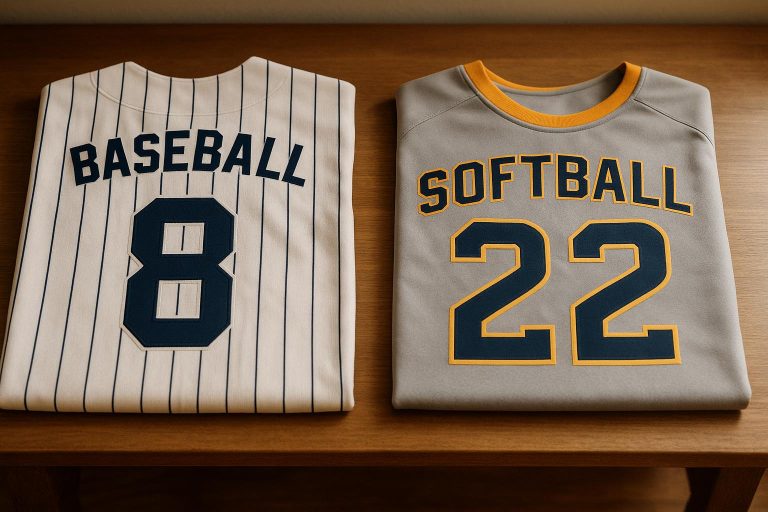
When it comes to jersey number sizes, baseball and softball share many similarities but also have key differences. Both sports prioritize visibility, compliance with league rules, and a polished team appearance. Here’s a quick breakdown:
- Youth Jerseys: Front numbers are 3 inches tall, back numbers are 6 inches tall for both sports.
- Adult Jerseys: Front numbers are 4 inches tall, back numbers are 8 inches tall for both sports.
- Softball-Specific: Softball often includes numbers on shorts (3 inches for youth, 4 inches for adults) and may have stricter size requirements for front numbers (e.g., 3 inches wide and 6 inches tall).
- Name Lettering: Baseball uses 3-inch lettering for adults, while softball uses 2.5-inch lettering.
Quick Comparison
| Category | Baseball | Softball |
|---|---|---|
| Youth Front Numbers | 3 inches | 3 inches |
| Youth Back Numbers | 6 inches | 6 inches |
| Adult Front Numbers | 4 inches | 4 inches |
| Adult Back Numbers | 8 inches | 8 inches |
| Youth Name Lettering | 2 inches | 2 inches |
| Adult Name Lettering | 3 inches | 2.5 inches |
| Shorts Numbers (Youth) | Not standard | 3 inches |
| Shorts Numbers (Adult) | Not standard | 4 inches |
Both sports aim for clear identification on the field, but softball’s additional shorts numbers and slightly smaller adult name lettering make it stand out. Always check your league’s specific rules to ensure compliance.
Baseball Jersey Number Sizing Standards
Baseball places a strong emphasis on clarity and consistency, and this extends to jersey number sizing. These guidelines ensure that numbers are easily visible across all levels of play, maintaining uniformity throughout leagues.
Youth Baseball Jersey Number Dimensions
Youth baseball jerseys are designed with smaller players in mind, featuring appropriately scaled numbers. Front numbers are 3 inches tall, while back numbers measure 6 inches. These dimensions are standard for players aged 6–14.
The reduced sizes maintain the jersey’s overall balance. For example, a 6-inch back number on a youth jersey mirrors the proportional look of an 8-inch number on an adult uniform.
When player names are added, youth jerseys typically use 2-inch lettering. This ensures the names fit well without overcrowding the smaller jersey space.
These dimensions provide a solid foundation for the standardized sizes used in adult leagues.
Adult Baseball Jersey Number Dimensions
Adult baseball jerseys follow a standard sizing system: 4-inch front numbers and 8-inch back numbers. These measurements are widely used in high school, college, and recreational adult leagues across the United States.
The 8-inch back number ensures visibility from the stands and dugouts, while the 4-inch front number offers easy identification for umpires and opposing teams without overwhelming the chest area.
When names are included, adult jerseys use 3-inch lettering to complement the larger number sizes.
| Jersey Type | Name Size | Front Number Size | Back Number Size |
|---|---|---|---|
| Youth | 2″ | 3″ | 6″ |
| Adult | 3″ | 4″ | 8″ |
Baseball Jersey Customization Guidelines
Customization goes beyond just sizing, with additional factors impacting visibility and compliance. Material matters – stretch fabrics can distort the appearance of numbers, so adjustments may be necessary for proper fit and readability.
Color contrast is another key consideration. High contrast between the numbers and jersey fabric ensures better visibility. For instance, dark numbers on light jerseys or light numbers on dark jerseys are ideal and often required by league rules.
Standard number placement is also crucial, though some leagues may specify unique requirements, such as stroke width, positioning, or approved fonts. Professional and collegiate teams occasionally deviate from standard sizing for special events or retro designs, but these exceptions must still balance tradition, visibility, and compliance with regular season guidelines.
For teams looking to customize their uniforms, working with experienced providers can ensure a design that meets both aesthetic preferences and league regulations.
Softball Jersey Number Sizing Standards
Softball jersey sizing follows principles similar to baseball but includes a few adjustments to fit the unique needs of the sport. These standards ensure numbers are easily visible while accommodating the wide range of players and league rules in softball.
Youth Softball Jersey Number Dimensions
For youth softball jerseys, the standard dimensions are 3-inch numbers on the front and 6-inch numbers on the back. These sizes are ideal for players aged 6–14, providing a balanced look on smaller uniforms.
Many leagues also enforce minimum size requirements for numbers. For instance, front numbers must often measure at least 3 inches wide and 6 inches tall, while back numbers need a minimum height of 6 inches for youth players. Teams should always confirm their league’s specific rules to ensure compliance. These consistent dimensions help maintain uniformity across youth leagues.
Adult Softball Jersey Number Dimensions
Adult softball jerseys typically stick to the same sizing standards as baseball: 4-inch numbers on the front and 8-inch numbers on the back. If names are added to the jerseys, the lettering is usually 2.5 inches tall. The larger back numbers improve visibility during gameplay, making it easier for umpires, teammates, and spectators to identify players.
Softball Jersey Customization Guidelines
While number sizing follows set standards, customization allows teams to tailor jerseys for better fit and style. Many teams now opt for stretch fabrics and custom fits to accommodate different body types and enhance comfort and performance. Stretch materials are particularly practical, as they help maintain proper proportions even as uniforms adjust to players’ movements and growth. This approach can also reduce the need for mid-season uniform replacements.
Color contrast is another key factor. High-contrast color combinations ensure that numbers are easy to read, whether by umpires during fast-paced plays or by spectators from a distance. Some leagues may also have additional rules, such as minimum width requirements for numbers or specific placement guidelines, like positioning front numbers in designated areas.
For teams looking to balance functionality and aesthetics, consulting professionals for fabric choices and sizing adjustments can help create jerseys that meet both league standards and team preferences.
Baseball vs. Softball Jersey Number Size Comparison
Baseball and softball jerseys share almost identical number sizing, with only slight differences that reflect the unique characteristics of each sport’s uniform. These distinctions highlight the customization practices that cater to the specific needs of both sports.
Size Comparison Chart: Baseball vs. Softball
The sizing standards for baseball and softball jersey numbers are largely the same, with a few key differences:
| Category | Baseball | Softball |
|---|---|---|
| Youth Front Numbers | 3 inches | 3 inches |
| Youth Back Numbers | 6 inches | 6 inches |
| Adult Front Numbers | 4 inches | 4 inches |
| Adult Back Numbers | 8 inches | 8 inches |
| Youth Name Lettering | 2 inches | 2 inches |
| Adult Name Lettering | 3 inches | 2.5 inches |
| Shorts Numbers (Youth) | Not standard | 3 inches |
| Shorts Numbers (Adult) | Not standard | 4 inches |
The most noticeable difference lies in the inclusion of shorts numbers for softball uniforms. Softball jerseys feature shorts numbers – 3 inches for youth and 4 inches for adults – while baseball uniforms do not typically include this as a standard feature. Additionally, adult name lettering differs slightly, with baseball using 3-inch letters compared to softball’s 2.5-inch standard.
Why the Standards Differ
The differences in jersey number sizing stem from the distinct gameplay and visibility requirements of each sport. Both baseball and softball share a common heritage and similar gameplay needs, which explains the consistency in most sizing standards. Numbers need to be easily visible for referees, coaches, and spectators, ensuring smooth gameplay and adherence to league rules.
Softball uniforms, for instance, require front numbers to be at least 3 inches wide and 6 inches high, positioned to the left of the midriff. Baseball follows similar size guidelines but allows more flexibility in number placement. The addition of shorts numbers in softball further emphasizes the subtle design differences between the two sports.
This alignment in sizing standards benefits teams and leagues by simplifying uniform sourcing, allowing suppliers to cater to both sports with minimal adjustments.
sbb-itb-4d95ad3
Best Practices for Jersey Number Sizing
When it comes to designing sports uniforms, getting the jersey number sizing right is key. Not only does it ensure compliance with league rules, but it also makes the uniform visually appealing and functional. Here’s how to make sure your designs hit the mark.
Number Sizing Guidelines
Start with league rules. Always check the specific dimensions and placement requirements for your league. These rules are non-negotiable, so they should be your first priority.
Prioritize visibility. Numbers should be easy to read, even from the stands. Bold, block-style fonts work best, and proper spacing between numbers and other design elements prevents clutter.
Use high-contrast colors. Pairing colors that stand out against each other makes numbers pop. For instance, red numbers on a blue jersey are much easier to see than colors with similar tones.
Plan for growth with youth uniforms. For younger players, ordering slightly larger sizes can accommodate growth spurts, especially when players fall between standard measurements.
Double-check number placement. Ensure the numbers are positioned according to league rules. Proper placement helps with visibility and keeps the design compliant.
Using Custom Design Services
To execute these guidelines effectively, teaming up with professional designers can make all the difference. Experienced uniform providers not only ensure compliance but also help refine your design.
Provide clear instructions upfront. Share your league’s rules, team colors, and any special requirements (like numbers on shorts for softball) with your designer. This streamlines the process, allowing you to focus on the creative aspects like logos and overall style.
"The design team took my thoughts and created several perfect options for our swim team, using our logo created by one of our swimmers. The team absolutely loves the fit and comfort of the warm ups and wears them with pride." – Tammy S.
Use revision opportunities wisely. Most custom design services offer multiple rounds of revisions. Take advantage of this to fine-tune number sizes, adjust contrast, and double-check compliance with league standards.
"Designs were awesome and any changes were made quickly and precise." – Kythe H.
Plan for tight deadlines. Established providers can often deliver large orders in as little as three weeks. If you’re on a tight schedule, choose a provider known for quick turnarounds.
Think beyond just the jersey. A cohesive uniform includes matching jerseys, pants, and accessories. Ordering a complete package not only ensures consistency in number sizing and color matching but can also save money compared to piecemeal orders.
Conclusion
This guide has highlighted how accurate jersey number sizing plays a crucial role in enhancing team performance and ensuring visual clarity. Understanding the differences in sizing standards is essential for creating professional, league-compliant uniforms. For baseball and softball, youth jerseys typically follow a standard of 3″ numbers on the front and 6″ on the back, while adult jerseys use 4″ front numbers and 8″ back numbers. Placement rules, however, can vary depending on the league.
Key Points
Proper number sizing is about more than just meeting minimum requirements. It ensures numbers are visible, high-contrast, and correctly positioned to meet league standards.
Here are some considerations:
- Compliance and visibility should always be prioritized.
- Youth jerseys require flexibility to accommodate growth.
- Using professional design services can help avoid costly errors.
The shift toward stretch fabrics and tailored fits is gaining momentum, especially for youth and women’s teams. These materials not only enhance comfort but also improve the overall appearance of the uniforms.
Why Choose Wooter Apparel

Wooter Apparel stands out by delivering high-quality, professional uniforms that meet league standards while addressing important details like number sizing and placement. With over 2,000 five-star reviews, the company has earned a reputation for excellence.
"Making them just how I wanted was easy, and the team did a great job paying attention to all the little details." – Olivia
Their free custom design service connects teams with experienced designers who understand the specific requirements of baseball and softball uniforms. This collaborative process ensures the final product meets league regulations while capturing the team’s unique identity.
"Great quality for our softball jerseys and loved the design choices ❤️" – Emily W.
Shawn B., a manager for several baseball and softball teams, shared his appreciation for Wooter Apparel’s exceptional customer service. He credited his representative, Jeremy, for going "above and beyond" to simplify uniform management across multiple teams.
"The rest of our league saw our jersey post and said we have the best official looking jerseys in the entire league." – Brian F.
These testimonials reflect Wooter Apparel’s commitment to delivering uniforms that not only look professional but also perform well throughout the season.
FAQs
Why do softball uniforms often include numbers on shorts, while baseball uniforms do not?
Softball uniforms often include numbers on shorts, making it easier to identify players during games. With smaller fields and players positioned closer together, this placement helps teammates, coaches, and officials quickly recognize players in the middle of fast-moving plays.
On the other hand, baseball uniforms stick to numbers on jerseys. The larger field size and different pace of play mean there’s less need for extra number placement. Both designs serve practical purposes, tailored to the demands of each sport.
What’s the best way to make sure my team’s jersey numbers meet league size requirements?
When it comes to making sure your team’s jerseys meet league-specific number size rules, the first step is to review the official guidelines from your league. These rules usually outline the required height, width, and placement of numbers on the uniforms.
If you’re creating custom jerseys, consider partnering with a provider like Wooter Apparel. They can help you design uniforms that not only meet the league’s standards but also reflect your team’s unique style. Their team works closely with you to ensure compliance while delivering top-notch, personalized designs.
What are the advantages of using stretch fabrics for baseball and softball jerseys?
Stretch fabrics bring a lot to the table when it comes to baseball and softball jerseys, offering a blend of comfort and performance that players can count on. These materials are designed to provide flexibility and freedom of movement – key for those intense moments on the field. Whether you’re diving for a catch, sliding into base, or firing off a fast throw, stretch fabrics ensure your uniform moves with you, not against you.
On top of that, these fabrics are usually lightweight and breathable, which is a game-changer during those long, hot days on the diamond. They help keep players cool and comfortable, even when the heat is on. Plus, they’re built to last. Stretch fabrics can handle the wear and tear of regular use and frequent washing without losing their fit or shape. It’s this combination of practicality, comfort, and durability that makes them a go-to choice for today’s sports uniforms.