
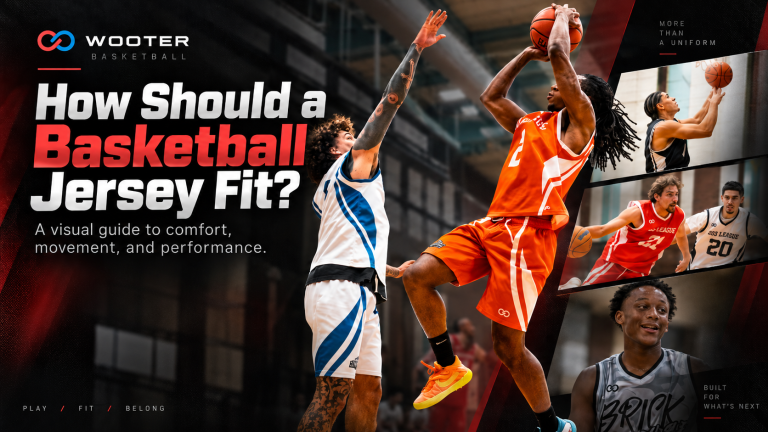
A basketball jersey should feel loose enough to move in, but not so loose that excess fabric gets in your way.
It should sit comfortably across the chest and shoulders, give your arms a full range of motion, and stay comfortable when you shoot, pass, rebound, sprint, or defend.
Too tight, and the jersey can pull across the upper body. Too loose, and it may bunch, swing, or feel oversized.
So, how should a basketball jersey fit?
The ideal basketball jersey fit is relaxed and athletic: enough room for unrestricted movement, with a clean shape that does not overwhelm the player.
This guide breaks down exactly what to check before choosing a size, including chest room, shoulders, armholes, basketball jersey length, jersey style, and the telltale signs that your uniform is too big or too small.
How Should a Basketball Jersey Fit? Check These 4 Areas First
Do not judge a basketball jersey by the size label alone.
Two players wearing the same size can experience a completely different fit because of differences in chest width, shoulder shape, height, and torso length.
Instead, check four areas.
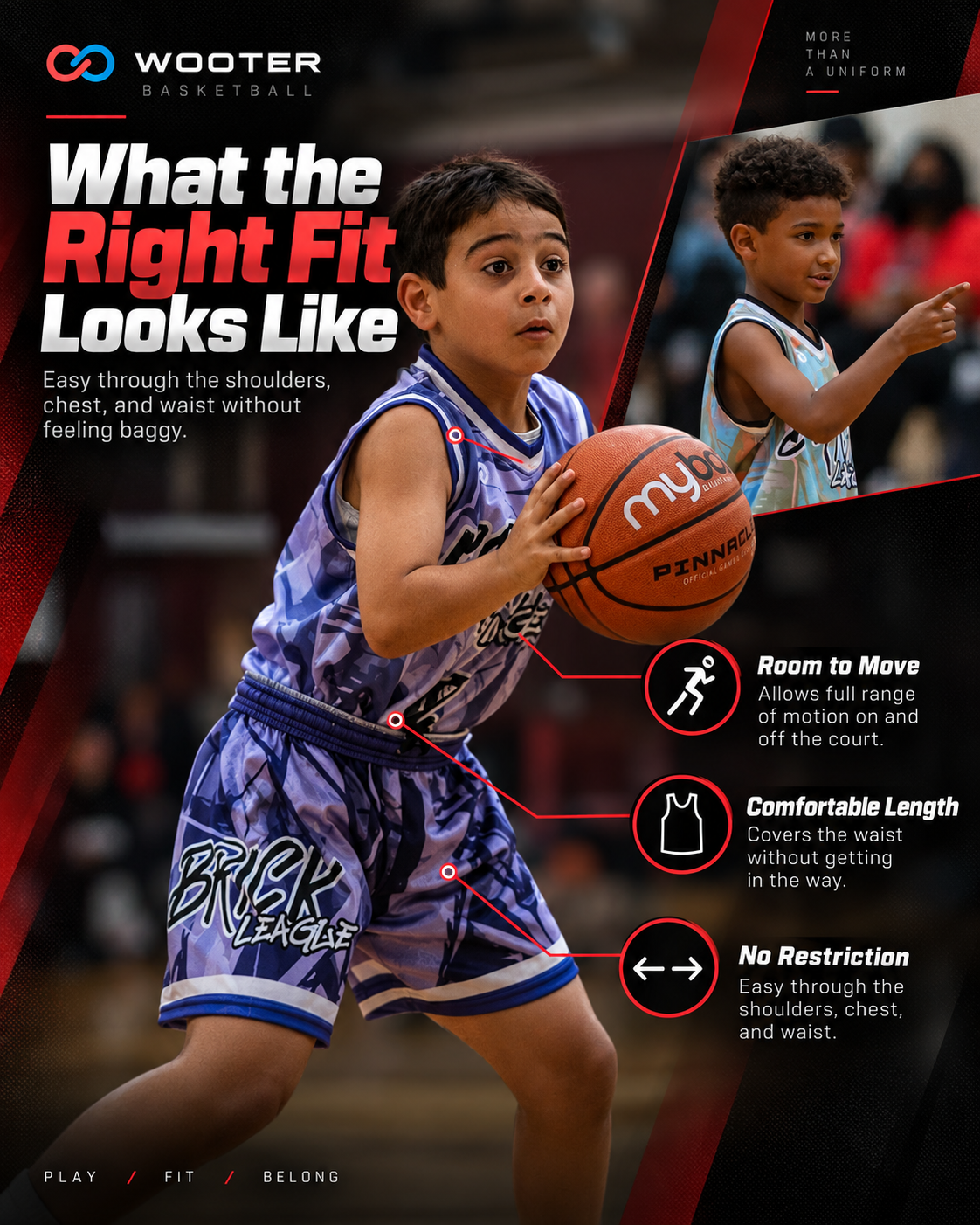
1. Chest Fit: Room to Move Without Excess Fabric
The jersey should sit comfortably across the chest without stretching or pulling.
Take a deep breath. Rotate your torso. Reach forward.
The fabric should move with you rather than tightening across your chest or upper back.
A little looseness is expected. Basketball jerseys are not compression tops.
But if large folds of material collect around your torso, you may have more room than you actually need.
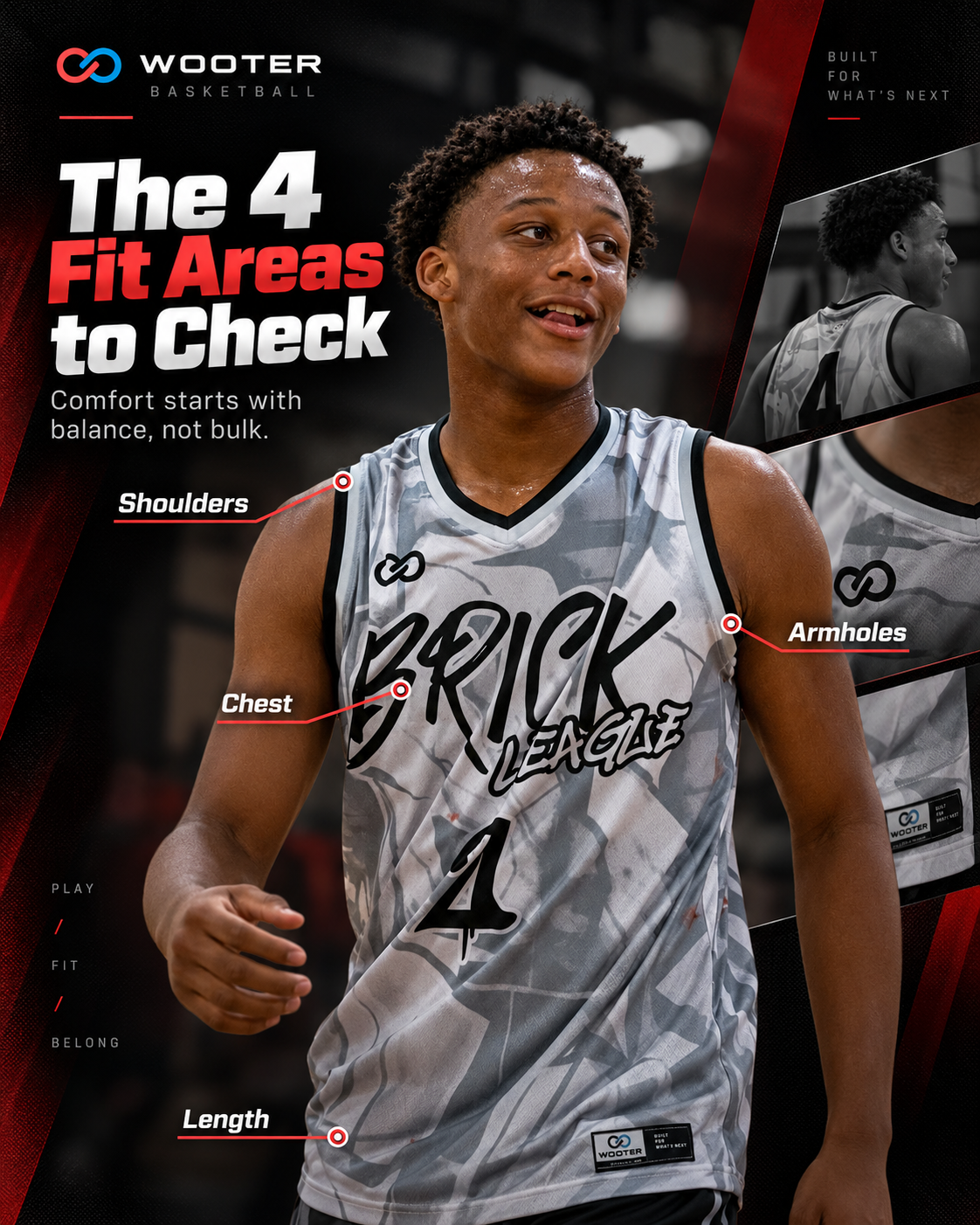
2. Shoulders and Armholes: Can You Shoot Freely?
This is where a poor fit becomes obvious.
Basketball players constantly raise and extend their arms to shoot, rebound, pass, block, and defend.
Your jersey should allow those movements without digging into the underarms or pulling tightly across the shoulders.
Raise both arms above your head and move through a complete shooting motion.
If the jersey pulls upward or the armholes feel restrictive, the size or cut may be too small.
3. Basketball Jersey Length: Find the Sweet Spot
Good basketball jersey length provides coverage without leaving unnecessary fabric around the waist and hips.
Too short? The jersey may ride up every time you shoot or rebound.
Too long? It can bunch around the waist or make the overall fit look oversized.
There is no single ideal length for every athlete. Height, torso proportions, jersey construction, and competition requirements can all change how a jersey should sit.
For high-school programs, uniform rules matter too. The NFHS specifically states for 2026–27 that jerseys designed to be tucked in must remain properly tucked during play.
College teams should similarly verify current requirements rather than assuming high-school standards apply. The NCAA maintains its current men’s basketball rule book and uniform guidelines through its official rules resources.
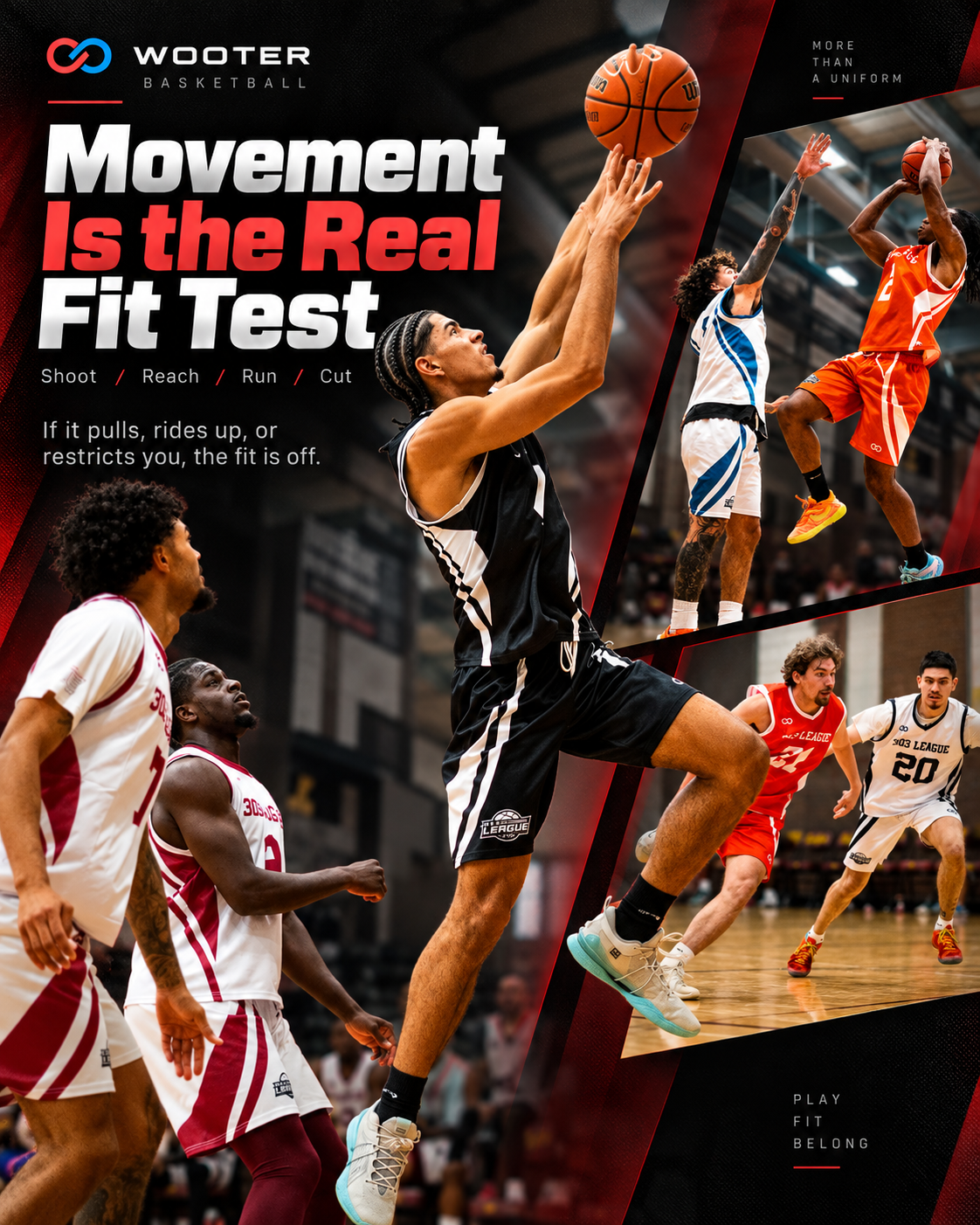
4. Movement: The Test That Matters Most
A jersey can look perfect while you are standing still and feel completely wrong once you start playing.
Take a few jump shots. Reach overhead. Rotate your torso. Drop into a defensive stance. Jog and change direction.
The jersey should move naturally with your body.
If you constantly notice it pulling, riding up, or swinging around, something about the fit is off.
Should a Basketball Jersey Be Tight or Loose?
Neither extreme works particularly well.
A basketball jersey should usually have a relaxed athletic fit. It should feel slightly loose through the body while still maintaining a clean shape.
| Fit | How It Feels | Common Signs |
|---|---|---|
| Too tight | Restrictive | Pulling across chest, tight armholes, riding up |
| Right fit | Relaxed and comfortable | Full arm movement, comfortable length, clean shape |
| Too loose | Baggy or oversized | Low armholes, excess fabric, unnecessary length |
The best fit is the one you stop thinking about once the game begins.
Your jersey should not compete for your attention.
Basketball Jersey Too Big? Signs the Fit Is Off
A loose jersey and an oversized jersey are not the same thing.
If your basketball jersey is too big, the first clue may be the shoulders. The jersey can drop well beyond your natural shoulder line and create armholes that hang too low along the sides.
You may also notice excess fabric collecting around the chest and waist.
Length is another giveaway. An oversized jersey can extend far below where it needs to, causing the material to bunch around the hips.
Then there is movement.
If the jersey swings around independently of your body every time you run, jump, or change direction, you probably have more fabric than you need.
Basketball Jersey Too Small? Watch for These Warning Signs
A smaller jersey may look sharp while you are standing still.
The problems usually appear when you move.
Fabric that pulls tightly across the chest or upper back is an obvious warning sign. The shoulder area may also tighten as soon as you raise your arms.
Check the armholes too.
They should provide enough clearance for repeated shooting and reaching without pressing into the underarm area.
A jersey that repeatedly rides upward during jump shots or rebounds may also be too short or too small through the body.
And one of the easiest signs?
You keep adjusting it.
If you constantly have to pull the jersey down or reposition it, the fit probably needs another look.
Why Basketball Jersey Fit Matters Once the Game Starts
A better-fitting jersey will not suddenly make a player faster or more accurate.
But a poor fit can create restriction and distraction that nobody needs during a game.
Basketball involves repeated overhead movement, torso rotation, sprinting, defensive slides, contact, and quick direction changes.
Your jersey needs to handle all of it.
A tight shoulder area becomes noticeable every time you shoot. Excess torso fabric moves around during sprints. Poor length can cause bunching or riding up.
That is also why jersey construction matters.
For example, Wooter’s Custom Pro Basketball Jerseys use curved seams, a pro-cut silhouette, and side splits intended to create a more athletic fit and support natural movement.
The goal is simple: choose a jersey you barely notice once the game begins.
Basketball Jersey Sizing vs. Fit: What Is the Difference?
These two terms are closely related, but they are not interchangeable.
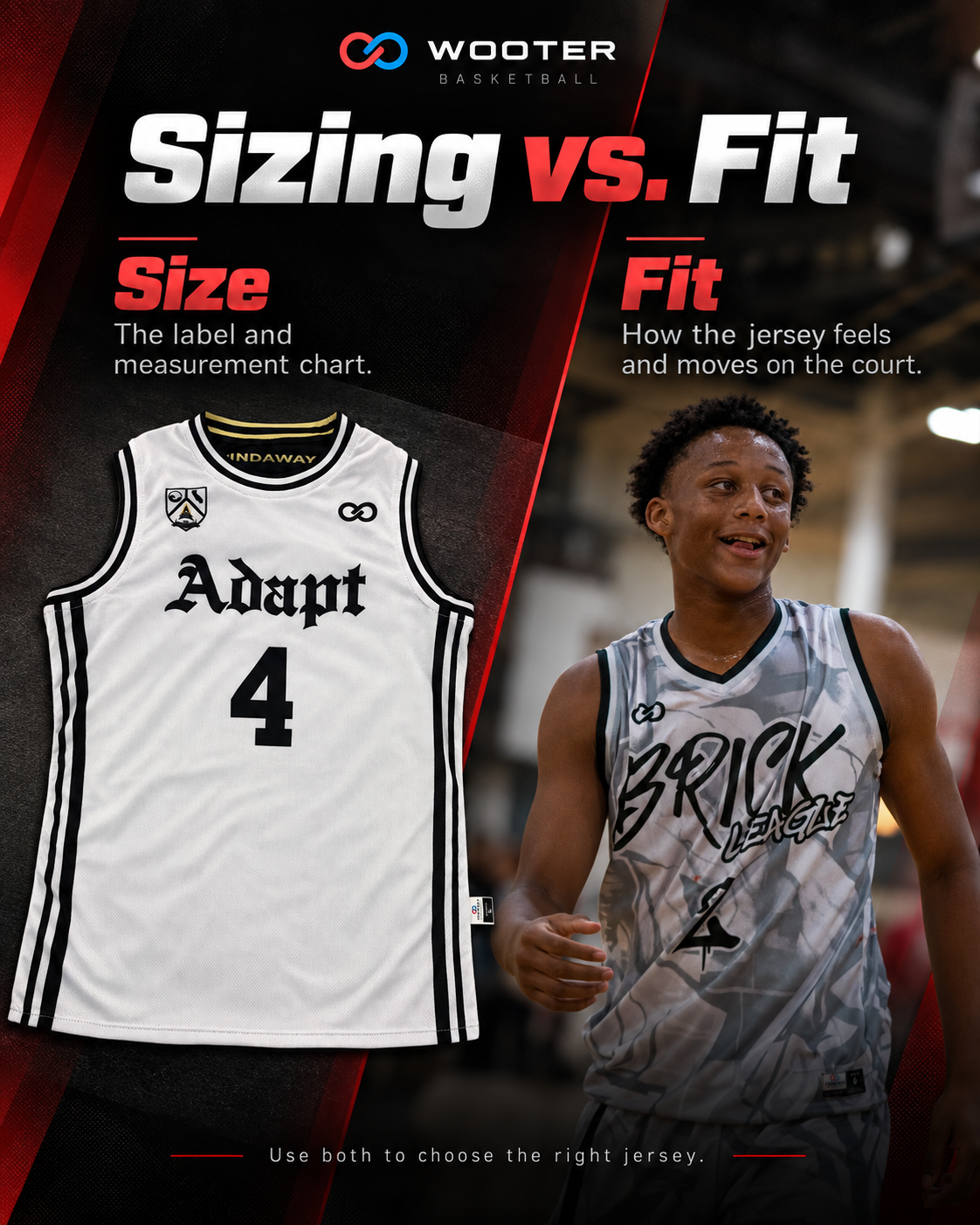
Basketball jersey sizing tells you which labeled size corresponds with your measurements.
Basketball jersey fit describes how that selected jersey actually sits and moves on your body.
That distinction matters.
Two athletes can both wear a men’s medium and still experience a different fit because they have different heights, shoulder widths, chest measurements, or torso proportions.
A basketball jersey size guide should therefore be your starting point, not the entire decision.
Before choosing a size, compare the player’s measurements with Wooter’s dedicated basketball sizing charts for the jersey being ordered.
Then check what happens when the player actually moves.
Measurements narrow down the size.
Movement confirms the fit.
Found the Right Fit? Now Find the Right Jersey.
Compare basketball jersey styles, sizing options, and custom designs built for teams, leagues, and programs.
What Size Basketball Jersey Should I Get?
If you are wondering, “What size basketball jersey should I get?”, do not automatically choose your normal T-shirt size.
Start with measurements.
Compare your measurements with the chart for the exact jersey you plan to wear. Different cuts and constructions can sit differently, even when the size label is the same.
Then ask a few practical questions.
Can you raise your arms without the jersey pulling? Is there enough room through the chest? Does the length feel comfortable? Do the armholes stay clear when you shoot?
If the answers are yes, you are much closer to the right size.
If not, the label matters less than the way the jersey actually fits.
Does Basketball Jersey Style Change the Fit?
Absolutely.
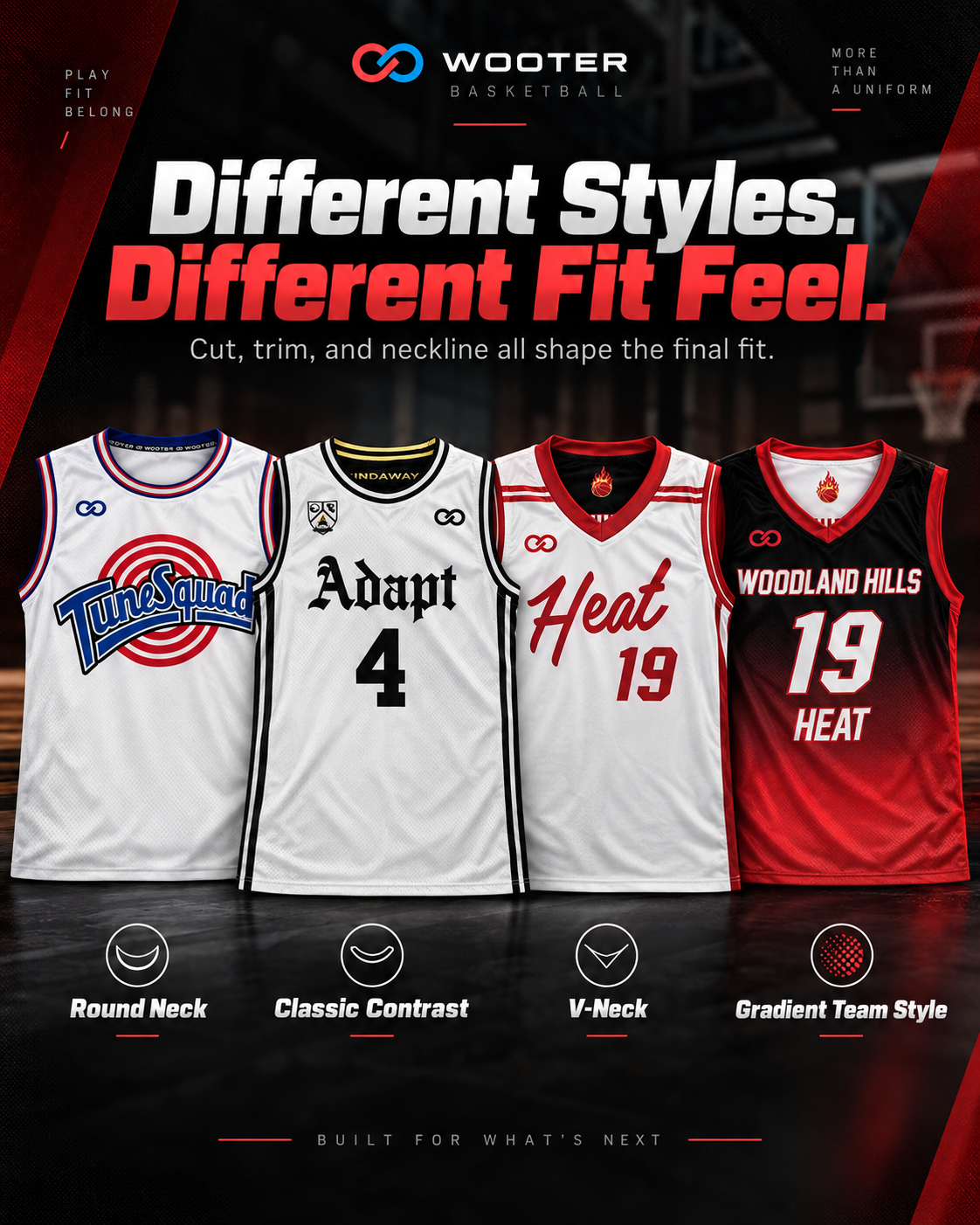
Cut, neckline, sleeves, seams, and overall construction can all change the silhouette of a jersey.
That is why one medium may not feel exactly like another.
Standard Sleeveless Jerseys
Traditional sleeveless jerseys generally provide plenty of freedom around the arms.
But shoulder width, neckline shape, torso cut, and side construction can still affect the fit.
A round-neck basketball jersey, for example, can have a different shape and feel from pro-cut, reversible, or sleeved options..
Pro-Cut Basketball Jerseys
Pro-cut styles tend to create a more deliberate athletic silhouette.
That can change how the jersey sits through the chest, sides, and lower torso.
If your team moves from a traditional straight-cut jersey to a pro-cut option, do not assume the same labeled size will feel identical.
Check the measurements again.
Short-Sleeve Basketball Jerseys
Sleeves create an extra fit point.
The upper arm and shoulder need enough room to move through a full shooting motion without pulling.
Teams choosing short-sleeve basketball jerseys should pay particular attention to shoulder mobility before confirming sizes.
Reversible and Practice Jerseys
Practice jerseys may also fit differently from game uniforms.
Their purpose and construction can be different.
Wooter’s reversible basketball practice jerseys, for example, are built as lightweight training jerseys for drills, scrimmages, conditioning, and repeated team use.
If your program orders separate practice and game uniforms, check the sizing for both.
Do not assume the same labeled size will create exactly the same fit across different styles.
How Coaches Can Get Basketball Jersey Sizing Right for the Whole Team
Sizing one player is straightforward.
Sizing an entire roster is where mistakes become expensive.
Coaches and team managers should avoid guessing based on age, height, or what a player normally wears.
Instead, measure every player using the same process. Record each player’s measurements, jersey number, selected size, and any concerns before the final order is submitted.
Then compare those measurements with the chart for the exact jersey style being ordered.
Players sitting near a size boundary deserve a second check.
For a full team, a few extra minutes confirming sizes before production is much easier than dealing with several poor fits after the uniforms arrive.
Basketball Jersey Fit Checklist Before You Order
Before confirming a player’s size, check that the jersey:
- Feels comfortable across the chest.
- Allows full shoulder rotation.
- Does not dig into the armholes.
- Provides enough torso coverage.
- Is not excessively long.
- Stays comfortable through a full shooting motion.
- Allows easy running, jumping, and defensive movement.
- Does not create unnecessary loose fabric.
- Does not need constant adjustment.
For team orders, repeat the same checks across the entire roster.
Consistency matters just as much as the size printed on the label.
FAQs About Basketball Jersey Fit and Sizing
How should a basketball jersey fit?
A basketball jersey should have a relaxed athletic fit. It should provide comfortable room through the chest and shoulders while allowing full arm movement without excessive loose fabric.
Are basketball jerseys supposed to be loose?
Basketball jerseys generally fit looser than compression clothing, but they should not be excessively baggy. The goal is enough room for natural movement without unnecessary material around the body.
How long should a basketball jersey be?
A basketball jersey should provide comfortable torso coverage without hanging so low that the fabric bunches around the hips or interferes with movement. The ideal length varies by player proportions and jersey cut.
Should I size up in a basketball jersey?
Not automatically. Compare your measurements with the sizing chart for the specific jersey first. If you are between sizes, consider chest room, shoulder movement, jersey length, and how each option feels during basketball movements.
Get the Fit Right Before You Customize
Fit comes first.
A great design cannot compensate for a jersey that feels uncomfortable every time the player raises their arms.
Measure the roster accurately. Use the correct sizing chart. Check chest room, shoulders, armholes, and length.
Then test the jersey through real basketball movements.
Once the fit is right, you can focus on the part that makes the uniform yours: colors, logos, player names, numbers, and the jersey style that represents your team.
Wooter’s basketball collection includes custom jerseys, reversible styles, shorts, uniform packages, sizing options, and other team apparel for programs building a complete look.
Ready to Outfit Your Team?
Get custom basketball jerseys designed around your team’s colors, logos, player names, numbers, and sizing needs. Tell us what your roster needs, and we’ll help you take the next step.